Source Passive DWDM Wavelength Division Multiplexer for Telecom, Data Centers, and FTTH
Explore 30 listings for the Passive DWDM Wavelength Division Multiplexer designed for telecom, data centers, and FTTH networks. Buyers can compare channel spacing, passband, and temperature ratings from verified manufacturers in China.
Key considerations
Products List


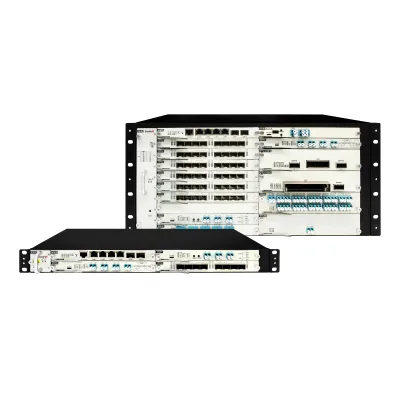
Dense Wavelength Division Multiplexing with 48channels for 480g Solution
$80.00 - $560.00
MOQ: 1 Pieces


2X16 Fiber Optic Coarse Wavelength Division Multiplexing for Wdm System
$320.00 - $332.00
MOQ: 1 Pieces

Comprehensive Sourcing Guide
Strategic Sourcing Guide for Passive DWDM Wavelength Division Multiplexers
Understanding the Core Technology and Component Types
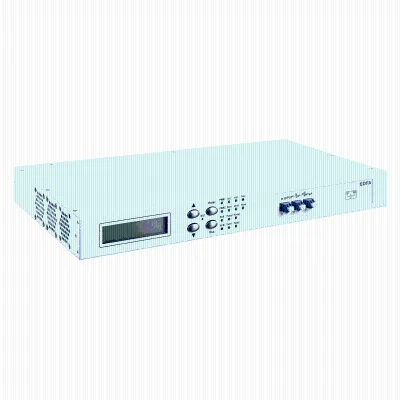
When sourcing passive DWDM (Dense Wavelength Division Multiplexing) wavelength division multiplexers, buyers must first distinguish between the specific form factors and functional roles these components play within optical networks. The market offers a diverse array of devices, ranging from simple couplers to complex OADM (Optical Add-Drop Multiplexer) modules. In the current supply landscape, these components are frequently categorized under broader classifications such as Fiber Optic Splitter & Coupler, Fiber Transceivers, or specialized ODF (Optical Distribution Frame) wiring devices.
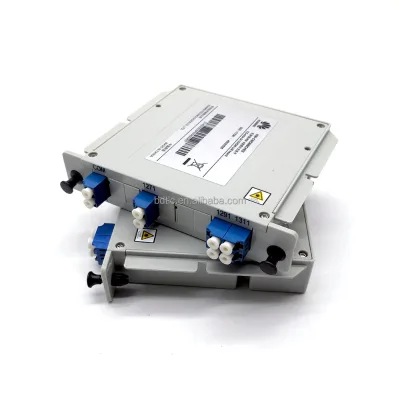
A critical observation for procurement teams is that while the core keyword is "Passive DWDM Wavelength Division Multiplexer," the actual product listings often include integrated wiring solutions and specific module types like the 100G DWDM OADM Module. These modules are designed to handle specific channel counts, commonly appearing in configurations of 4, 8, or 16 channels. The physical implementation varies significantly; some units are packaged individually in boxes, while others are bulk-packed, such as 36 pieces per carton, or customized according to specific customer requirements. Understanding whether the procurement need is for a standalone component or a module integrated into a larger system is the first step in defining the technical scope.
The operational principle of these devices relies on precise wavelength separation. Whether labeled as a DWDM Mux/Demux or a 200GHz DWDM unit, the device functions by combining multiple optical signals of different wavelengths onto a single fiber or separating them for individual processing. The distinction between 100GHz and 200GHz channel spacing is a primary technical differentiator. Buyers must verify if their network architecture requires the tighter channel spacing of 100GHz for higher capacity or the wider 200GHz spacing for specific legacy or lower-density applications. The channel wavelength is typically aligned with the ITU Grid, measured in nanometers, ensuring interoperability with standard telecommunications infrastructure.
Technical Specifications and Performance Metrics
Evaluating the technical specifications of passive DWDM multiplexers requires a deep dive into optical performance parameters that directly impact network reliability and signal integrity. The most critical metrics include channel passband, insertion loss, and ripple characteristics. For devices operating on a 100GHz grid, the channel passband at -0.5dB bandwidth is typically observed to be greater than 0.3nm, whereas 200GHz grid devices often exhibit a passband greater than 0.5nm. These tolerances ensure that the signal remains within the acceptable frequency range without significant degradation.
Another vital parameter is the channel ripple, which measures the variation in loss across the passband. High-quality units typically maintain channel ripple below 0.5dB, with some advanced specifications indicating a pass channel ripple of less than 0.3dB. This consistency is essential for maintaining uniform signal strength across all wavelengths. Furthermore, the return loss, a measure of how much light is reflected back toward the source, is a key indicator of component quality. Observed specifications for these devices often cite return loss values exceeding 45dB or 50dB, ensuring minimal back-reflection that could destabilize the laser sources in the transmission system.
Environmental resilience is equally important for long-term performance. The operating temperature range for these passive components is a critical specification. While some units are rated for a broad range of -50°C to +85°C, others are specified for -5°C to +75°C during operation, with storage temperatures extending up to +85°C or down to -40°C. Buyers must match these environmental ratings to the physical deployment location, whether it is a climate-controlled data center or an outdoor cabinet subject to extreme thermal fluctuations. Additionally, the maximum power handling capability, often cited around 300mW, dictates the intensity of the optical signal the device can safely manage without suffering thermal damage or nonlinear effects.
Compliance, Certification, and Regulatory Standards
In the B2B procurement of optical networking equipment, verifying compliance with international standards and certifications is non-negotiable. The supply chain for passive DWDM components is heavily influenced by regulatory requirements in the regions where the equipment will be deployed. A recurring observation in product data indicates that manufacturers frequently claim adherence to ISO, RoHS, and CE standards. These certifications serve as a baseline for quality management and environmental safety. Specifically, ISO 9001 is often cited as a quality certification, indicating that the manufacturer follows a structured quality management system.
The RoHS (Restriction of Hazardous Substances) directive is particularly relevant for electronics sold in the European market and increasingly adopted globally. It ensures that the components do not contain restricted levels of lead, mercury, cadmium, and other hazardous materials. Similarly, the CE marking signifies conformity with health, safety, and environmental protection standards for products sold within the European Economic Area. Some product listings also reference GS (Geprüfte Sicherheit) certification, which is a German safety mark, and SGS, a global inspection and verification company, suggesting third-party validation of quality and safety.
However, buyers must exercise caution when interpreting these claims. While the aggregated data shows a high frequency of ISO, RoHS, and CE mentions, the specific standard version or the scope of the certification should be verified with the supplier. For instance, the presence of "ISO" in a general list does not automatically confirm ISO 9001 compliance for a specific batch unless explicitly stated. The procurement process should include a request for valid, current certificates from the manufacturer or an authorized testing body. This verification step is crucial to avoid non-compliant shipments that could lead to regulatory fines or rejection at customs.
Cost Drivers and Procurement Economics
The pricing structure for passive DWDM wavelength division multiplexers is influenced by a complex interplay of technical specifications, packaging requirements, and order volume. The observed market price range is extremely broad, spanning from $0.10 to over $1,300.00 USD. This variance is not arbitrary but is driven by the complexity of the device. A simple fiber optic splitter or coupler will sit at the lower end of this spectrum, while a sophisticated 100G DWDM OADM module with 16 channels and precise thermal stabilization will command a significantly higher price.
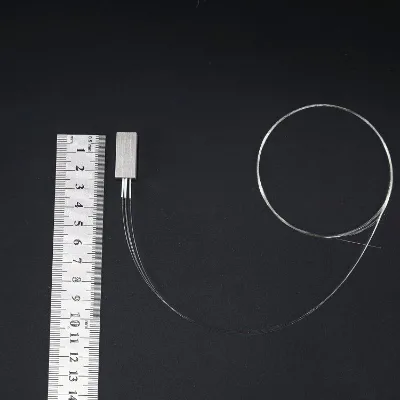
Minimum Order Quantity (MOQ) is another critical economic factor. The market data indicates an MOQ range from 1 to 50 units. For small-scale projects or prototyping, suppliers offering an MOQ of 1 are essential, allowing buyers to test performance without a large financial commitment. Conversely, large-scale network deployments benefit from the economies of scale offered by higher MOQs, which often correlate with reduced unit costs. The customization of the input cable length, available in options such as 0.5m, 1m, 1.5m, or fully customized lengths, also impacts the final cost. Customized configurations typically incur a premium due to the additional labor and setup time required.
Packaging standards also play a role in logistics costs. While some products come in individual boxes, others are packed in bulk cartons containing 36 pieces. The choice of packaging affects shipping volume and protection. For fragile optical components, "Safe Packaging" involving thick foam boxes and cartons is a standard requirement to prevent damage during transit. Buyers should factor in the potential for higher shipping costs if the packaging is not optimized for volume, or conversely, the savings from consolidated bulk shipments.
Supplier Evaluation and Geographic Considerations
When evaluating potential suppliers for passive DWDM components, geographic origin and manufacturing capability are key indicators of reliability. The majority of the observed product data points to manufacturers located in China, specifically in the provinces of Ningbo and Zhejiang. These regions are established hubs for optical fiber manufacturing and telecommunications equipment, offering a mature supply chain and competitive pricing. However, the concentration of suppliers in these areas requires buyers to conduct thorough due diligence to ensure that the specific factory meets their quality expectations.
Supplier evaluation should extend beyond location to include their ability to provide customization. The availability of customization options, such as specific connector endfaces (UPC or APC), cable lengths, and channel configurations, is a strong indicator of a flexible and capable manufacturer. A supplier that offers "Individual Box or According to Customer" packing demonstrates a willingness to adapt to the buyer's logistical needs. Furthermore, the presence of detailed technical specifications, such as Polarization Dependent Loss (PDL) under 0.1dB and Polarization Mode Dispersion (PMD) under 0.1 PS, suggests a high level of engineering precision.
Buyers should also assess the supplier's track record regarding quality certifications. While many list ISO, CE, and RoHS, the ability to provide specific test reports or third-party verification from bodies like SGS adds a layer of trust. The consistency of the product model numbers, such as the "DT-FWDM" or "100G DWDM Module," across different listings can indicate a standardized production line, which is preferable to a supplier with a fragmented product catalog.
Quality Control and Long-Term Procurement Strategy
Implementing a robust quality control (QC) strategy is essential for mitigating risks associated with optical component procurement. Given the sensitivity of fiber optic systems to insertion loss and return loss variations, buyers should establish clear acceptance criteria based on the technical specifications observed in the market. For example, verifying that the Directivity is greater than 50dB and the Return Loss exceeds 45dB should be part of the incoming inspection protocol. Any deviation from these thresholds could indicate a defective batch or a manufacturing inconsistency.
Long-term procurement considerations involve building a relationship with suppliers who can support the lifecycle of the network. This includes ensuring the availability of spare parts and the consistency of product specifications over time. The "New" condition of the products listed is a standard expectation, but buyers must confirm that the inventory is not obsolete or from a discontinued line. Additionally, the storage temperature range of -40°C to +85°C should be considered when planning warehouse conditions to prevent degradation of the components before installation.
To maintain supply chain resilience, buyers should avoid over-reliance on a single source. Diversifying suppliers across different regions, even within the same country, can mitigate risks related to production delays or geopolitical issues. The ability of a supplier to provide customized solutions, such as specific channel passbands or ripple values, also adds value by allowing the buyer to tailor the solution to the specific network architecture, reducing the need for post-installation adjustments.
Application Scenarios and Network Integration
Passive DWDM wavelength division multiplexers are integral to modern telecommunications, enabling the efficient transmission of data over long distances. Their typical applications span from metropolitan area networks (MANs) to long-haul backbone systems. In these environments, the ability to multiplex multiple wavelengths onto a single fiber significantly increases bandwidth capacity without the need for additional cabling. The 100G and 200GHz grid modules are particularly suited for high-density data centers and cloud connectivity, where space and power efficiency are paramount.
The integration of these components into existing infrastructure requires careful planning. The choice between UPC and APC endfaces is critical; APC connectors, with their angled physical contact, are generally preferred for applications requiring high return loss to minimize reflections, such as in CATV or high-speed data transmission. The "Integrated Wiring" attribute found in some product descriptions suggests that these components may be designed for seamless integration into ODFs or patch panels, simplifying the installation process.
Furthermore, the specific channel counts (4, 8, or 16) allow for scalable network expansion. A network operator might start with a 4-channel module and upgrade to 16 channels as demand grows. The flexibility of the channel spacing (100GHz or 200GHz) also allows for future-proofing, as the network can be adapted to support higher channel densities or legacy systems as needed. Understanding these application nuances ensures that the selected DWDM multiplexer aligns with both current operational requirements and future growth strategies.
FAQs
What certifications do Passive DWDM Wavelength Division Multiplexer products typically have?
These products typically hold ISO, RoHS, and CE certifications. Some listings also include GS and SGS quality marks, indicating compliance with international safety and environmental standards for optical networking equipment.
How is the channel spacing defined for these multiplexer devices?
Channel spacing is defined as either 100GHz or 200GHz. The device operates on the ITU Grid, with passband widths greater than 0.3nm for 100GHz grids and greater than 0.5nm for 200GHz grids.
Can buyers request customized cable lengths for these fiber optic components?
Yes, customization is available for input cable lengths. Standard options include 0.5m, 1m, and 1.5m, but buyers can also request fully customized lengths to fit specific installation requirements.
Which temperature ranges are supported by these optical modules?
Operating temperatures range from -5 to +75 degrees Celsius, while storage temperatures extend from -40 to +85 degrees Celsius. Some units are rated for a broader operational range of -50 to +85 degrees Celsius.
What is the typical return loss performance for these devices?
The return loss typically exceeds 45dB, with some high-performance models achieving values greater than 50dB. This ensures minimal back-reflection to stabilize laser sources in the transmission system.
Where are the manufacturers of these components primarily located?
Manufacturers are primarily located in Ningbo and Zhejiang, China. These regions serve as established hubs for optical fiber manufacturing, offering a mature supply chain for telecommunications equipment.
How are these products packaged for shipment and delivery?
Packaging varies from individual boxes to bulk cartons containing 36 pieces. Options include safe packaging with thick foam boxes, and buyers can request packing according to specific customer requirements.