Source Passive RFID Blocking Card for Finance, Transport, and ID
Find and compare Passive RFID Blocking Card options from 29 verified suppliers. Evaluate PVC smart cards with high-frequency protection for finance, transportation, and identification applications. Review specifications, MOQs, and lead times to select the right secure payment and data encryption solutions.
Key considerations
Products List


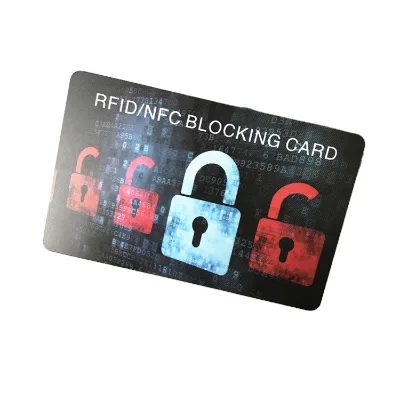
RFID Blocking Card Anti Scanner 13.56MHz Credit Card Protector RFID Blocker
$0.18 - $0.25
MOQ: 500 Piece/Pieces


Comprehensive Sourcing Guide
Passive RFID Blocking Card Sourcing Guide
Procuring passive RFID blocking cards requires a clear understanding of their dual nature as both financial instruments and security tools. These cards function primarily to shield sensitive data stored on embedded chips from unauthorized wireless scanning. Buyers must distinguish between standard payment cards and specialized security sleeves or inserts designed for bulk protection. The market offers various form factors, including full-size cards and smaller keyfob-style accessories, each serving different logistical needs.
The sourcing process involves evaluating material composition, frequency compatibility, and physical durability. Most available products utilize PVC or ABS materials to ensure structural integrity while maintaining the necessary shielding properties. Buyers should verify that the selected product aligns with their specific use case, whether it is for personal privacy, corporate asset protection, or financial sector compliance. Understanding these distinctions prevents misalignment between supplier capabilities and end-user requirements.
Product Scope and Observed Listing Signals
The current market landscape for passive RFID blocking solutions includes a diverse array of products ranging from smart cards to protective sleeves. Listings indicate a price range of $0.05 to $32, reflecting variations in material quality, chip integration, and packaging volumes. Minimum order quantities typically span from one unit to five hundred, allowing for both sample testing and large-scale deployment. This variability suggests a mature supply chain capable of accommodating different procurement scales and budget constraints.
Observed product attributes highlight significant customization options, with suppliers offering standard sizes like 85.5x54mm alongside custom dimensions. Materials commonly cited include PVC, ABS, and PET, ensuring compatibility with existing card readers and handling equipment. Some listings specify active card technologies, while others focus on passive read-write or read-only structures. Buyers must carefully filter these signals to identify products that strictly meet the passive shielding requirement without unnecessary active components.
Technical Specifications to Verify
Technical verification begins with confirming the frequency range and shielding effectiveness of the selected blocking card. Most passive RFID systems operate at high frequencies, typically around 13.56 MHz, which requires specific metallic or conductive layers to block signals effectively. Buyers should request detailed specifications regarding the card’s thickness, which often ranges from 0.5mm to 0.86mm, to ensure compatibility with standard card readers and wallets. Thicker cards may offer enhanced durability but could cause feeding issues in automated systems.
Data transmission modes and chip types also play a critical role in performance assessment. While some products support parallel or serial data transmission for read-write applications, blocking cards primarily focus on isolation. Verify whether the card contains a specific chip, such as MIFARE, or if it is purely a passive shield. Additionally, check the read-write method to ensure it is non-contact type, which is standard for RFID interactions. Confirming these technical details prevents integration failures in existing infrastructure.
Compliance and Safety Documentation
Compliance documentation is essential for ensuring that RFID blocking cards meet international safety and quality standards. Buyers should request certificates confirming that materials used, such as PVC or ABS, are free from harmful substances like phthalates or heavy metals. These certifications are particularly important for products intended for financial or personal use, where direct skin contact is frequent. Without proper documentation, there is a risk of regulatory non-compliance in certain jurisdictions.
Furthermore, verify that the manufacturing process adheres to recognized quality management systems. Suppliers should provide evidence of consistent production quality, including batch testing results for shielding efficacy. While specific test data may not always be publicly listed, buyers should insist on third-party lab reports for critical shipments. This due diligence ensures that the blocking performance is reliable and consistent across all units, protecting sensitive data from potential breaches.
Cost Drivers and Commercial Terms
Cost structures for passive RFID blocking cards are influenced by material selection, customization levels, and packaging requirements. Standard PVC cards are generally more affordable than those made from ABS or PET, which offer greater durability. Customization, such as embossing, signature stripes, or specific logo printing, adds to the unit cost. Buyers should also consider packaging options, which range from simple OPP bags to bulk cartons containing thousands of units, as this affects logistics and storage costs.
Commercial terms often include flexible minimum order quantities and sample availability. Many suppliers offer free samples to allow for technical verification before committing to large orders. Lead times typically range from six to ten days, depending on the order size and customization complexity. Buyers should negotiate clear terms regarding shipping responsibilities and return policies for defective units. Understanding these commercial dynamics helps in budgeting accurately and managing supply chain expectations.
Supplier Qualification and Quality Control
Supplier qualification involves assessing their manufacturing capabilities and quality control processes. Buyers should prioritize suppliers with established production lines in regions known for electronics manufacturing, such as Chengdu, Shenzhen, or Guangzhou in China. These locations often have mature ecosystems for producing RFID components and cards. Verify the supplier’s ability to handle large volumes while maintaining consistent quality, as indicated by their packaging specifications and production capacity.
Quality control measures should include incoming material inspections and final product testing. Buyers should request information on the supplier’s defect rate and their process for handling non-conforming products. Regular audits or third-party inspections can provide additional assurance of quality consistency. Additionally, check the supplier’s responsiveness to customization requests and their ability to provide technical support. A reliable supplier will offer comprehensive support throughout the procurement lifecycle.
Long-Term Procurement Checks
Long-term procurement success depends on establishing a robust relationship with suppliers and continuously monitoring performance. Buyers should implement a periodic review process to assess supplier reliability, product quality, and cost competitiveness. This includes tracking delivery times, defect rates, and responsiveness to issues. Regular communication with suppliers can help identify potential improvements or new product offerings that may better suit evolving needs.
Additionally, stay informed about changes in RFID technology and security standards. As technology evolves, the requirements for blocking effectiveness may change, necessitating updates to procurement specifications. Buyers should maintain a diverse supplier base to mitigate risks associated with single-source dependencies. By proactively managing these relationships and staying updated on industry trends, buyers can ensure a secure and efficient supply chain for passive RFID blocking cards.
FAQs
How is the Passive RFID Blocking Card powered?
The Passive RFID Blocking Card operates without an internal power source, relying on the reader's field for activation. This design ensures long-term reliability and eliminates battery replacement needs for users managing identification or payment data securely.
What materials are used for the Passive RFID Blocking Card?
Manufacturers typically construct these cards using PVC, ABS, or PET materials to ensure durability and flexibility. The standard thickness ranges from 0.5mm to 0.86mm, allowing for comfortable handling while maintaining structural integrity for various identification and payment applications.
Which dimensions are standard for the Passive RFID Blocking Card?
Standard dimensions often match the ISO 7810 ID-1 format measuring 85.5mm by 54mm, though custom sizes like 88mm by 60mm are available. Buyers can request specific dimensions to fit unique card readers or specialized identification systems requiring non-standard sizing.
Can the Passive RFID Blocking Card be customized for branding?
Yes, customization is available for branding, including signature stripes, ID number printing, and embossing. Suppliers offer flexible options to adapt the card surface for specific corporate or organizational needs while maintaining the core passive blocking functionality for data security.
How is the Passive RFID Blocking Card packaged for shipment?
Cards are commonly packed in boxes containing 100 or 200 units, with larger cartons holding 1000 to 5000 pieces. Packaging options vary by supplier, with some offering 20 pieces per OPP bag, ensuring safe transport and organized inventory management for bulk orders.
What is the typical lead time for the Passive RFID Blocking Card?
The typical lead time ranges from 6 to 10 days for standard orders, depending on customization requirements. This timeframe allows for efficient production and shipping, ensuring timely delivery for businesses needing quick turnaround on identification or payment card solutions.
Which application fields use the Passive RFID Blocking Card?
These cards are widely used in finance, transportation, and general identification sectors for secure data transmission. Their passive nature makes them ideal for environments requiring reliable encryption, decryption, and information storage without the complexity of active power management systems.