Source Pb Free Copper Bushings for Automotive, Robotics, and Marine
Find and compare Pb Free Copper Bushings from 30 verified listings. Evaluate options based on material, hardness, and application suitability for machinery and industrial equipment.
Key considerations
Products List


Cylindrical Copper Bushes Bronze Sleeve Oil Sintered Brass Bearing Bushings
$0.01 - $0.02
MOQ: 10000 Pieces


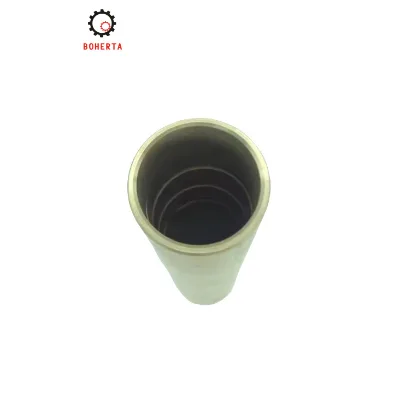


Custom Service Stainless Steel, Copper, Alloy Sleeve, Metal Bearing Bushing
$0.30 - $1.00
MOQ: 100 Pieces


Comprehensive Sourcing Guide
Pb Free Copper Bushings Sourcing Guide
Sourcing Pb Free Copper Bushings requires a disciplined approach to material verification and application matching, particularly when environmental regulations or specific mechanical constraints dictate the use of lead-free alloys. These components serve as critical friction-reducing elements in rotating or oscillating machinery, where the absence of lead does not compromise the self-lubricating properties or load-bearing capacity typically associated with traditional bronze bushings. Buyers must navigate a market where "pb free" is a baseline compliance requirement in many jurisdictions, yet the underlying copper alloy composition—whether it be tin bronze, aluminum bronze, or sintered copper composites—varies significantly in performance characteristics. Understanding these material distinctions is the first step in ensuring that the selected bushing meets the operational demands of the end product without introducing regulatory risks or mechanical failures.
The procurement landscape for these components is characterized by a wide variance in manufacturing processes, from CNC-machined solid bushings to sintered powder metallurgy parts. This diversity means that a single keyword search will yield products with vastly different dimensional accuracies, hardness levels, and surface treatments. Buyers need to distinguish between standard off-the-shelf sizes and custom-engineered solutions, as the latter often involve higher minimum order quantities (MOQs) and longer lead times but offer tailored performance for specialized industries such as automotive, aerospace, or heavy-duty vehicle suspension systems. Recognizing these structural differences in the supply chain allows procurement teams to align their sourcing strategy with their production volume and quality requirements, avoiding the pitfalls of over-specifying for simple applications or under-specifying for high-stress environments.
Product Scope and Observed Listing Signals
The observed market signals indicate a broad spectrum of product types, ranging from rigid graphite bronze bushings to sintered copper variants, all falling under the general category of bushings, sleeves, washers, and flanged plates. Listings frequently highlight customization availability, suggesting that while standard models like TCB500 or TCB401 exist, the majority of demand is driven by specific dimensional requirements that necessitate custom drawings or modified tolerances. The presence of both CNC processing and mold extrusion methods in the data suggests that buyers should expect different surface finishes and structural integrity profiles depending on the manufacturing technique selected, with CNC parts generally offering higher precision for critical journal diameters and extruded or sintered parts providing cost-effective solutions for high-volume, less critical applications.
Pricing and order volume signals reveal a significant disparity, with observed prices ranging from minimal unit costs to substantial figures for specialized high-strength components, and MOQs stretching from single units to tens of millions of pieces. This wide range underscores the importance of defining the exact application context early in the sourcing process; for instance, bushings intended for household appliances or textile machinery may have different cost and quality thresholds compared to those used in construction machinery or marine industries. Buyers should interpret these signals as indicators of the supplier’s capability to handle both prototype runs and mass production, but must verify that the quoted terms align with the specific material grade and processing method required for their particular use case, rather than assuming all listed items are interchangeable.
Technical Specifications to Verify
Dimensional accuracy and tolerance verification are paramount when selecting Pb Free Copper Bushings, as even minor deviations can lead to premature wear or assembly failures. Buyers should prioritize suppliers who can demonstrate precision tolerance capabilities, such as IT6-IT7 grades, and verify the journal diameter dimensional accuracy alongside relative position accuracy, which may be specified within tight ranges like 0.001-0.005mm for high-performance applications. The recommended housing tolerance, often cited as H7, is a critical parameter that must be matched with the bushing’s outer diameter tolerance to ensure proper interference or clearance fits, depending on the operational speed and load conditions. Failing to align these tolerances can result in loose fits that cause vibration or tight fits that induce excessive stress during installation.
Material hardness and surface treatment specifications directly influence the bushing’s lifespan and friction characteristics. Hardness values, which may range from softer conditions like 25HB for sintered bushings to harder states exceeding 210HB for high-carbon steel or specific bronze alloys, must be selected based on the shaft material and operating speed. Surface treatments such as oiling are common to provide initial lubrication and prevent corrosion during storage, but buyers should also inquire about the inherent lubricity of the copper alloy itself, especially if the application involves dry running or intermittent lubrication. Additionally, the operating temperature range, typically cited between -40°C and +200°C for many bronze variants, should be confirmed to ensure the material retains its mechanical properties under the specific thermal conditions of the end-use environment.
Compliance and Safety Documentation
Environmental compliance is the primary driver for specifying Pb Free Copper Bushings, requiring suppliers to provide documentation that confirms the absence of lead and adherence to relevant international standards. Certifications such as ISO 9001:2015 are frequently observed and serve as a baseline for quality management systems, but buyers should also look for specific material compliance certificates that attest to the lead-free nature of the copper alloy, potentially referencing standards like RoHS or other regional environmental directives. It is essential to verify that the certification covers the specific alloy grade being supplied, as generic certificates may not account for variations in raw material sourcing or batch-to-batch consistency, which can impact both environmental compliance and mechanical performance.
Safety and industry-specific certifications may also be required depending on the application sector, with some suppliers offering TS16949 for automotive applications or other industry-specific validations. Buyers should request evidence of these certifications to ensure that the supplier’s quality control processes meet the rigorous demands of sectors like automotive, aerospace, or medical industries, where failure consequences are severe. Furthermore, while general standards like ISO or ASTM B505 may be referenced in background knowledge, buyers must confirm that the supplier’s internal testing protocols align with these standards, particularly regarding tensile strength, corrosion resistance, and hardness testing, to ensure that the pb free designation does not come at the expense of mechanical reliability.
Cost Drivers and Commercial Terms
The cost of Pb Free Copper Bushings is influenced by several key factors, including the complexity of the manufacturing process, the volume of the order, and the specific material grade used. CNC-machined bushings typically incur higher unit costs due to the time-intensive nature of the machining process and the higher material waste compared to sintered or extruded methods, which are more efficient for high-volume production. Buyers should evaluate the total cost of ownership rather than just the unit price, considering factors such as the durability of the bushing, the frequency of replacement, and the potential downtime costs associated with mechanical failure, as a higher-quality, more expensive bushing may offer significant savings over the lifecycle of the machinery.
Commercial terms such as MOQ, lead times, and packaging requirements also play a significant role in the overall procurement cost and supply chain efficiency. MOQs can vary widely, from small batches for prototyping to large volumes for mass production, and buyers should negotiate terms that align with their inventory management strategies to avoid excessive holding costs. Lead times, which may range from within 15 days for standard items to longer periods for custom orders, should be factored into production planning to prevent delays. Additionally, packaging methods, such as anti-rust paper, cartons, or wood cases, are crucial for protecting the bushings from corrosion during transit and storage, especially given the sensitivity of copper alloys to environmental factors, and should be specified to ensure the product arrives in optimal condition.
Supplier Qualification and Quality Control
Supplier qualification for Pb Free Copper Bushings should focus on the supplier’s ability to maintain consistent quality across batches, particularly regarding material composition and dimensional accuracy. Buyers should verify the supplier’s quality control processes, including incoming material inspection, in-process monitoring, and final product testing, to ensure that the bushings meet the specified tolerances and hardness requirements. The presence of certifications like ISO 9001:2015 is a positive indicator, but buyers should also request sample testing results or third-party audit reports to validate the supplier’s claims regarding their quality management system and their ability to produce consistent, high-quality components.
Customization capabilities and technical support are also critical factors in supplier selection, as many applications require tailored solutions that go beyond standard catalog items. Buyers should assess the supplier’s ability to interpret custom drawings, provide engineering advice on material selection, and offer rapid prototyping services to validate the design before full-scale production. The supplier’s responsiveness to technical queries and their willingness to collaborate on design improvements can significantly impact the success of the procurement project, ensuring that the final product meets both the functional requirements and the budgetary constraints of the buyer.
Long-Term Procurement Checks
Long-term procurement success with Pb Free Copper Bushings depends on establishing a robust supplier relationship that includes regular performance reviews and continuous improvement initiatives. Buyers should monitor key performance indicators such as on-time delivery, defect rates, and responsiveness to quality issues to ensure that the supplier maintains high standards over time. Regular audits, whether on-site or remote, can help identify potential risks in the supply chain and ensure that the supplier’s quality control processes remain effective and compliant with evolving industry standards and environmental regulations.
Additionally, buyers should stay informed about advancements in copper alloy technologies and manufacturing processes that could offer improved performance or cost efficiencies. Engaging with suppliers to explore new material options or processing techniques can lead to innovations that enhance the durability and reliability of the bushings, providing a competitive advantage in the end product. By maintaining a proactive approach to supplier management and technology adoption, buyers can ensure that their sourcing strategy remains aligned with their long-term business goals and market demands.
FAQs
What materials are used for these bushings?
The bushings are primarily made of copper or high carbon steel. Some variants feature graphite bronze composition. These materials ensure durability and performance across various industrial applications.
Can I request custom dimensions for these parts?
Yes, customization is available for these bushings. Buyers can provide customized drawings to specify exact requirements. The manufacturing process supports CNC processing and mold extrusion to meet unique needs.
What certifications do these products hold?
These products hold ISO 9001:2015 certification. Additional certifications may include RoHS, CE, and TS16949 depending on the specific model. This ensures compliance with international quality and safety standards.
How long is the delivery time for orders?
Delivery time is typically within 15 days for standard orders. This lead time applies to most production runs. Specific timelines may vary based on order volume and customization requirements.
What is the minimum order quantity required?
The minimum order quantity can range from 1 to 10,000,000 pieces depending on the supplier. Some specific models list an MOQ of 10,000 pieces. Buyers should verify the exact requirement for their selected model.
Which industries can use these bushings?
These bushings are suitable for machine tools, automotive, and aerospace industries. They are also used in robotics, medical, marine, and construction sectors. The applications extend to household appliances and textile machinery.
What is the operating temperature range?
The operating temperature range is from -40 to +200 degrees Celsius. This wide range allows use in diverse environmental conditions. The bushings maintain stability and performance within these thermal limits.