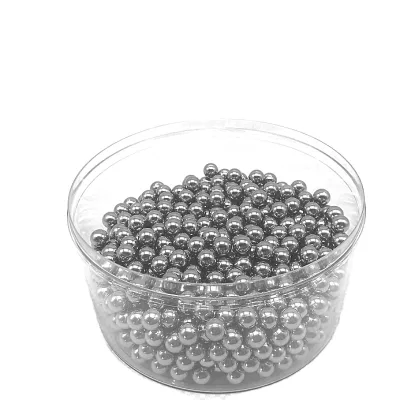
Source AISI 440c Stainless Steel Balls for valves bearings pens
Find 30 listings for AISI 440c Stainless Steel Balls with sizes from 0.68mm to 180mm and hardness of 58-62 HRC. Buyers can compare grades, certifications, and packaging options for valves, bearings, and ball pens.
Key considerations
Products List



Comprehensive Sourcing Guide
Strategic Sourcing Guide for AISI 440c Stainless Steel Balls
Procuring high-performance bearing components requires a meticulous approach to material selection, particularly when dealing with martensitic stainless steels like AISI 440C. This specific grade is distinguished by its high carbon content, which allows for exceptional hardness and wear resistance after heat treatment, making it a preferred choice for applications demanding durability in corrosive environments. For buyers navigating the global market, understanding the intersection of chemical composition, mechanical properties, and supply chain logistics is essential to mitigate risk and ensure component reliability. The following guide outlines the critical factors for sourcing AISI 440c Stainless Steel Balls, grounded in observed market data and technical specifications.
Technical Specifications and Material Properties
The foundation of a successful procurement strategy lies in verifying the precise technical attributes of the product. AISI 440c Stainless Steel Balls are defined by a specific chemical composition that includes Carbon (C), Silicon (Si), Manganese (Mn), Chromium (Cr), Molybdenum (Mo), Phosphorus (P), and Sulfur (S). The high chromium content is vital for corrosion resistance, while the carbon content drives the hardness potential. In the observed market data, these balls are frequently cited with a hardness range of 58-62 HRC, a standard metric for evaluating the wear resistance of hardened steel components. This hardness level is critical for applications involving high loads or abrasive conditions.
The physical density of these components is approximately 7.68 g/cm³, a figure that buyers should utilize for weight calculations in logistics and assembly planning. The product is available in a solid round shape, with a size range extending from 0.68mm up to 180mm, covering both micro-bearings and large industrial components. While some listings mention a size range of 1mm to 180mm, the broader range of 0.68mm suggests that suppliers may offer custom machining capabilities for smaller diameters. The grade classification often references G10 to G1000, indicating the precision tolerance levels available, where lower numbers denote tighter tolerances suitable for high-precision bearings.
| Attribute | Observed Specification | Verification Requirement |
|---|---|---|
| Material Grade | AISI 440C / 440c | Verify mill test reports for exact chemical breakdown |
| Hardness | 58-62 HRC | Confirm heat treatment process documentation |
| Density | 7.68 g/cm³ | Standard reference value for weight estimation |
| Shape | Solid Round | Visual inspection for geometric symmetry |
| Surface Finish | High Polished | Check for surface roughness parameters (Ra) |
| Size Range | 0.68mm - 180mm | Confirm specific diameter tolerances per order |
Compliance, Certification, and International Standards
In the B2B procurement of industrial components, certification serves as a proxy for manufacturing discipline and quality consistency. The market data indicates that reputable suppliers for AISI 440C balls often hold ISO certifications, which validate their quality management systems. Additionally, CE marking is frequently observed, suggesting compliance with European health, safety, and environmental protection standards. However, buyers must distinguish between general ISO certification and specific material standards.
The material itself adheres to international standards such as AISI 440C, but it is also cross-referenced with European designations like Z100CD17, Material 1.4125, and X105CrNiMo17. These equivalents are crucial for buyers operating in global supply chains where material datasheets must align with local regulatory frameworks. Furthermore, some listings reference BV (Bureau Veritas) standards, indicating third-party verification of the product's conformity. When evaluating a supplier, procurement teams should request documentation proving that the material batch matches the specific standard (e.g., AISI 440C) and that the manufacturing process adheres to the claimed ISO or CE protocols. It is important to note that while "Standard Parts" are often available, the "Customized" attribute suggests that non-standard sizes or finishes may require specific validation procedures.
Cost Drivers and Pricing Dynamics
The pricing of stainless steel balls is influenced by a complex matrix of factors, including raw material costs, manufacturing precision, and order volume. The observed price range in the market spans from $0 to $5.2 USD, a variance that likely reflects differences in unit size, grade tolerance, and order quantity rather than a uniform market price. The Minimum Order Quantity (MOQ) varies significantly, ranging from 1 unit to 1000 units. This flexibility allows small-scale prototyping but may impact the unit cost for bulk orders.
Several cost drivers directly affect the final price. First, the hardness requirement of 58-62 HRC necessitates a rigorous heat treatment process, which adds to the manufacturing cost compared to softer grades. Second, the surface finish, described as "High Polished," requires additional grinding and polishing steps that increase labor and time costs. Third, the precision grade (G10-G1000) dictates the level of sorting and inspection required; higher precision grades (lower G numbers) command a premium due to the stringent quality control needed to achieve tight tolerances. Buyers should also consider packaging costs, as options range from simple plastic bags to complex wooden crates and steel drums, each adding to the overall landed cost.
Typical Applications and Industry Use Cases
AISI 440c Stainless Steel Balls are engineered for environments where corrosion resistance and high hardness are paramount. The observed applications highlight their versatility across multiple sectors. In the valve industry, these balls are used for their ability to resist corrosion from aggressive fluids while maintaining a tight seal under pressure. Similarly, in the realm of special bearings and antifriction bearings, the high hardness (58-62 HRC) ensures longevity under heavy loads and high speeds.
Beyond heavy industry, the material is utilized in consumer and precision goods. The "Ball Pen" application is a notable example where the material's smoothness and resistance to rust are essential for writing performance. In the furniture and electrical appliance sectors, the balls provide reliable movement in hinges and mechanisms exposed to varying humidity levels. Medical equipment applications further underscore the material's suitability for sterile or hygienic environments, where the non-porous surface and corrosion resistance prevent bacterial growth. The magnetic characteristic of AISI 440C is also a key factor; unlike austenitic stainless steels, this martensitic grade is magnetic, which can be a critical selection criterion for applications involving magnetic fields or sensors.
Supplier Evaluation and Geographic Considerations
When selecting a supplier, geographic origin and production capacity are vital indicators of reliability. The data points to significant manufacturing hubs in China, specifically in Jiangsu (Changzhou) and Shandong provinces. These regions are known for their established metallurgical industries and capacity for high-volume production. One observed supplier lists a production capacity of 500,000,000 pieces, suggesting a robust ability to handle large-scale orders. However, buyers must verify that the supplier's actual capacity aligns with their specific delivery timelines.
The "Universal" attribute and the availability of "Customization" are strong indicators of a supplier's flexibility. A supplier offering both standard parts and custom solutions is better positioned to meet unique engineering requirements. Buyers should also evaluate the supplier's sorting capabilities; the observation of "100% Sorting" implies a rigorous quality control process where every ball is inspected, reducing the risk of defective units in the final assembly. Payment terms, such as Bank Transfer, Western Union, and Cash, are standard, but buyers should ensure these align with their corporate financial policies and risk management protocols.
Quality Control and Long-Term Procurement Strategy
Ensuring long-term supply chain stability requires a focus on quality control and consistent performance. The "100% Sorting" attribute observed in the market is a positive signal, but it should be backed by documented testing procedures. Buyers should verify that the hardness (58-62 HRC) and chemical composition are consistently maintained across batches. The "Samples: Free" attribute offers a low-risk opportunity to validate these claims before committing to a large order.
For long-term procurement, the lead time is a critical consideration. An observed delivery time of 30 business days suggests a standard production cycle that buyers must factor into their inventory planning. To mitigate supply chain disruptions, buyers should consider suppliers with diverse packaging options (Box, Plastic Bag, Steel Drum, Pallet) to ensure safe transport and storage. The "Dry, Light Oil" packaging method helps prevent corrosion during transit, which is essential for maintaining the integrity of stainless steel components.
In conclusion, sourcing AISI 440c Stainless Steel Balls requires a balanced approach that weighs technical specifications against cost and supply chain reliability. By focusing on verified hardness, adherence to international standards like AISI 440C and ISO, and selecting suppliers with proven capacity and sorting capabilities, buyers can secure high-quality components for demanding applications. The availability of customization and the wide range of sizes ensure that these components can be tailored to specific engineering needs, making them a versatile choice for industries ranging from medical devices to heavy industrial machinery.
FAQs
What is the hardness range for AISI 440c Stainless Steel Balls?
The hardness range is typically 58-62 HRC for these stainless steel balls. This high hardness ensures excellent anti-abrasion properties and durability for applications like valves and special bearings.
Which certifications do AISI 440C stainless steel ball suppliers hold?
Suppliers often hold ISO and CE certifications for their products. Some listings also reference BV standards, indicating third-party verification of the product conformity and manufacturing discipline.
How large is the size range available for these stainless steel balls?
The size range extends from 0.68mm up to 180mm in diameter. This covers both micro-bearings and large industrial components suitable for various mechanical and precision applications.
Can I request customization for specific sizes or finishes?
Yes, customization is available for specific sizes and finishes. Buyers can request non-standard dimensions or surface treatments, though these may require specific validation procedures compared to standard parts.
What is the typical delivery time for orders of these balls?
The typical delivery time is approximately 30 business days. Buyers should factor this lead time into their inventory planning to ensure timely supply for their production schedules.
Where are the primary manufacturing locations for these balls?
Primary manufacturing locations include Jiangsu, Changzhou, and Shandong in China. These regions are known for established metallurgical industries and high-volume production capacities.
What are the main applications for AISI 440c Stainless Steel Balls?
Main applications include valves, special bearings, ball pens, and medical equipment. The material is also used in furniture and electrical appliances due to its corrosion resistance and magnetic properties.
How is the product typically packaged for shipping?
Products are packaged in boxes, plastic bags, steel drums, or wooden crates. Some options include dry or light oil packaging to prevent corrosion during transit and storage.