Source Permanent Magnet Car Starter Motor for Family Cars, Trucks, and SUVs
Compare 30 Permanent Magnet Car Starter Motor options with varying power ratings, spigot sizes, and tooth counts. Buyers can evaluate specifications like voltage, driving type, and customization availability to find suitable units for family cars and other vehicle models.
Key considerations
Products List




Comprehensive Sourcing Guide
Strategic Sourcing Guide for Permanent Magnet Car Starter Motors
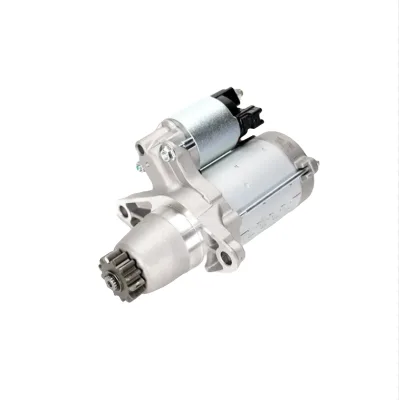
The global automotive aftermarket and original equipment manufacturing sectors rely heavily on the reliability of starting systems, with the Permanent Magnet Car Starter Motor emerging as a critical component for modern vehicle efficiency. Sourcing these units requires a disciplined approach that balances technical compatibility, supply chain resilience, and rigorous quality verification. Unlike traditional series-wound motors, permanent magnet variants offer superior power density and reduced weight, making them ideal for a wide spectrum of applications ranging from family sedans to heavy-duty commercial vehicles. This guide provides a comprehensive framework for procurement professionals to navigate the complexities of acquiring these specific electromechanical components, ensuring that every purchase decision is grounded in verified data and industry best practices.
Technical Specifications and Compatibility Verification
The foundation of a successful procurement strategy lies in the precise matching of technical specifications to the target vehicle's requirements. Permanent magnet starter motors are defined by their unique electromagnetic operating systems and sliding armature driving types, which distinguish them from older inertia-based designs. When evaluating potential suppliers, buyers must scrutinize the specific attributes of the motor, particularly the voltage and power output. The market data indicates a prevalence of 12-volt systems with power ratings varying between 0.8 kW and 2.0 kW. A 12V 0.8kW unit is common for smaller displacement engines, while higher power outputs of 1.7 kW or 2.0 kW are typically required for larger engines or those operating in colder climates.
Beyond voltage and power, the mechanical interface is paramount. The number of teeth on the drive gear is a critical dimension that must align exactly with the engine's flywheel ring gear. Observed specifications show a range of 8, 9, and 10 teeth, with some listings specifying "Eight" teeth and others "9" or "10." Mismatching these values will result in immediate mechanical failure or gear damage. Furthermore, the spigot diameter, which ensures proper alignment between the starter and the engine block, varies significantly. Verified data points include spigot measurements of 64.9 mm, 74.8 mm, 76.0 mm, 76.8 mm, and 88.8 mm. Procurement teams must verify the specific spigot dimension for the target vehicle model before placing an order.
The driving type also plays a crucial role in performance. While some units utilize a sliding armature mechanism, others employ forced intermeshing or inertia intermeshing. The selection depends on the engine's compression ratio and the desired engagement speed. Additionally, the rotation direction is typically clockwise, but this must be confirmed for specific model years. The material composition is another key factor; aluminum is a common material for the housing, offering a balance of strength and weight reduction. Buyers should request detailed technical drawings that explicitly confirm the modulus, rated torque, and displacement to ensure the unit meets the engine's torque requirements without overloading the electrical system.
Model Specificity and Application Scope
The versatility of permanent magnet starter motors is often highlighted by their ability to match multiple car models, yet this compatibility is not universal. Specific part numbers serve as the primary identifier for these units. For instance, models such as 12027177, 12027043, 12027069, 12027022, 12027351, and 12027049 represent distinct configurations tailored to specific vehicle architectures. While some listings claim a "Match all vehicle models" capability, this is often a marketing generalization. In practice, these motors are designed for specific compatible vehicle models, including family cars and various commercial applications.
The following table illustrates the variance in specifications across different model numbers, highlighting the necessity for precise identification:
| Product Model | Power (Kw) | Teeth | Spigot (mm) | Driving Type |
|---|---|---|---|---|
| 12027069 | 0.8 | 8 | 74.8 | Sliding Armature |
| 12027022 | 1.2 | 10 | 64.9 | Forced Intermeshing |
| 12027351 | 1.7 | 9 | 76.8 | Inertia Intermeshing |
| 12027049 | 2.0 | 8 | 88.8 | Sliding Armature |
| 12027177 | 1.2 | 9 | 76.0 | Sliding Armature |
This data underscores that a single part number cannot be assumed to fit all vehicles. Buyers must cross-reference the vehicle's engine code, transmission type, and mounting points with the specific product model. The "Applicable Models" specification often lists "Match Multiple Car Models," but this refers to a cluster of vehicles sharing the same engine platform rather than a universal fit. Understanding these nuances prevents the costly error of ordering a motor that requires extensive modification or fails to engage correctly.
Cost Drivers and Pricing Dynamics
The pricing of permanent magnet starter motors is influenced by a complex interplay of factors, including material costs, manufacturing complexity, and order volume. The observed price range in the market spans from $0.01 to $500, a wide disparity that reflects the difference between generic aftermarket components and high-performance OEM-grade units. The lower end of the spectrum often corresponds to basic models with standard specifications, while the upper end includes units with custom features, higher power ratings, or specialized certifications.
Minimum Order Quantity (MOQ) is a significant cost driver. Data indicates an MOQ range of 1 to 1000 units. For small-scale repairs or prototype development, buyers may find suppliers offering an MOQ of 1 or 20 units, though the unit price will likely be higher. Conversely, bulk procurement for fleet maintenance or assembly lines can leverage economies of scale, with MOQs reaching 1000 units to secure the most competitive pricing. The customization option is another variable; while standard units are readily available, custom-made motors with specific spigot dimensions or gear teeth counts will incur additional tooling and setup costs.
Material composition also impacts cost. Units utilizing aluminum housings and high-grade permanent magnets generally command a premium over those with alternative materials. The weight of the unit, often around 3.7 kg for standard models, is a proxy for the amount of copper and steel used, which directly correlates to the raw material cost. Buyers should be aware that the "Standard" designation for parameters like rated torque and load current does not imply a fixed price but rather a baseline performance level that can be exceeded with custom engineering.
Supplier Evaluation and Compliance Checks
Evaluating suppliers for permanent magnet starter motors requires a focus on origin, standardization, and logistical capabilities. The majority of these components originate from China, a hub for automotive electromechanical manufacturing. When assessing potential partners, buyers must verify the supplier's adherence to production standards. While specific certification names are not universally provided in general listings, the presence of "custom made" standards and specific weight specifications (e.g., 3.7 kg) indicates a level of quality control.
Compliance checks should extend beyond the product itself to the packaging and shipping processes. The observed packing methods include individual cartons, cartons packed into pallets, and custom-made packaging solutions. The choice of packaging affects the risk of damage during transit and the efficiency of warehouse handling. For international shipments, the supplier's ability to provide secure, moisture-resistant packaging is essential to protect the sensitive electromagnetic components from corrosion.
Furthermore, the supplier's ability to handle customization requests is a key differentiator. The availability of customization suggests that the supplier has the engineering capacity to modify spigot dimensions, gear teeth, and power outputs. Buyers should request samples or detailed technical documentation to verify that the supplier can consistently meet the "Standard" specifications for rated speed, load current, and load torque. The "Current Type" is listed as Alternating Current in some contexts, but starter motors are typically DC; this discrepancy highlights the need for rigorous verification of the electrical specifications to ensure compatibility with the vehicle's DC electrical system.
Quality Control and Long-Term Procurement
Quality control in the manufacturing of starter motors is critical for ensuring long-term reliability. The "Standard" designation for parameters like rated speed (Min-1) and load speed (R/Min) implies a baseline performance that must be met consistently. Buyers should implement a quality assurance protocol that includes incoming inspection of critical dimensions such as the spigot diameter and gear teeth count. Visual inspection for material defects, such as casting flaws in the aluminum housing or irregularities in the permanent magnets, is also necessary.
Long-term procurement considerations involve establishing a relationship with a supplier who can provide consistent quality over time. The "Custom Made" attribute suggests that the supplier can adapt to changing vehicle models or specific customer requirements, which is valuable for maintaining a stable supply chain. However, buyers must ensure that any customizations are documented and standardized to prevent future production errors. The lead time for custom orders may be longer than for standard stock items, so planning for these delays is essential for inventory management.
In addition to the physical product, the documentation provided by the supplier should be comprehensive. This includes detailed specifications, installation guides, and warranty terms. The ability to trace the product back to its production batch is a strong indicator of a supplier's commitment to quality. Buyers should also consider the environmental impact of the manufacturing process, particularly regarding the sourcing of raw materials and the disposal of packaging.
Conclusion
Sourcing permanent magnet car starter motors requires a meticulous approach that prioritizes technical precision, supplier reliability, and cost efficiency. By carefully analyzing specifications such as voltage, power, teeth count, and spigot dimensions, buyers can ensure compatibility with their target vehicles. The wide range of available models, from 12027022 to 12027351, offers flexibility but demands rigorous verification to avoid mismatches. Understanding the cost drivers, including MOQ and customization, allows for strategic budgeting, while thorough supplier evaluation ensures a steady supply of high-quality components. Ultimately, a disciplined procurement strategy that leverages verified data and adheres to strict quality control measures will result in a robust and reliable supply chain for these essential automotive components.
FAQs
What is the voltage rating for these permanent magnet car starter motors?
The voltage rating is 12 volts. These units are designed to operate within a 12V system, with power outputs ranging from 0.8 kW to 2.0 kW depending on the specific model and application requirements.
Which driving types are available for permanent magnet car starter motors?
Available driving types include sliding armature, forced intermeshing, and inertia intermeshing. The selection depends on the engine compression ratio and the specific engagement speed required for the vehicle model.
How many teeth do the gears on these starter motors typically have?
The number of teeth varies between 8, 9, and 10 depending on the specific product model. Precise matching of the gear teeth count to the engine flywheel ring gear is essential to prevent mechanical failure.
Can I order custom made permanent magnet car starter motors?
Yes, customization is available for specific requirements. Suppliers can modify attributes such as spigot dimensions, gear teeth, and power output, though custom orders may involve additional tooling costs and longer lead times.
What is the minimum order quantity for these starter motors?
The minimum order quantity ranges from 1 to 1000 units. Small orders of 20 units are available for testing, while bulk procurement for fleet maintenance often requires higher volumes to secure competitive pricing.
Which material is commonly used for the housing of these motors?
Aluminum is a common material used for the housing. This material choice offers a balance of strength and weight reduction, with standard units often weighing approximately 3.7 kg.