Source Custom Plush Doll Keychain for Gifts, Promos, and Retail
Find and compare 30 customized Plush Doll Keychain options from China. Evaluate features like soft comfort, eco-friendly materials, and CE/ASTM certifications for promotional gifts, holiday items, and retail products.
Key considerations
Products List


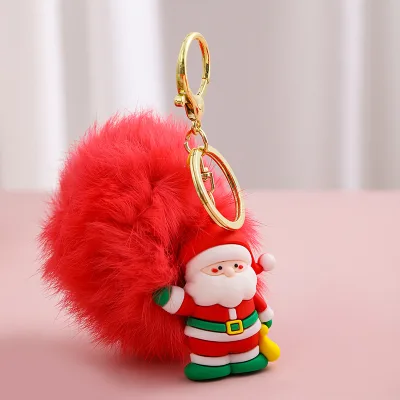


Cartoon Little Dog Plush Keychain Pendant Bag Hanging Decoration Doll Toys Gift
$0.80 - $5.99
MOQ: 500 Pieces



Comprehensive Sourcing Guide
Plush Doll Keychain Sourcing Guide
The global market for plush doll keychains offers a versatile category of promotional and gift items that blend soft tactile appeal with functional utility. Based on observed product listings, these items are frequently marketed as customizable gifts suitable for holidays, business promotions, and general entertainment. The core value proposition for buyers lies in the ability to tailor the product's appearance, including the logo, shape, and packaging, to align with specific brand identities or event themes. This customization capability is a primary driver for procurement, allowing companies to create unique merchandise that resonates with target audiences ranging from children to corporate clients.
Procurement decisions for this category must account for the diverse manufacturing processes and material compositions observed in the supply base. While many listings highlight "Hand-Made" attributes and "Soft Comfortable" features, other variants utilize offset printing or pad printing on cloth and plastic substrates. Buyers should recognize that the term "plush doll" in this context often encompasses a spectrum of products, from traditional stuffed figures to stylized keychains and promotional novelties. Understanding these distinctions is critical when defining technical requirements, as the intended usage—whether as a children's toy, a corporate giveaway, or a fashion accessory—directly influences the necessary material safety and durability standards.
Product Scope and Observed Listing Signals
Buyers must first clarify the specific product definition, as the observed market signals indicate a wide variance in form factors and intended applications. Listings describe items ranging from "Customized Plush Dolls" to "Custom Plush Keychains," with styles spanning from "Business" and "Cartoon Toy" to "Multiple Styles." The "Suitable for: Universal" attribute suggests broad applicability, yet the "Age: > 8 Years" specification on certain plastic variants indicates that not all items in this category are appropriate for young children. Procurement teams should verify the exact physical form and target demographic for each SKU to ensure the product aligns with the intended distribution channel and safety regulations.
The customization landscape for these items is extensive, with suppliers offering options for logos, labels, and packaging. Facts confirm that "Customers Logo" printing is available, with techniques including "Full Color" imprinting and "Pad Print." Packaging options vary significantly, ranging from simple "OPP" or "PE Bag" wraps to "Boxed" presentations and bulk cartons containing 30 to 40 pieces or up to 1000 pieces. When sourcing, buyers should explicitly define their requirements for the "Label or Hang Tag" and the final "Packing" configuration, as these elements significantly impact the perceived value and logistics costs of the final shipment.
Technical Specifications to Verify
Technical verification begins with the physical dimensions and material composition, which vary widely across the observed product range. Some listings specify a standard size of "5.5 x 5.5 x 9.5 CM" or "12*6cm," while others list the standard as "General" or "Depending on the number of products." The material composition is equally diverse, with "Cloth" and "Plastic" both appearing in the supply base. Buyers must confirm the specific material for their order, as this dictates the tactile feel, durability, and manufacturing process, such as "Offset Printing" for cloth items versus "Pad Print" for plastic components.
Weight and structural integrity are critical technical parameters that require explicit definition during the ordering process. The "Weight" attribute is listed as "Custom," indicating that there is no industry-standard weight for this category and that specifications must be negotiated per order. Additionally, the "Modelling Source" is noted as "Custom," meaning the design originates from the buyer's input or a specific mold request. To ensure consistency, buyers should request detailed technical drawings or physical samples that confirm the final dimensions, weight, and the specific "Processing" methods used to achieve the desired "Soft Comfortable" or "Eco-Friendly" characteristics.
Compliance and Safety Documentation
Safety compliance is a non-negotiable aspect of sourcing plush toys and keychains, particularly when the target audience includes children. The observed product data lists several critical certifications, including "CE," "En71," "ASTM," "Cpsia," and "Reach." These standards are essential for market access in Europe and North America, where strict regulations govern toy safety. Buyers must verify that the specific product model they intend to purchase carries the relevant test reports for the target market, as the "Test" attribute explicitly references "ASTM/En71" compliance for certain items.
Beyond product-specific testing, the manufacturing facility's operational certifications provide assurance of quality management and ethical labor practices. The supply base includes suppliers with "BSCI&ISO9001" certificates, which indicate adherence to international quality management systems and social compliance standards. When evaluating potential suppliers, procurement teams should request current copies of these certificates and cross-reference them with the specific product line. It is vital to confirm that the "Certificate" status applies to the actual production batch, ensuring that the "Eco-Friendly" claims and material safety assertions are backed by valid, up-to-date documentation.
Cost Drivers and Commercial Terms
Pricing in the Plush Doll Keychain market is highly variable, with observed listings ranging from $0.10 to $5.99 USD. This wide range reflects differences in material costs, customization complexity, order volume, and packaging requirements. The "MOQ" (Minimum Order Quantity) observed spans from 1 to 10,000 units, offering flexibility for small promotional runs or large-scale corporate campaigns. Buyers should anticipate that unit costs will decrease as order quantities increase, but the final price will be heavily influenced by the specific "Customization" level, such as the complexity of the logo print or the choice of specialized packaging.
Lead times and sample availability are significant commercial factors that impact project planning. The "Sample Time" is typically 3-7 working days, allowing for rapid prototyping and design validation before full production. However, the "Production Time" is estimated at about 20 days, though this can vary "According to Order Quantity." Buyers must factor these timelines into their supply chain schedule, especially when dealing with "OEM/ODM" projects that require design approval and mold creation. Clear communication regarding the "Sample Time" and "Production Time" is essential to avoid delays and ensure that the goods arrive in time for the intended promotional event or holiday season.
Supplier Qualification and Quality Control
Supplier qualification should focus on the ability to deliver consistent quality across customized orders, given the "Hand-Made" nature of many products. The "Technical" attribute of "Hand-Made" implies a reliance on skilled labor, which can introduce variability in the final product. To mitigate this risk, buyers should implement a rigorous quality control protocol that includes pre-production sample approval and in-process inspections. The availability of "OEM/ODM" services suggests that suppliers are equipped to handle custom designs, but the buyer must verify the supplier's capacity to maintain consistency in stitching, stuffing density, and print quality across large batches.
Quality assurance also extends to the packaging and labeling processes, which are often customized to the buyer's specifications. The "Packing" options range from individual bags to bulk cartons, and the "Label or Hang Tag" can be customized. Buyers should ensure that the supplier has a robust system for checking the accuracy of the "Logo Print" and the correctness of the packaging labels before shipment. Since the "Style" can vary from "Business" to "Cartoon Toy," the quality control checklist must be tailored to the specific aesthetic and functional requirements of the product, ensuring that the final output meets the agreed-upon standards for appearance and durability.
Long-Term Procurement Checks
Establishing a long-term partnership requires ongoing verification of the supplier's ability to maintain compliance and quality over time. As regulations evolve, particularly regarding toy safety and environmental standards, buyers must ensure that their suppliers remain up-to-date with changes in "CE," "En71," and "ASTM" requirements. Regular audits of the supplier's "BSCI&ISO9001" certifications and a review of their test reports for new product batches are essential steps to maintain a compliant supply chain. This proactive approach helps prevent disruptions caused by regulatory non-compliance and ensures that the products remain safe for the intended market.
Continuous improvement in the product line should be a shared goal between the buyer and the supplier. Given the "Custom" nature of the "Modelling Source" and "Weight," there is often room for optimization in design and material selection to reduce costs or enhance sustainability. Buyers should engage in periodic reviews of the product specifications, exploring opportunities to adopt "Eco-Friendly" materials or more efficient "Processing" methods. By maintaining open communication and setting clear performance metrics, procurement teams can foster a collaborative relationship that drives innovation and ensures the long-term success of the Plush Doll Keychain program.
FAQs
Can I customize the logo on the Plush Doll Keychain?
Yes, customers can provide their own logo for printing on the product. The customization is available for both the plush doll and keychain styles, allowing for personalized branding on the final item.
What certifications do these plush doll keychains hold?
The products hold multiple safety certifications including CE, EN71, ASTM, CPSIA, and Reach. Additional factory certifications like BSCI and ISO9001 are also available to ensure compliance with international standards.
How long does it take to produce a custom order?
Production time is approximately 20 days, though this may vary according to the specific order quantity. Sample preparation requires 3 to 7 working days before full-scale manufacturing begins.
What is the minimum order quantity for these items?
The minimum order quantity ranges from 1 to 10,000 units depending on the specific product model and customization requirements. Buyers should check the specific listing for the exact MOQ applicable to their order.
Which materials are used to make the plush keychains?
Materials include cloth for the plush doll versions and plastic for other toy variations. The products are designed to be soft, comfortable, and eco-friendly, suitable for various promotional and gift uses.
Can the packaging be customized for bulk orders?
Yes, packaging options include OPP bags, boxes, PVC bags, or custom solutions tailored to the buyer. Standard packing is often 30 to 40 pieces per carton, but this can be adjusted for specific needs.
What is the origin of these plush doll keychains?
All listed products originate from China. The manufacturing process involves hand-made techniques and offset printing to ensure high-quality finishes on the custom designs and logos provided by clients.