Source Polyester Warp Knitted Geogrid for Road Base, Dam, Retaining Wall
Find 30 verified suppliers of Polyester Warp Knitted Geogrid with customizable tensile strength and mesh sizes. Compare specifications for road reinforcement, dam construction, and steep slope stabilization directly from manufacturers in Anhui, China.
Key considerations
Products List
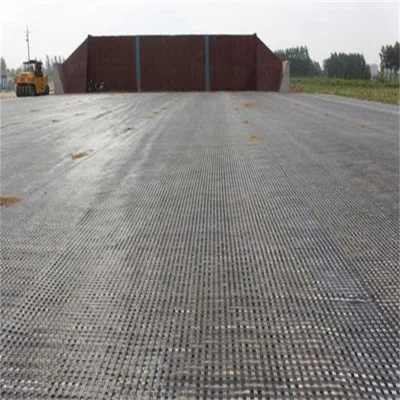


Geogrid Reinforcing Driveway Polyester Geogrid Warp Knitted Polyester Geo Grid
$0.41 - $1.68
MOQ: 1000 Square Meters


Geogrid Reinforcing Driveway Polyester Geogrid Warp Knitted Polyester Geogrid Geotextile
$0.56 - $1.56
MOQ: 1000 Square Meters

PVC Coated Warp-Knitted Biaxial Polyester Geogrid for Soil Stabilization
$0.46 - $1.42
MOQ: 1000 Square Meters

China Supplier Polyester Warp Knitted Geogrid for Reinforcement Roadbed
$0.51 - $1.18
MOQ: 1000 Square Meters

High Tensile Strength Polyester Warp Knitted Geogrid with PVC Coating for Soil Reinforcement
$0.55 - $1.93
MOQ: 1000 Square Meters


Warp Knitted Polyester Geogrid for Soil Reinforcement Retaining Wall
$0.30 - $1.50
MOQ: 1000 Square Meters


Warp Knitting Polyester Geogrid Pet Geogrid for Soft Soil Reinforcement
$0.25 - $1.50
MOQ: 1000 Square Meters

Geo Grid Ground Grid China Supplier Polyester Warp Knitted Geogrid for Reinforcement Roadbed
$0.30 - $1.50
MOQ: 1000 Square Meters


Warp Knitted Uniaxial Polyester Geogrid 80-30kN 100-30kN 200-50kN 600-50kN with Manufacturer Price
$0.30 - $1.50
MOQ: 1000 Square Meters


Reinforcement Warp Knitting Polyester Geogrid Composite Geotextile
$0.83 - $0.90
MOQ: 20000 Square Meters


Durable High Strength Warp Knitted Polyester Geogrid for Pet Applications
$0.46 - $3.65
MOQ: 20000 Square Meters

The Best Quality Warp Knitted Polyester Pet Geogrid for Retaining Walls Road Construction
$0.46 - $3.65
MOQ: 20000 Square Meters

High-Strength Corrosion-Resistant Polyester Warp-Knitted Geogrid
$0.26 - $5.68
MOQ: 1000 Square Meters

High-Strength Polyester Warp-Knitted Geogrid for High-Strength Polyester Warp-Knitted Geogrid
$0.26 - $5.68
MOQ: 1000 Square Meters

Wholesale Basic Retaining Wall PVC Coated Warp Knitted Polyester Geogrid
$0.18 - $0.30
MOQ: 1000 Square Meters
Comprehensive Sourcing Guide
Strategic Sourcing Guide for Polyester Warp-Knitted Geogrids
Understanding Product Fundamentals and Technical Architecture
Polyester warp-knitted geogrids represent a specialized class of geosynthetic materials engineered primarily for soil reinforcement in civil engineering projects. The core manufacturing process involves interlacing high-tenacity polyester yarns in a warp-knitted configuration, creating a stable, open grid structure. This architecture is distinct from woven geogrids, offering superior elongation characteristics and tensile strength distribution. The primary material composition is polyester, which provides resistance to chemical degradation and long-term durability in various soil environments.
The physical specifications of these geogrids vary significantly based on project requirements. A critical dimension is the mesh size, which typically ranges from 12.7mm x 12.7mm to 76.2mm x 76.2mm. Common standard configurations include 25.4mm x 25.4mm and 50.8mm x 50.8mm, though custom mesh sizes are often available to suit specific aggregate interlock needs. The width of the product is another vital parameter, with standard roll widths observed between 2 meters and 6 meters, frequently centered around 3.95 meters or 4 meters. Lengths per roll generally span from 50 meters to 100 meters, with some variations up to 75 meters. The color of the material is predominantly black, which aids in UV protection during storage and installation. Buyers must verify the specific mesh dimensions and roll widths against their engineering drawings, as the ability to customize these dimensions is a key feature of the product category.
Compliance, Certification, and Quality Verification
In the global construction market, verifying the compliance and certification status of geosynthetic materials is non-negotiable. Reliable suppliers in this sector typically provide documentation indicating adherence to international quality management standards. Common certifications observed in the industry include CE marking, ISO 9001, and BV (Bureau Veritas) certification. These credentials serve as evidence that the manufacturing facility operates under a controlled quality management system and that the product meets specific safety and performance benchmarks.
When evaluating a potential supplier, procurement teams should request current certificates rather than relying on historical claims. The presence of these certifications suggests a commitment to consistent production quality. Furthermore, the product standard itself is a crucial document to review. While specific standard numbers may vary by region, the documentation should explicitly state the testing protocols used for tensile strength and elongation. Buyers should ensure that the supplier can provide third-party test reports that validate the claimed performance metrics. It is essential to understand that while certifications like CE/ISO9001/BV are common, they do not guarantee that every single roll of product will meet the exact same performance threshold without proper batch testing. Therefore, the verification process must include a review of the specific test data associated with the batch intended for the project.
Cost Drivers and Economic Factors in Procurement
The pricing of polyester warp-knitted geogrids is influenced by a complex interplay of factors, including raw material costs, manufacturing complexity, and order volume. The market price range for these products can vary widely, typically observed between $0.10 and $8.50 per unit, depending on the specific configuration and volume. The primary cost driver is the tensile strength requirement. Products with higher tensile strength ratings, ranging from 20 kN/m up to 1500 kN/m, command higher prices due to the increased amount of high-tenacity polyester fiber required and the more rigorous manufacturing controls needed.
Order quantity, or Minimum Order Quantity (MOQ), is another significant economic factor. Suppliers often set MOQs ranging from 1 unit to 20,000 units. Larger orders typically benefit from economies of scale, reducing the unit cost significantly. However, buyers must balance the cost savings of bulk purchasing against their storage capacity and project timeline. Customization also plays a role in pricing; requests for non-standard mesh sizes, widths, or lengths may incur additional setup costs. Additionally, the destination location affects the final landed cost. Since the primary place of origin for many of these products is Anhui, China, buyers must factor in international shipping logistics, tariffs, and insurance. The "Selling Units" are often listed as single items, but the actual transaction is usually based on the square meter or the roll, making it crucial to clarify the pricing basis before negotiation.
Typical Applications and Engineering Performance
Polyester warp-knitted geogrids are engineered for a diverse range of civil engineering applications where soil stabilization is critical. The primary function of these materials is reinforcement, designed to distribute loads and reduce differential settlement in weak soil layers. Common applications include road construction, road base reinforcement, and the construction of retaining walls. The material's ability to interlock with aggregate makes it particularly effective in road base applications, where it prevents the lateral spreading of the road foundation.
Beyond road construction, these geogrids are utilized in dam construction, steep slope stabilization, and retaining wall projects. The specific application dictates the required tensile strength and elongation properties. For instance, road reinforcement may require a tensile strength of 25 kN/m to 300 kN/m, while more demanding retaining wall applications might necessitate strengths up to 1500 kN/m. The elongation ratio is another critical performance metric; for many applications, the elongation is kept to not more than 10% to ensure immediate load transfer, while other designs may allow for higher elongation up to 13% to accommodate soil movement. The product is also noted for its anti-slip properties in certain configurations, enhancing safety on steep slopes. Buyers should match the specific application requirements with the supplier's available product models, such as LVC305, LVC306, or PET20-PET600 series, to ensure the selected geogrid meets the engineering design specifications.
Supplier Evaluation and Project Support Capabilities
Selecting the right supplier involves more than just comparing price lists; it requires assessing the supplier's ability to provide comprehensive project support. A reputable supplier should offer a full range of after-sales services, including online technical support, onsite installation guidance, and onsite training for the construction team. This level of support is vital for ensuring that the geogrid is installed correctly, which is often the difference between a successful project and a structural failure.
Furthermore, suppliers with strong project solution capabilities can offer significant value. These capabilities often include graphic design services, 3D model design, and the provision of total solutions for complex projects. This indicates that the supplier has a team of engineers who can analyze the site conditions and recommend the optimal geogrid configuration. When evaluating suppliers, buyers should inquire about their experience with similar projects and their ability to provide customized solutions. The availability of customization is a key indicator of a flexible and capable supplier. Additionally, the warranty period is a critical factor; products with warranties exceeding five years suggest a high level of confidence in the material's long-term durability. Buyers should verify the terms of the warranty, including what specific conditions are covered and the process for claiming under the warranty.
Quality Control and Long-Term Procurement Strategy
Implementing a robust quality control strategy is essential for managing the risks associated with geosynthetic procurement. Buyers should establish a clear protocol for inspecting incoming materials, focusing on key attributes such as mesh size consistency, tensile strength, and elongation properties. Visual inspection should confirm the color, which is typically black, and check for any physical defects in the grid structure. It is also important to verify that the product does not contain viscose, as the presence of viscose can alter the material's performance characteristics.
For long-term procurement, buyers should consider the lifecycle costs of the geogrid. While the initial purchase price is important, the longevity and performance of the material over the project's lifespan are equally critical. A geogrid with a warranty of more than five years offers better long-term value than a cheaper alternative with no warranty. Buyers should also consider the supplier's ability to provide consistent quality over time. This includes their capacity to meet large order volumes and their lead time reliability. The place of origin, often Anhui, China, should be verified to ensure the product meets the specific export standards required by the buyer's region. Finally, maintaining a relationship with a supplier who offers comprehensive technical support and customization options can streamline future procurement processes and ensure that the project remains on schedule and within budget.
FAQs
What are the standard mesh sizes available for polyester warp knitted geogrids?
Standard mesh sizes include 12.7mm x 12.7mm, 25.4mm x 25.4mm, 40mm x 40mm, 50.8mm x 50.8mm, and 76.2mm x 76.2mm. Customizable options are available to meet specific project aggregate interlock requirements and engineering drawings.
Can buyers find polyester warp knitted geogrids with CE and ISO9001 certifications?
Yes, reliable suppliers provide products certified under CE, ISO9001, and BV standards. These credentials verify adherence to international quality management systems and safety benchmarks, though specific batch test reports should always be requested.
How does the tensile strength range vary for these geogrid products?
Tensile strength ranges from 20 kN/m up to 1500 kN/m depending on the specific model and application. Common configurations for road reinforcement typically fall between 25 kN/m and 300 kN/m, while retaining walls may require higher capacities.
What is the typical roll width and length for these geogrids?
Roll widths generally span from 2 meters to 6 meters, with 3.95 meters and 4 meters being common standards. Lengths per roll typically range from 50 meters to 100 meters, though custom lengths are often available upon request.
Where are polyester warp knitted geogrids primarily manufactured?
The primary place of origin for these products is Anhui, China. Buyers should verify the specific factory location to ensure compliance with export standards and to calculate accurate shipping logistics and tariffs for their destination.
What after-sales services are typically offered by geogrid suppliers?
Suppliers often provide online technical support, onsite installation guidance, and onsite training for construction teams. Comprehensive project solution capabilities may also include graphic design, 3D model design, and total solutions for complex civil engineering projects.