Source Polyethylene String Wound Filter Element for Medicine, Food, Industry
Compare 27 Polyethylene String Wound Filter Element options from verified suppliers. Buyers can evaluate filtration grades, dimensions, and customization features for medicine, food and beverage, and industrial applications.
Key considerations
Products List


No Contamination Superior Quality Filter Element String Wound Filter Cartridges
$2.80 - $10.40
MOQ: 50 Pieces


Affordable Price Full Cartridge Utilization String Wound Filter Elements
$2.80 - $10.40
MOQ: 50 Pieces


Long Service Life String Wound Filter Elements with Full Cartridge Utilization
$2.80 - $10.40
MOQ: 50 Pieces


Comprehensive Sourcing Guide
Strategic Sourcing Guide for Polyethylene String Wound Filter Elements
Understanding Technical Specifications and Material Composition
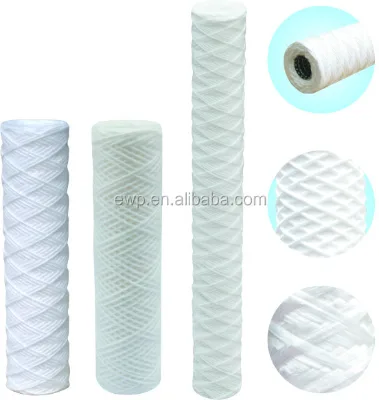
When sourcing polyethylene string wound filter elements, buyers must first establish a clear understanding of the physical and chemical properties that define the product's performance. The core construction typically involves a perforated cylinder made of stainless steel, which serves as the structural skeleton for the wound media. This core material is critical for maintaining the element's integrity under pressure, preventing collapse during operation. The filtration media itself is often composed of polyethylene, bleached cotton, or glass fiber, with polyethylene being a primary choice for its chemical resistance and hydrophobic properties in specific applications.
The filtration mechanism relies on the depth filtration principle, where contaminants are trapped within the layers of the wound string rather than just on the surface. This design allows for a higher dirt-holding capacity compared to surface filters. The precision of the filter is a variable attribute, with observed specifications ranging from 0.2 micrometers to 200 micrometers. Commonly listed filter fineness options include 1μm, 5μm, 10μm, 20μm, and 25μm, allowing buyers to select the exact grade required for their specific fluid clarity needs. The filtration grade is generally categorized as a medium filter or a PRE filter, indicating its role in pre-filtration stages or general particulate removal.
Dimensions are another critical specification that varies by supplier and application. Standard lengths observed in the market include 10-inch, 20-inch, and 30-inch configurations. The outside diameter can range from 63mm to 115mm, while the inside diameter typically falls between 28mm and 30mm. Some specialized models may feature compact dimensions, such as 30mm outer dimensions, or custom lengths like one meter long wire winding elements. The working temperature is a limiting factor, with many elements rated for a maximum operating temperature of 90℃. Buyers must verify that the selected element can withstand the thermal conditions of their specific process without degrading the polyethylene string or the core material.
Compliance, Certification, and Standard Verification
In the industrial procurement of filtration components, verifying compliance with international standards is essential for ensuring product reliability and safety. While specific certification statuses vary by manufacturer, the market frequently references ISO 9001 as a baseline for quality management systems. Some suppliers may also hold export licenses, which are necessary for international trade compliance. Buyers should explicitly request proof of these certifications rather than assuming they apply to all listed products.
The standardization of filter elements often adheres to industry norms, though specific standard codes like "5"-50"" may refer to size ranges or specific manufacturing protocols rather than a universal regulatory code. It is crucial to distinguish between the product's internal manufacturing standards and external regulatory requirements. For instance, the material standard for the string itself might be described as "textile fiber thread," but this does not automatically imply compliance with food-grade or pharmaceutical-grade regulations unless explicitly stated.
Buyers must also be vigilant regarding the origin of the product. Many suppliers are located in regions such as China, with specific manufacturing hubs in Hangzhou, Zhejiang, and Hebei. While the origin provides context for logistics and potential tariffs, it does not inherently guarantee quality. The presence of an ODM (Original Design Manufacturer) capability suggests that suppliers can customize elements to meet unique requirements, but this also necessitates a rigorous review of the supplier's quality control processes. The standard for the product should be clearly defined in the purchase order, whether it is a generic standard or a custom specification based on purchasing requirements.
Cost Drivers and Pricing Dynamics
The pricing of polyethylene string wound filter elements is influenced by a complex interplay of factors, including material costs, manufacturing complexity, and order volume. The observed price range in the market spans from $0.28 to $10.40 USD, reflecting the vast diversity in product specifications. A filter element with a finer micron rating, such as 1μm, or one constructed with specialized materials like glass fiber, will typically command a higher price than a standard 25μm cotton-wound element.
The Minimum Order Quantity (MOQ) is a significant driver of unit cost. While some suppliers may offer low MOQs as low as 1 piece for sampling or small-scale testing, the standard industry MOQ often sits around 100 pieces. Larger orders generally benefit from economies of scale, reducing the per-unit cost. However, buyers should be aware that the MOQ can vary significantly depending on whether the element is a standard off-the-shelf item or a customized product. Customization options, such as specific lengths, diameters, or packing requirements, can increase the base price and may require higher minimums to justify the setup costs.
Packing methods also contribute to the overall cost structure. Options range from standard carton packing to shrink wrap or export-standard packing. Customized packing solutions, while offering better protection for specific logistics chains, may incur additional fees. Furthermore, the motive force required for the filtration process, typically pressure-driven, does not directly impact the element's price but influences the selection of the element's structural strength, which in turn affects material costs. Buyers should request detailed quotes that break down material, labor, and packaging costs to understand the true cost drivers for their specific application.
Typical Applications and Industry Suitability
Polyethylene string wound filter elements are versatile components used across a wide array of industries. The primary applications include the medicine, food and beverage, industry, metallurgy, and textile sectors. In the medicine and food and beverage industries, the filter's ability to remove particulates while maintaining chemical inertness is paramount. The use of bleached cotton or polyethylene ensures that the filter media does not leach harmful substances into the product stream, a critical requirement for consumable goods.
In the industrial and metallurgy sectors, these filters are often employed in pre-filtration stages to protect downstream equipment from abrasive particles. The high dirt-holding capacity of the wound design makes them suitable for handling fluids with varying levels of contamination. The chemical industry also utilizes these elements for their resistance to a broad spectrum of chemicals, provided the specific chemical compatibility is verified. Environmental protection applications further leverage the efficiency of these filters in treating wastewater or managing industrial effluents.
The specific application dictates the choice of filter media and precision. For instance, a textile application might require a coarser filter to remove lint and debris, whereas a pharmaceutical application might demand a 1μm or 5μm rating to ensure sterility. The "Efficient Filtration" performance attribute is a general claim that buyers should validate against their specific process requirements. The filter's ability to handle the working temperature of 90℃ makes it suitable for hot water applications or processes involving heated fluids, but it is not suitable for high-temperature steam sterilization without specific confirmation.
Supplier Evaluation and Sourcing Strategy
Evaluating suppliers for polyethylene string wound filter elements requires a multi-faceted approach that goes beyond price comparison. Buyers should prioritize suppliers who demonstrate transparency in their manufacturing processes and offer clear documentation of their quality control measures. The availability of customization services, such as ODM capabilities, is a strong indicator of a supplier's flexibility and technical competence. However, customization should be approached with caution, ensuring that the supplier has the necessary infrastructure to maintain consistency across batches.
Geographic location plays a role in the sourcing strategy. Suppliers based in regions like Zhejiang and Hebei in China are common sources for these products. While these locations offer competitive pricing and established supply chains, buyers must verify the specific factory's capabilities and reputation. The presence of an export license and adherence to ISO 9001 standards are positive indicators, but they should be treated as baseline requirements rather than differentiators.
When evaluating potential partners, buyers should assess the supplier's ability to provide technical support. This includes their willingness to discuss filter media options, precision requirements, and compatibility with specific fluids. A supplier that can offer detailed technical data sheets and assist in selecting the correct element for a specific application adds significant value to the procurement process. Additionally, the supplier's response time and communication clarity are critical, especially when dealing with custom orders or urgent replacements.
Quality Control and Long-Term Procurement Considerations
Implementing a robust quality control (QC) protocol is essential for mitigating risks associated with filter element procurement. Buyers should establish clear acceptance criteria based on the observed specifications, such as filter fineness, dimensions, and material composition. Regular sampling and testing of incoming shipments can help ensure that the elements meet the required performance standards. Key QC checks should include verifying the core material (stainless steel perforated cylinder), the string material (polyethylene, cotton, or glass fiber), and the overall dimensions (length, outside diameter, inside diameter).
Long-term procurement considerations involve building a sustainable relationship with suppliers who can consistently deliver high-quality products. This includes negotiating favorable terms for repeat orders, such as volume discounts or flexible MOQs. Buyers should also consider the lifecycle of the filter element, including its service life and replacement frequency. Elements with higher dirt-holding capacity may reduce the frequency of replacements, leading to lower long-term operating costs despite a potentially higher initial purchase price.
Packaging and logistics are also critical aspects of long-term procurement. The choice between carton, shrink wrap, or export-standard packing should be aligned with the buyer's storage and shipping requirements. Customized packing solutions can prevent damage during transit, ensuring that the elements arrive in optimal condition. Furthermore, buyers should maintain open communication with suppliers regarding any changes in product specifications or standards to ensure continuity in their operations. By focusing on these strategic elements, buyers can secure a reliable supply chain for polyethylene string wound filter elements that supports their operational efficiency and product quality goals.
Comparative Analysis of Product Attributes
To facilitate informed decision-making, the following table summarizes key attributes observed in the market for polyethylene string wound filter elements. This comparison highlights the variability in specifications and helps buyers identify the most suitable options for their specific needs.
| Attribute | Common Variations | Application Context |
|---|---|---|
| Filter Media | Polyethylene, Bleached Cotton, Glass Fiber | Chemical resistance, Food safety, General industrial |
| Core Material | Stainless Steel Perforated Cylinder | Structural integrity, Pressure resistance |
| Filter Fineness | 1μm, 5μm, 10μm, 20μm, 25μm | Precision filtration, Pre-filtration stages |
| Length | 10inch, 20inch, 30inch | Standard housing compatibility |
| Working Temperature | Up to 90℃ | Hot water, Heated process fluids |
| MOQ | 1 to 1000 pieces | Sampling vs. Bulk procurement |
| Origin | China (Zhejiang, Hebei) | Supply chain logistics, Tariff considerations |
| Certification | ISO9001, Export License | Quality assurance, Regulatory compliance |
This table serves as a reference point for buyers to cross-reference their requirements against available market options. It underscores the importance of verifying specific attributes rather than relying on generalizations. By carefully evaluating these factors, buyers can make strategic decisions that align with their technical, financial, and operational objectives.
FAQs
What materials are used for the string wound filter element?
The string material is typically PP yarn, bleached cotton, or glass fiber. The core is made of a stainless steel perforated cylinder to ensure structural integrity under pressure during operation.
Which filter fineness options are available for this product?
Available filter fineness options include 1μm, 5μm, 10μm, 20μm, and 25μm. The overall precision range spans from 0.2um to 200um depending on the specific model and application requirements.
Can the filter element be customized for specific needs?
Yes, customization is available for length, diameter, and packing. Buyers can request specific dimensions like 10inch, 20inch, or 30inch, along with custom packing solutions such as carton or shrink wrap.
What is the working temperature limit for these filters?
The maximum working temperature is 90℃. This limit applies to the polyethylene string and the stainless steel core, ensuring the element maintains performance without degrading under heat.
How is the minimum order quantity determined for these elements?
The standard MOQ is 100 pieces, though some listings show ranges from 1 to 1000. Customized orders may have different minimums compared to standard off-the-shelf items like the WW-003 model.
Which industries commonly use polyethylene string wound filters?
These filters are used in medicine, food and beverage, industry, metallurgy, and textile sectors. They provide efficient filtration for environmental protection and chemical industry applications requiring pre-filtration.
What certifications do the manufacturers typically hold?
Manufacturers often hold ISO9001 certification and export licenses. These standards verify quality management systems, though buyers should request proof as not all listed products automatically satisfy every certification.