Source Portable Marine Diesel Generator for ships, boats, and docks
Compare 30 Portable Marine Diesel Generator units from Shandong, China, featuring brass, steel, and aluminum alloys. These units offer AC three-phase output, various cooling methods, and customization options for diverse marine applications.
Key considerations
Products List
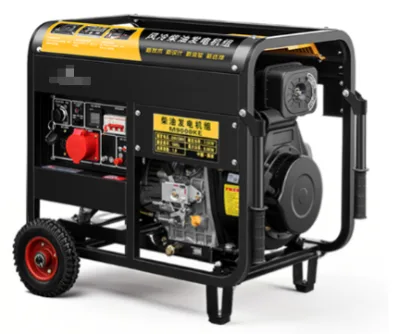


120kw Marine Diesel Engine Power Generator Set for Reliable Performance
$1600.00 - $1650.00
MOQ: 1 Pieces


High-Performance Soundproof Portable Diesel Generator for Mobile Applications
$899.00 - $6999.00
MOQ: 1 PC


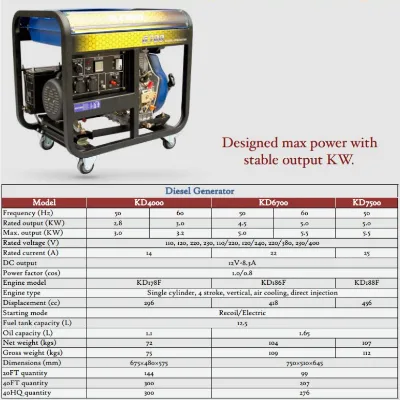
Comprehensive Sourcing Guide
Strategic Sourcing Guide for Portable Marine Diesel Generators
Understanding the Product Landscape and Technical Variability
The market for portable marine diesel generators presents a complex array of configurations, driven by the diverse operational environments of maritime vessels. When sourcing these units, buyers must first recognize that "portable" in a marine context often refers to units designed for easy transport, installation, or emergency deployment rather than fixed, permanent integration. The supplied product data indicates a significant variance in capacity, ranging from compact 20kVA units to robust 600kVA systems. This wide spectrum necessitates a precise definition of power requirements before engaging with suppliers.
Technical specifications vary significantly across the observed product range. While some units are rated at 20kVA or 40kVA, others extend to 400kVA and 600kVA. The output type is consistently identified as AC Three Phase, which is standard for heavy-duty marine applications requiring balanced power distribution. Frequency ratings are typically listed as 50/60Hz, allowing for compatibility with various regional grid standards or onboard electrical systems. The rated voltage for these units is generally observed at 220V/380V, a standard configuration for industrial and marine machinery.
The starting mechanism is another critical technical differentiator. The data highlights "Electric Start" as a primary mode, often paired with a "Self-Starting Diesel Generator" classification. This implies an automated capability to engage upon power failure, a vital feature for standby and emergency crew applications. Fuel type is uniformly specified as 0# Diesel, a standard grade for diesel engines, though buyers should verify the specific viscosity requirements for their intended climate zones. The noise level for these units is observed at approximately 70 Db, with some units categorized under "Silent Type" or "Low Noise" classifications, which is essential for passenger comfort and regulatory compliance in residential or coastal zones.
Critical Technical Specifications and Performance Metrics
When evaluating the technical viability of a Portable Marine Diesel Generator, buyers must scrutinize the specific attributes that define performance and durability. The supplied data reveals that cooling methods vary between "Air Cooled" and "Water Cooling." For marine applications, water cooling is often preferred for high-load, continuous operation due to its superior heat dissipation capabilities, whereas air cooling may be suitable for smaller, intermittent duty cycles. The stroke type is noted as "Four Stroke," which is the industry standard for efficiency and emissions control in modern diesel engines.
Protection class is a non-negotiable specification for marine environments. The observed data lists a Protection Class of IP23. This rating indicates protection against solid objects larger than 12mm and water spray from any direction up to 60 degrees. However, for true marine durability, especially in saltwater environments, buyers should verify if the unit meets higher IP ratings or possesses additional corrosion-resistant treatments. The physical dimensions of the units vary considerably, with standard dimensions observed ranging from 21009301150 mm to larger configurations like 480018002450 mm. These dimensions directly impact the portability and installation footprint on a vessel.
The fuel tank configuration is another technical variable, with options for "Top Tank or Bottom Tank." This choice influences the center of gravity and the ease of refueling in tight spaces. The excitation mode is specified as "AC Rotating Exciter," which ensures stable voltage regulation under varying load conditions. Furthermore, the unit type is described as "Portable" with an installation method that supports mobility. Buyers must ensure that the "Land Use" classification, which includes "Land Use" and "Low Noise" types, aligns with the specific maritime regulations of the vessel's flag state. The warranty period is consistently listed as 1 Year, which serves as a baseline for initial quality assurance but may require extension for long-term marine operations.
Compliance, Certification, and Regulatory Verification
Navigating the regulatory landscape for marine generators requires a rigorous verification process, as the supplied data does not explicitly confirm specific marine certifications. While background information mentions ISO 9001:2015 and ISO 45001:2018, these should be treated as general quality and safety management system indicators rather than specific product certifications. Buyers must independently verify that the generator meets the International Maritime Organization (IMO) standards, particularly regarding emissions (Tier II or Tier III) and fire safety.
The "Protection Class" of IP23 is a starting point, but marine environments demand higher resistance to salt spray and humidity. Buyers should request evidence of compliance with IEC 60529 for ingress protection and specific marine standards such as those from the American Bureau of Shipping (ABS) or Lloyd's Register. The "Silent Type" designation suggests a focus on noise reduction, which is critical for compliance with port authority regulations and crew welfare. However, the observed noise level of 70 Db must be validated against the specific decibel limits of the intended operating zone.
Certification checks should also extend to the electrical safety standards. Since the output is AC Three Phase, the unit must comply with relevant IEC standards for electrical safety. The "Self-Starting" capability implies an integration with the vessel's control systems, which may require compliance with specific automation standards. Buyers should not assume that the "Customized" attribute implies full regulatory compliance; rather, it indicates that the manufacturer can adapt the unit to meet specific client requirements, which must then be validated against local maritime laws. The "Project Solution Capability" including "graphic design" and "3D model design" suggests that suppliers can provide documentation for certification, but the final approval rests with the classification society.
Cost Drivers and Total Cost of Ownership Analysis
The pricing for portable marine diesel generators is influenced by a complex matrix of factors, with the observed range spanning from $146 to $50,000. This vast disparity is primarily driven by capacity, material composition, and the level of customization required. The lower end of the price spectrum likely corresponds to smaller, air-cooled units with basic features, while the higher end reflects large, water-cooled, silent-type units with advanced control systems and higher power outputs like the 600kVA models.
Material selection is a significant cost driver. The product data lists a wide array of materials including Brass, Copper, Stainless Steel, Aluminum Alloy, and Galvanized Steel. Units constructed with higher-grade stainless steel or copper windings will command a premium due to their superior corrosion resistance and longevity in marine environments. The "Custom Products" specification for thickness and the availability of "Customized" color and dimensions also add to the cost, as these require specialized tooling and production runs.
The Minimum Order Quantity (MOQ) range of 1-10 units suggests flexibility for buyers, but the unit price may fluctuate based on volume. Buyers should consider the Total Cost of Ownership (TCO), which includes not just the purchase price but also maintenance, fuel efficiency, and spare parts availability. The "After-sale Service" options, such as "Online Technical Support," "Onsite Installation," and "Free Spare Parts," can significantly reduce long-term operational costs. A unit with a lower upfront cost but limited after-sales support may prove more expensive over its lifecycle. The "Warranty" of 1 Year is a standard inclusion, but buyers should negotiate extended warranty terms or service contracts to mitigate the risk of costly downtime.
Typical Applications and Operational Environments
Portable marine diesel generators serve a variety of critical functions across different maritime sectors. The "Application" data highlights uses in "Laundry," "Gym," "Garage and Shed," and "Basement," which, while seemingly terrestrial, often translate to onboard facilities for crew comfort and vessel maintenance. For example, a "Laundry" application on a cruise ship requires a reliable power source for washing machines and dryers, necessitating stable voltage and frequency. Similarly, "Gym" and "Home Bar" applications indicate the need for generators to support recreational facilities on larger vessels.
The "Usage" classification includes "Common Units," "Standby Unit," and "Emergency Crew," underscoring the versatility of these generators. Standby units are essential for backup power during main engine failure, while emergency crew units are designed for critical safety systems like navigation lights and communication equipment. The "Land Use" type, including "Low Noise" and "Ordinary," suggests suitability for both commercial shipping and smaller recreational boats where noise pollution is a concern.
The "Shape" options of Round, Oval, and Square, along with the "Design Style" of Contemporary, indicate that these units are designed to fit aesthetically within modern vessel interiors or engine rooms. The "Feature" set, including "Water Resistant," "Durable," "Anti-Corrosion," and "Fire Resistant," is tailored for the harsh marine environment. Buyers should match the specific application to the unit's capabilities; for instance, a "Wine Cellar" application requires precise temperature control, which may demand a generator with advanced voltage regulation. The "Installation Method" being "Portable" allows for flexibility in deployment, making these units ideal for temporary power needs or retrofitting older vessels.
Supplier Evaluation and Quality Assurance Protocols
Selecting the right supplier for portable marine diesel generators requires a thorough evaluation of their capabilities and track record. The "Project Solution Capability" of the suppliers, including "graphic design," "3D model design," and "total solution for projects," indicates a level of engineering support that goes beyond simple manufacturing. Buyers should assess whether the supplier can provide comprehensive documentation, including installation manuals, maintenance schedules, and certification papers.
Quality control is paramount in the marine industry. The "After-sale Service" options, such as "Onsite Inspection," "Onsite Training," and "Return and Replacement," are strong indicators of a supplier's commitment to quality. Buyers should verify the supplier's ability to conduct factory acceptance tests (FAT) and offer third-party inspection services. The "Customization" availability suggests that the supplier can adapt the product to specific needs, but this must be balanced with rigorous quality checks to ensure that modifications do not compromise safety or performance.
The "Location" of the supplier, identified as "Shandong, China," provides context for logistics and lead times. While the specific lead times are not provided, buyers should account for the distance and potential shipping complexities when planning procurement. The "prod_packing" method, described as "Plastic Film Carton," should be evaluated for its adequacy in protecting the unit during maritime transport. Buyers should also inquire about the supplier's experience with marine-specific challenges, such as saltwater corrosion and vibration resistance.
Long-Term Procurement and Maintenance Strategies
Sourcing a Portable Marine Diesel Generator is a long-term investment that requires careful planning for maintenance and lifecycle management. The "Warranty" of 1 Year is a starting point, but buyers should consider the availability of spare parts and the cost of maintenance over the unit's lifespan. The "After-sale Service" options, including "Free Spare Parts" and "Onsite Training," are critical for ensuring the longevity of the equipment. Buyers should negotiate service level agreements (SLAs) that cover regular maintenance, emergency support, and parts replacement.
The "Fuel Type" of 0# Diesel and the "Starting Mode" of Electric Start are standard, but buyers should verify the fuel efficiency and emissions compliance of the unit. The "Noise" level of 70 Db and the "Silent Type" classification suggest a focus on environmental impact, which is increasingly important in marine operations. Buyers should also consider the "Cooling Method" in the context of the vessel's operating environment; water cooling may require more maintenance but offers better performance in high-load scenarios.
Finally, the "Customization" aspect allows for future-proofing the procurement. As technology evolves, the ability to upgrade or modify the generator can extend its useful life. Buyers should ensure that the supplier supports software updates and hardware upgrades. The "Project Solution Capability" and "Total Solution for Projects" indicate that the supplier can assist with future expansions or modifications, making them a valuable partner for long-term procurement strategies. By focusing on these long-term considerations, buyers can ensure that their investment in portable marine diesel generators delivers reliable performance and value over time.
FAQs
What is the warranty period for portable marine diesel generators?
The warranty period is consistently listed as 1 Year for these units. This serves as a baseline for initial quality assurance but may require extension for long-term marine operations to mitigate downtime risks.
Which cooling methods are available for these generator units?
Available cooling methods vary between Air Cooled and Water Cooling options. Water cooling is often preferred for high-load continuous operation due to superior heat dissipation, while air cooling suits smaller intermittent duty cycles.
Can buyers customize the dimensions and color of the units?
Yes, customization is available for dimensions, color, and thickness specifications. Buyers should note that custom products require specialized tooling and production runs, which may impact the final unit price and lead time.
What is the typical noise level for silent type units?
The observed noise level for these units is approximately 70 Db. Some units are categorized under Silent Type or Low Noise classifications, which is essential for compliance with port authority regulations and crew welfare.
How does the starting mode function for standby applications?
The units typically feature an Electric Start mode with Self-Starting Diesel Generator capabilities. This implies an automated capability to engage upon power failure, which is vital for standby and emergency crew applications.
What materials are commonly used in the construction of these generators?
Common materials include Brass, Stainless Steel, Aluminum Alloy, and Galvanized Steel. Units constructed with higher-grade stainless steel or copper windings command a premium due to superior corrosion resistance in marine environments.
Which output type is standard for heavy-duty marine applications?
The output type is consistently identified as AC Three Phase. This configuration is standard for heavy-duty marine applications requiring balanced power distribution across various regional grid standards or onboard electrical systems.