Source Portable Manual Heat Sealer for Seasoning, Rice, and Tea
Explore 30 listings for the Portable Manual Heat Sealer to compare specifications like sealing length, power, and weight. Buyers can evaluate options for sealing bags of rice, flour, snacks, and cosmetics with varying automatic grades and voltage ratings.
Key considerations
Products List
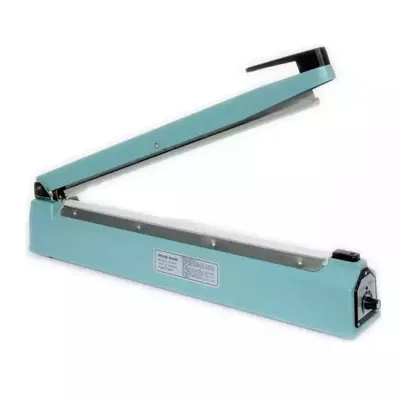


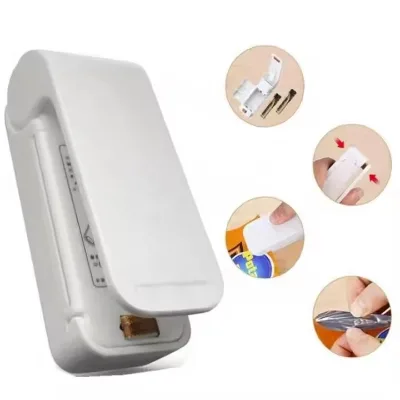
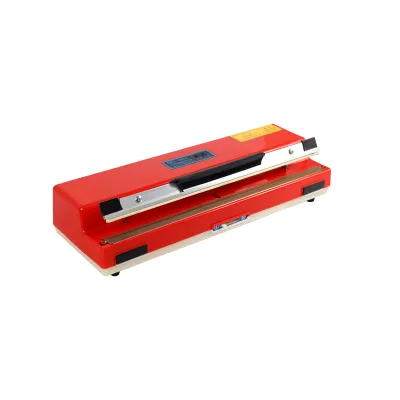


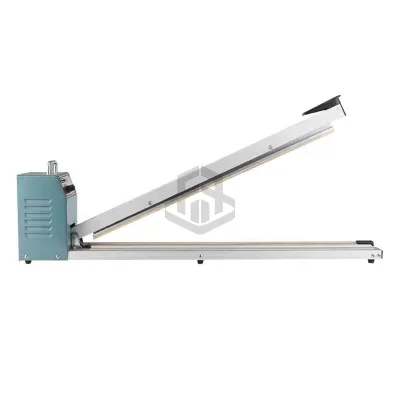


Comprehensive Sourcing Guide
Sourcing Guide for Portable Manual Heat Sealers
Understanding the Core Technology and Operational Scope
When sourcing a Portable Manual Heat Sealer, buyers must first distinguish between the broad category of packaging machinery and the specific subset of handheld or benchtop impulse sealers designed for low-volume or intermittent operations. The market offers devices labeled variously as "hand impulse sealers," "manual sealers," and "heat sealing machines," yet the underlying technology often relies on a heated wire or bar that melts thermoplastic films to create a hermetic seal. In the context of portable units, the "manual" designation typically refers to the operator's physical action of pressing the handle or clamping the device, rather than a fully automated conveyor system.
Technical specifications for these units vary significantly based on the intended throughput and the materials being sealed. Observed data indicates that while some units are marketed as semi-automatic, others are explicitly classified as manual or hand-operated. The driving mechanism is predominantly electric, with power consumption ratings ranging from 180W to 740W depending on the heating element size and duty cycle. For portable applications, a power range of 180W to 330W is common, balancing sufficient heat generation with manageable energy draw. Voltage compatibility is a critical technical parameter; many units are designed for dual voltage operation (110V/220V) to accommodate international trade requirements, though single-voltage models exist.
The sealing mechanism itself is defined by the sealing length and speed. A standard sealing bar length for portable units often measures around 450mm, which allows for sealing bags of varying widths. However, the operational speed is a key differentiator. While high-speed industrial machines may reach 100 pieces per minute, portable manual sealers typically operate at speeds between 1 to 5 pieces per minute or 0 to 30 meters per minute for continuous sealing applications. This lower speed is a trade-off for the flexibility and portability the device offers. Buyers should verify the specific sealing speed of the model they are considering, as it directly impacts production efficiency in small-batch environments.
Technical Specifications and Material Compatibility
Selecting the correct sealer requires a deep understanding of the packaging materials involved. The primary application for these devices is sealing film-based packaging, including polyethylene and polypropylene pouches. The "Packaging Material Mechanical Properties" for these machines are often described as "Flexible Container Sealing," indicating their ability to handle soft, pliable materials without tearing. The material type being sealed is frequently bulk solids such as rice, flour, seasoning, snacks, fish, meat, vegetables, fruit, tea, cosmetics, and cleaning detergents.
The physical dimensions of the machine are crucial for portable applications. A typical unit might have a single package size of approximately 30x26x65 cm, with a gross weight around 11 kg. Some compact models are lighter, weighing as little as 8.5 kg, which enhances portability for field use or small workshops. The overall dimensions, often cited as 75x16x29 cm or 83x33x31 cm, dictate the footprint required on a workbench. Buyers must ensure the workspace can accommodate these dimensions, especially if the machine is intended for mobile use where storage space is limited.
The automatic grade of the machine is another vital specification. While the market includes fully automatic machines, the core keyword "Portable Manual Heat Sealer" points to units where the operator controls the sealing cycle. These are often categorized as "Semi-Automatic" or "Manual" depending on the manufacturer's classification. The "driven type" is electric, meaning the heating element is powered by electricity rather than gas or pneumatic systems. This distinction is important for safety and facility requirements, as electric units require specific electrical infrastructure but offer cleaner operation without combustion byproducts.
Compliance, Certification, and Safety Standards
In the B2B procurement of packaging machinery, compliance and certification are non-negotiable elements that ensure the equipment meets safety and quality standards. When evaluating potential suppliers, buyers should look for the provision of a "machinery test report." This document serves as evidence that the unit has undergone specific performance and safety checks. While specific certification bodies are not universally mandated for all small-scale sealers, the presence of a test report is a strong indicator of a manufacturer's commitment to quality control.
Voltage standards are a primary compliance concern. Since these machines are often exported globally, they must adhere to the electrical standards of the destination country. The observed range of 110V to 220V suggests that many manufacturers produce dual-voltage models to mitigate this issue. However, buyers must verify the specific voltage rating of the unit they purchase to prevent electrical hazards or equipment failure. Additionally, the "warranty" period, typically observed as 1 year for these types of machines, is a standard contractual term that reflects the manufacturer's confidence in the product's durability.
Safety features are often implicit in the design of electric heat sealers. The "hand impulse" mechanism usually includes a safety interlock or a thermal fuse to prevent overheating. While specific safety certifications (such as CE or UL) are not explicitly listed in the provided data, the requirement for a "machinery test report" implies that the unit has been tested for basic electrical safety. Buyers should request detailed safety documentation, including wiring diagrams and thermal protection specifications, to ensure the machine complies with local occupational safety regulations.
Cost Drivers and Pricing Dynamics
The pricing of portable manual heat sealers is influenced by several factors, including power output, sealing length, build quality, and the inclusion of additional features like printing capabilities. The observed price range in the market spans from $0.01 to $429, a wide spectrum that reflects the diversity of product tiers. The lower end of this range likely corresponds to basic, entry-level models with minimal features, while the higher end includes units with advanced controls, larger sealing bars, or integrated printing functions.
Power consumption is a significant cost driver. Units with higher wattage ratings (e.g., 740W) generally command a higher price than those with lower ratings (e.g., 180W) due to the larger heating elements and more robust electrical components required. Similarly, the sealing length affects cost; a 450mm sealing bar is more expensive to manufacture and install than a shorter bar. The "Customization" availability is another factor that can increase the price. Suppliers offering custom branding, specific voltage configurations, or tailored sealing bar lengths often charge a premium for these services.
The Minimum Order Quantity (MOQ) also plays a role in the effective cost per unit. The observed MOQ range is 1 to 5000 units. For buyers seeking a single unit or a small batch, an MOQ of 1 is ideal, though the unit price may be higher. Conversely, bulk purchases with higher MOQs often benefit from economies of scale, reducing the per-unit cost. Buyers should calculate the total cost of ownership, including shipping, import duties, and potential customization fees, rather than focusing solely on the base unit price.
Typical Applications and Industry Use Cases
Portable manual heat sealers are versatile tools used across a wide array of industries. Their primary function is to seal bags for commodities such as rice, flour, seasoning, snacks, fish, meat, vegetables, and fruit. The ability to handle bulk solids makes them essential for the food and beverage industry, where product freshness and hygiene are paramount. The sealing process creates a barrier against moisture and contaminants, extending the shelf life of perishable goods.
Beyond food packaging, these machines are increasingly used in the cosmetics, cleaning, and detergent sectors. The "Application" data lists tea, cosmetics, and cleaning products, indicating that the sealer's versatility extends to non-food items. The "Function" of plastic pouch sealing is critical for these industries, where small-batch production and frequent product changes are common. The "Easy To Operate" selling point highlights the machine's suitability for environments with varying levels of operator skill, reducing training time and minimizing errors.
In some advanced configurations, these sealers also serve as printing machines. The "Printing Text" capability allows for the imprinting of expiry dates, batch codes, QR codes, and barcodes directly onto the packaging. This integration of sealing and printing functions adds value by streamlining the packaging process and ensuring compliance with labeling regulations. The "Type" of machine is often classified as a "Heat Sealing Machine" or "Printing Sealing Machine," depending on the specific features included.
Supplier Evaluation and Quality Control
Evaluating suppliers for portable manual heat sealers requires a rigorous assessment of their manufacturing capabilities and quality assurance processes. The "place of origin" for these machines is often listed as Zhejiang or Hubei Province in China, regions known for their manufacturing hubs. Buyers should verify the specific origin of the product to understand the supply chain dynamics and potential logistics costs.
Quality control is paramount. The presence of a "machinery test report" is a strong indicator of a supplier's commitment to quality. Buyers should request this report before placing an order to ensure the machine meets performance standards. Additionally, the "warranty" of 1 year is a standard benchmark; suppliers offering longer warranties may demonstrate higher confidence in their product's longevity. The "packaging type," typically cartons, should be robust enough to protect the machine during transit, especially for international shipments.
When comparing suppliers, buyers should look for those offering "Customization" options. This flexibility allows buyers to tailor the machine to their specific needs, such as adjusting the sealing length or voltage. The "Single gross weight" and "Single package size" are also important for logistics planning. Suppliers who provide accurate and detailed packaging information facilitate smoother shipping and handling processes.
Long-Term Procurement and Maintenance Considerations
For long-term procurement, buyers must consider the maintenance requirements and the availability of spare parts. The "core components" of these machines are often listed as "Other," which can be ambiguous. Buyers should clarify what specific parts are included in the core assembly, such as the heating wire, thermostat, and transformer. Understanding the replaceability of these components is essential for minimizing downtime.
The "driven type" being electric means that the machine requires regular electrical checks to ensure safety and performance. The "power" ratings (180W/240W/330W/740W/210W) indicate that different models have different power requirements, which may affect the choice of electrical infrastructure in the buyer's facility. Buyers should also consider the "max speed" of 100 pcs/min for high-performance models, although most portable units operate at lower speeds.
Finally, the "Automatic Grade" of the machine, whether manual or semi-automatic, influences the long-term operational costs. Manual sealers require more labor but offer greater flexibility for small batches. Semi-automatic models may offer a balance between speed and ease of use. Buyers should align their procurement strategy with their production volume and labor costs to ensure the selected machine provides the best return on investment over its lifespan.
FAQs
What is the sealing speed for this Portable Manual Heat Sealer?
The sealing speed ranges from 1 to 5 pieces per minute for manual operation. Some models support continuous sealing speeds up to 30 meters per minute depending on the specific configuration and motor power selected for your production needs.
Which voltage options are available for this electric sealer?
The device supports dual voltage operation at 110V and 220V to accommodate international electrical standards. This flexibility ensures the machine can be used safely in various regions without requiring external voltage converters.
Can this machine seal bulk solids like rice and flour?
Yes, the sealer is designed to handle bulk solids including rice, flour, seasoning, fish, meat, and vegetables. It effectively seals flexible film packaging to maintain freshness and prevent contamination for these specific commodity types.
What is the warranty period for this packaging sealing machine?
The standard warranty period provided for this unit is one year from the date of purchase. This coverage typically includes protection against manufacturing defects and ensures basic operational reliability for the buyer.
How large is the sealing bar length on this impulse sealer?
The sealing bar length is specified as 450mm to accommodate various bag widths. This dimension allows for versatile sealing applications on different packaging sizes while maintaining a compact footprint for benchtop use.
Is customization available for the sealing machine specifications?
Customization is available for specific requirements such as branding or voltage configurations. Buyers can request tailored solutions to meet unique production needs while utilizing the standard semi-automatic or manual operation modes.
What is the weight of the single package for shipping?
The single gross weight is approximately 11 kilograms for standard models. Some compact variants weigh 8.5 kilograms, making them easier to transport and suitable for small workshops or mobile packaging stations.