Source Power Distribution Enclosure for High-rise Buildings, Industrial Sites, and Commercial Facilities
Explore 30 verified listings for Power Distribution Enclosure options tailored for high-rise buildings, industrial sites, and commercial facilities. Buyers can compare specifications, certifications, and pricing to find suitable units.
Key considerations
Products List


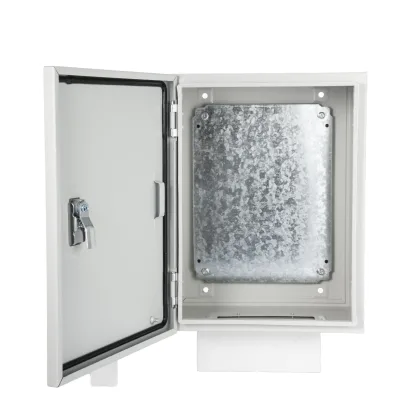


Distribution Board Distribution Box Low Voltage System Metal Enclosure
$100.00 - $500.00
MOQ: 1 Pieces


LV/Mv Switchgear Enclosure for Low and Medium Voltage Power Distribution
$12.00 - $27.00
MOQ: 50 Pieces


Comprehensive Sourcing Guide
Strategic Sourcing Guide for Power Distribution Enclosures
Understanding Technical Specifications and Structural Variants
When sourcing power distribution enclosures, the primary objective is to align the physical and electrical characteristics of the unit with the specific demands of the installation environment. The market offers a diverse array of configurations, ranging from open-frame designs to fully packaged systems. Buyers must first distinguish between the structural integrity required for the application. For instance, certain units are designed as "Open Frame" structures, which may be suitable for indoor environments where dust and moisture are controlled, while others utilize a "Fixed Board" or "Protection" structure to ensure robust containment of electrical components.
The physical dimensions of the enclosure are a critical specification that cannot be overlooked. Variations in size are significant, with observed standard dimensions including models measuring approximately L359mm x W196mm x H102.5mm, as well as larger units reaching L519.1mm x W294.4mm x H150.5mm. Some specifications explicitly list sizes such as 400x300x200mm or 800x600x200mm, indicating that buyers must verify the exact footprint required for their panel boards. Furthermore, the thickness of the material is a key determinant of durability, with available options ranging from 1.0mm to 2.0mm. The choice of shell material is equally vital; common materials include Steel Plate, SGCC (Galvanized Steel), Secc, Mild Steel, and Stainless Steel. The selection depends heavily on the corrosion resistance needed for the specific site conditions.
Electrical ratings also vary widely across the product pool. While some units are categorized under "Low Voltage" operation, others are engineered for "High Voltage" applications, specifically rated at 33kV. The frequency compatibility is generally standardized to 50Hz and 60Hz, ensuring broad applicability across different grid systems. Additionally, the maximum current capacity is a defining metric, with some high-capacity units rated up to 630A. Buyers must ensure that the selected enclosure's voltage and current ratings exceed the operational load of the connected equipment to prevent thermal overload and ensure safety.
Compliance and Certification Verification
In the realm of electrical infrastructure, compliance with international and local safety standards is non-negotiable. The supply chain for power distribution enclosures often features products carrying specific certifications that validate their safety and quality. A recurring certification observed in the market includes CCC (China Compulsory Certification), which is essential for products entering the Chinese market and often serves as a baseline for quality assurance. Additionally, ISO9001 certification is frequently cited, indicating that the manufacturer adheres to a recognized quality management system.
It is crucial for buyers to verify the specific form of certification associated with the product. Some listings indicate certifications linked to specific forms, such as "All-packaged Type" or "Partly-welded Type." This distinction implies that the certification may be tied to the manufacturing process or the specific configuration of the unit. For example, a "Partly-welded Type" enclosure might have different certification requirements compared to an "All-packaged Type." Buyers should not assume that a general ISO or CCC mark applies to every model within a supplier's catalog without explicit confirmation.
Beyond the certifications themselves, the protection level of the enclosure is a critical compliance metric. The IP (Ingress Protection) rating defines the enclosure's ability to resist dust and water. Observed specifications include IP65, which offers protection against dust and low-pressure water jets, and other variations where the protection grade is listed as "IPSize:1 Uint," suggesting a need for careful interpretation of the specific rating provided. The working temperature range is another compliance factor, with units designed to operate in environments ranging from -30°C to +60°C, and others rated for a broader span of -40°C to +60°C. Verifying that the enclosure can withstand the ambient conditions of the installation site is essential for long-term reliability.
Cost Drivers and Pricing Dynamics
The pricing of power distribution enclosures is influenced by a complex interplay of factors, including material costs, manufacturing complexity, and customization requirements. The observed price range in the market is exceptionally wide, spanning from $0.25 to $64,500. This vast disparity reflects the difference between small, simple components and large, complex, high-voltage distribution systems. A unit priced at the lower end of the spectrum is likely a basic, standardized component, whereas a unit at the higher end may be a custom-engineered solution for high-voltage, high-current applications.
Material composition is a primary driver of cost. Enclosures made from Stainless Steel or those with specialized surface finishes like "Pickling Phosphating Powder Powder Spraying" will generally command a higher price than those made from standard Mild Steel. The thickness of the steel plate also directly impacts the cost; thicker gauges (e.g., 2.0mm) require more raw material and processing time than thinner gauges (e.g., 1.0mm). Furthermore, the level of customization available significantly affects the final price. While many suppliers offer "Customization: Available," requests for non-standard dimensions, specific paint colors, or unique mounting configurations will incur additional charges.
Packaging and logistics also play a role in the total cost. Some units are packed in standard "Carton" boxes, while larger or more delicate units may require "Wooden Box" packaging or custom requests. The origin of the product, whether from Jiangsu, Shandong, or Zhejiang Wenzhou, can influence shipping costs and tariffs, which are often factored into the final landed cost. Buyers should be aware that the Minimum Order Quantity (MOQ) also impacts the unit price, with observed ranges from 1 to 10,000 units. Ordering in bulk often reduces the per-unit cost, but the initial investment must be weighed against storage and inventory carrying costs.
Typical Applications and Operational Environments
Power distribution enclosures serve a variety of critical functions across different sectors, and understanding the intended application is key to selecting the right product. One of the most common applications is in "High-rise Buildings," where the enclosures must withstand the rigors of vertical distribution and potentially harsh environmental conditions. In these settings, the "Distribution Metering Box" type is frequently utilized to manage and monitor electrical flow efficiently. The "Fixed Board" structure is particularly relevant here, providing a stable platform for mounting meters and circuit breakers.
The operational environment dictates the necessary protection levels. For outdoor installations or areas with high humidity, an enclosure with an IP65 rating and a working temperature range of -40°C to +60°C is often required. These units are typically made from corrosion-resistant materials like SGCC or Stainless Steel to ensure longevity. Conversely, indoor applications in controlled environments may allow for the use of "Open Frame" structures or units with lower protection grades, provided the electrical safety is maintained.
Specific model types also align with distinct applications. For example, models with dimensions like 400x300x200mm are often used for general distribution tasks, while larger units like the 800x600x200mm model may be designed for heavy-duty industrial applications. The "H type/U type" configurations suggest specialized mounting or structural needs, possibly for cable management or specific equipment integration. Buyers must match the application range of the enclosure to the actual site conditions, ensuring that the voltage rating (Low or High Voltage) and current capacity (up to 630A) are sufficient for the load.
Supplier Evaluation and Geographic Considerations
Evaluating suppliers requires a focus on their geographic location, manufacturing capabilities, and service offerings. The supply chain for these enclosures is concentrated in specific regions of China, with notable origins in Jiangsu, Shandong, and Zhejiang Wenzhou. Each region may have its own industrial strengths; for instance, Zhejiang Wenzhou is historically known for electrical equipment manufacturing. The "Place of Origin" is a critical data point for buyers to assess the logistics of shipping and the potential for local support.
When evaluating a supplier, buyers should look for evidence of "OEM Server: Accept," indicating the supplier's willingness to customize products according to the buyer's brand or specifications. The availability of "Customization" is a strong indicator of a supplier's flexibility. Additionally, the "Installation Method" offered, such as "Wall-Mount," should be compatible with the buyer's site requirements. The production capacity is another factor, with some suppliers offering "All-packaged Type" solutions that simplify the installation process, while others may supply "Partly-welded Type" units that require on-site assembly.
Lead times and delivery capabilities are also essential for procurement planning. Observed delivery times range from 7 to 20 days, which suggests a relatively agile supply chain for standard orders. However, for customized or large-volume orders, these timelines may extend. Buyers should verify the "Delivery Time" for their specific order to avoid project delays. The "Standard Export Carton" or "Wooden Box" packaging options provided by the supplier can also influence the condition of the goods upon arrival, making it important to confirm that the packaging meets the protection needs of the shipment.
Quality Control and Long-Term Procurement Strategy
Ensuring the long-term reliability of power distribution enclosures requires a robust quality control strategy. The surface finish of the enclosure is a key indicator of quality, with "Pickling Phosphating Powder Powder Spraying" being a common process that enhances corrosion resistance and aesthetic appeal. Buyers should verify that the surface treatment process is consistent and that the paint or coating adheres properly to the steel plate. The "Thickness" of the material, ranging from 1.0mm to 2.0mm, must be verified through inspection to ensure it meets the specified tolerance.
For long-term procurement, buyers should prioritize suppliers who offer comprehensive documentation, including certification records and test results. The presence of certifications like CCC and ISO9001 provides a baseline for quality, but buyers should also request specific test data related to the IP rating and temperature resistance. The "Working Temperature" range of -40°C to +60°C or -30°C to +60°C should be validated through independent testing if the application involves extreme conditions.
Finally, the procurement strategy should include a review of the "Product Packing" and "Standard" specifications. Ensuring that the packaging is robust enough to prevent damage during transit is crucial. The "Standard Export Carton" or custom wooden boxes should be inspected for integrity. By focusing on these quality control aspects and maintaining a clear understanding of the technical specifications, buyers can secure a reliable supply of power distribution enclosures that meet their operational needs and safety standards.
FAQs
What certifications are available for power distribution enclosures?
Available certifications include CCC and ISO9001 for various enclosure types. These marks often apply to specific forms like all-packaged or partly-welded units, ensuring compliance with safety standards before purchase.
Which voltage ratings are supported by these enclosures?
Enclosures support both low voltage and high voltage applications, with specific models rated at 33kV. Frequency compatibility generally covers 50Hz and 60Hz to suit diverse grid systems worldwide.
Can I find power distribution enclosures with high current capacity?
Yes, some units offer a maximum current capacity of up to 630A. These high-capacity models are designed for demanding industrial loads and require careful selection based on operational requirements.
What material options exist for the enclosure shell?
Shell materials include Steel Plate, SGCC, Secc, Mild Steel, and Stainless Steel. The choice depends on corrosion resistance needs, with thickness options ranging from 1.0mm to 2.0mm for durability.
How are these enclosures typically packaged for shipping?
Packaging options include Carton, Wooden Box, or Standard Export Carton depending on the unit size. Custom requests are also accepted to ensure safe transport of the distribution metering boxes.
What is the typical delivery time for these products?
The standard delivery time ranges from 7 to 20 days for most orders. This lead time may vary based on customization needs, order volume, and the specific origin location of the supplier.