Source Pre-Insulated Ring Terminal for Automotive, Industrial, and Residential Uses
Compare 30 Pre-Insulated Ring Terminal options featuring copper conductors and PVC insulation. Buyers can evaluate specifications like cable size, current capacity, and certifications including UL and VDE for diverse electrical applications.
Key considerations
Products List


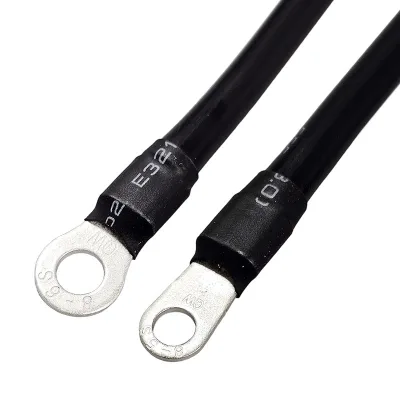
Comprehensive Sourcing Guide
Strategic Sourcing Guide for Pre-Insulated Ring Terminals
Navigating the global market for pre-insulated ring terminals requires a disciplined approach that balances technical compatibility with rigorous supplier verification. These components are fundamental to electrical systems, serving as the critical interface where conductors meet connection points. For procurement professionals, the primary challenge lies in distinguishing between generic listings and products that meet specific operational demands. The market offers a wide array of configurations, from standard copper conductors to specialized insulation materials, necessitating a clear understanding of the available specifications before initiating any purchase order.
Technical Specifications and Material Composition
The foundation of any successful procurement strategy begins with a precise definition of technical requirements. In the context of pre-insulated ring terminals, the conductor material is a primary determinant of performance. The supplied data indicates that copper is the predominant material used for the conductive element. This choice is standard due to copper's superior electrical conductivity and mechanical durability. However, buyers must verify that the specific product listing explicitly confirms copper composition, as variations in alloy or plating can significantly impact resistance and corrosion resistance.
The insulation material is equally critical, as it dictates the terminal's environmental resilience and voltage rating. Observations from the product data reveal a diversity of insulation types, including PVC (Polyvinyl Chloride) and Heat Shrinkable materials. Some listings also reference Nylon as an insulation material, which offers distinct mechanical properties compared to PVC. The color coding of these terminals is a vital safety and identification feature. The available color spectrum includes Red, Blue, Yellow, and Black, which typically correspond to specific wire gauge ranges or voltage classes in various regional standards. Procurement teams must ensure that the color selected matches the required wire size to prevent insulation damage or loose connections.
The physical geometry of the terminal also varies based on application needs. The data highlights "U" shaped and "Round" shapes, alongside specific types such as "Socket Terminals," "Single Hole Terminals," and "Hook Terminals." The "Ring" configuration, implied by the core keyword, is often associated with the "Single Hole" or "Socket" categories depending on the mating connector. The production process is another key differentiator. The observed manufacturing methods include Injection Molding, which is typical for the insulation sleeve, and Cold Pressing, which is essential for forming the metal crimp barrel. A high-quality terminal will utilize cold pressing for the metal component to ensure a cold-weld bond that maintains conductivity under vibration.
Compliance, Certification, and Regulatory Standards
In the B2B procurement landscape, compliance is not merely a formality but a risk mitigation strategy. The electrical industry is heavily regulated, and non-compliant components can lead to system failures, safety hazards, and legal liabilities. The supplied product information lists several certifications that buyers should look for to validate supplier claims. These include UL (Underwriters Laboratories), VDE (Verband der Elektrotechnik), CE (Conformité Européenne), RoHS (Restriction of Hazardous Substances), SGS, TUV, and CQC (China Quality Certification Centre).
It is crucial to treat these certifications as verification points rather than automatic guarantees. A supplier may claim "CE" or "RoHS" status, but the buyer must request valid, current test reports from accredited laboratories. The data also mentions specific standards such as "H: 10mm," which likely refers to a dimensional standard or a specific height requirement for the insulation sleeve. Buyers should verify if the product meets international standards like IEC 60998 or equivalent national standards depending on the destination market. The presence of "material Heat Shrinkable" or "material PVC" in the standard field suggests that the product documentation should explicitly state the material compliance with fire safety and environmental regulations.
When evaluating a supplier, the certification status should be cross-referenced with the specific product model. For instance, a model designated as "RV 1.25-3.2" or "HRV" might have different certification requirements than a "Crimp Terminal" or "RNB" series. The data also notes "Brand:Ht" in conjunction with UL and VDE certifications, indicating that brand reputation and specific model tracking are important. Buyers should insist on a Certificate of Conformity (CoC) that matches the batch number of the goods being shipped, ensuring that the certification applies to the actual inventory and not just a generic product line.
Cost Drivers and Pricing Dynamics
Understanding the cost structure of pre-insulated ring terminals is essential for budgeting and negotiation. The observed price range in the market spans from $0.01 to $26.00 USD. This wide variance is not indicative of a single product type but rather reflects differences in volume, material quality, insulation complexity, and packaging. The lower end of the spectrum likely corresponds to high-volume orders of standard PVC-insulated copper terminals with basic packaging. Conversely, the higher price points may reflect specialized materials like heat-shrinkable insulation, higher current ratings, or smaller batch sizes with premium packaging.
The Minimum Order Quantity (MOQ) is a significant factor influencing the unit cost. The observed MOQ range is between 10 and 100,000 units. Suppliers offering an MOQ of 10 are typically catering to prototyping or small-scale maintenance needs, often at a higher per-unit cost. In contrast, an MOQ of 100,000 suggests a focus on mass production, where economies of scale drive the price down significantly. Buyers must align their order volume with the supplier's capacity to optimize costs. Ordering 10,000 units might result in a mid-range price, while ordering 100,000 units could unlock the lowest price tiers.
Packaging also plays a role in cost. The data lists various packing methods, including "Standard Packing," "100PCS/Bag," and "Bag Box Paper." More complex packaging, such as box-and-paper combinations, adds to the unit cost but may be necessary for protecting terminals during long-distance shipping or for specific retail requirements. The "Standard Packing" option is generally the most cost-effective. Buyers should calculate the total landed cost, including packaging and shipping, rather than focusing solely on the unit price. Additionally, the "Interface Type" (AC/DC, DC/DC, HDR) can influence cost, as specialized interfaces may require more precise tooling or additional testing.
Typical Applications and Performance Requirements
Pre-insulated ring terminals are ubiquitous in electrical systems where reliability is paramount. The primary application listed is "Conduct Electricity," but the data also specifies "Transmission of Electrical Signals." This distinction is important; while power transmission requires terminals with high current capacity, signal transmission may prioritize low resistance and noise immunity. The observed maximum current rating of 19A (Imax 19A) provides a benchmark for power applications, though this figure must be verified against the specific wire gauge and insulation type.
The cable size compatibility is another critical application factor. The data indicates a range of 0.5mm to 1.5mm for some models, while others list a broader range of 0.5mm to 150mm. This vast difference suggests that the market offers terminals for both delicate electronic signal lines and heavy-duty power cables. Buyers must match the terminal's cable size specification to their wiring harness. Using a terminal designed for 0.5mm wire on a 150mm cable will result in a failure, just as using a 150mm terminal on a 0.5mm wire will lead to a loose connection and potential arcing.
The "Environmental Protection" character noted in the data highlights the importance of terminals in harsh environments. Terminals used in automotive, industrial, or outdoor applications must resist moisture, vibration, and temperature fluctuations. The "Heat Shrinkable" insulation material is particularly relevant here, as it provides a tight seal against moisture ingress. The "Cold Pressing" production process is also vital for applications subject to vibration, as it ensures the metal crimp does not loosen over time. Buyers should assess the operating environment of their end product and select terminals with the appropriate insulation material and crimping method to ensure long-term reliability.
Supplier Evaluation and Quality Control Protocols
Selecting the right supplier is as important as selecting the right product. The data indicates that the origin of these products is primarily "China," with specific mentions of "Wenzhou City" and "Cn." While this provides a geographic context, it does not guarantee quality. Buyers must evaluate suppliers based on their production capabilities and quality assurance processes. The mention of "Injection Molding" and "Cold Pressing" as production processes suggests that a capable supplier should have dedicated machinery for both the insulation sleeve and the metal crimp barrel.
Quality control should be a continuous process, not a final inspection step. Buyers should request documentation on the supplier's quality management systems, such as ISO 9001 certification, even if not explicitly listed in the provided data. The presence of multiple certifications like UL, VDE, and TUV suggests that the supplier has undergone rigorous external audits. However, buyers should verify that these certifications are active and cover the specific product models being ordered. The "Standard Packing" and "Bag Box Paper" options should be inspected for damage during transit, as poor packaging can lead to terminal deformation or insulation damage.
When evaluating a supplier, buyers should also consider their flexibility regarding customization. The data confirms that "Customization" is available. This is a valuable attribute for buyers with unique requirements, such as specific color codes, non-standard cable sizes, or custom packaging. A supplier that offers customization is likely more responsive and capable of handling complex orders. However, customization often comes with higher MOQs and longer lead times, which must be factored into the procurement timeline.
Long-Term Procurement and Supply Chain Considerations
Sourcing pre-insulated ring terminals is not a one-time transaction but a long-term relationship that impacts the reliability of the end product. The "Standard" and "Standard Packing" options suggest a baseline for consistency, but buyers should ensure that the supplier can maintain this consistency over time. The "prod_model" variations, such as "RV," "RNB," "SV1.25-3," and "RNY22," indicate a diverse product portfolio. Buyers should aim to consolidate their orders with a single supplier who can provide a wide range of models to simplify inventory management and reduce the risk of supply chain disruptions.
Lead times and production capacity are critical factors for long-term planning. While specific lead times are not provided in the data, the wide range of MOQs (10 to 100,000) implies that suppliers have varying production scales. Buyers should discuss production schedules with potential suppliers to ensure they can meet demand during peak seasons. The "Wenzhou City" origin suggests a hub of manufacturing activity, which can be advantageous for logistics but also means that buyers should be aware of potential regional supply chain bottlenecks.
Finally, buyers should consider the total cost of ownership, which includes not just the purchase price but also the cost of failures, returns, and downtime. High-quality terminals with proper certifications and robust insulation materials may have a higher upfront cost but can significantly reduce the risk of electrical failures. The "Environmental Protection" and "Insulation" characteristics are key indicators of long-term durability. By focusing on these attributes and maintaining a disciplined approach to supplier evaluation, buyers can secure a reliable supply of pre-insulated ring terminals that meet their technical and operational needs.
Comparative Analysis of Terminal Specifications
To assist buyers in making informed decisions, the following table summarizes key specifications observed in the market data. This comparison highlights the diversity of options available and the critical parameters that must be verified during the sourcing process.
| Specification Category | Observed Attributes | Verification Requirement |
|---|---|---|
| Conductor Material | Copper | Confirm purity and plating (e.g., tin, silver) in CoC. |
| Insulation Material | PVC, Heat Shrinkable, Nylon | Verify material grade and temperature rating. |
| Terminal Shape | U, Round, Single Hole, Hook | Match shape to mating connector and application. |
| Cable Size Range | 0.5-1.5mm, 0.5-150mm | Ensure exact match to wire gauge; avoid mismatches. |
| Current Rating | Imax 19A (Example) | Verify rating against actual load requirements. |
| Certifications | UL, VDE, CE, RoHS, SGS, TUV, CQC | Request valid, batch-specific certificates. |
| Production Process | Injection Molding, Cold Pressing | Confirm cold pressing for metal crimp integrity. |
| Color Coding | Red, Blue, Yellow, Black | Verify color corresponds to correct wire size. |
| Origin | China (Wenzhou City, Cn) | Assess logistics and supply chain stability. |
| Packaging | Standard, 100PCS/Bag, Bag Box Paper | Select based on shipping needs and inventory handling. |
This table serves as a checklist for buyers to ensure that all critical parameters are addressed during the sourcing process. By systematically verifying each attribute against the specific needs of their application, buyers can mitigate risks and secure high-quality pre-insulated ring terminals that ensure the reliability and safety of their electrical systems.
FAQs
What materials are used for pre insulated ring terminals?
Copper is the predominant conductor material used for these terminals. The insulation is typically made from PVC, Heat Shrinkable material, or Nylon depending on the specific model and application requirements.
Which certifications should I look for in these products?
Valid certifications include UL, VDE, CE, RoHS, SGS, TUV, and CQC. Buyers must verify that these certifications are current and apply to the specific product batch being purchased.
How is the production process for these terminals performed?
Manufacturing involves Injection Molding for the insulation sleeve and Cold Pressing for the metal crimp barrel. This combination ensures a secure cold-weld bond and proper insulation fit.
What is the maximum current rating for these terminals?
The observed maximum current rating is 19 Amperes. This rating depends on the specific cable size and insulation type selected for the application.
Can I customize the packaging for these terminals?
Customization is available for various product attributes including packaging. Options range from standard packing to 100 pieces per bag or bag box paper combinations.
Where are these terminals typically manufactured?
The products originate from China, with specific mentions of Wenzhou City. Buyers should verify the exact origin location on the supplier's documentation.
What cable sizes are compatible with these terminals?
Compatible cable sizes range from 0.5mm to 150mm depending on the model. Specific models like RV 1.25-3.2 support sizes between 0.5mm and 1.5mm.