Source Precision Turning Metal Shaft for Machinery Parts, Auto Accessories, and Hardware Tools
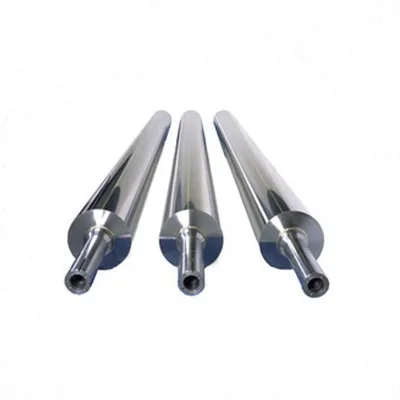
Explore 30 listings for Precision Turning Metal Shaft suitable for metal processing machinery, auto accessories, and hardware tools. Buyers can compare materials like stainless steel and aluminum, surface treatments, and tolerances to find the right components for their manufacturing needs.
Key considerations
Products List




Comprehensive Sourcing Guide
Strategic Sourcing Guide for Precision Turning Metal Shafts
Understanding Technical Specifications and Material Variability
When sourcing precision turning metal shafts, the primary objective is to align the component's physical properties with the operational demands of the end application. The market offers a diverse range of materials, each selected for specific mechanical advantages. Based on available product data, the core material categories include Stainless Steel, Carbon Steel, Brass, Aluminum, and various Alloy compositions. Buyers must recognize that "Steel" is often further categorized into specific alloys, while "Other Material" listings frequently encompass Copper, Brass, and Bronze, indicating a broad spectrum of conductive and corrosion-resistant options.
The precision of the turning process is defined by strict tolerance and surface roughness parameters. High-performance shafts typically operate within a tolerance range of ±0.02mm down to ±0.005mm, with some specialized machining services capable of achieving a tolerance of 0.01mm. This level of precision is critical for applications requiring tight fits or high rotational speeds. Surface finish is equally vital, with observed roughness values ranging from Ra 0.2 to Ra 3.2. For applications demanding minimal friction or high aesthetic standards, a minimum roughness of Ra 0.1 may be specified. These numerical ranges are not universal guarantees for every listed product but represent the observed capabilities of the supply base.
The manufacturing process itself is predominantly CNC Machining, encompassing both CNC Turning and CNC Milling services. This method ensures repeatability and accuracy, essential for batch production runs. The production type is generally classified as Batch Production, allowing for scalability from small prototype runs to larger volumes. When evaluating a potential supplier, buyers should verify that their CNC capabilities match the required tolerance bands and that their material inventory includes the specific alloy needed for the application, whether it be Iron, Aluminum, Copper, or specialized Steel Alloys.
Compliance, Certification, and Standard Adherence
In the industrial sector, compliance is not merely a formality but a prerequisite for market access and operational safety. The sourcing landscape for metal shafts is governed by a complex matrix of international and regional standards. Buyers must verify that the supplier adheres to recognized standard codes such as BS, ANSI, JIS, GB, GOST, ASTM, and DIN. Specific industry codes like ASME, TEMA, APIEN, and China GB Code are also frequently cited, particularly for components intended for heavy machinery or pressure vessel applications.
Certification status provides an additional layer of assurance regarding the supplier's quality management systems. The observed market data indicates that suppliers often hold certifications including ISO, GS, RoHS, and CE. While ISO 9001 is a common reference for quality management, buyers should specifically confirm the version, such as ISO 9001:2015, if the end application requires strict adherence to the latest quality protocols. It is important to note that while "ISO9001" is listed as a standard in some contexts, the specific certification status of a supplier must be verified directly, as possession of a standard does not automatically equate to a valid, current certificate for every product batch.
For applications involving food processing, medical devices, or electronics, RoHS compliance is critical to ensure the absence of restricted hazardous substances. Similarly, CE marking indicates conformity with health, safety, and environmental protection standards for products sold within the European Economic Area. Buyers should request valid certification documents rather than relying on marketing claims. The origin of the product, often listed as Qingdao, China, or generally China, should be cross-referenced with the supplier's ability to provide traceable documentation for these standards.
Cost Drivers and Economic Factors in Procurement
The pricing structure for precision turning metal shafts is influenced by a confluence of material costs, geometric complexity, and production volume. The observed price range in the market is extensive, spanning from $0.20 to $1,891 per unit. This wide variance reflects the difference between simple, small-diameter shafts and large, complex, high-tolerance assemblies. The Minimum Order Quantity (MOQ) also plays a significant role in unit economics, with observed ranges starting as low as 1 unit for prototyping and extending up to 1,000 units for bulk industrial orders.
Material selection is a primary cost driver. Stainless Steel and specialized alloys typically command higher prices than Carbon Steel or Aluminum due to raw material costs and the difficulty of machining. The surface treatment process further impacts the final cost. Options such as Anodizing, Electroplating, Blackening, Powder Coating, Spraying, and various plating methods (Zinc, Nickel, Chrome) add processing steps and material costs. For instance, a shaft requiring a combination of CNC turning, high-precision tolerance, and multi-layer electroplating will be significantly more expensive than a standard carbon steel shaft with a basic blackening finish.
Lead times and logistics are secondary but important cost factors. While specific lead times are not universally fixed, the availability of sample production within 3 days suggests that suppliers with agile CNC capabilities can offer rapid turnaround for prototypes. For batch production, the lead time will depend on the order volume and the complexity of the surface treatments. Shipping methods, ranging from standard carton packaging to wooden cases or Europe Standard Packing, also influence the total landed cost. Buyers should evaluate the total cost of ownership, including packaging, transportation, and potential customs duties, rather than focusing solely on the unit price.
Typical Applications and Industry Alignment
Precision turning metal shafts are ubiquitous across various industrial sectors, serving as critical components in machinery that requires rotational motion, structural support, or precise alignment. The application data highlights a strong focus on metal processing equipment. These shafts are integral to Metal Casting Machinery, Metal Coating Machinery, Metal Drawing Machinery, and Metal Engraving Machinery. In these contexts, the shafts must withstand high mechanical stress, vibration, and potentially corrosive environments.
Beyond heavy machinery, the applications extend to Metal Forging Machinery, Metal Spinning Machinery, and Metal Straightening Machinery. The versatility of the material palette allows these shafts to be adapted for diverse environments; for example, Brass or Copper alloys might be used in applications requiring electrical conductivity or specific friction properties, while Stainless Steel is preferred for corrosion resistance. The hardware tool and fastener sectors also utilize these components, alongside automotive and motorcycle accessories where weight reduction and high strength are paramount.
The specific model numbers observed, such as FY-C101, FY-C227, and NO081, often correspond to standardized or semi-customized designs used in these applications. However, the "Customized" attribute is a key feature of the market, allowing buyers to tailor shaft dimensions and features to unique machinery requirements. Whether the application involves a simple hardware tool or a complex metal processing machine part, the shaft must meet the specific operational demands of the host equipment. Buyers should clearly define the application environment to ensure the selected material and surface treatment are appropriate for the operating conditions.
Supplier Evaluation and Quality Assurance Protocols
Selecting a reliable supplier requires a rigorous evaluation of their technical capabilities and quality control measures. The production process for these shafts is characterized by CNC Machining, which offers high precision and repeatability. A critical factor in supplier selection is their Quality Control (QC) protocol. Data indicates that some suppliers perform 100% Inspection, a robust standard that ensures every unit meets the specified tolerance and surface finish requirements. Buyers should prioritize suppliers who can demonstrate a documented QC process rather than relying on random sampling.
The ability to provide samples is another vital indicator of supplier capability. The market observation notes that samples can be produced within 3 days, suggesting a responsive supply chain. This rapid prototyping capability allows buyers to validate the fit, form, and function of the shaft before committing to a large batch order. Furthermore, the availability of customization services, including specific packing requirements like Cartons or Wooden Cases, indicates a supplier's flexibility in meeting diverse logistical needs.
When evaluating a supplier, buyers should also assess their adherence to production standards. The presence of ISO9001 certification is a strong positive signal, but it must be verified as current and applicable to the specific manufacturing site. The origin of the products, frequently cited as Qingdao, China, should be considered in the context of the supplier's export experience and ability to navigate international trade regulations. A supplier with a history of serving the Metal Processing Machinery sector is likely to have the necessary expertise to deliver shafts that meet the rigorous demands of that industry.
Long-Term Procurement and Packaging Considerations
Sourcing precision metal shafts is not a one-time transaction but a long-term partnership that requires careful consideration of logistics and supply chain stability. Packaging plays a crucial role in protecting the integrity of the shafts during transit. Observed packaging options include Cartons, Wooden Cases, and Europe Standard Packing. The choice of packaging depends on the size, weight, and fragility of the shafts, as well as the destination's environmental conditions. For international shipments, Wooden Cases or robust Carton packaging with appropriate internal protection is often necessary to prevent damage from moisture or impact.
The standardization of the product is another long-term consideration. While some models are fixed, such as FY-C101 or CNC Machining Parts, the "customizable" nature of the product standard allows for adaptation to future design changes. Buyers should ensure that their suppliers have the capacity to maintain consistency in material composition and machining tolerances over time. The ability to produce in Batch Production modes ensures that the supply chain can scale up or down based on demand fluctuations without compromising quality.
Finally, the total procurement strategy should account for the potential need for ongoing technical support and after-sales service. Suppliers offering services like CNC Turning and CNC Milling are often positioned to provide engineering support for design optimization. By selecting a supplier with a proven track record in Metal Processing Machinery Parts and a commitment to quality standards like ISO and RoHS, buyers can mitigate risks associated with component failure and ensure the longevity of their machinery. The combination of precise tolerances, robust material selection, and reliable quality control forms the foundation of a successful long-term procurement strategy for precision turning metal shafts.
FAQs
What materials are available for precision turning metal shafts?
Available materials include Stainless Steel, Carbon Steel, Brass, Aluminum, and various Alloy compositions. Buyers can also select from Steel, Copper, and Bronze options depending on specific mechanical and corrosion resistance needs for the application.
Which certifications do suppliers typically hold for these shafts?
Suppliers often hold certifications such as ISO, GS, RoHS, and CE to ensure compliance with international safety and quality standards. Buyers should verify specific documentation like ISO9001 to confirm the quality management system is current and applicable to their order.
How precise are the tolerances for CNC machined metal shafts?
Standard tolerances range from plus or minus 0.02mm down to plus or minus 0.005mm for high-precision applications. Some specialized machining services can achieve a tighter tolerance of 0.01mm to meet strict fit requirements for rotational machinery parts.
Can I get custom surface treatments for my metal shafts?
Yes, customization is available with options including Anodizing, Electroplating, Powder Coating, and various plating methods like Zinc or Chrome. Buyers can also request Blackening, Spraying, Polishing, Brushing, or Blasting to achieve specific surface roughness values between Ra 0.1 and 3.2.
What is the typical minimum order quantity for these parts?
The minimum order quantity ranges from 1 unit for prototyping up to 1000 units for bulk industrial orders. This flexibility allows buyers to start with small batches or scale up to large production runs while maintaining cost efficiency.
Where are these precision shafts typically manufactured?
Products are frequently manufactured in Qingdao, China, or generally within China. Buyers should consider this origin when evaluating shipping logistics, lead times, and the supplier's ability to handle international export requirements and customs documentation.
How quickly can suppliers provide samples for testing?
Suppliers can often produce samples within 3 days to allow for rapid validation of fit and function. This quick turnaround supports the batch production model and helps buyers verify quality before committing to larger orders.