Source Puncture Proof Flat Free Tire and Wheel for Trolley Hand Truck Wheelbarrow
Compare 30 options for Puncture Proof Flat Free Tire and Wheel designed for trolleys, hand trucks, and wheelbarrows. Buyers can review models like 300-8 and 350-7, materials including PU and rubber, and packaging details from Qingdao suppliers.
Key considerations
Products List


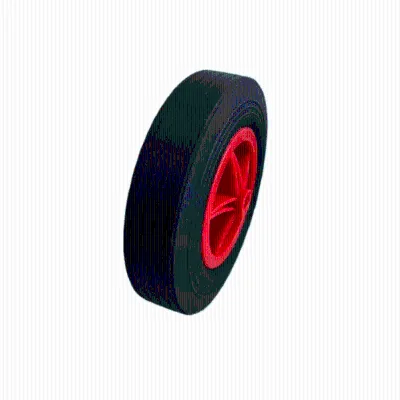

350-10 Flat Free Rubber Foam Tire Wheel with Rim
$8.99 - $19.99
MOQ: 1000 Pieces
Ningbo Eastar Electromechanical Industrial Trading Co., Ltd.


Comprehensive Sourcing Guide
Strategic Sourcing Guide for Puncture-Proof Flat-Free Tire and Wheel Solutions
Understanding the Core Product Architecture and Variants
When sourcing puncture-proof flat-free tire and wheel solutions, buyers must first distinguish between the specific material compositions and structural designs available in the global market. The core keyword often encompasses a broad spectrum of products, ranging from solid rubber wheels to advanced polyurethane (PU) foam wheels. Based on current market observations, a significant segment of these products utilizes PU foam as the primary tread material. This material choice is critical because it provides the "flat-free" characteristic by eliminating the air chamber found in pneumatic tires, thereby preventing punctures from nails, glass, or debris.
The product architecture varies significantly by model number and intended load capacity. Market listings frequently reference specific dimensional standards such as 3.00-8, 350-8, 350-7, and 400-8. These numerical designations typically denote the tire width and rim diameter in inches or millimeters, serving as the primary identifier for compatibility with existing equipment. For instance, the 300-8 and 350-8 models are common configurations for heavy-duty applications, while smaller variants like 350-4 or 200x50 may be designated for lighter trolleys or garden tools.
Buyers should also note the diversity in rim construction. While some units feature a steel rim for maximum durability, others may utilize plastic or metal rims depending on the specific load requirements and cost constraints. The classification of these products often falls under "Tires" or "Solid Rubber Wheels," with some listings explicitly distinguishing between "Pneumatic Rubber Wheel" and "Solid Rubber Wheel" options. Understanding these architectural differences is the first step in aligning procurement needs with the correct product specifications.
Technical Specifications and Performance Parameters
Technical due diligence requires a granular review of the specifications provided by potential suppliers. The most critical technical attribute for a flat-free solution is the material composition. The supplied data indicates that Polyurethane (PU) is a dominant material for these wheels, often presented in black. This material is selected for its high abrasion resistance and ability to maintain structural integrity under heavy loads without the risk of blowouts. In contrast, some listings reference Natural Rubber, which may offer different shock absorption characteristics but requires careful evaluation against the specific "puncture-proof" requirement.
Dimensional accuracy is paramount. The observed product standards include specific size codes like 3.00-8, 350-7, and 400-8. These are not merely labels but represent strict geometric tolerances that must match the hub and axle of the equipment being outfitted. For example, a 350-8 wheel must fit a rim designed for that specific profile. Additionally, the tread pattern is a vital performance factor. Some products feature a "Cross-Country Tread Pattern," which suggests enhanced traction for uneven surfaces, while others may have smoother treads designed for indoor or paved environments.
The load-bearing capacity is often implied through the model number and material density. Products are frequently marketed for use in "Hand Trolley," "Hand Truck," and "Wheelbarrow" applications, which implies a need for high load-bearing stability. The "Quality A" standard mentioned in some listings suggests a tiered grading system where buyers must verify the specific quality grade against their operational demands. Furthermore, the distinction between "Tubeless" and other types is relevant, although solid wheels inherently function without tubes. Buyers should verify if the product is designed as a complete wheel assembly or if it requires a separate rim installation.
Compliance, Certification, and Regulatory Standards
Navigating the compliance landscape is essential for international procurement, particularly when sourcing from major manufacturing hubs. The supplied context highlights that products may carry certifications such as CCC (China Compulsory Certification) and ISO standards. These certifications are not merely marketing terms but indicate adherence to specific safety and quality management protocols. When evaluating suppliers, buyers must request valid certification documents to ensure the products meet the regulatory requirements of their target markets, such as the USA, Brazil, Europe, South Africa, or Korea.
The origin of the product also plays a role in compliance. Many listings indicate a production origin in Qingdao, Shandong, China, or specifically Jiaonan Qingdao. This region is a known hub for tire and wheel manufacturing, but it necessitates rigorous supplier vetting to ensure that the "OEM Accepted" status is legitimate and that the manufacturing processes adhere to the claimed standards. The "Quality A" designation implies a specific quality tier, but without third-party verification, this remains an internal claim by the manufacturer.
Buyers should also be aware of the classification of these items as "Tires" or "Wheels" in customs documentation. This classification affects import duties and regulatory scrutiny. While the provided data mentions "Good Quality" suitable for various global markets, it does not explicitly list specific international safety standards like ASTM or EN for every model. Therefore, the procurement strategy must include a verification step where the buyer confirms that the specific model number (e.g., 350-8) meets the local safety regulations of the destination country. Relying solely on the "OEM Accepted" label is insufficient; the underlying certification documents must be reviewed.
Cost Drivers and Pricing Dynamics
The cost of sourcing puncture-proof flat-free tires and wheels is influenced by several dynamic factors, primarily material composition, order volume, and packaging requirements. The observed price range in the market spans from $0.55 to $30 USD, a wide variance that reflects differences in size, material quality, and order quantity. Smaller models like the 350-4 or 200x50 likely fall at the lower end of this spectrum, while larger, heavy-duty models such as the 400-8 or 3.50-8 command higher prices due to increased material usage and manufacturing complexity.
Minimum Order Quantity (MOQ) is a significant cost driver. The market data shows an MOQ range from 1 to 1000 units. Buyers seeking to test the market or fulfill small-scale needs can find suppliers with low MOQs, but this often comes with a higher unit price. Conversely, bulk orders of 1000 units or more typically unlock economies of scale, reducing the per-unit cost. However, the packaging method also impacts the final landed cost. Some suppliers offer "5 PCS Per Nylonbag" or "10 PCS Per Bag" configurations, while others provide "in Bulk" or "Bag or Carton" options. Custom packaging according to customer demand is available, but this customization often incurs additional fees.
Material costs are another critical factor. Wheels made from high-density PU foam or natural rubber with steel rims will inherently cost more than those with plastic rims or lower-grade rubber compounds. The "Cross-Country Tread Pattern" may also add to the cost due to the more complex molding process required. Buyers must balance the initial unit price against the total cost of ownership, considering that a slightly more expensive, high-quality wheel may offer a longer service life and reduced maintenance costs compared to a cheaper alternative.
Typical Applications and Operational Environments
The versatility of puncture-proof flat-free wheels makes them suitable for a wide array of industrial and commercial applications. The primary use cases identified in the market data include "Hand Trolley," "Hand Truck," "Wheelbarrow," and "Garden Tools." These applications often involve the transport of heavy goods, where the reliability of the wheel is paramount. The ability to carry heavy loads without the risk of a flat tire is a key selling point for these products in environments where downtime is costly.
Specific operational environments dictate the choice of wheel type. For instance, the "Cross-Country Tread Pattern" is ideal for rough terrain, such as construction sites, agricultural fields, or outdoor garden areas where debris and uneven surfaces are common. In contrast, smoother tread patterns might be preferred for indoor warehouse environments or smooth concrete surfaces where noise reduction and ease of movement are priorities. The "Wind Rang of Use" (likely referring to range of use) explicitly mentions Wheelbarrow, Handtruck, and Tools Carts, indicating that these wheels are engineered for manual handling equipment.
The durability of the material is crucial for long-term use in these applications. PU foam wheels, for example, are particularly well-suited for environments where puncture resistance is the primary concern, such as recycling centers or industrial yards. The "Good Quality" designation suggests suitability for diverse climates, including those in North America, South America, and Europe. Buyers should match the specific model number to the expected load and terrain. For example, a 400-8 model might be better suited for a heavy-duty wheelbarrow than a 300-4 model, which is likely intended for lighter utility carts.
Supplier Evaluation and Quality Assurance Protocols
Evaluating suppliers for flat-free tire and wheel products requires a multi-faceted approach that goes beyond price comparison. The presence of "OEM Accepted" and "Customization Available" attributes indicates that many suppliers are willing to adapt their products to specific buyer requirements. However, buyers must verify the supplier's capacity to deliver consistent quality. The observation of multiple model numbers (e.g., 350-8, 350-4, 300-8) suggests that suppliers often have diverse production lines, but this does not guarantee that every model meets the same quality standard.
Quality control should focus on the consistency of the material and the precision of the dimensions. Buyers should request samples to test the hardness of the PU foam or rubber, the integrity of the rim attachment, and the uniformity of the tread pattern. The "Quality A" standard mentioned in the data is a positive indicator, but it should be corroborated with physical testing. Additionally, the packaging method, whether "5 PCS Per Nylonbag" or "in Bulk," should be inspected to ensure that the products are protected during transit to prevent damage.
Supplier location is another factor to consider. With origins listed in Qingdao, Shandong, and Jiaonan Qingdao, buyers should be aware of the logistics implications. While these regions are manufacturing hubs, the distance from the buyer's location will impact lead times and shipping costs. Buyers should also verify the supplier's ability to handle the specific MOQ requirements. A supplier offering an MOQ of 1 is ideal for prototyping, while a supplier with an MOQ of 1000 is better suited for large-scale procurement.
Long-Term Procurement and Lifecycle Management
Sourcing puncture-proof flat-free tires and wheels is not just a one-time transaction but a strategic decision that impacts long-term operational efficiency. The "Puncture-Proof" nature of these wheels is designed to reduce maintenance costs and downtime. However, buyers must consider the lifecycle of the product. While solid wheels do not suffer from punctures, they can experience wear over time, particularly in high-friction environments. The material composition, such as PU or Natural Rubber, will determine the rate of wear and the eventual need for replacement.
Buyers should establish a relationship with suppliers who offer customization and OEM services. This flexibility allows for the adaptation of wheel specifications as operational needs change. For example, if a company expands into a new market with different terrain requirements, the ability to order wheels with specific tread patterns or rim materials becomes valuable. The "Customization Available" attribute suggests that suppliers can accommodate changes in size, color, or branding, which is essential for maintaining brand consistency and meeting specific regulatory requirements.
Furthermore, buyers should monitor the market for updates in standards and certifications. As regulations evolve, the "CCC" or "ISO" certifications may need to be updated or supplemented with new standards. Maintaining a close relationship with the supplier ensures that the buyer is informed of any changes that could affect compliance. Finally, the total cost of ownership should be calculated by factoring in the lifespan of the wheel, the frequency of replacement, and the labor costs associated with maintenance. By choosing high-quality, durable wheels, buyers can achieve significant savings over the long term, even if the initial unit price is higher.
FAQs
What materials are used for Puncture Proof Flat Free Tire and Wheel?
Polyurethane foam is the primary material used for these flat-free wheels to prevent punctures. Some listings also specify natural rubber or steel rims, depending on the model and load requirements for trolleys and wheelbarrows.
Which models are available for hand trolley applications?
Common models include 300-8, 350-8, 350-7, and 400-8, which fit various rim sizes. Smaller variants like 350-4 and 200x50 are also available for lighter garden tools and hand trucks.
Can buyers request customization for these flat free wheels?
Yes, customization is available for branding and packaging requirements. Buyers can specify OEM branding and choose between nylon bags, cartons, or bulk packaging based on their specific demand.
What certifications do these tire and wheel products hold?
Some products carry CCC and ISO certifications to ensure safety and quality standards. These certifications help verify compliance for markets in North America, Europe, and South America.
How are these wheels typically packaged for shipping?
Packaging options include 5 pieces per nylon bag, 10 pieces per bag, or bulk shipping. Custom packaging according to customer demand is also an option for specific order requirements.
Where are these puncture proof wheels manufactured?
Manufacturing origins are primarily located in Qingdao and Jiaonan, Shandong, China. This region is a known hub for producing tires and wheels for global export markets.