Source Quick Folding Lightweight Baby Stroller for Travel, Daily, and Shopping
Explore 30 options for a Quick Folding Lightweight Baby Stroller designed for travel, daily commutes, and shopping trips. Buyers can compare specifications like load capacity, dimensions, and packing details to find the right fit for their needs.
Key considerations
Products List


Factory Auto Folding Light Weight Travel Portable Pushchair Baby Stroller
$45.00 - $52.00
MOQ: 850 Pieces


Affordable Baby Stroller/Ultra Light and Convenient/Easy to Fold/Baby Stroller
$19.00 - $21.00
MOQ: 300 piece


Portable Baby Stroller with Easy Folding in Two Directions Baby Stroller
$37.00 - $38.00
MOQ: 1 Pieces
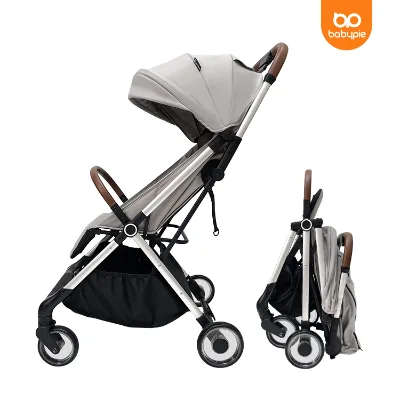

New Baby Pushchair Lightweight Baby Stroller Foldable Pram Buggy Travel Stroller
$28.30 - $30.30
MOQ: 100 Pieces


All Terrain Ultra Compact Lightweight Travel Stroller Comfortable Baby Folding Stroller
$50.00 - $60.00
MOQ: 2 Pieces

Baby Foldable Sitting & Reclining Toddler Pocket Pushchair Lightweight Simple Stroller
$8.50 - $10.00
MOQ: 500 Pieces
Comprehensive Sourcing Guide
Strategic Sourcing Guide for Quick Folding Lightweight Baby Strollers
The global demand for compact, portable mobility solutions for infants has driven a significant shift in the baby product sector, with the Quick Folding Lightweight Baby Stroller emerging as a dominant category. For B2B procurement professionals, navigating this market requires a disciplined approach that separates marketing narratives from verifiable product attributes. This guide synthesizes observed market data to provide a framework for sourcing these specific units, focusing on technical specifications, compliance verification, and supply chain reliability. The objective is to equip buyers with the evidence-based knowledge necessary to select suppliers who can deliver products that meet rigorous safety and logistical standards without relying on unverified claims.
Technical Specifications and Dimensional Analysis
When evaluating a Quick Folding Lightweight Baby Stroller, the primary technical differentiator lies in the balance between portability and structural integrity. Market observations indicate that these units are frequently defined by specific dimensional standards and packing configurations that directly impact shipping costs and retail shelf space. For instance, one observed model, designated as LS5168, adheres to a standard dimension of 80x58x51 cm, while another, LS-5186, measures 75x55x44 cm. These variations are critical for procurement planners, as the folded footprint determines whether the stroller fits within standard airline carry-on limits or specific vehicle trunk capacities.
Weight is another pivotal specification. Data points reveal a range of net weights, with some units weighing as little as 5.78 kg (e.g., model BYQ XT-820) while others, such as the SHUAITONG ST-F1, reach 11 kg. The gross weight, which includes packaging, further influences logistics planning; the same ST-F1 model has a gross weight of 13 kg. Buyers must verify that the "lightweight" designation aligns with the actual net weight of the specific unit being sourced, as this metric directly correlates with the ease of use for parents. Additionally, load-bearing capacity varies significantly across models. While some units are rated for a load capacity of 8.5 kg, others, like the QINGHE HJ-01, support up to 40 kg, and the SHUAITONG ST-F1 is rated for 50 kg. This discrepancy necessitates a clear definition of the target demographic age group, as one observed attribute specifies suitability for children under 3 years, while load limits suggest usage for toddlers or young children.
The material composition also plays a role in the overall performance profile. Observed standards for certain models include nylon or a combination of nylon and aluminum (Nylon+AL), which are chosen for their strength-to-weight ratio. The color options available in the market are diverse, ranging from standard neutrals like Black, Gray, and Brown to vibrant selections such as Red, Purple, Green, Blue, Pink, and White. Procurement teams should note that color availability can vary by model; for example, the MALUO K6 8 offers Red, Purple, Green, Blue, and Gray, whereas the JIARUOQI 666-6 8 is limited to White and Pink.
Packaging Standards and Logistics Efficiency
Efficient logistics are paramount in the baby product industry, where shipping costs can erode profit margins if packaging is not optimized. The observed market data highlights distinct packaging standards that buyers must account for. One common configuration is the "4PC/CTN" (4 pieces per carton) standard, seen in model LS5168, which suggests a compact packing strategy. In contrast, model LS-5186 utilizes a "6PC/CTN" arrangement, indicating a higher density packing method that could reduce per-unit shipping costs but may require different handling protocols.
Other models utilize specialized packaging to ensure product safety during transit. The Y1502 model is shipped in a Yellow Corrugated Box, while the Y1801 model is packed in a Wooden Box, a choice that implies a need for higher protection against moisture or impact, potentially for export to regions with strict humidity controls. The MALUO K6 8 and SHUAITONG ST-F1 both utilize standard Carton packaging, which is the industry norm for balance between cost and protection. Furthermore, the JIARUOQI 666-6 8 is listed with a package count of 6PCS, which may refer to a multi-pack configuration or a specific set inclusion.
Origin locations also influence logistics. The majority of observed products originate from China, with specific manufacturing hubs noted in Guangdong and Shandong. The Guangdong origin, associated with models like Y1502, often implies access to a robust supply chain for textiles and plastics. The Shandong origin, linked to model Y1801, may indicate a different manufacturing ecosystem. Buyers must verify the exact origin for each SKU to accurately calculate freight rates and understand potential regional trade tariffs.
Compliance, Certification, and Safety Verification
Safety is the non-negotiable cornerstone of the baby product sector. In the context of sourcing quick folding lightweight baby strollers, compliance with international standards is a prerequisite for market entry. The observed data confirms that the CE certification is a prevalent attribute among the listed products. This certification indicates conformity with health, safety, and environmental protection standards for products sold within the European Economic Area. However, the presence of CE on a product listing should be treated as an observation of the specific item's documentation rather than a blanket guarantee for all units in a category.
Buyers must rigorously verify that the CE certification is current and applies to the specific model being ordered. It is essential to request the full test reports and the Declaration of Conformity from the supplier. While the background information mentions EN 1888, a standard relevant to playground equipment, it is not explicitly confirmed as the primary standard for the strollers in the provided data. Therefore, procurement teams should not assume compliance with EN 1888 for strollers. Instead, they must verify the specific safety standards applicable to baby strollers in their target market, such as EN 1888 for playgrounds or, more likely, EN 1888's counterpart for prams and strollers (often EN 1888-1 or similar regional equivalents like ASTM F833 in the US).
The verification process should include checking for third-party testing from accredited laboratories. Buyers should ask suppliers to provide evidence of structural integrity tests, particularly for the folding mechanisms and braking systems, which are critical failure points in lightweight designs. The load-bearing capacities observed, ranging from 8.5 kg to 50 kg, must be validated through independent testing to ensure they meet the claimed specifications under dynamic load conditions, not just static weight.
Cost Drivers and Pricing Dynamics
The pricing landscape for quick folding lightweight baby strollers is influenced by a complex interplay of material costs, manufacturing complexity, and order volume. The observed price range in the market spans from $8.50 to $125.00 USD. This wide variance suggests that the category encompasses everything from basic, entry-level models to premium units with advanced features. The lower end of the spectrum likely corresponds to models with simpler folding mechanisms, fewer color options, or standard packaging, while the higher end may reflect advanced materials like aluminum alloys, superior braking systems, or extensive customization options.
Minimum Order Quantity (MOQ) is another significant cost driver. The observed MOQ range is substantial, spanning from 1 unit to 850 units. A low MOQ of 1 allows for small-scale testing or dropshipping models, whereas an MOQ of 850 indicates a focus on bulk wholesale distribution. Buyers must align their order volume with the supplier's MOQ structure to optimize unit costs. Additionally, customization availability is a key factor in pricing. The data confirms that customization is available for these products, which can include branding, color selection, and packaging modifications. Customization typically incurs a premium and may increase the lead time, requiring careful budget planning.
Supplier Evaluation and Quality Control Protocols
Selecting the right supplier requires a multi-faceted evaluation strategy that goes beyond price and MOQ. Given the diversity of models and origins, buyers should prioritize suppliers who demonstrate transparency in their manufacturing processes. The presence of specific model numbers like LS5168, Y1502, and MALUO K6 8 suggests a catalog of established SKUs, but buyers must ensure the supplier can maintain consistency across batches.
Quality control (QC) should be integrated into the procurement workflow. Given the safety-critical nature of baby strollers, a robust QC plan is essential. This should include pre-production sample approval, in-line production checks, and pre-shipment inspections. Buyers should verify that the supplier has a documented QC process that covers the folding mechanism, wheel stability, and fabric durability. The observation of varying net and gross weights for the same model types (e.g., different weights for different colors or batches) highlights the need for strict weight tolerance controls to ensure product consistency.
Furthermore, the availability of customization suggests that the supplier has flexible production lines. Buyers should assess the supplier's ability to manage these custom orders without compromising quality. This involves reviewing their changeover procedures and their track record for handling custom specifications. The origin of the product, whether from Guangdong or Shandong, can also serve as a proxy for the supplier's specialization, as different regions may have different strengths in textile processing versus metal fabrication.
Long-Term Procurement and Market Sustainability
Sourcing quick folding lightweight baby strollers is not merely a transactional exercise but a strategic decision with long-term implications. The market trend towards lightweight and compact designs indicates sustained demand, driven by urbanization and the increasing preference for travel-friendly baby gear. However, buyers must remain vigilant regarding supply chain resilience. The reliance on specific raw materials like nylon and aluminum, as well as the variability in packaging standards, means that supply chain disruptions can impact production schedules.
Buyers should establish long-term relationships with suppliers who offer stable pricing and consistent quality. The availability of customization allows for brand differentiation, which is crucial for building a loyal customer base. However, this requires a clear understanding of the lead times associated with custom orders. While specific lead times are not provided in the data, the complexity of customization implies that they will be longer than standard orders.
Finally, sustainability is becoming an increasingly important factor in procurement. While the provided data does not explicitly detail eco-friendly materials, buyers should inquire about the recyclability of the packaging materials, such as the corrugated boxes and wooden crates, and the durability of the fabrics used. Ensuring that the product lifecycle aligns with corporate sustainability goals can enhance brand reputation and meet the growing consumer demand for environmentally responsible products. By adhering to these evidence-based guidelines, buyers can navigate the complex landscape of the Quick Folding Lightweight Baby Stroller market with confidence, ensuring they source products that are safe, compliant, and commercially viable.
FAQs
What certifications do quick folding lightweight baby strollers have?
The listed products carry CE certification, indicating conformity with European safety standards. Buyers must verify that this certification applies to the specific model ordered and request full test reports to ensure compliance with local regulations.
Which models offer customization options for branding and colors?
Customization is available for the quick folding lightweight baby strollers, allowing for branding and color selection. This service may incur a premium and extend lead times, so buyers should confirm specific requirements with the supplier before ordering.
How does the load capacity vary across different stroller models?
Load capacity varies significantly, ranging from 8.5 kg to 50 kg depending on the specific model. For instance, the SHUAITONG ST-F1 supports 50 kg, while other models may be rated for lower weights, requiring careful selection based on the child's age and weight.
What are the typical packaging configurations for these strollers?
Packaging configurations include 4PC/CTN, 6PC/CTN, Yellow Corrugated Boxes, Wooden Boxes, and standard Cartons. The choice depends on the model, with some requiring specialized protection like wooden boxes to ensure safety during transit and storage.
Can buyers find strollers with specific dimensions for airline travel?
Yes, models like LS5168 measure 80x58x51 cm and LS-5186 measures 75x55x44 cm when folded. These dimensions are critical for determining if the stroller fits within standard airline carry-on limits or specific vehicle trunk capacities.
What is the price range for sourcing these lightweight strollers?
The observed price range spans from 8.5 to 125 USD, reflecting differences in materials and features. Lower prices often correspond to basic models, while higher prices may include advanced folding mechanisms or premium materials like aluminum alloys.