Source Quick Release Mooring Towing Hook for Deck Dock Boat
Compare 30 verified listings for the Quick Release Mooring Towing Hook with options for deck, dock, and boat applications. Buyers can review specifications including SWL, certifications, and customization features to find the right marine equipment.
Key considerations
Products List


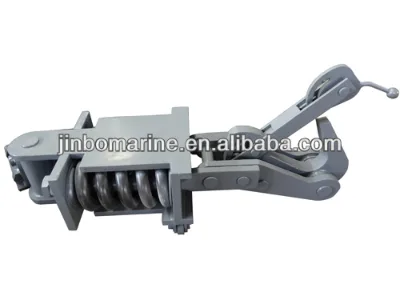


Marine Dock Deck Pneumatic Quick Release Mooring Towing Hook for Boat
$199.00 - $9999.00
MOQ: 1 Pieces


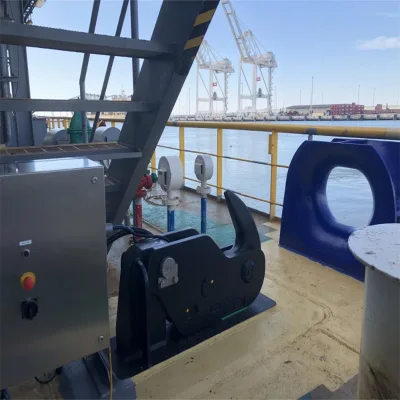

Comprehensive Sourcing Guide
Strategic Sourcing Guide for Quick Release Mooring and Towing Hooks
The global maritime industry relies heavily on the reliability of mooring and towing equipment to ensure vessel safety during docking, anchoring, and emergency towing operations. When sourcing a Quick Release Mooring Towing Hook, buyers must navigate a complex landscape of technical specifications, certification requirements, and supplier capabilities. This guide provides a disciplined approach to evaluating potential suppliers and products, focusing on the critical attributes observed in the current market. The objective is to equip procurement professionals with the knowledge to select equipment that meets rigorous operational standards without relying on unverified claims.
Technical Specifications and Design Variability
The foundational step in sourcing a Quick Release Mooring Towing Hook is defining the precise technical requirements. The market exhibits significant variability in design configurations, which directly impacts performance. Observed product attributes indicate that designs often follow specific patterns, such as the Delta Anchor configuration, which is engineered for specific load distributions. Furthermore, the number of hooks integrated into a single unit can vary, with common configurations including single, double, or triple hook arrangements. This variability allows for customization based on the specific vessel type and the intended mooring line configuration.
Material composition is another critical technical factor. The majority of high-performance hooks in the current supply chain are manufactured from steel, chosen for its durability and resistance to harsh marine environments. The surface treatment process is equally vital; observed data points to baking paint as a standard finish, which provides a protective layer against corrosion and wear. Buyers must verify that the surface treatment is applied consistently across the product batch to ensure long-term integrity.
Capacity and load ratings are perhaps the most decisive technical parameters. The market displays a wide range of Safe Working Loads (SWL), with observed specifications ranging from 16kN to 400kN, and broader ranges extending up to 100-2000kN for heavy-duty applications. Some suppliers list standards based on specific tonnage capacities, such as 10T, or force ranges like 5KN-1000KN. It is imperative for buyers to match the SWL of the hook to the maximum expected load of their mooring lines, ensuring a significant safety margin. Additionally, the weight of the unit itself is a logistical consideration, with observed product weights falling between 1000kg and 3000kg, necessitating careful planning for installation and handling.
Compliance and Certification Verification
In the maritime sector, certification is not merely a formality but a legal and operational necessity. A Quick Release Mooring Towing Hook must comply with international and regional standards to be approved for use on commercial vessels. The observed market includes products certified by major classification societies, including CCS (China Classification Society), BV (Bureau Veritas), ABS (American Bureau of Shipping), DNV-GL, and Rmrs (Russian Maritime Register of Shipping). These certifications validate that the product has undergone rigorous testing for strength, fatigue, and release mechanisms.
Beyond classification society approvals, other regulatory standards play a role. Some products in the supply chain are listed with ISO certification, indicating adherence to international quality management standards. Additionally, specific regional certifications such as RoHS and GS may be present, though their relevance depends on the destination market and the specific regulatory framework of the importing country. Buyers must explicitly request the certificate of conformity and verify that the certification covers the specific model number and batch being purchased. The presence of a "CS" or "RS" certification in product listings should be cross-referenced with the issuing body's database to confirm validity.
It is crucial to note that not all listed products carry the same level of certification. While some suppliers offer comprehensive certification packages, others may only provide basic compliance. Procurement teams should prioritize suppliers who can demonstrate a complete certification trail for the specific model, such as the "EW" model or those designated as "Spring towing hooks," to avoid regulatory hurdles during vessel inspections.
Cost Drivers and Pricing Dynamics
Understanding the cost structure of quick release mooring towing hooks is essential for budgeting and negotiation. The observed price range in the market is extensive, spanning from $1 to $20,000 USD. This vast disparity is driven by several factors, primarily the Safe Working Load (SWL), material grade, and the complexity of the quick-release mechanism. A hook with an SWL of 16kN will naturally be priced lower than a unit rated for 2000kN.
Customization is a significant cost driver. While many suppliers offer standard models, the market also supports customized options for length, color, and capacity. Products listed with "Customized" attributes for length and color often command a premium due to the additional engineering and manufacturing steps required. Conversely, non-customized or standard models may be available at lower price points. The packaging method also influences cost; options range from "Nude" packaging to wooden boxes, plywood boxes, or plastic packaging. More robust packaging, such as plywood boxes, adds to the overall cost but ensures the product arrives in pristine condition, which is critical for high-value marine equipment.
Minimum Order Quantity (MOQ) is another financial consideration. The observed MOQ range is between 1 and 100 units. Suppliers with lower MOQs may be more suitable for smaller vessel operators or replacement needs, while those requiring higher volumes may offer better unit economics. Buyers should also consider the supply ability, which is observed to be around 50 sets per month for some suppliers. This capacity constraint can impact lead times and the ability to fulfill large orders promptly, potentially affecting the total cost of ownership if project timelines are tight.
Typical Applications and Operational Context
The versatility of quick release mooring towing hooks makes them suitable for a wide array of maritime applications. Observed product attributes highlight applications on decks, docks, boats, yachts, and tugs. The specific application dictates the required design features. For instance, hooks intended for deck use on large vessels may require a central control system for operation, allowing for remote activation in hazardous conditions. In contrast, hooks for smaller boats or yachts might utilize a ground operation form, where the crew manually operates the release mechanism.
The power source for the release mechanism is another application-specific variable. Some units are designed for electric operation, providing automated and rapid release capabilities, while others may rely on double-action mechanisms or manual operation. The choice between electric and manual systems depends on the vessel's power infrastructure and the crew's operational preferences. Additionally, the color of the hook, observed in yellow, black, or red, is often chosen for visibility and safety compliance on the deck.
For towing operations, the hook must be robust enough to handle dynamic loads. The "Spring towing hooks" category, for example, is specifically designed to absorb shock loads during towing maneuvers. Buyers must ensure that the selected hook's application rating matches the vessel's operational profile. A hook rated for a tugboat may be over-engineered and unnecessarily expensive for a small yacht, while a hook designed for a yacht would be unsafe for a large tug.
Supplier Evaluation and Supply Chain Reliability
Selecting the right supplier is as critical as selecting the right product. The market includes suppliers originating from various regions in China, including Jiangshu, Henan, and Chongqing. While the specific origin can influence logistics and lead times, the primary focus should be on the supplier's ability to deliver consistent quality and meet certification requirements. Buyers should evaluate suppliers based on their after-sales service provisions, as the market indicates that many suppliers offer support services.
The supply ability is a key metric for supplier evaluation. A supplier stating a capacity of 50 sets per month may struggle to fulfill a large order within a short timeframe. Buyers should inquire about the supplier's production capacity and their ability to scale up during peak demand periods. The port of dispatch, observed as Shanghai for some suppliers, is also relevant for logistics planning, as it affects shipping costs and transit times.
Transparency regarding the product's origin and manufacturing process is essential. Suppliers should be able to provide detailed information about the production location and the quality control measures in place. The presence of a "Central Control System" or specific "Accessories" like a base should be verified to ensure the supplier can provide a complete, ready-to-install solution. Buyers should avoid suppliers who are vague about their manufacturing capabilities or who cannot provide clear documentation regarding the product's specifications.
Quality Control and Long-Term Procurement Considerations
Quality control is the final barrier before a Quick Release Mooring Towing Hook is deployed on a vessel. Buyers must ensure that the supplier has a robust quality assurance process in place. This includes verifying the material grade of the steel, the consistency of the baking paint surface treatment, and the integrity of the quick-release mechanism. The weight of the product, observed between 1000kg and 3000kg, should be consistent with the specifications to ensure the hook performs as expected under load.
Long-term procurement considerations involve the warranty and maintenance requirements. The market offers a standard 1-year warranty for many products, which provides a baseline for supplier accountability. However, buyers should also consider the availability of spare parts and the ease of maintenance. The "After Sales Service" attribute indicates that suppliers are expected to provide support, but the scope of this support should be clearly defined in the contract.
Furthermore, the packaging details, such as plywood box packaging, play a role in long-term preservation. Proper packaging protects the hook from corrosion and damage during transit and storage. Buyers should verify that the packaging meets the requirements for the specific shipping route and storage conditions. Finally, the customization options, including color and length, should be documented clearly to ensure that the final product matches the operational requirements of the vessel. By adhering to these disciplined sourcing practices, buyers can secure reliable quick release mooring towing hooks that enhance maritime safety and operational efficiency.
FAQs
What certifications are available for quick release mooring towing hooks?
Available certifications include CCS, BV, ABS, DNV-Gl, and Rmrs for marine applications. Some products also carry ISO, RoHS, and GS certifications, ensuring compliance with international quality and safety standards for vessel operations.
Which material is used to manufacture these marine towing hooks?
The hooks are manufactured from steel to ensure durability in harsh marine environments. The surface treatment typically involves baking paint to provide a protective layer against corrosion and wear during long-term deck or dock operations.
Can the product weight be customized for specific vessel requirements?
Product weight is observed to range between 1000kg and 3000kg depending on the model and capacity. While the weight itself is not explicitly listed as a customizable parameter, the capacity and design configurations can be adjusted to meet specific load needs.
What packaging options are available for shipping these hooks?
Packaging options include nude, wooden, plastic, and plywood box packaging. Plywood boxes are commonly used for heavy-duty items to ensure protection during transit, while other methods may be selected based on cost and logistics requirements.
How is the capacity of the towing hook defined in the market?
Capacity is defined by Safe Working Load (SWL) ranging from 16kN to 400kN or 100-2000kN for heavy-duty units. Some specifications also list tonnage standards like 10T or force ranges up to 1000KN to match vessel mooring line requirements.
Which locations are the primary origins for these marine products?
Products originate from various regions in China, including Jiangshu, Henan, and Chongqing. The port of dispatch for some suppliers is Shanghai, which influences logistics planning and lead times for international buyers sourcing this equipment.
What warranty and after-sales services are provided for these hooks?
A standard one-year warranty is typically provided for the equipment. Suppliers also offer after-sales service support, ensuring that buyers have access to assistance for installation, maintenance, or troubleshooting during the operational lifecycle of the hook.