Source Recyclable Kids Dinner Set for home hotel restaurant
Compare 30 listings of Recyclable Kids Dinner Set options featuring bamboo fiber and plastic materials. Buyers can evaluate certifications, customization, and pricing for home, hotel, and restaurant applications.
Key considerations
Products List


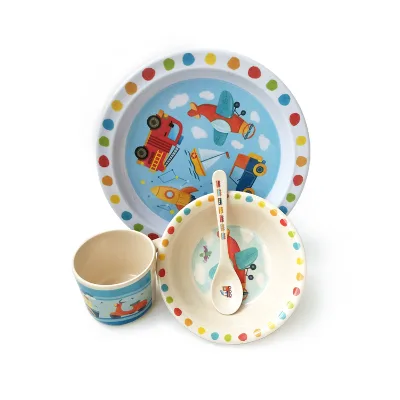
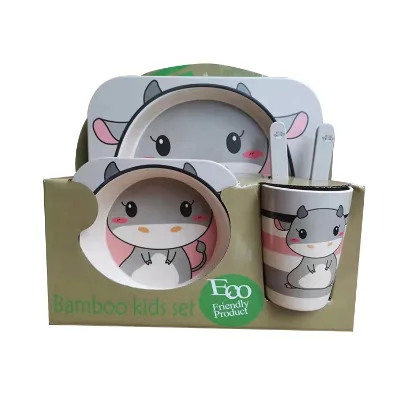


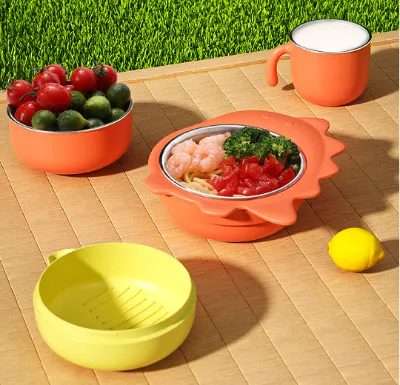
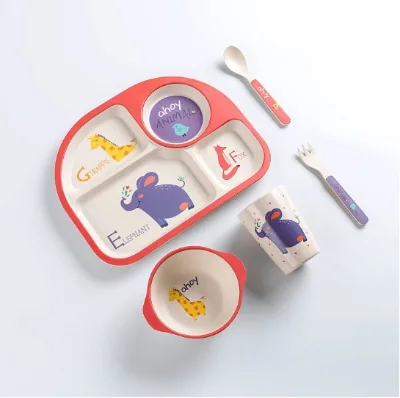
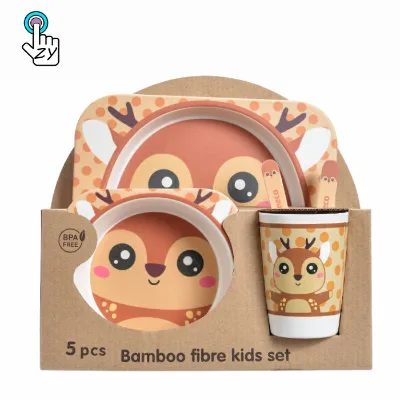
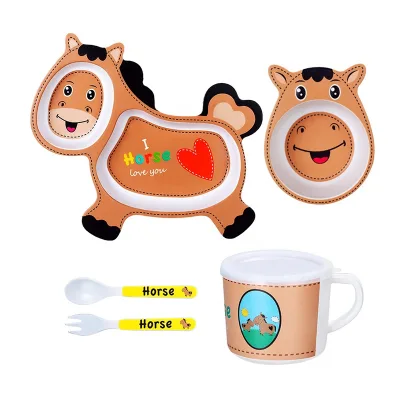
Customized Dinnerware RPET Animal Print Children Service Dinnerware Set
$3.59 - $3.99
MOQ: 1000 Pieces


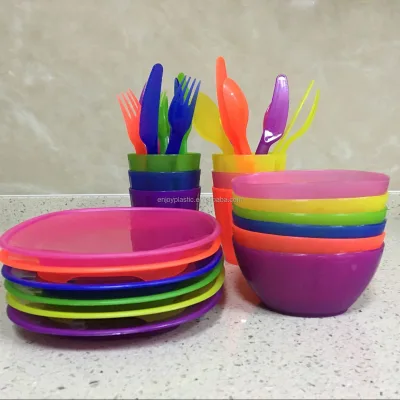
Wholesale RPET Round Dinnerware 5PCS Kids Plastic Reusable Party Tableware Set
$2.99 - $3.19
MOQ: 500 Pieces


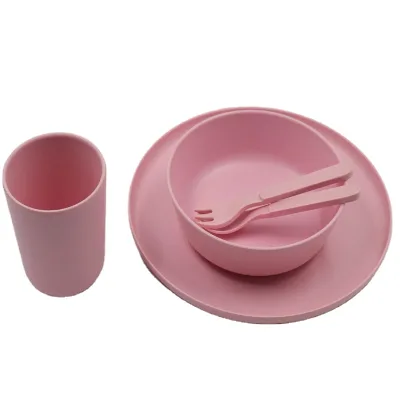
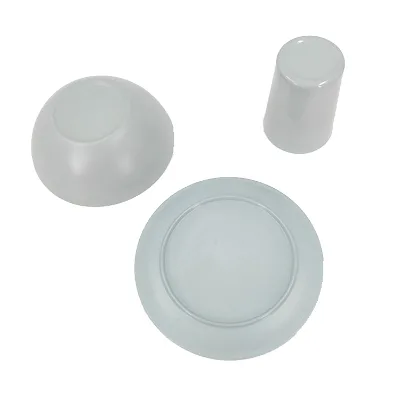



Comprehensive Sourcing Guide
Strategic Sourcing Guide for Recyclable Kids Dinner Sets
The global demand for sustainable, child-safe tableware has intensified as parents and institutional buyers prioritize eco-friendly materials that do not compromise on durability or safety. When sourcing a Recyclable Kids Dinner Set, procurement professionals must navigate a complex landscape of material science, regulatory compliance, and supply chain logistics. The following guide synthesizes available market data and technical requirements to assist buyers in identifying reliable suppliers and defining precise product specifications. This analysis focuses on the intersection of bamboo fiber technology and plastic alternatives, ensuring that the final procurement decision aligns with both environmental goals and strict safety standards for children's products.
Material Composition and Technical Specifications
The foundation of any successful sourcing strategy for kids' dinnerware lies in understanding the material composition. Current market offerings for "recyclable" or "eco-friendly" children's sets often feature a blend of natural fibers and synthetic binders. A primary observation in the sector is the prevalence of bamboo fiber dinnerware, which is frequently marketed as a sustainable alternative to traditional melamine or virgin plastics. These products are typically described as "bamboo fiber plates" or "reusable dinnerware bamboo fiber," combining bamboo pulp with food-grade resins to create a durable, lightweight, and chip-resistant surface.
Technical specifications for these sets vary significantly based on the intended use and manufacturing process. Buyers should expect to encounter specific dimensional constraints and weight profiles. For instance, standard single-package sizes for these sets often measure approximately 21.5 x 21.5 x 2 cm, with a single gross weight hovering around 0.500 kg. However, variations exist; some models list a standard weight of 385g, while others indicate a lighter profile of 0.31kg. The shape is predominantly round, designed to fit standard child-sized hands and plates, though the "dinnerware type" can encompass a full set including plates, bowls, cups, and cutlery kits comprising spoons, forks, knives, and chopsticks.
When evaluating the "recyclable" claim, it is crucial to distinguish between the material's origin and its end-of-life processing. While bamboo fiber sets are often labeled as eco-friendly and stocked for immediate delivery, the term "recyclable" in the context of composite materials requires careful verification. The material is often categorized under "plastic dinnerware set for babies" in broader listings, indicating that the binding agent may be a thermoset resin that limits traditional mechanical recycling. Buyers must therefore scrutinize the specific material blend to ensure the product meets their sustainability criteria without relying on vague marketing terms.
Regulatory Compliance and Certification Verification
Safety is the non-negotiable priority when sourcing dinnerware for children. The regulatory landscape for kids' products is stringent, requiring suppliers to provide robust documentation proving that their goods meet international safety standards. In the context of the current market, high-confidence facts indicate that compliant products often carry certifications such as FDA, LFGB, CE / EU, CIQ, EEC, and SGS. These certifications are not merely badges of honor but legal requirements for entering major markets like the United States and the European Union.
The LFGB (German Food and Feed Code) and FDA (U.S. Food and Drug Administration) certifications are particularly critical for food-contact materials. They verify that the dinnerware does not leach harmful substances like bisphenol A (BPA) or heavy metals into food. Similarly, the CE / EU mark indicates conformity with European health, safety, and environmental protection standards, while CIQ (China Inspection and Quarantine) and EEC (European Economic Community) marks provide additional layers of assurance regarding the product's origin and compliance. The presence of SGS certification further validates the product's quality through third-party testing.
Buyers must verify that the specific model they intend to purchase holds these certifications. The market data shows that some listings explicitly mention "CE / EU, CIQ, EEC, LFGB" while others add "SGS" to the list. It is imperative to request the actual test reports corresponding to these certifications for the specific batch or model number, as certifications can be generic to a factory rather than specific to a product line. The absence of these documents should be treated as a red flag, regardless of the supplier's verbal assurances regarding the product's safety.
Cost Drivers and Pricing Dynamics
Understanding the cost structure of kids' dinnerware is essential for budgeting and negotiation. The observed price range in the market spans from $0.15 to $6.71 per unit, a wide variance that reflects differences in material quality, design complexity, and order volume. Several key factors drive these costs. First, the material composition plays a significant role; bamboo fiber composites often command a premium over standard plastic due to the perceived eco-friendly value and the complexity of processing natural fibers.
Second, customization is a major cost driver. The market data indicates that customization is available, with options for "Customized Designs" and "Custom Printing." However, this comes with specific Minimum Order Quantity (MOQ) thresholds. For standard printed designs, the Print MOQ is often set at 3000 PCS, while some suppliers may require 5000 PCS for custom artwork. Orders falling below these thresholds may incur higher per-unit costs or require the purchase of stock items. The general MOQ for the product itself ranges from 1 to 10,000 units, offering flexibility for small startups but potentially limiting bulk discounts for larger enterprises.
Payment terms also influence the effective cost of procurement. Standard industry practice for these transactions involves a T/T (Telegraphic Transfer) structure requiring a 30% deposit and a 70% balance before shipment. This structure protects the supplier against non-payment while requiring the buyer to have sufficient liquidity to cover the initial deposit. Additionally, packaging details, such as the choice between bulk packaging, white boxes, color boxes, or PVC blister boxes, can add to the overall unit cost. Buyers should weigh the marketing value of premium packaging against the budget constraints of the project.
Supplier Evaluation and Operational Capabilities
Selecting the right supplier requires a deep dive into their operational capabilities and reliability. The market data reveals that the primary origin for these products is China, with suppliers claiming a supply ability of up to 20,000 sets per day for bamboo fiber sets. This high capacity suggests that the manufacturing base is well-equipped to handle large-scale orders, but it also necessitates rigorous vetting to ensure that quality remains consistent during peak production periods.
Lead times are another critical metric for supplier evaluation. The observed product lead time is approximately 30 days, which is standard for manufacturing and logistics from China. However, the sample time varies, with some suppliers offering samples within 3-7 days, while others list a sample time of 7 days. Buyers should factor these timelines into their product launch schedules. A supplier that can deliver samples quickly is often more responsive and efficient, which is a positive indicator of their overall operational health.
When evaluating suppliers, buyers should look for evidence of "Classic, Modern, Morden Luxury" style capabilities, as the design aesthetic is a key differentiator in the kids' market. The ability to offer "Customized Designs" alongside standard stock items indicates a flexible manufacturing process. Furthermore, the "Product Lead Time" of about 30 days should be confirmed against the specific order volume; while 20,000 sets per day is the theoretical capacity, actual lead times for custom orders may extend beyond the standard window. Buyers should also verify the "Port of dispatch," which is listed as "Any port in China," allowing for logistical flexibility but requiring the buyer to manage freight forwarding arrangements.
Quality Control and Inspection Protocols
Implementing a robust quality control (QC) protocol is essential to mitigate the risks associated with sourcing from international markets. Given the direct contact of the dinnerware with children's food, the inspection process must go beyond visual checks to include functional and chemical safety testing. The "feature" of the product often includes "Disposable, Eco-Friendly, Stocked," but for reusable sets, the focus must be on durability and safety.
Inspection criteria should include checks for structural integrity, such as ensuring the "round Shape" is uniform and that the edges are smooth to prevent injury. The "Single package size" and "Single gross weight" should be verified to ensure consistency across the batch, as variations can indicate production inconsistencies. For bamboo fiber products, buyers should specifically inspect for signs of delamination or cracking, which can occur if the binding resin is not applied correctly.
Chemical safety testing is paramount. Even if a supplier claims FDA or LFGB certification, independent third-party testing of the specific production batch is recommended. This is especially important for products labeled as "Eco-Friendly," as the term can sometimes mask the presence of non-compliant additives. The "Payment: T/T 30% Deposit 70% Balance" structure allows buyers to withhold the final payment until a successful pre-shipment inspection is completed. This leverage ensures that the supplier addresses any quality issues before the goods leave the factory.
Long-Term Procurement and Sustainability Considerations
Sourcing a Recyclable Kids Dinner Set is not just a one-time transaction but a strategic decision with long-term implications for brand reputation and supply chain stability. The "Usage" of these products spans "Home, Hotel, Restaurant," indicating a broad market potential. However, the sustainability claims must be scrutinized over the product's lifecycle. While the material is described as "bamboo fiber" and "eco-friendly," the "recyclable" nature of the final composite product depends on local waste management infrastructure.
Buyers should consider the "Customization" aspect as a long-term asset. The ability to offer "Customized Designs" allows brands to differentiate themselves in a crowded market. However, the high MOQ for printing (3000-5000 PCS) means that customization is best suited for established brands with consistent demand. For new entrants, starting with stock items that feature "Multicolor" options or "Custom Printing" on smaller batches might be a more viable strategy.
Finally, the "Item Name" and "Product Type" should align with the brand's core values. Whether the product is marketed as a "baby set dinnerware" or a "kids dinnerware set," the messaging must be consistent with the safety and environmental claims. The "Design" should reflect the "Classic, Modern, Morden Luxury" styles to appeal to modern parents who value aesthetics alongside functionality. By focusing on these long-term considerations, buyers can build a supply chain that supports their brand's growth while maintaining the highest standards of safety and sustainability for children's products.
FAQs
What certifications do recyclable kids dinner sets typically have?
These sets typically hold FDA, LFGB, CE, EU, CIQ, EEC, and SGS certifications. These documents verify safety for food contact and ensure compliance with international standards for children's products before they reach the market.
How long does it take to receive samples of these dinner sets?
Sample times generally range from 3 to 7 days depending on the supplier. Some vendors may require up to 7 days specifically, so buyers should confirm the exact timeline before placing a trial order.
Can I customize the design of the Recyclable Kids Dinner Set?
Yes, customization is available for designs and printing with specific minimum order quantities. Buyers must usually order at least 3000 to 5000 pieces for custom printing to meet the supplier's production thresholds.
What is the typical lead time for bulk orders of these sets?
The product lead time is about 30 days for most manufacturers. This duration covers production and preparation, though it may vary based on the specific order volume and customization requirements.
Which materials are used to make these eco-friendly dinner sets?
The sets are primarily made from bamboo fiber or plastic materials. These materials are often described as reusable, eco-friendly, and suitable for baby dinnerware, combining durability with safety standards.
What is the price range for a single Recyclable Kids Dinner Set?
The observed price range in the market spans from 0.15 to 6.71 USD per unit. This variance depends on factors like material quality, customization, and the specific order volume purchased.