Source Recyclable Organza Grocery Tote Bag for Shopping, Events, and Gifts
Compare 30 listings for the Recyclable Organza Grocery Tote Bag from verified Chinese manufacturers. Buyers can evaluate customization options, printing methods, and delivery times to find the best fit for retail or promotional needs.
Key considerations
Products List





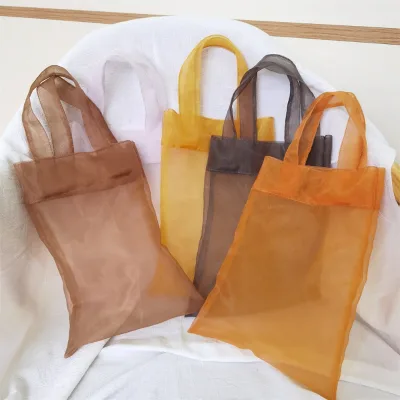
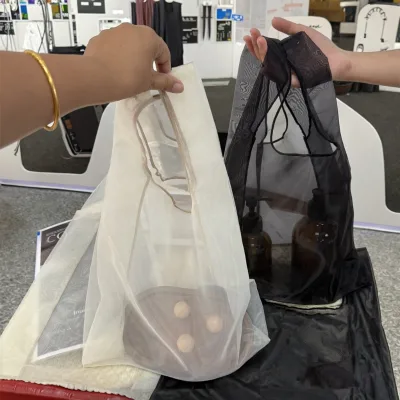


Comprehensive Sourcing Guide
Strategic Sourcing Guide for Recyclable Organza Grocery Tote Bags
The global shift toward sustainable packaging has elevated the demand for recyclable tote bags, yet a critical distinction must be made immediately for procurement professionals. While the core keyword often references "organza," the supplied product data indicates a market dominated by polypropylene (PP) woven and non-woven materials. Organza is typically a sheer, crisp fabric made from silk or synthetic fibers, whereas the observed inventory focuses on durable, eco-friendly PP solutions. Buyers must align their search parameters with the actual supply reality: high-performance, recyclable non-woven or woven PP bags that offer the structural integrity required for grocery and retail applications. This guide outlines the technical, logistical, and quality parameters necessary to source these products effectively, ensuring that procurement strategies are grounded in verified market facts rather than generic assumptions.
Technical Specifications and Material Composition
Understanding the material composition is the first step in defining product requirements. The observed market data reveals that the primary material for these recyclable totes is Polypropylene (PP), specifically available in both woven and non-woven forms. Non-woven PP bags are characterized by their fabric-like texture and are often cited for their eco-friendly and recyclable attributes. The technical specifications observed include a weight range of less than 0.5 kg for the product itself, with some variants having a gross weight between 0.1 and 0.2 kg, while others support a weight limit exceeding 10 kg. This disparity suggests a need for precise specification of load-bearing capacity during the sourcing phase.
The physical dimensions are equally critical. Standard sizes observed include "Middle" dimensions, but a significant portion of the market offers "Accept Customized" sizing, with specific standard configurations noted as 50/40/30 cm. The shape is predominantly square, though the "Handle" type indicates a specific structural design for carrying. The hardness of the material is described as "Medium Soft," which balances durability with flexibility. Buyers must verify if the specific supplier's "PP Woven" or "Non Woven" classification meets the intended use case, as woven variants generally offer higher tensile strength for heavy grocery loads, while non-woven options may be preferred for lightweight promotional distribution.
Surface Finishing and Branding Capabilities
Customization is a central feature of the current market, with "Customization" and "Customized" listed as available attributes. The primary method for branding these bags involves "Logo Printing," which can be executed through several distinct processes. The observed data highlights "Hot Stamping," "Offset Printing," "Thermal Transfer," and "Heat Transfer" as viable technologies. Additionally, "Watermark" printing is noted as a specific aesthetic option. The color palette observed includes "White" as a standard, but the "Customized" standard implies that color matching is possible.
When evaluating suppliers, procurement teams should request samples to verify the clarity and durability of the printing. The "Hot Stamping" process, for instance, often provides a metallic or glossy finish that enhances brand visibility, whereas "Offset Printing" is typically used for high-volume, multi-color designs. The "Sewing" process is also a key technical attribute, indicating that the handles and body of the bag are stitched for reinforcement. This is crucial for grocery bags that must withstand the weight of heavy items. Buyers should confirm that the sewing technology aligns with the "Safety Factor" requirement, ensuring that seams do not fail under the maximum load limit of >10 kg.
Compliance, Certification, and Environmental Claims
The term "Eco-friendly" and "Recyclable" appears frequently in the product attributes, making compliance verification a top priority. While the data confirms these attributes, it does not list specific third-party certifications (such as ISO 14001 or specific plastic recycling codes) or test results. Therefore, buyers must treat these claims as observations that require validation. The "Safety Factor" is mentioned, but the specific safety standards (e.g., BPA-free, food-grade compliance for the "Food" usage category) are not explicitly defined in the source data.
For applications involving "Food," "Cosmetic," or "Gifts," the material must meet relevant food safety and chemical migration standards. Buyers should explicitly request documentation proving that the PP material is free from harmful substances and that the recycling process adheres to local environmental regulations. The "Waterproof" attribute is also listed, which is essential for grocery bags carrying wet produce or liquids. However, the degree of waterproofing should be verified through physical testing, as non-woven materials can vary significantly in their water resistance. Procurement teams should avoid assuming compliance based on marketing terms and instead demand test reports from the supplier.
Cost Drivers and Pricing Structures
The observed price range for these products is between $0.03 and $5.59 USD. This wide variance is driven by several factors, including material thickness, printing complexity, and order volume. The Minimum Order Quantity (MOQ) ranges from 100 to 10,000 pieces, with one specific listing noting an MOQ of 10,000 PCS for a "Simplicity" style bag. This indicates that smaller buyers can access the market through suppliers accepting "Small Orders," but larger volumes will likely yield better unit economics.
The "Factory Price" is listed as an advantage, suggesting that direct sourcing from manufacturers in China (specifically Wenzhou and Quanzhou) offers cost benefits over intermediaries. However, the final cost is heavily influenced by the "Customization" level. Bags with complex "Hot Stamping" or multi-color "Offset Printing" will command higher prices than those with simple "Logo" printing. Additionally, the "Gross Weight" of the product affects shipping costs; bags with a gross weight of >0.3 kg will incur higher freight charges than lighter variants. Buyers should calculate the total landed cost, including the base price, customization fees, and shipping, rather than focusing solely on the unit price.
Supplier Evaluation and Geographic Origins
The supply base is concentrated in specific manufacturing hubs in China, with "Wenzhou" and "Quanzhou" identified as key origins. These regions are known for their textile and packaging industries, offering a dense network of suppliers capable of producing PP woven and non-woven bags. When evaluating suppliers, buyers should verify the "prod_origin" and ensure that the facility has the capacity for the required "Sewing" and "Printing Process" technologies.
The "Delivery Time" varies significantly, with some suppliers offering "Usually 30 days" and others providing "7-10 days After Receiving The Deposit." This discrepancy highlights the importance of lead time management in the procurement strategy. Suppliers offering shorter lead times may charge a premium or have limited capacity for custom orders. Furthermore, the "Sample" availability is noted as "Freely" in some contexts, which is a positive indicator for quality verification. Buyers should leverage this to test the "Hardness," "Weight Limit," and "Closure Type" (noted as "Open") before committing to a large order.
Quality Control and Long-Term Procurement
Ensuring consistent quality requires a robust inspection protocol. The "Standard" for these bags is often "Customized," meaning that the buyer must define the acceptance criteria based on the specific "Model Number" (e.g., #ML-Nonwoven-001, xh-688, Flora-655-Handle Bag). Key quality checkpoints include the integrity of the "Sewing" seams, the adhesion of the "Logo Printing," and the durability of the "Waterproof" coating. The "Gross Weight" should also be monitored to ensure it matches the specification, as variations can indicate inconsistent material density.
For long-term procurement, the "Recyclable" nature of the product is a strategic asset. Buyers should establish a relationship with suppliers who can provide consistent material batches and maintain the "Eco-friendly" claims over time. The "CTN" (Carton) and "Bag/Carton" packing methods observed suggest that packaging logistics should be planned to minimize damage during transit. Additionally, the "Advantage" of "Factory Price" implies that direct relationships with the manufacturer can secure better terms for repeat orders. Buyers should also consider the "Usage" diversity—ranging from "Shopping" and "Promotion" to "Garment & Shoes" and "Electronic Products"—to ensure the selected bag model is versatile enough to meet evolving market needs without requiring frequent product changes.
Application Scenarios and Market Fit
The versatility of these recyclable totes is evident in their listed usage categories. They are suitable for "Shopping," "Promotion," "Packing," "Food," "Cosmetic," "Gifts," and "Electronic Products." The "Open" closure type makes them ideal for quick access in retail environments, while the "Handled" design ensures ease of transport. The "Square" shape provides ample space for rectangular items, making them particularly effective for grocery and retail applications.
However, the "Weight Limit" of >10 kg is a critical specification for grocery use. Buyers must ensure that the specific model selected (e.g., the "Lara--Shopping Bag" or "Flora-655-Handle Bag") can consistently support this load without tearing. The "Medium Soft" hardness is beneficial for folding and storage but must not compromise the structural integrity when filled. For promotional use, the "Logo Printing" capabilities allow for high-visibility branding, making these bags effective marketing tools. The "Eco-friendly" and "Recyclable" attributes resonate strongly with modern consumers, enhancing brand image for retailers and manufacturers alike.
In conclusion, sourcing recyclable organza-style grocery tote bags requires a nuanced approach that prioritizes verified material specifications, rigorous quality control, and clear communication with suppliers in Wenzhou and Quanzhou. By focusing on the actual data points regarding PP materials, printing processes, and load capacities, buyers can secure high-quality, sustainable packaging solutions that meet both functional and environmental goals. The wide range of customization options and competitive pricing structures offers significant opportunities for strategic procurement, provided that the buyer remains vigilant about compliance, lead times, and quality assurance.
FAQs
What materials are used for recyclable grocery tote bags?
The primary materials are Polypropylene (PP) woven or non-woven fabrics. These options provide durability and are marketed as eco-friendly and recyclable for various retail applications.
Can suppliers accept small orders for these bags?
Yes, small orders are accepted by many suppliers in the market. While some listings require a minimum of 10,000 pieces, others allow orders starting from 100 units.
How long does delivery usually take for custom orders?
Delivery times vary significantly between suppliers, ranging from 7 to 30 days. Some vendors ship within 7 to 10 days after receiving a deposit, while others typically require 30 days.
Which printing processes are available for logo customization?
Available printing methods include Hot Stamping, Offset Printing, Thermal Transfer, and Heat Transfer. Buyers can also request Watermark printing for specific aesthetic branding needs.
What is the weight limit for these shopping bags?
Some variants support a weight limit exceeding 10 kg, suitable for heavy grocery loads. Other models have a gross weight between 0.1 and 0.2 kg but may have lower capacity.
Where are the main manufacturing origins for these bags?
Key manufacturing hubs are located in Wenzhou and Quanzhou, China. These regions host factories capable of producing PP woven and non-woven bags with various customization options.
What sizes are available for the shopping bags?
Standard sizes include Middle dimensions and specific configurations like 50/40/30 cm. Many suppliers also offer fully customized sizing to meet specific product requirements.