Source Recyclable Paper Tube for Cosmetics, Food, and Medicine
Compare 30 verified listings for Recyclable Paper Tube options tailored for cosmetics, food, and medicine packaging. Buyers can evaluate customization features, material types, and supplier locations to find the right fit.
Key considerations
Products List


Customized Logo Recyclable Paper Packing Tubes for Tea Cardboard Tube Packaging
$0.20 - $0.50
MOQ: 1000 Pieces

Custom Recyclable Cosmetics Paper Tube Cardboard Paper Tube for Cosmetic Packaging
$0.20 - $0.50
MOQ: 1000 Pieces


Round Kraft Paper Tube Packaging for Biodegradable Cardboard Paper Tube
$0.20 - $0.50
MOQ: 1000 Pieces


Body Tube Biodegradable Cardboard Cylinder Food Paper Tube for Packaging
$0.21 - $0.47
MOQ: 500 Pieces

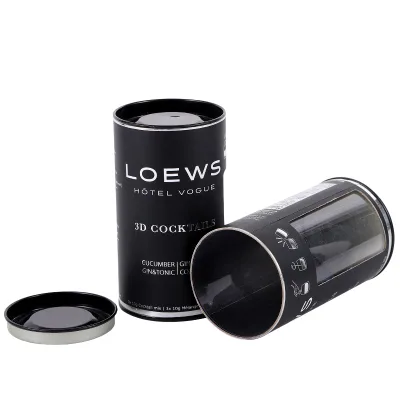


Special-Shaped Perforated Round Paper Tube, Spiral Process Kraft Paper Tube
$16.00 - $20.00
MOQ: 500 Pieces


Comprehensive Sourcing Guide
Strategic Sourcing Guide for Recyclable Paper Tube Procurement
Understanding Material Composition and Structural Integrity
The foundation of any successful procurement strategy for recyclable paper tubes begins with a rigorous analysis of material composition. In the current market, the term "Recyclable Paper Tube" often encompasses a spectrum of products ranging from pure paperboard constructions to composite structures that may include aluminum or other liners. Based on observed product attributes, the primary material for this category is explicitly identified as Paper. This distinguishes these items from aluminum tubes, which are characterized by a Cold Extrusion forming process and often feature Various Coatings on the inner surface to protect contents.
When evaluating a potential supplier, buyers must first verify the specific grade of paper used. The supply chain data indicates that Paper is the standard material, but the structural integrity depends heavily on the wall thickness and the bonding agents used. For applications involving Cosmetics, Medicine, Food, Toothpaste, and Chemicals, the paper tube must offer sufficient rigidity to protect the contents during transit while maintaining the ability to be recycled at the end of its lifecycle.
It is critical to distinguish between pure paper tubes and hybrid solutions. While some listings specify Aluminum as the material, these are distinct from the core "recyclable paper" category. Aluminum tubes typically utilize Cold Extrusion and feature Various Coatings for internal protection. In contrast, the Recyclable Paper Tube relies on the inherent properties of the paperboard, often treated with Offset Printing or Labeling processes for branding. Buyers should request material safety data sheets (MSDS) or technical datasheets that confirm the paper composition is free from non-recyclable laminates that would compromise the recycling stream. The presence of FSC (Forest Stewardship Council) certification is a strong indicator that the paper source is managed responsibly, though this must be verified against the specific batch rather than assumed for the entire product line.
Technical Specifications and Customization Capabilities
The versatility of recyclable paper tubes is largely driven by their high degree of customization. The market data reveals that Customization is a standard feature, allowing buyers to tailor dimensions to their specific packaging needs. For paper-based solutions, the Standard is often listed as Customized, meaning there is no rigid industry-wide size constraint, unlike the specific diameter ranges observed in aluminum counterparts, which are noted as 19-40mm (Customizable) with heights of 90-200mm (Customizable).
When sourcing paper tubes, buyers should define their requirements for Diameter, Height, and Volume. While the provided data does not list specific millimeter ranges for the paper tubes, the principle of Size can be customized applies universally in this sector. The Volume capacity is a critical metric, particularly for industries like Cosmetics and Food, where the tube must hold a precise amount of product without compromising structural stability.
The Surface Treatment process is another vital technical specification. The observed data highlights Labeling and Offset Printing as the primary methods for applying graphics and branding to the tube. Offset Printing is generally preferred for high-volume runs requiring high-resolution images, while Labeling might be used for secondary branding or regulatory information. Buyers must ensure that the printing inks used are compatible with the recycling process; solvent-based inks that do not separate easily during pulping can contaminate the recycling stream.
Furthermore, the Inner Coating is a technical consideration that varies by application. While aluminum tubes explicitly mention Various Coatings as Per Products Inside, paper tubes may also require internal barriers to prevent moisture or oil migration, especially for Chemical or Food applications. The absence of a specific coating specification for the paper tubes in the general data suggests that buyers must explicitly request this information. The Forming Process for paper tubes typically involves winding and gluing, differing significantly from the Cold Extrusion used for metal. Understanding this manufacturing distinction is essential for predicting the tube's crush resistance and stacking strength.
Compliance, Certification, and Regulatory Standards
Navigating the compliance landscape is non-negotiable for B2B procurement, particularly when dealing with products intended for Cosmetics, Medicine, and Food. The supply chain data confirms that ISO and FSC certifications are present in the market for these products. ISO certification indicates that the manufacturer adheres to international quality management standards, which is crucial for maintaining consistency in production. FSC certification is particularly relevant for recyclable paper products, as it verifies that the wood fiber originates from responsibly managed forests.
However, buyers must exercise caution. The data lists FSC under both high-confidence and low-confidence categories. This discrepancy suggests that while the certification is a common attribute, it may not apply to every single SKU or batch. Therefore, procurement teams should not assume that a product labeled as "Recyclable Paper Tube" automatically carries FSC certification. Instead, buyers must request valid, current certificates from the supplier for the specific production run.
In addition to environmental certifications, regulatory compliance for the intended use is paramount. For Food and Medicine applications, the paper tube must meet specific food-grade safety standards. The data mentions SGS as a standard for some products, which implies third-party testing capabilities. Buyers should verify if the supplier can provide test reports confirming that the paper and any adhesives or inks used are non-toxic and safe for contact with consumable goods.
The Standard for these products is often listed as Customized or Size can be customized, which means there is no single universal standard that applies to all. Instead, the supplier should be able to demonstrate compliance with relevant regional regulations, such as FDA regulations in the United States or EU food contact regulations in Europe. The presence of OEM/ODM capabilities further indicates that the supplier can adapt their production to meet specific regulatory requirements of the buyer's target market.
Cost Drivers and Economic Factors
The economics of sourcing recyclable paper tubes are influenced by several variables, including material costs, customization complexity, and order volume. The observed MOQ (Minimum Order Quantity) ranges from 100 to 50,000 units, indicating a wide spectrum of flexibility for buyers. Small businesses or those testing new products may find the lower end of this range accessible, while large-scale manufacturers will likely negotiate closer to the higher end to achieve economies of scale.
Price is a dynamic factor, with observed ranges in the market spanning from 0.05 to 50 USD. This vast difference is not necessarily indicative of quality but rather reflects the diversity in tube specifications, such as wall thickness, diameter, and the complexity of the Surface Treatment. A simple, unprinted paper tube will naturally be at the lower end of the price spectrum, while a tube featuring Offset Printing, custom Nozzles, or specialized Inner Coatings will command a higher price.
Customization is a primary cost driver. While Customization is available, the extent of the customization directly impacts the unit cost. Complex geometries, unique Inserts (such as Foam, EVA, or Paperboard inserts), and specialized Accessories like Ribbons, Strings, or Magnet closures add to the manufacturing complexity and cost. Buyers should also consider the Sample Time, which is noted as 3 Days in some cases. Rushing the sample or production process often incurs additional fees.
The Packing method also affects the final landed cost. The data lists Paper, Carton Packing, and Standard Carton Packing as options. Export Carton packing is typically required for international shipments to ensure the tubes arrive in perfect condition. The choice of packing material and the density of the load can influence shipping costs, which are a significant component of the total procurement budget.
Typical Applications and Industry Use Cases
Recyclable paper tubes serve a diverse array of industries, driven by their ability to combine functionality with sustainability. The Usage data explicitly lists Cosmetics, Medicine, Food, Toothpaste, and Chemicals as key application areas.
In the Cosmetics sector, paper tubes are increasingly favored for packaging creams, lotions, and serums. The Recyclable feature aligns with the growing consumer demand for eco-friendly beauty products. The ability to apply Offset Printing allows for high-quality branding, while the Customizable nature of the tube allows for unique shapes that stand out on retail shelves.
For the Medicine and Toothpaste industries, the structural integrity and barrier properties of the paper tube are critical. While the data does not specify exact barrier ratings, the Inner Coating process mentioned for similar products suggests that paper tubes can be treated to protect sensitive pharmaceuticals or toothpaste from moisture and light. The Disposable nature of some products in this category also makes paper tubes an attractive option for single-use medical or hygiene applications.
The Food industry utilizes paper tubes for packaging dry goods, spices, or confectionery. The FSC certification ensures that the packaging meets the environmental expectations of modern food consumers. Additionally, the Chemical sector may use these tubes for packaging small quantities of industrial chemicals, provided the tube's Inner Coating is suitable for the specific chemical composition.
Supplier Evaluation and Quality Control Protocols
Selecting the right supplier requires a multi-faceted evaluation process that goes beyond price comparisons. The Location of the supplier is a significant factor, with data points indicating origins in Shanghai, Zhejiang, and Guangzhou in China. These regions are known for their robust manufacturing ecosystems, but buyers should verify the specific factory capabilities.
Quality Control should be a central part of the supplier evaluation. Buyers should inquire about the supplier's Service levels, such as 8 Hours Online support, which indicates responsiveness to inquiries and potential issues. The Sample acceptance policy is another critical metric; a supplier that accepts samples and provides them within a reasonable Sample Time (e.g., 3 Days) demonstrates confidence in their production capabilities.
When evaluating Quality Control, buyers should request documentation on the Forming Process and Surface Treatment consistency. For Offset Printing, color accuracy and registration are vital. For Labeling, adhesion strength and durability must be tested. The Insert options, such as Foam, EVA, or Paper Card, should be inspected for fit and finish.
The Loading Port is another logistical consideration. Data indicates Ningbo Port as a common loading point for these products. Buyers should ensure that the supplier has experience with export procedures from this port to avoid delays. The OEM/ODM capability should be verified to ensure the supplier can handle the specific design requirements of the buyer's brand.
Long-Term Procurement and Sustainability Strategy
Sourcing recyclable paper tubes is not just a transactional decision but a strategic move toward long-term sustainability. The Recyclable attribute is a key selling point, but its value is realized only if the entire supply chain supports it. Buyers should establish a long-term relationship with suppliers who are committed to continuous improvement in their environmental practices.
The Standard of Customized production allows for flexibility in adapting to future regulatory changes or consumer trends. As recycling infrastructure evolves, the ability to modify the Material composition or Surface Treatment will be crucial. Buyers should also consider the Artwork Format requirements, such as Pdf, Ai, and Corel Draw, to ensure smooth integration with their design teams.
Finally, the Logo customization and Accessories like Ribbon, String, or Magnet offer opportunities for brand differentiation. By selecting a supplier that offers OEM/ODM services, buyers can create a unique product identity that aligns with their sustainability goals. The MOQ flexibility allows for iterative testing and scaling, reducing the risk of over-investment in inventory.
In conclusion, the procurement of recyclable paper tubes requires a balanced approach that considers material integrity, technical specifications, compliance, cost, and supplier reliability. By adhering to the guidelines outlined above, buyers can make informed decisions that support both their business objectives and environmental commitments.
FAQs
Can I customize the size and design of recyclable paper tubes?
Yes, customization is available for dimensions and branding. Buyers can request specific diameters and heights, though exact ranges vary by supplier. Offset printing or labeling is used for graphics, and FSC certification may apply to the paper source.
What certifications do Recyclable Paper Tube manufacturers typically hold?
Common certifications include ISO and FSC for quality and sustainable sourcing. Some products also meet SGS standards for safety. Buyers should verify specific batch certificates rather than assuming all items carry these marks.
What is the minimum order quantity for these recyclable paper tubes?
The minimum order quantity ranges from 100 to 50,000 units depending on the supplier. Lower MOQs suit small businesses testing products, while larger volumes secure better economies of scale. Specific limits vary by manufacturer.
How are recyclable paper tubes packed for international shipping?
Tubes are typically packed in export cartons or standard carton packing. This ensures protection during transit. Some suppliers use paper packing for internal grouping before placing items into larger shipping cartons.
Which industries commonly use recyclable paper tubes for packaging?
These tubes are used for cosmetics, medicine, food, toothpaste, and chemicals. The recyclable feature aligns with eco-friendly trends in these sectors. Internal coatings may be added for moisture or oil protection.
What is the typical sample time for custom recyclable paper tubes?
Sample time is generally around 3 days for custom designs. This allows buyers to verify quality and fit before full production. Rush orders may incur additional fees or require specific supplier agreements.
Where are Recyclable Paper Tube manufacturers located in China?
Manufacturers are located in Shanghai, Zhejiang, and Guangzhou. These regions offer robust supply chains for paper packaging. Buyers should confirm the specific factory location when requesting quotes or samples.