Source Eco Friendly TPE Yoga Mat for Home, Gym, and Travel
Compare 30 listings of Eco Friendly TPE Yoga Mat from verified Chinese manufacturers. Buyers can evaluate materials like EVA and TPE, check custom logo options, and review MOQs ranging from 60 to 10,000 pieces for home exercise and studio use.
Key considerations
Products List




Comprehensive Sourcing Guide
Strategic Sourcing Guide for Eco-Friendly TPE Yoga Mats
Understanding Material Composition and Environmental Attributes
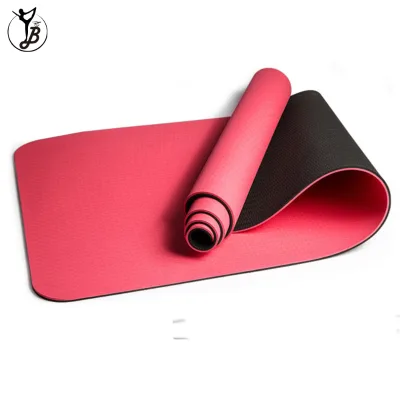
When sourcing eco-friendly TPE (Thermoplastic Elastomer) yoga mats, the primary objective is to distinguish these products from traditional PVC (Polyvinyl Chloride) mats. TPE is widely recognized in the B2B market for being a recyclable, non-toxic, and odorless alternative. Unlike PVC, which often contains phthalates and requires incineration for disposal, TPE offers a closed-loop recycling potential, aligning with modern sustainability mandates. In the current supply landscape, buyers observe specific material classifications where TPE is the dominant polymer. The material properties of TPE provide a balance of elasticity, durability, and softness, making it suitable for various yoga styles.
The observed product data indicates that TPE mats are frequently categorized under specific model numbers, such as TP19-TPEM-MT 501, which signifies a standardized manufacturing approach. It is crucial for buyers to verify that the "Eco-Friendly" claim is substantiated by the material composition itself. While some listings mention "Suede" or "PU" (Polyurethane) layers, the core eco-attribute often resides in the TPE base. Buyers must ensure that the supplier does not blend TPE with PVC to reduce costs, as this would negate the environmental benefits. The material should be free from heavy metals and harmful chemicals, a baseline requirement for any product marketed as eco-friendly.
Technical Specifications and Dimensional Standards
Technical specifications are the backbone of any procurement decision, particularly for fitness equipment where user safety and performance are paramount. The standard dimensions for yoga mats in the current market generally adhere to specific metric ranges. Observed data reveals that common standard sizes include 18361 cm, 18066 cm, and 173*61 cm. These dimensions are designed to accommodate the average adult user while ensuring portability.
Thickness is a critical variable that affects both comfort and stability. The market offers TPE mats in thicknesses ranging from 4mm to 6mm, with some specialized variants offering 0.4mm, 0.5mm, 0.6mm, or 0.8mm options. Thicker mats (5mm-6mm) are preferred for restorative yoga or practitioners with joint sensitivities, providing superior cushioning. Thinner mats (4mm) are often favored for dynamic styles like Vinyasa or Ashtanga, where stability and ground feel are essential. The product data also highlights a specific standard of 183610.4/0.6/0.8cm, indicating that manufacturers often produce multiple thickness variants within the same model line.
Weight is another significant factor for logistics and user experience. Light-weight options are highly valued, with specific listings noting "Light Weight: Yes" as a key attribute. For instance, a standard 183610.6cm mat may weigh approximately 1100g, while thinner variations will be lighter. Buyers should verify the exact weight-to-thickness ratio, as this impacts shipping costs and the ease of transport for the end consumer. The packing method, such as "Paper Wrap / Box" or "Rolling by OPP Film," also influences the final product condition and the perceived value of the packaging.
Compliance, Certification, and Safety Verification
In the B2B sector, compliance is not merely a formality but a prerequisite for market access, especially in regions with strict chemical regulations. When sourcing eco-friendly TPE mats, buyers must demand documentation for specific certifications. The observed product data explicitly lists certifications such as Ca65 (California Proposition 65), Reach (Registration, Evaluation, Authorization and Restriction of Chemicals), En71 (European safety standards for toys, often applied to children's fitness gear), and Rosh (Restriction of Hazardous Substances). These certifications are vital indicators that the product has been tested for harmful substances.
Buyers should verify that the "Eco-Friendly" claim is backed by these third-party test results. While some background knowledge suggests certifications like FSC, CE, or Oeko-Tex, these should not be assumed without explicit confirmation from the supplier. The presence of Ca65 compliance is particularly important for sales in the United States, as it ensures the product does not contain chemicals known to cause cancer or reproductive toxicity. Similarly, Reach compliance is mandatory for selling within the European Union.
It is essential to note that the absence of a specific certification in a product listing does not necessarily mean the product is non-compliant, but it does require the buyer to request the test reports directly. Buyers should also be wary of vague claims regarding "Eco-Friendly" without supporting documentation. The verification process should include a request for the latest test reports from accredited laboratories, ensuring that the data is current and covers the specific batch or model being ordered.
Cost Drivers and Economic Factors
The pricing of TPE yoga mats is influenced by several interconnected factors, including material costs, order volume, and customization requirements. The observed price range in the market spans from 1.5 to 16.5 USD, a wide variance that reflects differences in thickness, density, branding, and packaging. Lower-priced items typically correspond to thinner mats (4mm) with standard packaging, while higher-priced items often feature thicker profiles (6mm), premium finishes like suede or PU layers, and more elaborate packaging solutions.
Minimum Order Quantity (MOQ) is a significant economic driver. The data indicates an MOQ range of 60 to 10,000 pieces, with a specific high-confidence fact noting an MOQ of 100 PCS for certain models. This variability allows buyers to scale their orders based on their budget and storage capacity. Smaller MOQs are beneficial for startups or those testing the market, while larger orders secure better unit economics. However, buyers must calculate the total landed cost, which includes shipping, duties, and insurance, not just the unit price.
Customization is another major cost component. The product data confirms that "Customization: Available" and "OEM: Accept" are standard attributes. This includes custom logos, colors, and packaging. While adding a custom logo or color increases the unit cost, it is often necessary for brand differentiation. The payment terms, such as PayPal, Western Union, TT, and Trade Assurance, also play a role in the financial risk management of the transaction. Buyers should negotiate payment terms that align with their cash flow, potentially using Trade Assurance to mitigate risks associated with non-delivery or quality issues.
Supplier Evaluation and Operational Capabilities
Selecting the right supplier requires a thorough evaluation of their operational capabilities, location, and production history. The observed data points to suppliers located in key manufacturing hubs such as Jiangsu China and Foshan Guangdong. These regions are known for their robust supply chains and expertise in rubber and plastic processing. The presence of multiple model numbers, such as TP19-EVAMT-MT 506 and TP19-TPEM-MT 501, suggests that suppliers often have diverse production lines capable of handling different material types, including EVA and TPE.
Buyers should assess the supplier's ability to handle the specific requirements of the order, such as the "Customized Logo" and "Paper Wrap / Box" packaging. The lead time is another critical operational metric. The data mentions a "Ship Date" of 15-30 days, which serves as a benchmark for production and logistics planning. However, buyers must confirm if this lead time includes the time for mold creation for custom designs, which can extend the timeline significantly.
Quality control systems are essential for maintaining consistency. Suppliers should have a documented process for inspecting raw materials, monitoring production lines, and conducting final product checks. The ability to provide samples before mass production is a strong indicator of a reliable supplier. Buyers should also verify the supplier's capacity to handle large orders, as the MOQ can go up to 10,000 pieces. A supplier with a flexible production line can better accommodate fluctuations in demand and urgent orders.
Quality Control Protocols and Long-Term Procurement
Ensuring consistent quality is paramount in the yoga mat industry, where product failure can lead to safety issues and brand damage. Quality control should begin at the raw material stage, verifying that the TPE is indeed free from PVC and other contaminants. During production, buyers should request in-process inspections to check for uniformity in thickness, color consistency, and bonding quality of any surface layers.
The final inspection should focus on the physical properties of the mat, including its grip, elasticity, and durability. The "Light Weight" attribute observed in some products should be verified to ensure it does not compromise the structural integrity of the mat. Additionally, the packaging must be robust enough to protect the mat during transit, especially for rolled products that may be subject to compression. The "Wrap Paper+Shrinkage Bag+Carton" method observed in the data suggests a multi-layer protection strategy that buyers should expect for high-quality shipments.
Long-term procurement considerations involve building a sustainable relationship with the supplier. This includes establishing clear communication channels, agreeing on quality standards, and setting up a system for continuous improvement. Buyers should also consider the environmental impact of the entire supply chain, from raw material sourcing to end-of-life disposal. By prioritizing suppliers who demonstrate a commitment to sustainability and quality, buyers can ensure a steady supply of eco-friendly TPE yoga mats that meet market demands and regulatory requirements.
Application Scenarios and Market Positioning
The versatility of TPE yoga mats makes them suitable for a wide range of applications, from home exercise to professional studio use. The product data explicitly lists "Home Exercise" and "Yoga" as primary usage scenarios. The "Adult" and "Women" demographic tags indicate that marketing strategies should target these groups, although TPE mats are generally unisex. The "Figure" color attribute suggests that aesthetic appeal is a key selling point, with buyers often seeking mats that match their personal style or brand identity.
In the B2B market, TPE mats are positioned as a premium alternative to PVC, appealing to health-conscious consumers and environmentally aware retailers. The ability to customize the mat with a specific logo allows businesses to create a unique brand identity, differentiating themselves in a crowded market. The "Eco-Friendly OEM Suede TPE Yoga Mat" mentioned in the data highlights a trend towards combining eco-friendly materials with premium textures, catering to high-end market segments.
Buyers should also consider the specific needs of different yoga styles. For example, mats with a suede-like surface may be preferred for hot yoga due to their moisture-wicking properties, while standard TPE mats are ideal for general practice. Understanding these nuances allows buyers to curate a product line that meets the diverse needs of their target audience, ensuring higher customer satisfaction and repeat business.
FAQs
What certifications do eco friendly tpe yoga mats have?
These mats often carry Ca65, Reach, En71, and Rosh certifications to ensure safety. Buyers must verify these specific test reports directly with suppliers to confirm compliance for their target regions before placing orders.
Which standard dimensions are available for these yoga mats?
Standard sizes include 183*61 cm, 180*66 cm, and 173*61 cm to fit most users. Manufacturers also offer customized dimensions, but the standard 183*61 cm size is the most common baseline for production.
Can I order these mats with a customized logo?
Yes, customization is available for logos, colors, and packaging on these mats. Buyers should note that OEM services are accepted, but custom designs may require additional lead time beyond the standard 15-30 days.
What is the typical minimum order quantity for these mats?
The minimum order quantity typically starts at 100 pieces for standard models. Some suppliers may accept orders as low as 60 pieces, while larger capacity orders can reach up to 10,000 pieces depending on the vendor.
How long is the shipping lead time for these mats?
The standard ship date ranges from 15 to 30 days after order confirmation. This timeline covers production and packaging, though custom molds or large volume orders might extend the delivery schedule significantly.
What payment methods are accepted for these orders?
Accepted payment methods include PayPal, Western Union, TT, and Trade Assurance. Buyers should select Trade Assurance for added protection against non-delivery or quality issues when transacting with international suppliers.