Source Refillable Fine Mist Spray Bottle for Perfumes Cosmetics Liquids
Compare 30 options for the Refillable Fine Mist Spray Bottle suitable for perfumes, hand sanitizer, and cosmetics. These plastic bottles feature round or square shapes with pump sprayers and customizable colors.
Key considerations
Products List


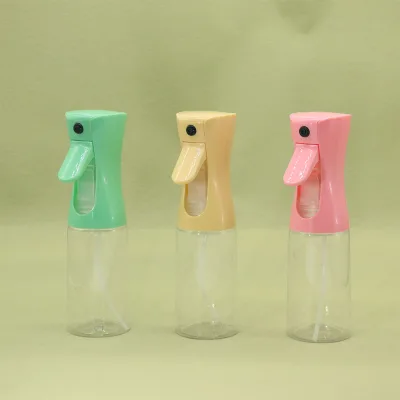


Empty Pet Plastic Spray Bottle with Refillable Sprayer for Essence Mist
$0.18 - $0.22
MOQ: 10000 Pieces


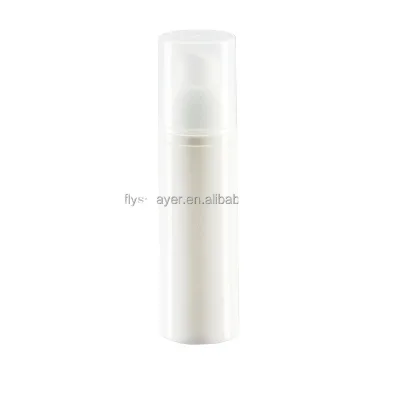


50ml Fine Mist Sprayer Bottle Portable Travel Size Refill Spray Bottle
$0.16 - $0.17
MOQ: 10000 Pieces


150ml Fine Sprayer Mist Pump Bottle Cosmetic Packing Container Bottles
$0.23 - $0.26
MOQ: 10000 Pieces


Luxury Design Good Quality Fine Mist Spray Bottle Continuous Spray Bottle
$0.52 - $0.57
MOQ: 10000 Pieces

200ml 300ml 500ml Fine Mist Sprayer Continuous Spray Bottle with a Discount
$0.52 - $0.57
MOQ: 10000 Pieces
Comprehensive Sourcing Guide
Strategic Sourcing Guide for Refillable Fine Mist Spray Bottles
Navigating the global market for refillable fine mist spray bottles requires a disciplined approach that balances technical precision with supply chain reliability. Buyers in the cosmetics, personal care, and fragrance sectors must move beyond generic product listings to understand the specific material properties, mechanical tolerances, and logistical constraints that define a successful procurement cycle. This guide synthesizes observed market data and technical attributes to provide a framework for evaluating potential suppliers and defining product specifications that meet rigorous commercial standards.
Technical Specifications and Material Composition
The foundation of any successful procurement begins with a clear definition of technical specifications. In the current market, the core keyword "Refillable Fine Mist Spray Bottle" encompasses a diverse range of configurations, primarily distinguished by material composition, capacity, and closure mechanisms. The most prevalent material observed in high-volume listings is plastic, specifically Polyethylene Terephthalate (PET) and Polypropylene (PP). PET is frequently cited for its clarity and chemical resistance, making it ideal for transparent packaging where product visibility is a selling point. Conversely, PP is often utilized for the cap and pump components due to its durability and resistance to cracking under stress.
Capacity variations are significant and directly influence the tooling requirements and unit pricing. Market data indicates a wide spectrum of standard sizes, ranging from miniature 5ml and 8ml units up to larger 150ml, 200ml, 300ml, 500ml, and even 700ml containers. The shape of the bottle is another critical variable; while round profiles are dominant for their ergonomic handling and structural integrity, square and rectangular designs are also available to suit specific brand aesthetics. The discharge rate is a crucial performance metric for fine mist applications. Verified data points suggest a standard discharge rate of approximately 1.00 ± 0.20ml per trigger actuation, a tolerance that ensures consistent product delivery without waste or overspray.
The closure system is equally vital. The majority of these units utilize a pump sprayer mechanism, often described as a pump cap or pump sprayer. This mechanism must be compatible with the viscosity of the intended liquid, whether it be perfume, hand sanitizer, or facial mist. The sealing type is typically a mechanical pump sprayer that creates a vacuum seal when not in use, preventing evaporation and leakage. Buyers must verify that the pump head, dip tube, and actuator are manufactured from compatible materials to prevent chemical degradation when in contact with alcohol-based or oil-based formulations.
Customization and Branding Capabilities
One of the primary advantages of sourcing refillable spray bottles is the extensive customization available to brands. The market data confirms that customization is a standard offering rather than an exception. Suppliers frequently provide options for custom colors, allowing brands to align packaging with their visual identity. This customization extends to the printing process, where silk screen printing and labeling are the most common techniques observed. These methods allow for the application of logos, usage instructions, and regulatory information directly onto the bottle surface or a separate label.
The ability to customize the mold is a significant factor for large-volume orders. Many suppliers offer OEM (Original Equipment Manufacturer) services, enabling buyers to create unique shapes or modify existing models to achieve a specific aesthetic. For instance, specific model numbers like TF-G, TF-U1, and FP609 represent distinct design families that can be adapted. The standard packing for these customized units is typically corrugated brown cartons or paper cartons, designed to protect the product during transit. The packing density is also a consideration; standard packing configurations often list quantities such as 1000 pieces per carton, which impacts palletization and shipping efficiency.
Compliance, Certification, and Quality Standards
When evaluating suppliers, compliance and quality assurance are paramount. While specific certification status should always be verified directly with the supplier, the industry generally looks for adherence to international management standards. Background knowledge suggests that ISO 9001 (Quality Management) and ISO 14001 (Environmental Management) are relevant benchmarks for manufacturers in this sector. However, buyers must treat these as verification targets rather than assumed facts. A supplier claiming to meet these standards must provide valid, current certificates.
Quality control in the production of spray bottles involves rigorous testing of the mechanical components. The "High Quality" attribute observed in product listings implies a focus on durability and leak prevention. Buyers should request test results regarding the discharge rate consistency, the number of actuations required to reach the specified volume, and the leak resistance under various pressure conditions. The "High Qualiy" (High Quality) designation in market data serves as a general observation, but it does not replace the need for specific test data. For cosmetic and pharmaceutical applications, the materials used must be food-grade or compliant with relevant cosmetic regulations, ensuring no leaching of harmful substances into the product.
Cost Drivers and Economic Considerations
Understanding the cost structure of refillable spray bottles is essential for budgeting and negotiation. The primary cost drivers include the material type, the complexity of the mold, the volume of the order, and the customization level. The observed Minimum Order Quantity (MOQ) ranges widely, from as low as 10 units for sampling purposes to 50,000 units for full production runs. A common MOQ threshold for standard production appears to be around 10,000 pieces, which aligns with the economic efficiency of injection molding and assembly lines.
Pricing is often influenced by the lead time and the specific origin of the product. Suppliers located in regions like Yuyao and Zhejiang, China, are prominent in this market, offering competitive pricing due to established supply chains and manufacturing clusters. The delivery time is another variable; while some suppliers cite a delivery cycle of 7-10 days for specific models, others indicate a standard lead time of 25 days. This discrepancy highlights the importance of clarifying the production schedule and capacity during the initial inquiry. Buyers should also consider the cost of samples; while many suppliers offer free samples or a small quantity (e.g., 1-5 pieces) for evaluation, the shipping costs for these samples may be the responsibility of the buyer.
Typical Applications and Market Segmentation
The versatility of refillable fine mist spray bottles allows them to serve a broad range of applications. The primary use cases identified in the market data include perfumes, hand sanitizers, cosmetics, hair mists, and facial mists. The fine mist capability is particularly valued in the fragrance and skincare industries, where a uniform, non-dripping application is desired. The "Industrial Use" category often lists "Cosmetic," but the functionality extends to household cleaning products and personal care items.
The global market reach of these products is extensive, with suppliers targeting international buyers. The "Market: Global" attribute indicates that these products are designed to meet diverse regulatory and aesthetic requirements across different regions. For buyers in the luxury perfume sector, the emphasis might be on the clarity of the PET bottle and the precision of the fine mist. In contrast, buyers in the hand sanitizer sector might prioritize the durability of the PP cap and the leak-proof nature of the pump mechanism. Understanding the specific end-use is crucial for selecting the right combination of material, size, and pump type.
Supplier Evaluation and Quality Control Protocols
Selecting the right supplier requires a multi-faceted evaluation process. Buyers should prioritize suppliers who demonstrate transparency in their production capabilities and offer robust communication channels. The availability of "24 Hours Online Services" is a positive indicator of responsiveness, but it should be complemented by a review of the supplier's track record. Key evaluation criteria include the ability to provide samples, the clarity of their MOQ terms, and their flexibility regarding customization.
Quality control protocols should be established before placing a large order. This includes requesting pre-production samples to verify the discharge rate, color accuracy, and printing quality. During production, third-party inspection services can be employed to check for defects such as mold lines, uneven coloring, or pump malfunctions. The "Sample Can Be Provided Freely" and "Sample Quantity: 5PCS" attributes suggest that suppliers are generally willing to facilitate this verification step. Buyers should also verify the packaging integrity, ensuring that the corrugated or paper cartons are sufficient to prevent damage during shipping.
Long-Term Procurement and Sustainability
For long-term procurement, sustainability and supply chain stability are critical considerations. The "Refillable" feature of these bottles aligns with growing consumer demand for eco-friendly packaging. By choosing bottles designed for refilling, brands can reduce waste and enhance their sustainability credentials. However, the environmental impact of the plastic materials used must be weighed. While PET and PP are recyclable, the actual recyclability depends on local infrastructure and consumer behavior.
Buyers should also consider the longevity of the supplier relationship. A supplier with a consistent delivery cycle and a history of meeting quality standards is more valuable than one offering a slightly lower price but with unreliable lead times. The ability to scale production up or down based on market demand is another important factor. Suppliers who can accommodate varying order sizes, from small trial runs to large-scale production, offer greater flexibility. Finally, buyers should stay informed about changes in material regulations and environmental standards to ensure their packaging remains compliant and competitive in the global market.
FAQs
What materials are used for refillable fine mist spray bottles?
The bottles are primarily made of plastic, specifically PET for the body and PP for the cap. These materials offer clarity and durability suitable for perfumes and cosmetics.
Can I get a free sample before placing a large order?
Yes, samples can be provided freely upon request. Buyers typically receive 1 to 5 pieces to evaluate the quality and spray performance before committing to production.
What is the minimum order quantity for these bottles?
The standard minimum order quantity is 10,000 pieces for most models. Some suppliers may accept lower quantities for sampling, but full production runs usually require this volume.
Which customization options are available for branding?
Customization is available for colors, silk screen printing, and labeling. OEM services allow for unique shapes, enabling brands to align packaging with their specific visual identity.
How long does it take to receive the order after payment?
Delivery times vary between 7 to 25 days depending on the specific model and production schedule. Buyers should confirm the exact lead time with the supplier before ordering.
What are the standard sizes available for these spray bottles?
Standard sizes range from 5ml up to 700ml, including common options like 10ml, 15ml, 20ml, and 30ml. Larger capacities such as 150ml and 200ml are also offered for different applications.
Where are these refillable bottles manufactured?
These products originate from Yuyao and Zhejiang, China. The region is known for its established manufacturing clusters that support high-volume production of cosmetic packaging.