Source Refined Paraffin Wax for Candles, PVC, and Food Packaging
Compare 22 listings of Refined Paraffin Wax suitable for candle manufacturing, PVC processing, and food packaging. Buyers can evaluate specifications like oil content and melting points from suppliers in China.
Key considerations
Products List


Paraffin Wax Semi Refined Bulk Paraffin Wax Price Semi Refined Paraffin 58
$800.00 - $1200.00
MOQ: 1 Tons


$1180.00 - $1220.00
MOQ: 1 Tons




Comprehensive Sourcing Guide
Refined Paraffin Wax Sourcing Guide
Refined Paraffin Wax is a critical industrial material derived from crude oil, specifically noted in the current market as originating from sources such as Kunlun Oil and Petrochina Fushun in China. This substance is characterized by its high molecular polymer composition and is primarily classified as a fully Refined Paraffin Wax, ensuring a high degree of purity suitable for diverse manufacturing applications. Buyers must understand that while the core material is consistent, the specific grade and physical form can vary significantly based on the intended end-use, ranging from candle manufacturing to complex PVC processing and food packaging requirements.
The procurement landscape for this commodity is defined by a wide range of product models and specifications, including fully Refined Paraffin Wax 60-62, paraffin wax 58-60, and specific melting point indicators like 60/62 DEG. C or 64#. These variations dictate the thermal properties and structural integrity of the final product, making it essential for buyers to align their technical requirements with the precise model numbers offered by suppliers. The observed market signals indicate a strong presence of industrial-grade options, which are tailored for heavy-duty applications such as rubber tire manufacturing and protective wax coatings, alongside specialized grades for consumer-facing products like candles and food wrappers.
Product Scope and Observed Listing Signals
The current market listings reveal a product count of 22 distinct offerings, with prices ranging from 1 to 1250 USD and minimum order quantities (MOQs) spanning from 1 to 500 units. This wide variance in pricing and MOQ suggests a fragmented market that accommodates both small-scale experimental purchases and large-volume industrial contracts. Buyers should note that the availability of customization options is explicitly stated, indicating that suppliers are willing to tailor the wax to specific client needs, whether that involves adjusting the melting point, modifying the packaging format, or meeting specific color standards such as the Saybolt color scale of +30 or +27 min.
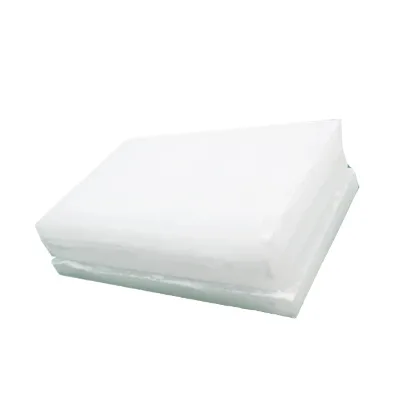
Physical attributes observed in the listings include a solid, white appearance with forms described as white lumps, granular, or slab shapes. The packaging is predominantly handled in bags, with common configurations including 5kg blocks, 25kg cartons, and 50kg woven bags or boxes. Some listings also mention container shipping as a viable option, which is crucial for large-scale procurement. The presence of these varied packaging and form factors allows buyers to select logistics solutions that minimize handling costs and reduce the risk of product contamination or damage during transit, ensuring that the wax arrives in optimal condition for immediate processing.
Technical Specifications to Verify
When evaluating Refined Paraffin Wax, the oil content is a primary technical parameter that must be strictly verified, with observed standards indicating a maximum oil content of 0.5% by weight. This low oil content is critical for ensuring the wax’s stability, hardness, and resistance to sweating, which are vital for applications like candle manufacturing and food packaging where purity and consistency are paramount. Buyers should request specific test reports confirming that the oil content does not exceed this threshold, as higher oil levels can compromise the structural integrity of the wax and affect its performance in high-temperature environments.
Another critical specification is the needle penetration value, which measures the hardness of the wax at 25°C. Observed data points to a range of 17-23 1/10mm, with some standards capping the value at 19 Max. This metric directly influences the wax’s suitability for different molding and casting processes; a lower penetration value indicates a harder wax, which is often preferred for detailed casting and impression work. Additionally, light stability is a key factor, with observed limits set at 4 Max, ensuring that the wax maintains its white color and does not yellow or degrade when exposed to light, a crucial requirement for consumer products like candles and food packaging materials.
Compliance and Safety Documentation
For applications involving food packaging and poultry depilation, compliance with food-grade safety standards is non-negotiable. Buyers must verify that the supplier can provide documentation proving that the Refined Paraffin Wax meets relevant food safety regulations, ensuring that the high-molecular polymer composition is free from harmful contaminants. Although specific certification names are not listed in the observed data, the classification of the product for food packaging implies a need for rigorous quality control and traceability. Procurement teams should insist on certificates of analysis (CoA) that explicitly confirm the absence of prohibited substances and adherence to local and international food safety guidelines.
In industrial applications such as PVC processing and rubber tire manufacturing, safety documentation focuses on material safety data sheets (MSDS) and handling guidelines. The high-temperature resistance of the wax is a key feature that must be documented to ensure safe processing conditions. Buyers should review the MSDS to understand the thermal stability and potential hazards associated with melting and handling the wax. Furthermore, the production method, noted as "Transfer Legal," suggests a regulated supply chain, and buyers should ensure that all documentation reflects compliance with environmental and occupational health standards in both the country of origin, such as Liaoning, China, and the destination market.
Cost Drivers and Commercial Terms
The cost of Refined Paraffin Wax is influenced by several factors, including the raw material source, the degree of refinement, and the specific model specifications such as the melting point range. The observed price range of 1 to 1250 USD reflects the diversity in product grades and packaging sizes, with higher prices likely corresponding to fully refined, food-grade, or specialized industrial grades. Buyers should analyze the cost per unit weight rather than the total price to accurately compare offers, taking into account the packaging efficiency and the MOQ requirements. Understanding these cost drivers helps in negotiating better terms and selecting the most economically viable option for the intended application.
Commercial terms also play a significant role in the total cost of ownership, with packaging options ranging from small 5kg blocks to large 50kg bags and container shipments. The choice of packaging affects logistics costs, storage requirements, and handling efficiency. For instance, container shipping may offer economies of scale for large orders, while bagged shipments are more flexible for smaller quantities. Buyers should also consider the lead times and production methods, such as the "Transfer Legal" process, which may impact delivery schedules. Clear communication regarding payment terms, shipping responsibilities, and quality assurance protocols is essential to avoid hidden costs and ensure a smooth procurement process.
Supplier Qualification and Quality Control
Supplier qualification for Refined Paraffin Wax requires a thorough assessment of their production capabilities and quality control systems. Given that the product originates from specific locations like Petrochina Fushun and Liaoning, China, buyers should verify the supplier’s direct relationship with these production facilities or their ability to source consistently from reputable manufacturers. The availability of customization and the variety of product models suggest that suppliers have flexible production lines, but buyers must ensure that these capabilities do not compromise the consistency of the product. Requesting samples and conducting independent laboratory tests is a critical step in validating the supplier’s claims regarding oil content, needle penetration, and light stability.
Quality control should extend beyond the initial sample approval to include ongoing monitoring of production batches. Buyers should establish clear acceptance criteria based on the observed specifications, such as the 0.5% max oil content and 17-23 1/10mm needle penetration range. Implementing a robust inspection regime, including pre-shipment inspections and random sampling upon arrival, helps mitigate the risk of receiving substandard material. Additionally, buyers should evaluate the supplier’s responsiveness to quality issues and their ability to provide timely support and replacements if the product fails to meet the agreed-upon standards. This proactive approach ensures long-term reliability and minimizes disruptions in the buyer’s manufacturing processes.
Long-Term Procurement Checks
Long-term procurement of Refined Paraffin Wax requires regular reviews of supplier performance and market trends. Buyers should track key performance indicators such as delivery reliability, product consistency, and responsiveness to quality concerns. Given the variability in product models and specifications, maintaining a diversified supplier base can help mitigate risks associated with supply chain disruptions. Regular communication with suppliers to discuss upcoming production needs and potential changes in specifications ensures that the supply chain remains aligned with the buyer’s evolving requirements. This ongoing engagement fosters a collaborative relationship that can lead to better pricing, improved service levels, and access to new product innovations.
Market monitoring is also essential for staying informed about changes in raw material costs, regulatory requirements, and technological advancements in paraffin wax production. Buyers should stay updated on industry standards and safety regulations, particularly for applications in food packaging and consumer goods. By maintaining a proactive stance on compliance and quality, buyers can ensure that their procurement practices remain robust and adaptable to changing market conditions. This strategic approach not only secures a reliable supply of high-quality Refined Paraffin Wax but also supports the buyer’s overall operational efficiency and competitive advantage in their respective industries.
FAQs
What are the primary uses of Refined Paraffin Wax?
Refined Paraffin Wax is used for candle manufacturing, PVC processing, food packaging, casting, and modeling. It also serves in poultry depilation and rubber tire industries. The product supports various applications due to its high temperature resistance and stable composition.
Which specifications are available for this paraffin wax?
Available models include 58/60, 60/62, and 64 degrees Celsius melting points. The oil content is 0.5% maximum, and needle penetration ranges from 17 to 23 at 25 degrees Celsius. These specifications ensure suitability for industrial and consumer applications.
How is the Refined Paraffin Wax packaged for shipment?
The product is packed in 25kg cartons or 50kg woven bags. Some options include 5kg blocks or container shipping. Packaging ensures protection during transport while meeting standard industrial requirements for bulk distribution and handling efficiency.
Can buyers request customization for this paraffin wax?
Yes, customization is available for this Refined Paraffin Wax. Buyers can specify requirements based on their production needs. This flexibility allows manufacturers to tailor the product for specific applications like food packaging or rubber processing without compromising quality.
What is the origin of this Refined Paraffin Wax?
The product originates from Petrochina Fushun in Liaoning, China. It is produced using Kunlun oil as the raw material. This location ensures consistent quality and adherence to industrial grade standards for fully Refined Paraffin Wax products.
What are the key physical properties of this wax?
The wax appears as white lumps or granular slabs with a Saybolt color of +27 minimum. Light stability is rated at 4 maximum, and it features high temperature resistance. These properties make it ideal for durable candle and packaging applications.