Source Eco-Friendly Heat Resistant Cake Molds for Home, Pub, Restaurant
Compare 30 listings of Eco-Friendly Heat Resistant Cake Molds from verified suppliers. These silicone molds support baking in home, pub, and restaurant settings with customizable options and certifications like FDA and LFGB; compare the available evidence and request quotations based on your requirements.
Key considerations
Products List



Comprehensive Sourcing Guide
Eco-Friendly Heat Resistant Cake Molds Sourcing Guide
Eco-Friendly Heat Resistant Cake Molds occupy a distinctive position in the bakeware supply chain because they combine consumer-facing sustainability claims with demanding technical performance requirements. Buyers sourcing these products for retail, hospitality, or promotional programs must evaluate both the material story and the functional envelope of each mold before committing to a production run. Silicone remains the dominant material category for this product type, and the listings observed in this category consistently describe food grade silicone constructions intended for repeated oven use.
This guide walks through the full procurement cycle for cake molds of this type: defining the product scope, verifying technical specifications, confirming safety documentation, understanding cost drivers, qualifying suppliers, and building long-term quality controls. The observations referenced here come from actual product-page listings, including items described as durable 100% food grade silicone cake mould trays and heat resistant silicone cup cake baking pans. Treat these attributes as signals of what the market offers, not as guarantees that any single listing satisfies every requirement. Each section identifies the decisions you must make and the evidence you should request before placing an order.
Product Scope and Observed Product Scope and Observed Listing Signals
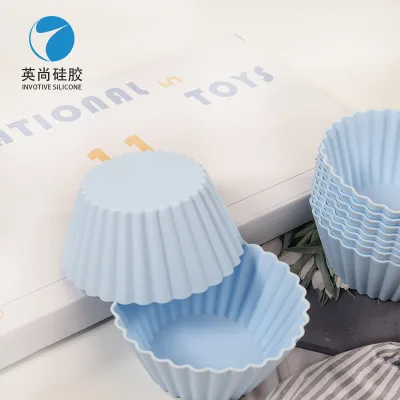
The observed listings define a clear product scope: silicone cake molds in both tray and individual-cup formats. One listing describes a durable 100% food grade silicone cake mould tray with dimensions of 206cm and 205.5cm and a weight of 8.5g per piece, pointing to lightweight single-cavity or small-format items. Another describes a heart-shaped heat resistant silicone cup cake baking pan measuring 27X18X3.5cm at 126g per piece, indicating a multi-cavity sheet format. Model identifiers such as GP-STQ0011, Fly-2021060853, and Fly-2021060876 suggest active, cataloged product lines rather than one-off listings.
Buyers should use these signals to benchmark their own requirements. Intended usage in the listings spans home, pub, and restaurant settings, with daily use, cake making, and general kitchenware cited as applications, and microwave oven compatibility noted for some items. Both listings advertise customization, sample acceptance, and OEM/ODM welcome status, which matters if you plan private-label programs. Note that listed MOQs in this category range widely, from as low as one piece to 5,000 pieces, and observed prices span from under a dollar to thousands, reflecting the mix of sample purchases and bulk production lots in the category.
Technical Specifications to Verify
Start with heat resistance and operating range, the defining performance attributes for this product. Observed listings state heat resistance of 230 degrees Centigrade and a temperature resistance range of -40 C to 230 C, which together cover freezer-to-oven workflows. Confirm in writing that the mold you order matches the temperature envelope you need, especially if your use case involves broiling, high-heat commercial ovens, or deep-freezing. Ask how the supplier validates these ratings, since a stated maximum is only meaningful if it is tested rather than copied between listings.
Next, verify dimensional and physical specifications against your production intent. The listings show hardness in the 20-80 Shore range, which affects how easily cakes release and how the mold deforms under batter weight; request hardness confirmation for the actual compound. Dimensional accuracy matters for multi-cavity pans, so confirm the 27X18X3.5cm sheet size or single-cavity 656530mm footprint with a first-article sample. Also check wall thickness consistency, cavity-to-cavity uniformity, and color execution. Both listings advertise any Pantone or PMS color, so request a physical color match sample before mass production rather than relying on screen references.
Compliance and Safety Documentation
Food contact compliance is the central risk area for silicone bakeware. The observed listings cite FDA, SGS, LFGB, RoHS, and in one case Reach certification, and describe the products as non-toxic and eco-friendly. Do not accept these labels at face value: request current, scope-matched certificates naming the exact product model or material batch you intend to purchase. LFGB is generally regarded as the more demanding food-contact framework, so if your target market is Europe, confirm LFGB test reports specifically rather than assuming FDA approval transfers across markets.
Beyond certificates, ask for the underlying test reports covering food-contact migration and any substances relevant to your destination market's regulations. Verify that the certificates reference the silicone grade actually used in production, not a generic material family, because reformulation between sample and bulk runs is a known failure mode. For sustainability claims, ask what specifically supports the "eco friendly" positioning, whether that is material composition, durability and reuse characteristics, or manufacturing practices, and ensure any claim you print on packaging is defensible in your market. Keep documentation on file with model numbers so audits and retail onboarding requirements can be met without re-testing delays.
Cost Drivers and Commercial Terms
Unit cost in this category is driven by size, weight, and cavity count. Compare the observed weight range, from 8.5g per piece for a small mold to 126g per piece for a larger sheet pan, to understand the material-cost spread. Color customization, logo application, and custom packaging all add cost, so quote your branded configuration explicitly rather than benchmarking against the plain-product price. Note that observed listing prices range from $0.16 to $10,000 across the category, which tells you the spread is enormous and that price alone, without specification matching, is meaningless for comparison.
Commercial terms should be nailed down before sampling. Observed listings show MOQs of 500PCS and 1,500PCS for specific models, alongside a category-wide MOQ range of 1 to 5,000, so negotiate MOQ against your forecast volume. Payment terms observed include T/T, credit card, and PayPal, with one listing specifying 30% T/T as a deposit structure, which is typical for this product class. Delivery time is listed at 10 days for some items and sample lead times of 3-5 days or within 3 days are cited, but confirm whether these apply to stock colors and standard sizes, since custom tooling and Pantone matching extend timelines.
Supplier Qualification and Quality Control
Qualify suppliers by their demonstrated control over the silicone molding process rather than by listing polish alone. Request production capability evidence: which molds they run in-house, whether they manufacture or trade, and how they handle hardness and color consistency across batches. The observed listings' willingness to accept samples, offer customization, and welcome OEM/ODM work indicates flexible suppliers, but you should verify that customization requests flow through an engineering review rather than a sales desk. Ask for references or order history in bakeware specifically, since silicone kitchenware differs from general silicone goods.
Build a quality control plan around the failure modes specific to cake molds: flash at parting lines, cavity dimension drift, odor or off-gassing from under-cured silicone, and color lot variation. Specify incoming inspection criteria covering dimensions, weight, hardness, and visual defects, and define an acceptable quality limit before production starts. Since packaging is carton-based with polybag or big-bag inner packing observed, confirm packaging protects delicate rim edges during transit. Use the sample stage, at 3-5 days lead time as observed, to run a bake-and-release test with real batter, checking for odor, warping, and residue before approving mass production.
Long-Term Procurement Checks
Sustain quality over repeat orders by locking the approved specification into a controlled document. Record the model number, material grade, hardness, dimensions, weight, color codes, and packaging configuration, then require the supplier to confirm conformity to that document on every subsequent shipment. The observed listing structures, with fixed model identifiers like Fly-2021060862 and defined packing formats such as 100PCS/bag and 1,000 PCS per carton, support this approach; request that any change to material, tooling, or packing trigger advance notification and re-approval samples.
Finally, plan for continuity and market-driven revalidation. Keep current certificates on file with expiry dates and schedule re-testing when regulations or target markets change, especially for Reach-related substance requirements in Europe. Monitor per-shipment quality trends through a simple defect log so gradual drift in dimensions or color becomes visible before customers complain. Diversify across at least two qualified suppliers once volumes justify it, using identical specification documents for both, so a single production disruption does not halt your program. Review pricing annually against weight and material benchmarks rather than accepting rolled-over quotes unexamined.
FAQs
What materials are used in these Eco-Friendly Heat Resistant Cake Molds?
These cake molds are made of silicone and are described as 100% food grade, with FDA, SGS, LFGB, and RoHS certifications listed on the product page. Some listings also cite FDA and LFGB certificates specifically. Buyers should confirm the exact certification documents for their chosen model before ordering, since attributes listed may vary between individual products.
How much heat can the silicone cake molds withstand during baking?
The listed heat resistance is 230 degrees Centigrade, and one heart-shaped model states a temperature resistance range of -40 to 230 degrees Celsius. This covers typical baking use in a microwave or oven. Always verify the temperature rating for the specific model you select, and avoid direct contact with open flames or heating elements.
Can I customize the color, shape, and logo of the cake molds?
Yes, customization is available. Any Pantone color is available, and one listing mentions any PMS color, so you can match brand colors. Logo printing is offered with customized logos, and OEM and ODM services are welcomed. Shapes such as heart shape are shown, and custom shapes can be requested. Provide artwork early so sampling can begin.
What is the minimum order quantity for these silicone cake molds?
Listed MOQs vary by model: one product shows 500 pieces, another shows 1500 pieces, and the overall observed range on the page runs from 1 to 5000 pieces. Because MOQs differ between listings, confirm the minimum order quantity for your specific chosen model and customization level with the supplier before placing a trial order.
How long does sampling and production take?
Sample time is listed as 3 to 5 days, with one model stating samples within 3 days, and delivery time is shown as 10 days. One listing states production time of 0 days after sample confirmation, meaning production starts once your sample is approved. Actual timelines can shift with customization complexity, so confirm schedules for your order.
What payment terms and shipping options are available?
Payment options listed include T/T, credit card, and PayPal, with one payment term shown as 30% T/T deposit. Shipping ways include DHL, FedEx, UPS, DPEX, EMS, by air, or by sea. Discuss which carrier suits your order size and destination, since sea freight suits bulk volumes while express services suit samples and small urgent shipments.
How are the cake molds packed and what sizes are offered?
Packing options include carton packing, 100 pieces per big bag with 1000 pieces per carton, OEM packaging, 100 pieces per bag, and 1 piece per polybag with customized packing available. Listed sizes include 20*6cm, 20*5.5cm, 65*65*30mm, and 27X18X3.5cm, with weights from 8.5g to 126g per piece. Request exact packing details for your chosen model.