Source Refrigerator Key Lock for Freezers, Cabinets, and Drawers
Compare 22 Refrigerator Key Lock options from verified Chinese suppliers. Buyers can evaluate zinc alloy and brass models with customization, varying dimensions, and MOQs starting at 2 pieces for home and industrial use.
Key considerations
Products List


High Quality Push Button Refrigerator Door Lock Refrigerator Cable Lock
$1.00 - $1.50
MOQ: 5000 Pieces


High Security Push Buttonrefrigerator Box Lock Refrigerator Lock with Key
$1.50 - $2.00
MOQ: 5000 Pieces

High Quality New Brand Brass Refrigerator Key Lock Refrigerator Lock with Key
$0.80 - $1.50
MOQ: 2000 Pieces

Plastic Commercial Fridge Freezer Door Lock Refrigerator Key Lock for Kids
$0.99 - $1.39
MOQ: 100 pieces

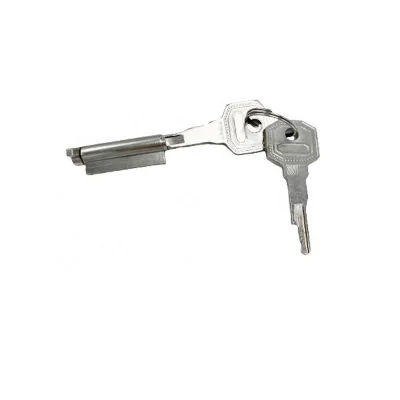

Hot Selling Quality Lock for Refrigerator Refrigerator Lock Combination with 2 Keys
$0.90 - $1.30
MOQ: 100 Pieces


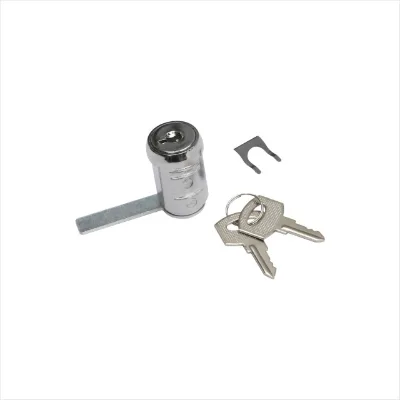
Comprehensive Sourcing Guide
Strategic Sourcing Guide for Refrigerator Key Locks
Navigating the global market for refrigerator key locks requires a disciplined approach that balances security requirements with supply chain reliability. Buyers in the B2B sector must distinguish between generic hardware solutions and specialized safety devices designed specifically for domestic appliances. The following guide synthesizes available product data and industry standards to provide a comprehensive framework for procurement. This analysis focuses on the technical realities of the supply chain, ensuring that sourcing decisions are grounded in verified attributes rather than speculative marketing claims.
Technical Specifications and Dimensional Variability
The primary challenge in sourcing refrigerator locks lies in the significant variance in physical specifications across different product lines. Unlike standardized door handles, refrigerator locks often require custom dimensions to fit specific appliance models or cabinet configurations. The observed market data reveals distinct dimensional profiles that dictate compatibility. For instance, one product category features compact dimensions of 19mm by 24mm, suitable for smaller latch mechanisms or specific drawer applications. In contrast, other models present larger profiles, such as 14mm by 17mm, or substantial assemblies measuring 149.6mm by 34.3mm by 31.7mm.
Buyers must verify the backset and overall length before placing an order. The data indicates a specific backset measurement of 28mm for certain models, which is a critical parameter for installation alignment. Furthermore, the weight of the unit is a factor in shipping costs and structural integrity; a recorded weight of 440g suggests a heavy-duty construction, likely utilizing metal components. When evaluating a potential supplier, procurement teams should request a detailed technical drawing that confirms the backset, mounting hole spacing, and overall envelope dimensions. Relying on a single "average" dimension is risky given the observed range from 14mm to 149mm in length.
The material composition of the lock body and keys is equally critical for durability and security. The supply chain data highlights the use of Zinc Alloy and Iron for the lock body and keys in several instances. Other models utilize a combination of Brass and Plastic, which may offer different trade-offs between corrosion resistance and cost. The keys themselves are consistently noted as being made of iron, a standard material that balances affordability with sufficient hardness for residential use. Surface treatments such as Chrome Plating or Painting are common, providing a finish that matches modern kitchen aesthetics while offering a layer of protection against humidity and wear.
Compliance, Certification, and Security Standards
In the realm of child safety and appliance security, compliance is not merely a regulatory formality but a core component of product value. The market data explicitly references an "Anti-theft Standard: A" and "ISO" certification for specific refrigerator lock models. While these are high-confidence facts for the listed items, buyers must understand that certification status is product-specific and not a universal attribute of all refrigerator locks. A supplier claiming ISO certification for a specific model must provide the relevant certificate number and scope to validate the claim.
The distinction between "Home Refrigerator & Freezer" usage and general "Household" application is vital for compliance. Products designed for child safety, such as those labeled "Baby Child Safety Lock," often adhere to stricter safety protocols than standard anti-theft latches. The data notes a "Qty of key codes: 10," which implies a level of key control suitable for residential environments where multiple keys might be distributed among family members. However, for commercial or high-security applications, buyers should verify if the key code capacity meets their specific security requirements.
When evaluating a supplier's compliance posture, procurement officers should look for evidence of adherence to international standards beyond the generic "ISO" label. This includes verifying if the product meets specific regional safety regulations for children's products or appliance safety. The presence of a "Lock Core" option, available with or without a core, suggests that the product line offers flexibility in security levels. Buyers should confirm whether the "Lock Core" meets specific anti-pick or anti-bump standards if the application requires higher security.
Cost Drivers and Pricing Dynamics
The pricing structure for refrigerator key locks is influenced by a complex interplay of material costs, customization levels, and order volume. The observed price range in the market spans from $0.46 to $5.97 USD, a wide disparity that reflects differences in material quality, finish, and functional complexity. The lower end of the spectrum likely corresponds to basic plastic or simple zinc alloy units with minimal customization, while the higher end may encompass heavy-duty brass models with chrome plating and custom branding.
Material costs are a primary driver. Models utilizing brass and zinc alloy will inherently cost more than those relying heavily on plastic or iron components. The surface treatment process also adds to the cost; chrome plating is generally more expensive than standard painting or raw finishes. Furthermore, the availability of customization is a significant cost factor. Products marked as "Customized: Available" or "Logo: Can Be Customized" often carry a premium due to the setup costs for tooling and branding.
Order volume plays a decisive role in the final unit price. The data indicates a Minimum Order Quantity (MOQ) range of 2 to 5,000 pieces. While some suppliers may accept small trial orders of just two pieces, the most competitive pricing is typically reserved for bulk purchases near the 5,000-piece threshold. Buyers should be aware that the "MOQ: 5,000PCS" is a high-confidence fact for certain models, meaning that smaller orders might incur higher per-unit costs or be unavailable for specific high-specification items.
Typical Applications and Usage Scenarios
Refrigerator key locks serve diverse applications ranging from child safety to appliance security and inventory control. The data explicitly categorizes usage for "Home Refrigerator & Freezer" and general "Household" environments. The specific product name "Handle Refrigerator Lock with 2 Keys" points to a direct application on appliance handles, preventing unauthorized access to the interior. Similarly, "freezer locks" are designed to secure cold storage units, which is particularly relevant for households with young children or in commercial settings where food security is paramount.
Beyond simple locking, these devices are often integrated into broader safety systems. The application list includes "Refrigerator Lock Window Limit Drawer Lock," indicating that the technology is adaptable for securing windows, drawers, and other access points within the home. This versatility makes them suitable for a "Modern" style of home security that integrates seamlessly with contemporary cabinetry and appliance designs. The "Style: Modern" attribute suggests that these locks are designed to be aesthetically pleasing, avoiding the industrial look of older security hardware.
In commercial contexts, such as restaurants or laboratories, these locks may be used to secure specific ingredients or sensitive materials. The "OEM Accepted: Yes" attribute confirms that these products are suitable for private labeling, allowing businesses to brand the locks as part of their own safety ecosystem. The "Selling Units: Single item" designation suggests that while bulk orders are common, the product is also viable for smaller, direct-to-consumer or replacement market segments.
Supplier Evaluation and Production Capacity
Selecting the right supplier requires a rigorous evaluation of their production capabilities and logistical readiness. The data highlights a specific production capacity of "1,000,000 pcs per month" for certain manufacturers, indicating a robust ability to handle large-scale orders without significant bottlenecks. However, buyers must verify if this capacity is dedicated to refrigerator locks or if it is a general figure that might fluctuate based on order mix.
Geographic location is another critical factor. The supply chain data points to origins in "Cixi, China" and "Zhejiang, China," both of which are established manufacturing hubs for hardware and appliance accessories. These regions offer a mature ecosystem of suppliers, but buyers should conduct due diligence to ensure the specific factory has the necessary equipment for the required surface treatments and assembly processes.
Lead times and sample availability are essential for planning. The "Sample Time: 3 Days" is a notable attribute, suggesting that suppliers are prepared to provide quick turnaround for prototype evaluation. This is crucial for verifying fit and finish before committing to a large order. However, buyers should distinguish between sample time and full production lead time, as the latter can vary significantly based on order volume and customization requirements. The "Packing: OPP Bag" and "White Box" options indicate standard packaging, but custom packaging solutions may be available for an additional fee.
Quality Control and Long-Term Procurement
Ensuring consistent quality in refrigerator lock procurement requires a structured approach to quality control (QC). Given the variance in materials like Zinc Alloy, Brass, and Plastic, buyers should establish clear acceptance criteria for material composition and finish. The "Anti-theft Standard: A" mentioned in the data serves as a benchmark, but buyers should define their own performance metrics for key durability, lock mechanism smoothness, and resistance to tampering.
Long-term procurement considerations include the stability of the supply chain and the availability of spare parts. The "Customization: Available" attribute implies that suppliers can adapt to changing design needs, but buyers should confirm the longevity of these customization capabilities. If a specific model is discontinued, can the supplier provide a direct replacement with similar dimensions and functionality? The "Payment Term: T/T, PAYPAL, ALIPAY" options offer flexibility, but buyers should negotiate terms that protect their interests, such as milestone-based payments for large orders.
Finally, the "Logo: Can Be Customized" feature allows for brand integration, which is valuable for long-term brand building. However, buyers must ensure that the customization process does not compromise the structural integrity of the lock. A comprehensive quality plan should include regular audits of the supplier's production line, verification of material certificates, and random sampling of finished goods to ensure they meet the specified standards. By adhering to these rigorous protocols, buyers can secure a reliable supply of high-quality refrigerator key locks that meet both functional and aesthetic requirements.
Comparative Analysis of Product Attributes
To facilitate decision-making, the following table summarizes key attributes observed in the market data, highlighting the variability that buyers must navigate.
| Attribute Category | Specific Observation | Variance / Note |
|---|---|---|
| Dimensions | 19mm x 24mm vs. 149.6mm x 34.3mm x 31.7mm | Significant difference; requires precise measurement. |
| Material | Zinc Alloy, Iron, Brass, Plastic | Material choice affects cost and durability. |
| MOQ | 2 to 5,000 PCS | High MOQ (5,000) for some models; low for others. |
| Finish | Chrome Plated, Painted, Zinc Plated | Affects aesthetic match and corrosion resistance. |
| Certification | ISO, Anti-theft Standard A | Verify specific certificate for each model. |
| Packaging | OPP Bag, White Box, 200pcs/CTN | Standard vs. bulk packaging options. |
| Customization | Available / Non-Customized | Critical for branding and specific fit. |
| Origin | Cixi, China / Zhejiang, China | Both are major manufacturing hubs. |
This comparative view underscores the necessity of detailed specification checks. A buyer cannot assume that a product with a specific finish or material in one listing will be identical in another. The diversity in the market demands a tailored sourcing strategy that aligns with the specific needs of the end-user, whether that is a household seeking child safety or a business requiring secure storage. By focusing on these verified attributes and maintaining a rigorous evaluation process, procurement professionals can effectively mitigate risk and secure high-quality refrigerator key locks.
FAQs
What are the typical dimensions for refrigerator key locks?
Dimensions vary significantly by model, ranging from compact 14mm by 17mm units to larger assemblies measuring 149.6mm by 34.3mm by 31.7mm. Buyers must verify specific backset measurements, such as 28mm, and overall length before ordering to ensure compatibility with their appliance.
Which materials are commonly used for the lock body and keys?
Lock bodies are frequently constructed from Zinc Alloy, Iron, Brass, or Plastic combinations. Keys are consistently made of iron, while surface treatments like Chrome Plating or Painting provide durability and match modern kitchen aesthetics against humidity and wear.
Can I customize the logo and packaging for these locks?
Yes, logo customization is available for many models, allowing for private labeling. Packaging options include standard OPP bags or white boxes, though custom packaging solutions may be available for an additional fee depending on the supplier and order volume.
What is the minimum order quantity for bulk purchases?
Minimum order quantities range from as low as 2 pieces for trial orders up to 5,000 pieces for specific high-specification models. Competitive pricing is typically reserved for bulk purchases near the 5,000-piece threshold, while smaller orders may incur higher per-unit costs.
Are there specific certifications for anti-theft or safety standards?
Some models explicitly meet an Anti-theft Standard A and hold ISO certification. Buyers should verify that the specific product model carries these certifications and request the relevant certificate numbers to validate compliance with safety and security protocols before purchasing.
How long does it take to receive samples?
Sample time is typically 3 days for prototype evaluation, allowing buyers to verify fit and finish before committing to large orders. This quick turnaround is crucial for confirming dimensions and material quality, though full production lead times vary based on order volume.