Source Remote Navigation Deployment AGV Chassis for Automotive, Welding, and Pharmaceutical
Find 30 Remote Navigation Deployment AGV Chassis models from verified Chinese manufacturers. Compare specifications including load capacity, battery life, and control modes for automotive, welding, and pharmaceutical applications.
Key considerations
Products List


Multi-Use Automated Guided Vehicle Robot Stable Operation Agv Robot Chassis
$4000.00 - $70000.00
MOQ: 1 Pieces

Agv Robot Chassis 650kg Industrial Base Moving Transportation Equipment Agv
$2000.00 - $25000.00
MOQ: 1 Pieces


Supply Smart Autonomous Remote Control Service Robot Chassis Agv for Delivery Robot Agv
$2000.00 - $25000.00
MOQ: 1 Pieces


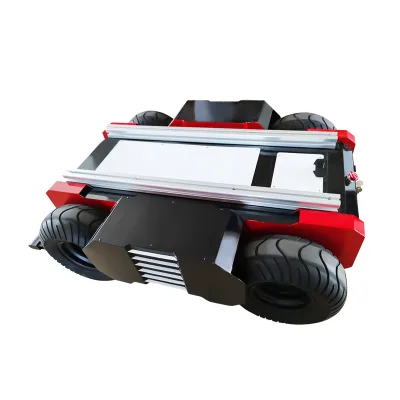
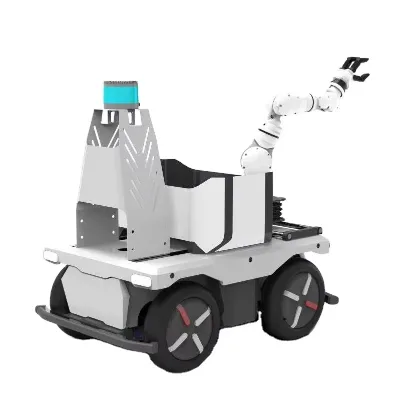
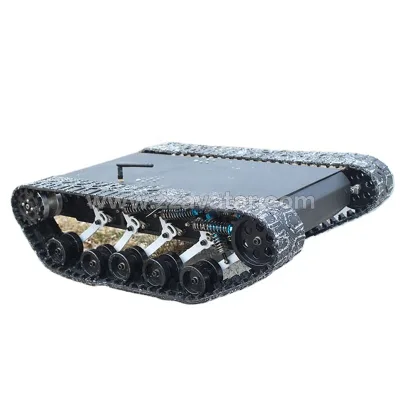
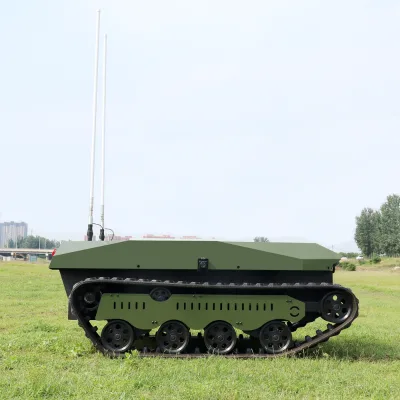


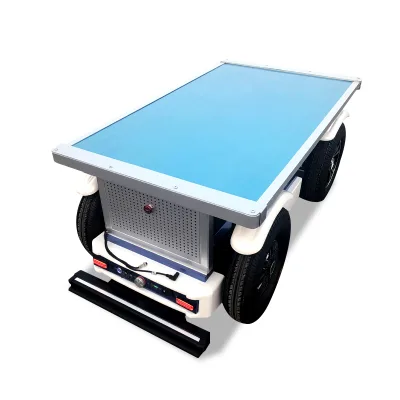


4 Wheels Independent Suspension Unmanned Delivery Vehicle Robot Chassis
$11284.00 - $14290.00
MOQ: 1 Pieces


Agv Chassis Robot for Customized Autonomous Mobile Robot Integration
$5000.00 - $15000.00
MOQ: 1 Pieces


Comprehensive Sourcing Guide
Remote Navigation Deployment AGV Chassis Sourcing Guide
Selecting the right autonomous mobile robot (AMR) or automated guided vehicle (AGV) chassis is a foundational decision for modernizing material handling operations. The core keyword "Remote Navigation Deployment AGV Chassis" highlights a specific technological capability: the ability to control, monitor, and navigate these platforms without physical tethering or fixed magnetic strips. This shift from legacy guided systems to flexible, software-defined navigation represents a significant upgrade in operational agility. Buyers must understand that the chassis is not merely a moving platform but the critical interface between physical logistics and digital control systems.
The procurement process for these chassis requires a disciplined approach to verifying technical claims against actual performance data. Unlike standard industrial equipment, AGV chassis involve complex interactions between hardware durability, battery management, and software algorithms. Sourcing guides must therefore focus on observable listing signals, precise technical verification, and long-term operational viability. This guide provides a structured framework for evaluating suppliers and products, ensuring that the selected chassis aligns with specific application requirements such as automotive manufacturing, pharmaceutical handling, or general warehouse logistics.
Product Scope and Observed Listing Signals
The current market for remote navigation AGV chassis exhibits a wide variance in specifications, reflecting diverse application needs. Observed listing data indicates a price range from approximately $1,000 to $70,000 USD, which suggests a spectrum from lightweight, simple payload carriers to heavy-duty, complex industrial platforms. Minimum Order Quantities (MOQ) vary significantly, ranging from single units for pilot projects to batches of up to 500 for large-scale deployments. This variability requires buyers to clearly define their scale of operation early in the sourcing process to avoid mismatched commercial terms.
Key product attributes observed in listings provide immediate insight into the chassis capabilities. For instance, some models feature a weight of 28kg to 32kg, indicating lightweight designs suitable for indoor electronics or pharmaceutical assembly lines. In contrast, other listings reference load capacities of 1-10 tons, pointing towards heavy industrial applications in automotive or metal fabrication. The presence of specific models like FBOT24F, DBOT30G, and WBOT11B suggests that suppliers offer distinct product lines tailored to different payload and navigation requirements. Buyers should use these model identifiers to request detailed technical datasheets rather than relying on generic descriptions.
Technical Specifications to Verify
Battery performance and operational endurance are critical factors for continuous deployment. Listings indicate battery capacities such as 10400mAh/37V, with working times ranging from 6 to 8 hours and charging times of approximately 4 hours. However, for high-throughput environments, faster charging capabilities are essential; some advanced specifications mention fast charging times of 36 minutes for a 20-80% charge. Buyers must verify the actual usable capacity and the battery management system's ability to support opportunity charging during breaks, as this directly impacts fleet utilization rates.
Navigation and control modes define the flexibility of the chassis. Observed specifications include support for remote navigation deployment, continuous path control, and point-to-point control. The operating system is often Android 5.1 or similar embedded Linux variants, which facilitates integration with higher-level fleet management software. Additionally, features like a 4Ω/3W mono speaker and Micro USB 2.0 debugging ports indicate the level of user interaction and maintenance accessibility. Buyers should confirm whether the control mode supports dynamic obstacle avoidance and real-time path re-planning, which are essential for safe operation in shared human-robot workspaces.
Compliance and Safety Documentation
Safety standards are non-negotiable for AGV deployment in shared environments. While specific certification statuses vary by supplier, buyers must verify compliance with recognized safety standards such as IEC 61508 for functional safety and ISO 13849 for machinery safety. These standards ensure that the chassis's control systems can reliably detect hazards and execute safe stops. Additionally, ISO 3691 provides guidelines for industrial truck safety, which is particularly relevant for AGVs operating in warehouse settings. Buyers should request third-party test reports or certification documents to validate these claims.
Environmental and operational certifications also play a role in procurement decisions. Some listings mention ISO certification for tires, which may indicate quality control in component sourcing rather than a specific safety rating. Zero emission drive modes are a significant advantage for indoor applications, particularly in food, pharmaceutical, and electronics industries where air quality and cleanliness are paramount. Buyers should verify the IP rating of the chassis for dust and water resistance, especially if the deployment environment involves cleaning protocols or outdoor transitions.
Cost Drivers and Commercial Terms
The total cost of ownership (TCO) extends beyond the initial purchase price. Factors such as battery replacement cycles, software licensing fees, and maintenance requirements significantly impact long-term costs. The observed price range of $1,000 to $70,000 reflects differences in load capacity, navigation complexity, and build quality. Buyers should analyze the cost per ton-meter of transport rather than just the unit price to evaluate value. Additionally, the availability of customization options can affect pricing; while customization is available, it may incur additional engineering and tooling costs.
Commercial terms such as after-sales service and warranty are crucial for risk mitigation. A standard one-year after-sales service is commonly observed, but buyers should negotiate extended warranty periods or service level agreements (SLAs) that guarantee response times for critical failures. The packing method, whether carton and wooden box or roll-on/roll-off, affects shipping costs and handling requirements. Buyers should clarify who bears the risk and cost of transit damage and ensure that the supplier provides comprehensive installation and commissioning support.
Supplier Qualification and Quality Control
Supplier location and manufacturing capability are key indicators of reliability. Many AGV chassis suppliers are based in China, with specific hubs like Shenzhen emerging as centers for electronics and robotics manufacturing. Buyers should verify the supplier's production capacity and quality control processes. The condition of the products is typically listed as "New," but buyers should request evidence of factory audits or quality management system certifications. Understanding the supplier's supply chain resilience is also important, especially for components like batteries and sensors that may have longer lead times.
Technical support and integration capabilities are vital for successful deployment. Suppliers should demonstrate experience in integrating their chassis with existing Warehouse Management Systems (WMS) or Enterprise Resource Planning (ERP) systems. The availability of SDKs, APIs, and debugging tools, such as the Micro USB port mentioned in some listings, facilitates custom development. Buyers should assess the supplier's technical documentation quality, including user manuals, error code lists, and troubleshooting guides. A supplier that provides robust technical support can significantly reduce downtime and integration risks.
Long-Term Procurement Checks
Scalability and fleet management are critical for long-term success. Buyers should evaluate whether the supplier offers fleet management software that allows for centralized monitoring, task assignment, and performance analytics. The ability to add more units to the fleet without significant reconfiguration is a key advantage of remote navigation systems. Buyers should also consider the interoperability of the chassis with different navigation technologies, such as LiDAR, visual SLAM, or QR code navigation, to future-proof their investment.
Maintenance and spare parts availability are essential for sustained operations. Buyers should verify the availability of critical spare parts, such as motors, batteries, and navigation sensors, and the lead times for their delivery. The design of the chassis should facilitate easy maintenance, with accessible components and modular designs. Additionally, buyers should establish a clear protocol for software updates and security patches to protect against vulnerabilities. Regular performance reviews and feedback loops with the supplier can help identify areas for improvement and ensure the chassis continues to meet operational needs.
FAQs
What is the working time for the Remote Navigation Deployment AGV Chassis?
The working time ranges from 6 to 8 hours on a single charge. This duration depends on the 10400mAh/37V battery capacity and the specific load bearing requirements of around 60kg during operation.
Can the Remote Navigation Deployment AGV Chassis support heavy loads?
Yes, the chassis supports a load bearing capacity of around 60kg. This makes it suitable for various industrial applications including automotive, pharmaceutical, and electronics industries where moderate payload is required.
How long does it take to charge the Remote Navigation Deployment AGV Chassis?
The charging time is approximately 4 hours using a 3A recharging current. This ensures the unit is ready for the next operational cycle without excessive downtime in a production environment.
Which operating system runs the Remote Navigation Deployment AGV Chassis?
The system operates on Android 5.1. This platform supports remote navigation deployment and allows for USB debugging via a Micro USB 2.0 port for maintenance and software updates.
What are the dimensions of the Remote Navigation Deployment AGV Chassis?
Dimensions vary by model, with one standard size being 450mm by 450mm by 317mm. Another model measures 704mm by 470mm by 1820mm, depending on the specific application requirements.
Is customization available for the Remote Navigation Deployment AGV Chassis?
Customization is available for this product. Buyers can request specific modifications to meet unique industrial needs while maintaining the core electric drive mode and continuous path control capabilities.
What is the after-sales service period for the Remote Navigation Deployment AGV Chassis?
The product comes with a 1-year after-sales service period. This coverage ensures support for the new condition units originating from Shenzhen, China, throughout the initial year of operation.