Source Resistance Earthing Grounding Test Clamp for substations, industrial sites, and telecom towers
Compare 30 Resistance Earthing Grounding Test Clamp options from verified Chinese manufacturers. View specifications including digital displays, IP55 protection, and customizable OEM support for various grounding applications.
Key considerations
Products List




Brass Grounding Terminal Copper Earth Clamp Electrical Grounding Fitting
$1.50 - $5.00
MOQ: 200 Pieces


Comprehensive Sourcing Guide
Sourcing Guide for Resistance Earthing Grounding Test Clamps
Selecting the appropriate Resistance Earthing Grounding Test Clamp requires a rigorous evaluation of technical capabilities, regulatory compliance, and supplier reliability. These instruments are critical for ensuring the safety and integrity of electrical grounding systems, which protect personnel and equipment from fault currents. The market offers a variety of models, ranging from basic digital displays to advanced multi-function units with data storage. Buyers must navigate a landscape where specifications vary significantly between manufacturers. This guide provides a structured approach to evaluating potential suppliers and products, focusing on the specific attributes observed in current market listings while adhering to strict evidence-based procurement practices.
Technical Specifications and Performance Metrics
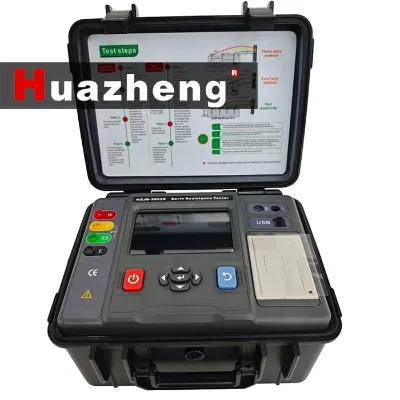
The core functionality of a grounding resistance tester lies in its ability to measure resistance accurately under various conditions. When reviewing product listings, buyers should prioritize resolution and measurement speed. High-performance units often feature a resistance resolution of 0.01Ω, allowing for precise detection of low-resistance paths that are critical in safety-critical applications. Similarly, the resolution for current and voltage measurements is a key differentiator; observed models demonstrate current resolutions as fine as 0.001mA and voltage resolutions of 0.01V. These metrics ensure that even minor deviations in grounding integrity are captured.
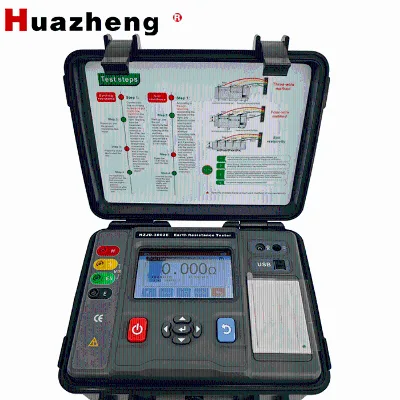
Display technology has evolved from analog needles to digital interfaces. Modern sourcing should target devices equipped with a 2.4-inch color LCD screen, which offers superior readability in low-light environments compared to monochrome displays. The measurement time is another operational factor; units capable of a 1 Time/Second measurement rate provide rapid feedback, which is essential for large-scale site inspections. Furthermore, the test frequency is a vital technical parameter. Some advanced clamps utilize Automatic Frequency Control (AFC) to switch between frequencies such as 128Hz, 111Hz, 105Hz, and 94Hz to mitigate interference from nearby power lines. Others may operate at a fixed frequency of 128Hz. Buyers must verify the specific frequency capabilities of a unit to ensure compatibility with the local grid environment.
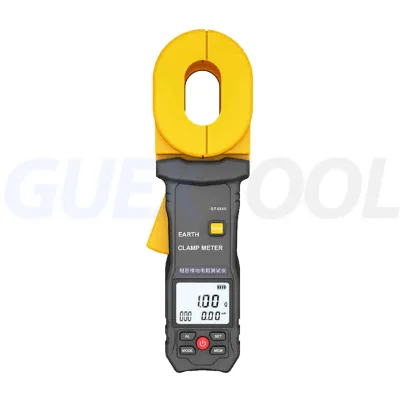
Physical dimensions and weight are practical considerations for field technicians. The market shows a wide variance in form factors. Some units are compact, with dimensions around 265×130×65mm³ and a weight of approximately 0.8kg including batteries, making them highly portable. In contrast, larger multi-function testers may measure 273mm in length with a weight of 975g or even 1443g. The clamp opening size is also a critical specification; a standard opening of φ50mm accommodates most common grounding conductors, but larger models may be required for heavy-duty industrial cables. Buyers should cross-reference the physical dimensions against the available space in their equipment cases and the weight limits for their field teams.
Compliance and Certification Verification
Regulatory compliance is non-negotiable in the procurement of electrical testing equipment. The primary certification observed in the market is the CE mark, indicating conformity with health, safety, and environmental protection standards for products sold within the European Economic Area. Some listings also reference ISO certification, suggesting adherence to international quality management standards. A specific entry notes a "CE ISO" certificate, while another lists "CE/ISO" as the standard. Buyers must treat these as observations of specific listings rather than universal guarantees for all products in the category.
In addition to international marks, regional standards play a significant role. One observed product lists the GB standard, which refers to Chinese National Standards. This is relevant for procurement within China or for suppliers exporting to markets that recognize GB standards. However, buyers should not assume that a product compliant with GB is automatically compliant with IEC or ANSI standards unless explicitly stated. The protection class is another compliance metric; an IP55 rating indicates that the device is protected against dust and water jets, making it suitable for outdoor use in variable weather conditions. This is particularly important for grounding tests, which are often conducted in harsh environments.
When evaluating certifications, buyers should request valid documentation directly from the supplier. The presence of a CE mark on a product page is an observation, but the actual certificate must be verified for authenticity and scope. Similarly, the warranty period is a contractual obligation rather than a technical specification; a standard warranty of 1 year is common, but this should be clearly defined in the purchase agreement. Buyers should also check for specific installation requirements, such as "Hanging" installation, which may affect how the device is deployed in the field.
Cost Drivers and Pricing Structures
The pricing for resistance earthing grounding test clamps varies widely, with observed ranges spanning from $0.10 to $2,999. This broad spectrum reflects differences in technology, build quality, and brand positioning. The lower end of the price range may correspond to basic models with limited features, while the upper end likely includes advanced units with AFC technology, extensive data storage, and robust construction. However, price alone is not a reliable indicator of quality. A low price may indicate a lack of certification or inferior components, while a high price does not guarantee superior performance if the specifications do not match the buyer's needs.
Minimum Order Quantity (MOQ) is another significant cost driver. Listings show MOQs ranging from 1 to 1000 units. For small-scale projects or individual procurement, a low MOQ is essential to avoid excessive inventory costs. Conversely, large organizations may benefit from bulk purchasing, provided the supplier offers volume discounts. The selling unit is typically listed as a "Single item," which simplifies the procurement process for individual purchases. Buyers should also consider the packaging costs; many units are shipped in wooden boxes with foam to prevent damage during transit. This packaging adds to the overall cost but is necessary for protecting sensitive electronic equipment.
Customization is a key factor that influences pricing. Many suppliers offer customized support, including OEM (Original Equipment Manufacturer) services. This allows buyers to brand the device with their own logo or modify specific features. However, customization often incurs additional costs and may increase the lead time. The model number is another identifier that can affect pricing; specific models like "Etcr2000f" or "HZJD-3002E" may have distinct price points based on their feature sets. Buyers should compare the total cost of ownership, including customization fees, shipping, and potential warranty extensions, rather than focusing solely on the base unit price.
Typical Applications and Operational Environments
Resistance earthing grounding test clamps are primarily used in electrical power distribution, industrial facilities, and telecommunications infrastructure. The ability to measure grounding resistance accurately is crucial for preventing equipment damage and ensuring personnel safety during electrical faults. The operating temperature range is a critical factor for application suitability. Observed units typically function between -10°C and 40°C, with some models supporting a wider range up to 50°C. Storage temperatures can extend further, with some units rated for -20°C to 60°C. Buyers must ensure the selected device can withstand the environmental conditions of the intended application site.
Humidity is another environmental factor to consider. Most units are rated for operation at humidity levels below 80% Rh, with storage conditions often requiring levels below 70% Rh. This makes them suitable for most indoor and outdoor applications, but extreme humidity may require additional protective measures. The power source is typically electric, with a voltage requirement of 220V for some models, while others may operate on batteries. Battery life and replacement costs should be factored into the operational planning.
The storage capacity of the device is also relevant for large-scale projects. Some models offer the ability to store up to 200 groups of data, which is essential for generating comprehensive reports and tracking changes over time. This feature reduces the need for manual data entry and minimizes the risk of errors. The open-circuit test current, observed at a maximum of AC 40V, indicates the safety level of the device during testing. Buyers should verify that this voltage level is sufficient for their specific grounding system requirements without posing a safety risk.
Supplier Evaluation and Quality Control
Evaluating suppliers requires a careful review of their background and product consistency. The market shows origins in various locations, including Wuhan, Hebei, and Shanghai in China. While these regions are known for manufacturing electronics, buyers should not assume uniform quality across all suppliers from these locations. The brand name "Huazheng" is observed in some listings, but buyers should not rely on brand recognition alone. Instead, they should verify the supplier's track record, customer reviews, and after-sales support capabilities.
Quality control is paramount when sourcing electronic testing equipment. Buyers should request detailed test reports and quality assurance documentation from the supplier. The presence of certifications like CE and ISO is a positive indicator, but the actual quality control processes used by the manufacturer are equally important. Buyers should inquire about the testing procedures used to ensure the accuracy of the resistance, current, and voltage measurements. The protection class, such as IP55, should be verified through independent testing if possible.
The warranty period is a key component of the supplier evaluation. A standard 1-year warranty is common, but buyers should clarify what is covered, including parts, labor, and shipping costs. Some suppliers may offer extended warranty options for an additional fee. The availability of spare parts and technical support is also critical for long-term maintenance. Buyers should ensure that the supplier has a reliable supply chain for replacement batteries, probes, and other accessories.
Long-Term Procurement Considerations
Sourcing resistance earthing grounding test clamps is not just a one-time transaction but a long-term commitment. Buyers should consider the lifecycle of the equipment, including maintenance, calibration, and eventual replacement. The durability of the device, indicated by its protection class and build quality, will influence its lifespan. Units with shock resistance features are likely to last longer in rugged environments. The customization options, such as OEM support, can also extend the utility of the device by allowing it to be integrated into the buyer's existing systems.
Data management is another long-term consideration. Devices with large storage capacities and digital interfaces facilitate easier data analysis and reporting. Buyers should ensure that the data formats are compatible with their existing software systems. The ability to export data and generate reports efficiently can save significant time and resources. Additionally, the availability of firmware updates and software support from the supplier is crucial for maintaining the device's functionality over time.
Finally, buyers should plan for the scalability of their procurement strategy. As the organization grows, the need for more devices or more advanced models may arise. Establishing a relationship with a reliable supplier who can accommodate increasing order volumes and provide consistent quality is essential. The MOQ flexibility and customization capabilities of the supplier will play a significant role in this scalability. By focusing on these long-term factors, buyers can ensure a sustainable and effective procurement strategy for resistance earthing grounding test clamps.
Comparative Analysis of Key Product Attributes
To assist in the decision-making process, the following table summarizes the key attributes observed in the market listings. This comparison highlights the diversity in specifications and helps buyers identify the features most relevant to their needs.
| Attribute | Observation Range / Specific Values | Relevance to Procurement |
|---|---|---|
| Certification | CE, ISO, CE/ISO, GB | Determines regulatory compliance and market access. |
| Display Type | 2.4-Inch Color LCD, Digital Only | Affects readability and user interface quality. |
| Resistance Resolution | 0.01Ω | Critical for precision in low-resistance measurements. |
| Current Resolution | 0.001mA | Essential for detecting small leakage currents. |
| Voltage Resolution | 0.01V | Important for accurate voltage drop calculations. |
| Test Frequency | 128Hz, 128Hz/111Hz/105Hz/94Hz (AFC) | Determines interference rejection capabilities. |
| Operating Temperature | -10°C~40°C, 0°C--50°C | Defines suitability for various environmental conditions. |
| Protection Class | IP55 | Indicates resistance to dust and water ingress. |
| Weight | 0.8kg to 1443g | Impacts portability and field usability. |
| Dimensions | 265×130×65mm³ to 277.2mm227.5mm153mm | Affects storage and transport logistics. |
| Data Storage | 200 Groups of Data | Supports reporting and historical analysis. |
| Warranty | 1 Year | Defines the period of supplier liability and support. |
| Origin | Wuhan, Hebei, Shanghai, China | May influence shipping costs and lead times. |
| Customization | OEM, Customized | Allows for branding and feature modification. |
This table serves as a reference point for buyers to compare specific models against their requirements. It emphasizes the need for a detailed review of each listing rather than relying on general assumptions. By systematically evaluating these attributes, buyers can make informed decisions that align with their technical, regulatory, and operational needs.
FAQs
What certifications are available for resistance earthing grounding test clamps?
Products typically carry CE certification, and some listings also reference ISO certification. Buyers should verify specific documentation as these marks indicate conformity with safety standards but vary by manufacturer.
How does the display type affect measurement readability?
Modern units feature a 2.4-inch color LCD screen for superior visibility in various lighting conditions. This digital-only display mode ensures clear reading of resistance, current, and voltage values during field operations.
Which specifications define the physical dimensions of the device?
Dimensions vary by model, with common sizes around 273mm in length and weights ranging from 0.8kg to 1443g. Buyers must check specific model data to ensure the device fits their equipment cases.
Can suppliers provide customized support for branding or features?
Yes, customized support including OEM services is available for many models. This allows buyers to add their brand logo or modify features, though it may affect lead times and pricing structures.
What is the typical warranty period for these testing instruments?
A standard warranty of 1 year is commonly offered for these electrical testing machines. Buyers should confirm coverage details including parts and labor in the purchase agreement to ensure long-term protection.
How accurate are the resistance and current measurements?
High-performance units offer a resistance resolution of 0.01Ω and a current resolution of 0.001mA. These metrics allow for precise detection of low-resistance paths critical for safety in grounding systems.
What is the storage capacity for measurement data?
Some advanced models can store up to 200 groups of data for later analysis. This capacity supports comprehensive reporting and tracking of grounding integrity changes over time without manual entry.