Source Retractable Iron Electrical Cable Reel for cranes, electromagnets, and lifting
Find 30 Retractable Iron Electrical Cable Reel options from verified Chinese manufacturers. Buyers can compare specifications like current capacity, cable length, and power source types including spring or motor-driven mechanisms for industrial applications.
Key considerations
Products List


Rigorous Mechanical Design Electrical Cable Reel for Electromotion Flat Car
$500.00 - $3000.00
MOQ: 1 Pieces


Flexible Waterproof Retractable Extension Power Cable Reel
$100.00 - $10000.00
MOQ: 1 Pieces
Shandong China Coal Industrial & Mining Supplies Group Co., Ltd.


Auto Retractable Electric Cable Reel Heavy Duty Steel Industrial Cable Reel
$1000.00 - $7000.00
MOQ: 1 Pieces


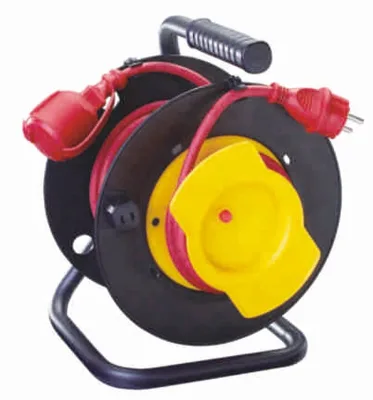


Comprehensive Sourcing Guide
Strategic Sourcing Guide for Retractable Iron Electrical Cable Reels
Understanding the Technical Architecture and Core Specifications
When sourcing a Retractable Iron Electrical Cable Reel, the primary objective is to identify a unit that balances mechanical durability with precise electrical performance. The product landscape for these reels is defined by specific model numbers and structural configurations that dictate their suitability for industrial environments. Based on available market data, buyers will encounter distinct model identifiers such as MTU-90L, ZM, JTD65-50-4, and JTA50-20-4. These alphanumeric codes are not merely labels but serve as critical references for matching the reel's physical dimensions and electrical capacity to the intended application.
The mechanical structure of the reel is a fundamental consideration. The observed market data indicates two primary structural types: "Slip Ring Built-in" and "Slip Ring Built-out." The choice between these configurations depends heavily on the specific requirements of the machinery being powered. For instance, models like the JTD65-50-4 feature a built-in slip ring structure, which is often preferred for applications requiring compact integration and continuous rotation without cable tangling. Conversely, the JTA50-20-4 is noted for a built-out structure, which may offer different maintenance accessibility or load distribution characteristics. The installation pattern is equally critical; the market presents options for both "Horizontal Coiling" and "Vertical Coiling." Selecting the correct orientation ensures that the retraction mechanism functions smoothly under the specific gravitational and spatial constraints of the installation site.
Electrical specifications vary significantly across the product range, requiring careful verification. The voltage rating for these units is typically observed at 380V, which is standard for heavy industrial three-phase applications. However, the current capacity is a variable that must be matched precisely to the load. Data points show current ratings ranging from 40A to 65A, with specific models like the JTA50-20-4 supporting a current capacity of 40A, while others like the JTD65-50-4 are rated for 65A. The frequency is consistently listed as 50Hz, aligning with standard industrial power grids in many regions.
The power source for the retraction mechanism is another key technical differentiator. Buyers can choose between "Spring Type" and "Motor Driven" options. The spring type is a common configuration, offering a mechanical solution that relies on stored potential energy to retract the cable. Some models, such as the JTD65-50-4, explicitly offer "Spring or Motor Driven Optional," providing flexibility for different operational speeds and load requirements. The cable itself is a critical component, with matched models including Yc 310+16, Yc36+14, and Yc 44. The length of the cable coil is equally variable, with observed ranges spanning from 20m to 100m, and specific instances of 24m and 50m coils. The power cable specifications often reference standards like H05VV-F with cross-sections ranging from 2-3G0.5 to 2.5 mm², and some listings mention VDE certification for the cable itself, indicating a high standard of insulation and safety.
Compliance Verification and Certification Standards
In the industrial procurement of electrical equipment, compliance is not optional; it is a prerequisite for safety and legal operation. The market data for retractable iron electrical cable reels highlights a cluster of certifications that buyers must verify. The most frequently observed certifications include CE, ISO, and BV. The CE marking is a mandatory conformity mark for products sold within the European Economic Area, indicating that the product meets EU safety, health, and environmental protection requirements. Its presence on the product or documentation is a baseline expectation for international trade.
Beyond CE, the ISO certification is a recurring theme, with specific references to ISO9001:2008 and general ISO standards. This certification signifies that the manufacturer adheres to international quality management standards, ensuring consistent production processes and quality control. The BV (Bureau Veritas) certification is another significant marker, often associated with third-party inspection and verification of product quality and safety. The combination of CE, ISO, and BV suggests a robust compliance framework, but buyers must ensure these certifications are current and applicable to the specific model being purchased.
Standard compliance is also evident in the product specifications. The "prod_standard" field lists values such as "50kg" and "CE, SGS." While "50kg" appears to be a weight specification rather than a standard, the inclusion of SGS (Société Générale de Surveillance) alongside CE and ISO reinforces the need for third-party validation. Buyers should treat these certifications as evidence of a manufacturer's commitment to quality but must request valid certificates for the specific batch or model to avoid relying on outdated or generic claims. The "prod_packing" methods, such as "Sea Transportation," "Carton Box," or "Plastic Bags," also play a role in compliance, as proper packaging is often required to maintain the integrity of the product during transit and to meet export regulations.
Cost Drivers and Pricing Dynamics
The pricing of retractable iron electrical cable reels is influenced by a complex interplay of technical specifications, material costs, and customization requirements. The observed price range in the market spans from $1 to $10,000 USD, a vast disparity that reflects the diversity of the product line. This range indicates that a basic, small-capacity reel may be available at the lower end, while heavy-duty, motor-driven units with extensive cable lengths and custom features command prices at the higher end.
Several factors drive these costs. First, the current capacity and voltage ratings directly impact the price. A reel rated for 65A will inherently cost more than one rated for 40A due to the larger conductors, more robust slip rings, and heavier-duty housing required. Second, the length of the cable coil is a significant cost driver. Models with 100m of cable will be substantially more expensive than those with 20m, not only because of the copper cost but also due to the increased mechanical complexity of the winding mechanism. Third, the power source type influences pricing; motor-driven reels generally carry a premium over spring-type reels due to the inclusion of motors, control electronics, and more complex assembly.
Customization is another major cost variable. The market data confirms that "Customization" and "Customized" options are available. Buyers seeking specific colors (beyond the standard Red, Blue, and Silvery), custom cable lengths, or unique installation patterns will incur additional costs. The "prod_packing" requirements, such as "Standard Export Package" versus custom packaging, can also affect the final price. Furthermore, the MOQ (Minimum Order Quantity) ranges from 1 to 1000 units. Buyers purchasing small quantities may face higher per-unit costs, while those ordering in bulk can leverage economies of scale to reduce the unit price. It is essential for buyers to understand that the low end of the price spectrum ($1) likely represents a minimal component or a very basic unit, while the high end ($10,000) represents a fully integrated, high-capacity industrial system.
Typical Industrial Applications and Operational Context
Retractable iron electrical cable reels are designed for environments where mobility and safety are paramount. The primary applications identified in the market data include "Electromagnet" operations and "All Kinds of Cranes." These are heavy-duty industrial settings where cables are constantly being extended and retracted, often in harsh conditions. The use of these reels in crane operations is particularly common, as they prevent cable drag, reduce the risk of tripping hazards, and ensure that the power supply remains connected to moving machinery.
The specific application of "Lifting Electromagnet" suggests that these reels are integral to scrap handling, steel mills, and recycling facilities where electromagnets are used to lift ferrous materials. In these scenarios, the reliability of the cable reel is critical; a failure could result in dropped loads or equipment damage. The "Spring Type" and "Motor Driven" options allow for different operational speeds and torques, catering to the varying needs of different crane types and lifting mechanisms.
The "4 Phase" configuration mentioned in the data points to applications requiring three-phase power plus a neutral or ground, which is standard for heavy industrial motors and electromagnets. The "Insulation" feature is a critical safety attribute, ensuring that the cable does not degrade under repeated flexing or exposure to industrial contaminants. The "Over Heat Protection" feature further enhances safety, preventing the reel from overheating during continuous operation, which is a common risk in high-load environments.
Buyers should also consider the "Installation Pattern" when selecting a reel for a specific application. Horizontal coiling is often preferred for overhead crane systems where space is limited in the vertical plane, while vertical coiling might be better suited for floor-mounted applications or specific machine configurations. The choice of structure type, whether "Slip Ring Built-in" or "Built-out," will also depend on the available space and the need for maintenance access within the specific operational context.
Supplier Evaluation and Quality Assurance Protocols
Evaluating a supplier for retractable iron electrical cable reels requires a rigorous approach that goes beyond checking the presence of certifications. Buyers must verify the manufacturer's ability to consistently deliver products that meet the specified technical parameters. The presence of ISO9001:2008 certification is a strong indicator of a quality management system, but it should be complemented by a review of the supplier's track record in producing similar models.
Quality control protocols should be a central part of the supplier evaluation. Buyers should inquire about the testing procedures used for the slip rings, the tension testing of the spring mechanisms, and the insulation resistance testing of the cables. The "VDE Certificate" mentioned for the power cable is a specific quality benchmark that should be verified for each batch. Additionally, the "Over Heat Protection" feature should be tested to ensure it functions correctly under load conditions.
The "prod_packing" method is also an indicator of supplier professionalism. A supplier offering "Standard Export Package" or "Carton Box, Plastic Bagsor as Your Payment" demonstrates flexibility and an understanding of international shipping requirements. However, buyers should ensure that the packaging is robust enough to protect the reel from damage during sea transportation, as indicated by the "Sea Transportation" attribute.
When evaluating suppliers, buyers should also consider the availability of customization. The ability to provide "Other Colors Is Available" or to tailor the cable length and current capacity indicates a supplier with the manufacturing flexibility to meet specific project needs. The "Current Capacity" and "Coil Length of Cable" specifications should be matched precisely to the project requirements, and the supplier should be able to provide documentation confirming these values.
Long-Term Procurement Considerations and Maintenance
Sourcing a Retractable Iron Electrical Cable Reel is not a one-time transaction but the beginning of a long-term relationship that involves maintenance and lifecycle management. The "Condition" of the product is listed as "New," but the longevity of the reel depends on the quality of its components and the maintenance practices employed by the end-user. The "Spring Type" mechanism, for example, will require periodic inspection to ensure the spring tension remains consistent and that the retraction speed does not degrade over time.
The "Slip Ring" is a critical component that requires attention. Whether "Built-in" or "Built-out," the slip ring is subject to wear and tear from continuous rotation. Buyers should ensure that the supplier provides spare parts or has a clear policy for replacing worn slip rings. The "Matched Cable Model" (e.g., Yc 310+16) should be readily available for replacement, and the supplier should be able to supply cables that meet the same insulation and safety standards as the original.
The "Power Source for Cable Reel" also impacts long-term costs. Motor-driven reels may require more maintenance than spring-type reels due to the complexity of the motor and control systems. Buyers should evaluate the total cost of ownership, including energy consumption, maintenance labor, and the cost of spare parts. The "Over Heat Protection" feature is a valuable long-term investment, as it reduces the risk of catastrophic failure and extends the life of the reel.
Finally, buyers should consider the "Customization" aspect in the context of future needs. If a project requires a specific color or cable length now, the supplier's ability to accommodate these changes in the future can be a significant advantage. The "MOQ" range of 1-1000 suggests that suppliers are flexible, but buyers should negotiate terms that allow for easy reordering of spare parts or additional units as the project evolves. By focusing on these long-term factors, buyers can ensure that their investment in retractable iron electrical cable reels delivers value and reliability over the lifespan of the equipment.
FAQs
What certifications do retractable iron electrical cable reels have?
These reels typically carry CE, ISO, and BV certifications to ensure safety and quality compliance. Specific models may also meet ISO9001:2008 standards and include SGS verification for added assurance in industrial procurement.
Which current capacities are available for these cable reels?
Available current capacities range from 40A to 65A depending on the specific model configuration. For instance, the JTA50-20-4 supports 40A, while the JTD65-50-4 is rated for 65A to handle heavier industrial loads.
How is the power source configured for retraction?
The power source can be configured as either a Spring Type or Motor Driven system. Some models offer both options, allowing users to select the mechanism that best fits their operational speed and load requirements.
Can I customize the color and installation pattern of the reel?
Yes, customization is available for colors like Red, Blue, and Silvery, with other colors also offered upon request. Installation patterns can be selected as either Horizontal Coiling or Vertical Coiling to suit specific site constraints.
What is the standard voltage and frequency for these units?
The standard voltage rating is 380V, which is typical for heavy industrial three-phase applications. The frequency is consistently listed as 50Hz, aligning with standard industrial power grids in many regions for reliable operation.
Which cable models are matched with these cable reels?
Matched cable models include Yc 3*10+1*6, Yc3*6+1*4, and Yc 4*4 depending on the reel capacity. These cables often feature H05VV-F specifications with VDE certification for high insulation and safety standards.
What are the typical coil lengths available for purchase?
Coil lengths vary significantly, ranging from 20m to 100m to accommodate different operational needs. Specific models offer lengths such as 24m, 50m, or up to 100m for extended reach requirements in crane applications.