Source Retractable Measuring Tape for Construction, DIY, and Tailoring
Find 30 Retractable Measuring Tape options from Chinese manufacturers. Compare specifications like material, precision, and packaging to select the right tool for your procurement needs.
Key considerations
Products List


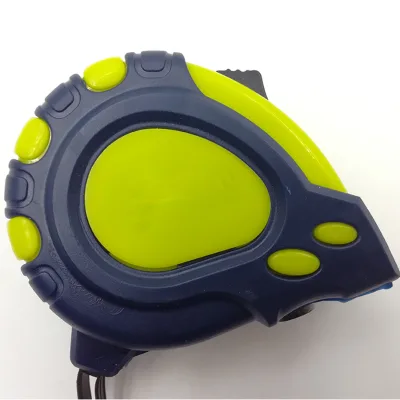

Heavy Duty Tape Measures Retractable Measuring Tape Custom Tape Measure
$13.50 - $14.00
MOQ: 500 Pieces

Retractable High Precision Measuring Tool Measure Tape High Quality Measuring
$12.50 - $13.00
MOQ: 500 Pieces


Hand Tools Retractable Measuring Tape ABS Plastic Stainless Steel Measuring Tapes
$0.59 - $0.79
MOQ: 1000 Pieces


Comprehensive Sourcing Guide
Retractable Measuring Tape Sourcing Guide
The global market for retractable measuring tapes presents a diverse landscape of tools ranging from basic manual length gauges to high-precision micrometers, all sharing the core function of accurate dimension assessment. Buyers must navigate a supply chain where product attributes vary significantly, from standard plastic housings to iron-based precision instruments, depending on the specific application requirements. The observed product data indicates a wide spectrum of capabilities, including devices designed for general measuring tasks and specialized units capable of resolving measurements down to 0.01mm, necessitating a clear definition of technical needs before engaging with suppliers.
Sourcing decisions for these instruments are heavily influenced by the intended use case, whether for construction site rough measurements or industrial quality control requiring strict tolerances. The available inventory includes models with varying resolutions and measurement ranges, such as those covering 50 to 75mm or extending to lengths of 3, 5, 7.5, and 10 meters. Understanding the distinction between a standard manual measuring tape and a precision measuring device is critical, as the latter often demands specific certifications and stricter quality control protocols to ensure reliability in critical manufacturing environments.
Product Scope and Observed Listing Signals
Buyers should first categorize the available inventory by material composition and structural design, as the observed listings reveal a split between plastic-bodied units and iron-based precision tools. The product data highlights specific models like the EB-A0458 and CA-6716, which feature distinct packaging standards ranging from simple brown boxes to complex inner box and carton configurations. This variation suggests that the physical durability and protection requirements for the tool during transit and storage differ based on the product's intended precision level and target market.
The scope of customization is another critical signal, with listings offering options for laser logo printing, customized logo printing, and OEM acceptance. While some products are listed as non-customized, others explicitly support custom branding and specific packing requirements, allowing buyers to tailor the final product to their brand identity. However, the presence of both customized and non-customized options in the same dataset requires careful filtering to ensure the selected supplier can meet the specific branding and packaging constraints of the procurement order.
Technical Specifications to Verify
Verification of measurement accuracy and resolution is the primary technical hurdle, as the observed data includes devices with resolutions as fine as 0.01mm and precision levels of 0.015mm. Buyers must distinguish between general-purpose tools and precision measuring devices, ensuring that the selected unit matches the tolerance requirements of their specific workflow. The distinction between a standard measuring tape and a micrometer is particularly important, as the latter offers a specific range of 50 to 75mm and is designed for high-precision applications that a standard tape cannot fulfill.
Dimensional specifications and measurement methods must also be rigorously checked against the supplier's product sheets to avoid mismatches in functionality. The data indicates models with specific model numbers like "BIG: 2.00cm" and "1.30CM," alongside standard length options of 3, 5, 7.5, and 10 meters. Since the measurement method is listed as manual for some units, buyers should confirm whether the device requires manual reading or if it integrates with automated systems, and verify that the stated accuracy class "A" aligns with the operational demands of the end-user.
Compliance and Safety Documentation
Compliance verification is essential when sourcing tools that may be subject to regional safety and quality standards, as the observed listings reference certifications such as GB, JIS, ISO, and GS TUV. Buyers must confirm that the specific model they intend to purchase carries the relevant certification for their target market, as the presence of one standard does not guarantee compliance with another. The variation in standards listed, from national standards like GB to international ones like ISO, indicates that suppliers may produce different batches or models for different regulatory environments.
Safety and quality documentation should also address the manufacturing origin and the specific standards applied to the production process. The product data points to origins in Fujian and Zhejiang, China, with some listings specifying Guangzhou as the loading port. While the general quality is described as "100% Exporter Standard," buyers should request specific test reports or quality certificates that validate the product against the claimed standards, ensuring that the tool meets the safety and performance expectations required for professional use.
Cost Drivers and Commercial Terms
Cost structures for retractable measuring tapes are driven by a combination of material costs, precision levels, and customization requirements, with observed prices ranging from $0.23 to $58. The significant price variance reflects the difference between basic plastic models and high-precision iron-based micrometers, as well as the inclusion of value-added services like custom logo printing and specialized packaging. Buyers must analyze the total cost of ownership, considering that higher precision and stricter certification requirements often command a premium price that correlates with the tool's reliability and lifespan.
Commercial terms regarding minimum order quantities (MOQ) and lead times are critical factors in budgeting and supply chain planning, with observed MOQs ranging from 2 to 5000 pieces and delivery times varying from 15 to 60 days. The data shows specific instances where the MOQ is set at 1000 pieces with a delivery time of 15 to 25 days, while other entries suggest a longer lead time of 45 to 60 days after order confirmation. Understanding these thresholds is vital for managing inventory levels and cash flow, as failing to meet the MOQ may result in higher unit costs or the inability to secure the order.
Supplier Qualification and Quality Control
Supplier qualification should focus on their ability to maintain consistent quality across different product lines, particularly given the mix of standard and precision instruments in the market. The observed listings mention "100% Exporter Standard" quality, but buyers must verify the actual quality control processes in place, including sample times which range from 10 to 15 days. This sample period is a crucial window for evaluating the physical attributes of the product, such as the resolution, material integrity, and the accuracy of the measurement mechanism before committing to a larger production run.
Quality control protocols must also extend to the packaging and logistics stages, as the data indicates various packing methods from simple brown boxes to complex carton systems. The supplier's ability to adhere to specific packing requirements, such as "12PCS*120box/CTN" or "Inner Box+Carton," is a strong indicator of their operational maturity and attention to detail. Buyers should assess the supplier's track record in handling custom packaging requests and ensuring that the product arrives in the specified condition, minimizing the risk of damage during transit.
Long-Term Procurement Checks
Long-term procurement success relies on establishing a reliable supply chain that can consistently meet evolving technical and commercial requirements. Buyers should monitor the supplier's ability to maintain the specified lead times and delivery details, as the observed range of 15 to 60 days suggests potential variability in production capacity. Regular audits of the supplier's quality control processes and certification status are necessary to ensure that the products continue to meet the required standards over time, especially as the buyer's volume increases or their specifications change.
Continuous evaluation of the product's performance in the field is essential to validate the initial technical specifications and accuracy claims. Buyers should implement a feedback loop to track the durability and precision of the measuring tapes in real-world applications, comparing them against the stated accuracy and resolution. This ongoing assessment helps in identifying any potential issues with the product line early, allowing for timely adjustments to the procurement strategy or supplier selection to maintain operational efficiency and product reliability.
FAQs
What is the typical lead time for Retractable Measuring Tape orders?
The standard delivery time is 45-60 days after order confirmation. Some suppliers offer faster production with a lead time of 15-25 days. Sample preparation usually takes 10-15 days. Buyers should confirm specific timelines with manufacturers to ensure alignment with project schedules and avoid delays in supply chain operations.
Can I customize the logo on Retractable Measuring Tape products?
Yes, customization is available for most Retractable Measuring Tape orders. Manufacturers offer options such as laser engraving or customized logo printing. This service allows businesses to brand their tools effectively. Buyers should verify customization requirements and associated costs with the supplier before finalizing the purchase agreement for branding purposes.
What certifications are available for Retractable Measuring Tape manufacturers?
Products may carry certifications such as GB, JIS, ISO, GS, and TUV. These standards ensure quality and compliance for international trade. Buyers should request specific certification documents to verify product standards. Confirming these credentials helps ensure the measuring tapes meet regional regulatory requirements and quality expectations for professional use.
What is the minimum order quantity for Retractable Measuring Tape?
The minimum order quantity typically ranges from 2 to 5000 pieces. Specific MOQs depend on the supplier and product specifications. Some vendors may offer free samples for evaluation. Buyers should clarify MOQ requirements early in the sourcing process to align with their inventory needs and budget constraints effectively.
Where are Retractable Measuring Tape products typically manufactured?
Manufacturing origins include regions such as Fujian, Zhejiang, and Guangzhou in China. Guangzhou also serves as a common loading port for exports. Buyers can filter suppliers by location to manage logistics and shipping costs. Verifying the origin ensures transparency in the supply chain and helps assess regional manufacturing capabilities.
What materials are used in Retractable Measuring Tape construction?
Common materials include plastic and iron for the casing and internal components. The tape itself is often made of steel for durability. These materials ensure accurate measurement and long-term reliability. Buyers should specify material preferences to ensure the product meets their durability and precision requirements for industrial or consumer applications.