Source Road Sweeper Brush for Street Airport Road Cleaning
Find 30 Road Sweeper Brush options from verified suppliers in China. Buyers can compare specifications like material, size, and certifications for industrial and environmental applications.
Key considerations
Products List
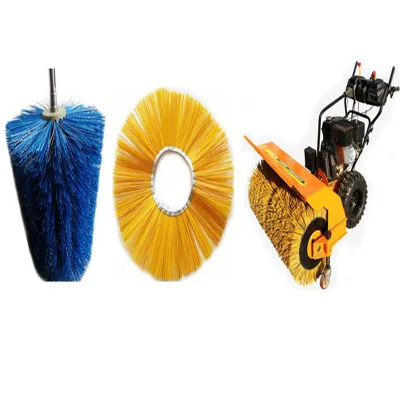


High Efficiency Cleaning Street, Road, Ground, Run Round Type Road Sweeper Brush
$7.23 - $10.92
MOQ: 10 Pieces




Comprehensive Sourcing Guide
Strategic Sourcing Guide for Industrial Road Sweeper Brushes
Procuring industrial cleaning equipment requires a nuanced understanding of component specifications, particularly for high-wear items like road sweeper brushes. These brushes are critical for maintaining operational efficiency in municipal, airport, and industrial environments. The market offers a diverse array of options, ranging from standard nylon bristles to specialized steel wire configurations. This guide synthesizes available product data and industry standards to assist procurement professionals in making informed decisions without relying on unverified supplier claims.
Technical Specifications and Material Composition
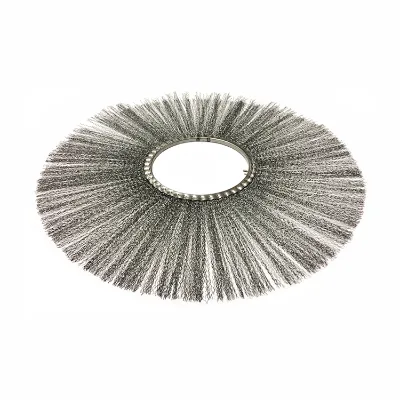
The performance of a Road Sweeper Brush is fundamentally dictated by its material composition and dimensional standards. Based on observed product attributes, the primary filament materials include Polypropylene (PP), Nylon, and Steel Wire. Each material serves a distinct purpose: Nylon offers a balance of flexibility and durability for general dust control, while Steel Wire is typically reserved for heavy-duty applications involving debris removal or surface scrubbing. The product data indicates that filaments are often available in a mix of these materials, allowing buyers to tailor the brush to specific surface conditions.
Dimensional consistency is equally critical. The product specifications list a wide range of standard sizes, including diameters such as 115mm, 128mm, 162mm, 165mm, 205mm, 222mm, 235mm, and 255mm. For larger industrial units, dimensions may extend to specific lengths and widths, such as 690300mm, 790300mm, 400700mm, 300600mm, 260500mm, 210450mm, and 180*400mm. Buyers must verify that the selected brush matches the mounting interface of their specific sweeper machinery. The shape of the brush is also a variable; while some models are cylindrical, others are designed with an oval profile to optimize contact with uneven road surfaces. The single package size for standard units often measures around 60x50x40 cm, which is a vital metric for logistics planning.
Compliance, Certification, and Safety Standards
In the B2B procurement of industrial machinery parts, compliance with international safety and quality standards is non-negotiable. The observed product data highlights CE certification as a relevant attribute for certain models, such as those designated with the model number TOP-RSB. This certification suggests adherence to European health, safety, and environmental protection standards, which is often a prerequisite for exporting to or operating within the European market. However, buyers should treat this as an observation of specific listings rather than a universal guarantee for all available inventory.
Beyond specific certifications, the condition of the product is listed as "New," which is a baseline expectation for industrial replacements. The "Eco-Friendly" attribute observed in some listings points to a growing market trend toward sustainable manufacturing, though the specific metrics for this claim (such as recyclability or biodegradability) should be verified with the supplier. When evaluating compliance, procurement teams should request documentation that explicitly links the product to the claimed standards. For instance, if a supplier claims a product meets a specific standard like 115mm or 255mm, the buyer must ensure this refers to the physical diameter or a recognized industry benchmark, not an arbitrary internal code.
Cost Drivers and Pricing Dynamics
The pricing landscape for road sweeper brushes is highly variable, with observed listed prices ranging from $1 to $6,099 USD. This wide disparity is not indicative of quality alone but rather reflects differences in scale, material intensity, and customization levels. A unit priced at the lower end of the spectrum is likely a standard, off-the-shelf component with minimal customization, whereas a unit at the higher end may include complex engineering, specialized materials like steel wire, or be part of a larger bulk order with specific packaging requirements.
Several factors drive these costs. The "Feature: Long Life Low Cost" attribute suggests that some manufacturers prioritize durability to reduce the total cost of ownership, even if the initial unit price is higher. Conversely, the "High Pressure" feature indicates brushes designed for specific cleaning mechanisms that may command a premium. The "Customized" color options, available in White, Red, Blue, Yellow, Green, and Black, can also influence pricing, as custom dyeing processes add to the manufacturing overhead. Buyers should analyze the total cost of ownership, considering the "Feature: Long Life" claim against the initial purchase price to determine the most economical choice for their fleet.
Typical Applications and Operational Context
Road sweeper brushes are versatile tools designed for a variety of environments. The product data explicitly lists applications including "Dust Control," "Environmental Protection," and "Street, Road, Airport.. Sweeping." This indicates that these brushes are suitable for both light municipal cleaning and heavy-duty industrial tasks. The "Use: Road cleaning" attribute confirms their primary function, while the "Application: Industrial Brushes" classification broadens their utility to factory floors and loading docks.
The "Style: Roller" designation describes the mechanical configuration, which is standard for rotating brush systems used in sweepers. The "Shape: Oval" option mentioned in the data suggests a specialized design for specific machine types that require a non-cylindrical contact patch. When selecting a brush for a specific application, buyers must match the material hardness to the surface. For example, a brush intended for airport runways might require the durability of steel wire to remove rubber deposits, whereas a brush for a city sidewalk might prioritize the gentleness of nylon to avoid damaging the pavement. The "Service: OEM" attribute indicates that suppliers are capable of producing custom-branded or custom-specification units, which is valuable for companies looking to standardize their fleet components.
Supplier Evaluation and Production Capabilities
Evaluating a supplier for road sweeper brushes requires a focus on their production capacity, location, and logistical capabilities. The product data identifies "Anhui, China" and "Anqing" as key places of origin, suggesting a concentration of manufacturing in this region. While the specific supplier names are not provided, the presence of multiple model numbers (TOP-RSB, TOP-RSBR, TOP-RSDB, TOP-RRSB, WDJ01) indicates a diverse product portfolio from the manufacturing base.
A critical factor in supplier evaluation is the Minimum Order Quantity (MOQ). The observed MOQ range spans from 1 to 1000 pieces. This flexibility allows buyers to test new products with small orders or commit to large-scale procurement for fleet-wide replacements. The "Selling Units: Single item" attribute suggests that individual units are available for purchase, which is beneficial for emergency replacements. However, for bulk orders, the "prod_packing" specifications vary significantly, ranging from 10PCS/CTN to 100PCS/CTN, and some utilize pallets. Buyers must calculate the total volume and weight, noting that the single gross weight is listed as 1.000 kg, to optimize shipping costs.
Quality Control and Packaging Standards
Maintaining quality during transit and storage is essential for industrial components. The "prod_packing" data reveals that brushes are typically packed in cartons, with specific configurations like 10, 50, or 100 pieces per carton. Some listings mention "Carton, Pallet" as the packing method, which is crucial for large shipments to prevent damage during handling. The "Single package size" of 60x50x40 cm provides a baseline for volume calculations, but buyers should verify the actual dimensions for their specific model, as larger industrial brushes may have different packaging requirements.
Quality control should extend to the physical attributes of the brush. The "Color: Customerized" and "Color: Customized" attributes highlight the importance of visual inspection to ensure the dye matches the order, which can be a proxy for overall production consistency. The "Condition: New" attribute is a standard requirement, but buyers should also inspect for defects in the filament arrangement and the structural integrity of the brush core. The "Standard" values listed, such as 250270400mm, serve as a reference for dimensional accuracy, but the "Customized" standard option indicates that buyers can request specific tolerances.
Long-Term Procurement Considerations
Sourcing road sweeper brushes is not a one-time transaction but a long-term partnership that impacts operational continuity. The "Delivery time" of 30-40 days is a significant lead time that buyers must account for in their inventory planning. This timeframe suggests that production is likely made-to-order or involves significant shipping logistics from the origin in China. The "Payment: TT" (Telegraphic Transfer) term is standard for international trade but requires careful financial planning to ensure cash flow is managed effectively during the production period.
To mitigate risks associated with long lead times, buyers should consider maintaining a safety stock of critical brush sizes. The "Customization: Available" attribute offers a strategic advantage; by working with a supplier to standardize brush specifications across a fleet, buyers can reduce the variety of SKUs they need to manage. Furthermore, the "Feature: Long Life Low Cost" suggests that investing in higher-quality brushes can reduce the frequency of replacements, thereby lowering the administrative burden of procurement. Buyers should also verify the "Certification: CE" status for each batch, as regulatory requirements can change, and ensure that the supplier maintains consistent quality control over time.
In conclusion, successful procurement of road sweeper brushes depends on a rigorous analysis of technical specifications, material properties, and supplier capabilities. By leveraging the observed data on dimensions, materials, and packaging, buyers can make informed decisions that align with their operational needs and budget constraints. The variability in pricing, MOQ, and lead times underscores the importance of clear communication with suppliers and a thorough understanding of the specific requirements of the intended application.
FAQs
What materials are used for Road Sweeper Brush filaments?
Filaments are made from Polypropylene, Nylon, or Steel Wire. Buyers can select specific materials based on the surface type and cleaning intensity required for their application.
Which certifications are available for these cleaning brushes?
Some models carry CE certification for European safety standards. This certification applies to specific listings and should be verified with the supplier before purchase.
How long is the delivery time for these brushes?
The standard delivery time ranges from 30 to 40 days. This lead time accounts for production and shipping logistics from the manufacturing origin in China.
Can I order a customized color for the brush?
Yes, colors like White, Red, Blue, Yellow, Green, and Black are available as customized options. Customization allows buyers to match specific branding or safety requirements.
What is the minimum order quantity for these products?
The minimum order quantity ranges from 1 to 1000 pieces depending on the specific model. This flexibility supports both single-item replacements and bulk fleet procurement.
Which dimensions are standard for road sweeper brushes?
Standard diameters include 115mm, 128mm, 162mm, 165mm, 205mm, 222mm, 235mm, and 255mm. Larger industrial units may also feature specific length and width combinations.
Where are these road sweeper brushes manufactured?
Products originate from Anhui and Anqing in China. This location indicates a concentration of manufacturing facilities specializing in industrial cleaning components.