Source Road Sprinkling Water Tanker Truck for Municipal Cleaning
Find 30 Road Sprinkling Water Tanker Truck options with varying tank volumes and chassis models. Compare specifications like dimensions, axle loads, and water cannon ranges from verified manufacturers in Hubei, China.
Key considerations
Products List


Water Tank Truck for Road Cleaning and Dust Suppression Sprinkler Truck
$18000.00 - $20000.00
MOQ: 1 Pieces

Special Water Tanker Truck 4X2 Watering Transport Sprinkler Spray Water Tank Truck
$20000.00 - $22000.00
MOQ: 1 Pieces

Water Tank Sprinkler Truck for Urban Cleaning and Road Maintenance
$17000.00 - $19000.00
MOQ: 1 Pieces

Sprinkler Water Truck for City Cleaning Dust Control and Washing Roads
$17000.00 - $19000.00
MOQ: 1 Pieces


Superior Quality Water Truck Road Water Truck Sprinkling Tanker Global Hot Sold
$19000.00 - $20000.00
MOQ: 1 pieces

Superior Quality Water Truck Road Water Truck Sprinkling Tanker Global Sale OEM
$19000.00 - $20000.00
MOQ: 1 pieces

Mini Water Tank Truck Sprinkler Water Truck New Sprinkler Water Tanker Truck
$19000.00 - $20000.00
MOQ: 1 pieces


Dongfeng 4*2 2ton/3ton/4ton Water Transportation Road Sprinkler Truck
$9980.00 - $28800.00
MOQ: 1 Pieces


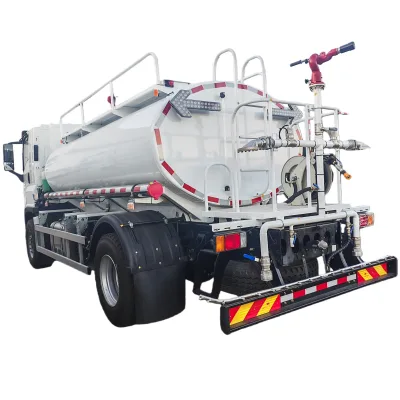

Small Water Tank Transport Truck 2000liter Sprinkling Water Tanker Truck Price
$10000.00 - $13000.00
MOQ: 1 unit


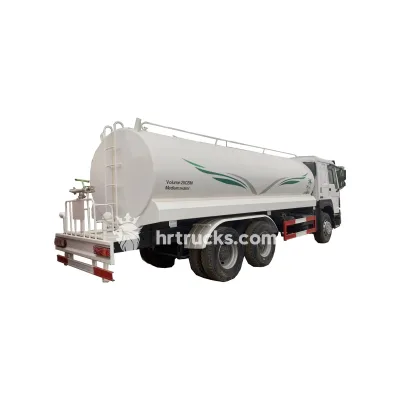
8*4 27000liter Road Sprinkler Water Truck Heavy Duty Water Sprinkler Tank Truck
$55000.00 - $85000.00
MOQ: 1 Pieces



Comprehensive Sourcing Guide
Strategic Sourcing Guide for Road Sprinkling Water Tanker Trucks
Understanding Core Technical Specifications and Chassis Configurations
When sourcing road sprinkling water tanker trucks, buyers must first distinguish between the specific chassis models and tank capacities that define the vehicle's operational envelope. The market offers distinct configurations tailored to different municipal and industrial needs. Based on available product data, the primary chassis models identified include the DFH1160BX1 and the EQ1125sj8cdc. These models dictate the fundamental performance metrics, including engine capacity, transmission type, and axle load distribution.
The DFH1160BX1 configuration typically features a robust diesel engine with a capacity exceeding 8 liters, paired with a manual transmission. This setup supports a gross vehicle weight of approximately 16,200 kg, with a curb weight of 6,280 kg. The tank volume for this specific configuration is recorded at 9.72 cubic meters, making it suitable for heavy-duty municipal water distribution. In contrast, the EQ1125sj8cdc chassis presents a lighter profile with a gross vehicle weight of 11,995 kg and a curb weight of 4,900 kg. Its tank volume is listed at 7.62 cubic meters, though variations exist with some units reaching 9.76 cubic meters depending on the specific build.
Dimensional specifications are equally critical for procurement planning. The DFH1160BX1 variant generally measures 7,700 mm in length, 2,500 mm in width, and 3,100 mm in height. The EQ1125sj8cdc series displays a wider range of dimensional options, with lengths varying from 7,350 mm to over 8,000 mm, and widths consistently around 2,250 mm. The wheelbase for these trucks is not uniform; it ranges from 3,600 mm to 4,700 mm, directly influencing the vehicle's turning radius and stability on uneven terrain. Buyers should verify the specific wheelbase required for their operational environment, as a longer wheelbase (e.g., 4,700 mm) offers better highway stability, while a shorter one (e.g., 3,600 mm) enhances maneuverability in tight urban spaces.
Compliance, Certification, and Regulatory Standards
Navigating the regulatory landscape is a non-negotiable aspect of sourcing heavy commercial vehicles. The supplied product data indicates that compliant units often carry specific certifications, including ISOCCC and TSEPA, alongside the mandatory CCC (China Compulsory Certification). These certifications are essential for ensuring that the vehicle meets environmental and safety standards required for road operation. The presence of the CCC mark is particularly vital for domestic sales and usage within China, while ISOCCC and TSEPA suggest adherence to broader international or regional environmental protocols.
Standards compliance extends beyond simple certification labels. The product data references specific standard codes such as 18000, 25000, and 11995. While the exact nature of these numerical standards requires verification against current local regulations, they likely correspond to safety, emission, or structural integrity benchmarks. For instance, the standard 11995 may correlate with the gross vehicle weight limit of 11,995 kg observed in certain models, indicating a regulatory weight class. Buyers must ensure that the supplier can provide documentation proving that the specific unit ordered adheres to the standards applicable in the destination country. Relying solely on the presence of a certification label without verifying the specific standard code against local laws can lead to compliance failures upon import or registration.
Furthermore, the origin of the manufacturing plays a role in regulatory alignment. The product data consistently lists the origin as Hubei, China. This region is a known hub for automotive manufacturing, but buyers must confirm that the specific factory holds the necessary export licenses and that the vehicle's design complies with the destination market's unique safety and emission requirements. The "Marine Transportation, Land Remote Traffic" packing specification suggests that the vehicles are designed for long-distance logistics, but this does not exempt them from local roadworthiness tests.
Cost Drivers and Pricing Dynamics
The pricing structure for road sprinkling water tanker trucks is influenced by a complex interplay of chassis specifications, tank capacity, and customization levels. The observed price range for these units in the market spans from 8,000 USD to 85,000 USD. This significant variance is not arbitrary but reflects the substantial differences in equipment and configuration. The lower end of the spectrum likely corresponds to basic models with smaller tank volumes, such as the 7.62 cubic meter variants, while the higher end encompasses heavy-duty units with larger tanks, advanced engine capacities, and extensive customization.
Several key factors drive these costs. First, the engine capacity is a primary cost determinant. Units with engines exceeding 8 liters generally command a higher price due to the increased power output and durability required for heavy loads. Second, the tank volume directly impacts the cost; a 9.76 cubic meter tank requires more material and structural reinforcement than a 7.62 cubic meter tank. Third, the level of customization available significantly affects the final price. The product data confirms that customization is available and supported, which allows buyers to tailor the water cannon range, sprinkling area, and specific dimensions to their needs. However, bespoke modifications invariably increase the unit cost compared to standard off-the-shelf models.
Additionally, the number of tires and axle configuration contribute to the price. Models with 10 tires and a two-axle group configuration designed for higher axle loads (e.g., 7,000/18,000 kg) are more expensive than those with 6 tires and lighter load capacities. The maximum speed capability also plays a role; units capable of reaching 103 km/h may utilize more advanced transmission systems or aerodynamic designs compared to those capped at 88 km/h. Buyers should be aware that the "New" condition of the vehicles is a baseline requirement, but the age of the chassis components and the quality of the tank lining are variables that can influence the price within the observed range.
Operational Applications and Performance Metrics
The utility of a Road Sprinkling Water Tanker Truck is defined by its specific performance metrics, which dictate its suitability for various applications. The water cannon range is a critical performance indicator, with observed capabilities of at least 28 meters in jet mode. This range is sufficient for standard street cleaning, dust suppression on construction sites, and emergency cooling operations. The sprinkling area, typically between 12 and 16 meters, ensures effective coverage for wide road surfaces, making these vehicles ideal for municipal road maintenance and park irrigation.
The approach and departure angles are crucial for off-road or rough terrain capabilities. The data shows a range of angles, with some models offering a 21-degree approach angle and 11-degree departure angle, while others provide a minimum of 14 degrees approach and 11 degrees departure. These angles determine the vehicle's ability to navigate steep inclines and declines without damaging the undercarriage. For operations in urban environments with speed bumps or steep driveways, a higher approach angle is preferable. Conversely, for flat, paved roads, the standard angles are generally adequate.
The occupancy capacity, listed as 2 or 3 persons, is a standard configuration for these trucks, accommodating the driver and potentially a spotter or operator for the water cannon. The maximum speed of 88 km/h to 103 km/h indicates that these vehicles are designed for efficient transit between job sites, balancing speed with the heavy load of the water tank. The fuel type, consistently diesel, ensures high torque output necessary for moving heavy loads, though it requires consideration of fuel efficiency and local emission regulations. The volume of 10,001 to 15,000 liters (or 10 to 15 cubic meters) aligns with the tank volume data, confirming that these trucks are designed for large-scale water distribution rather than small, localized tasks.
Supplier Evaluation and Quality Assurance Protocols
Evaluating a supplier for heavy commercial vehicles requires a rigorous assessment of their manufacturing capabilities and quality control processes. Since the product origin is consistently listed as Hubei, China, buyers should verify the specific factory's history and capacity. A reputable supplier will demonstrate a track record of producing vehicles that meet the specified standards, such as the 18000 or 25000 benchmarks mentioned in the product data. Buyers should request detailed documentation regarding the production line, including the quality of the welding processes for the tank and the assembly standards for the chassis.
Quality control should extend to the testing of critical components. While specific test results are not provided in the source data, buyers must insist on seeing evidence of rigorous testing for the water cannon, the pump system, and the structural integrity of the tank. The "New" condition of the vehicles is a baseline, but buyers should verify that the vehicles have undergone a comprehensive pre-delivery inspection. This includes checking the transmission type, ensuring the manual transmission shifts smoothly, and verifying the tire pressure and alignment for the specific number of tires (6 or 10) on the unit.
The customization support offered by the supplier is another key evaluation metric. The data indicates that customization is available, but the extent of this support varies. A high-quality supplier will offer a flexible production line that can accommodate specific requests for dimensions, tank volume, or engine upgrades without compromising the vehicle's structural integrity. Buyers should also assess the supplier's ability to provide after-sales support, including the availability of spare parts and technical assistance. The "Marine Transportation, Land Remote Traffic" packing specification suggests that the supplier has experience in logistics, but buyers should confirm their ability to handle the specific shipping requirements of the destination country.
Long-Term Procurement and Maintenance Considerations
Procuring a Road Sprinkling Water Tanker Truck is a long-term investment that requires careful consideration of maintenance and lifecycle costs. The choice of chassis model, such as the DFH1160BX1 or EQ1125sj8cdc, will influence the availability of spare parts and the ease of maintenance. Buyers should prioritize suppliers who offer a comprehensive warranty and a network of authorized service centers. The diesel engine, with its capacity exceeding 8 liters in some models, requires regular maintenance to ensure longevity, and the availability of genuine parts is crucial.
The tank volume and material quality are also long-term factors. A tank with a volume of 9.72 to 9.76 cubic meters must be constructed from materials that resist corrosion, especially given the constant exposure to water and potential chemical additives used in road cleaning. Buyers should inquire about the tank lining and the protective coatings applied to the exterior. The axle load capacity, ranging from 4,350/7,645 kg to 7,000/18,000 kg, dictates the stress on the suspension and braking systems. Regular inspections of the braking system, particularly for vehicles with a gross vehicle weight near the 16,200 kg limit, are essential for safety.
Furthermore, the customization options should be evaluated for their long-term impact. While customization allows for tailored solutions, it can sometimes complicate maintenance if non-standard parts are used. Buyers should ensure that any customizations are compatible with the standard maintenance schedules of the chassis. The lead time and production capacity of the supplier are also relevant, as delays in delivery can impact project timelines. Although specific lead times are not provided in the data, buyers should establish clear delivery schedules and penalties for delays in their procurement contracts. Finally, the total cost of ownership, including fuel consumption, maintenance, and potential downtime, should be calculated to ensure the selected vehicle offers the best value over its operational life.
FAQs
What certifications do road sprinkling water tanker trucks carry?
These trucks typically carry ISOCCC, TSEPA, and CCC certifications. The CCC mark is mandatory for domestic use in China, while ISOCCC and TSEPA indicate adherence to environmental and safety standards required for broader market operation.
Which chassis models are available for road sprinkling water tanker trucks?
The primary chassis models identified are the DFH1160BX1 and the EQ1125sj8cdc. These models dictate performance metrics like engine capacity and axle load, with the DFH1160BX1 supporting heavier loads up to 16,200 kg.
How large is the water tank on these road sprinkling water tanker trucks?
Tank volumes range from 7.62 to 9.76 cubic meters, equivalent to 10,001 to 15,000 liters. The specific capacity depends on the chassis model, with the DFH1160BX1 often featuring a 9.72 cubic meter tank.
Can road sprinkling water tanker trucks be customized for specific needs?
Yes, customization is available and supported for these vehicles. Buyers can tailor dimensions, tank volume, and water cannon ranges to fit specific operational requirements while maintaining the new condition of the truck.
Where are road sprinkling water tanker trucks manufactured?
The manufacturing origin for these trucks is consistently listed as Hubei, China. This region is a known hub for automotive manufacturing, and buyers should verify specific factory export licenses for international shipments.
What is the maximum speed of road sprinkling water tanker trucks?
Maximum speeds range from 88 km/h to 103 km/h depending on the configuration. The higher speeds are often associated with the EQ1125sj8cdc chassis, while the DFH1160BX1 typically caps at 88 km/h.