Source Rogers Double Sided SMT PCB for IoT, Medical, and Industrial
Compare 30 listings for Rogers Double Sided SMT PCB with options for multilayer and double-layer designs. Buyers can evaluate customization, surface finishes, and production modes from verified suppliers in China.
Key considerations
Products List


PCB Maker Double-Sided PCB OEM Service Custom PCB Board with Components Other
$0.20 - $0.50
MOQ: 10000 pieces
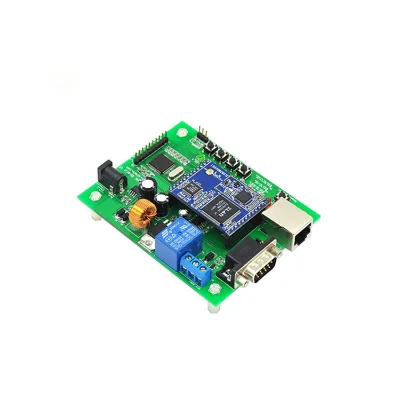


High Frequency Rogers or Other PCB Circuit Boards PCB Manufacturing and Assembly
$1.00 - $1.50
MOQ: 1 Pieces


Comprehensive Sourcing Guide
Strategic Sourcing Guide for Rogers Double-Sided SMT PCB Solutions
Navigating the procurement landscape for specialized printed circuit board assemblies (PCBAs) requires a rigorous approach to technical verification and supplier validation. When the core search intent focuses on Rogers double-sided SMT PCBs, buyers must distinguish between generic FR-4 solutions and high-frequency materials, as the terminology often overlaps in broad market listings. The following guide synthesizes observed market data and standard industry practices to provide a disciplined framework for sourcing these critical electronic components. This analysis focuses on the tangible attributes available in current supply chains, ensuring that procurement decisions are grounded in verifiable facts rather than speculative marketing claims.
Technical Architecture and Material Verification
The foundation of any successful PCB procurement lies in the precise definition of material properties and layer architecture. In the current market, a significant volume of available products lists "FR-Certification:RoHS,ISO" as the base material specification. While the term "Rogers" implies a specific class of high-performance laminate often used for RF and microwave applications, the observed data indicates a diverse range of substrates, including standard FR-4 variants with varying layer counts. Buyers must verify whether the specific "Rogers" designation refers to the actual dielectric material or a generic marketing term for double-sided boards.
The observed product attributes reveal a spectrum of layer configurations. While some listings explicitly state "Multilayer" or "8 layers FR4 PCB," the core keyword targets "double-sided" solutions. The data confirms the availability of "Double-Layer" configurations alongside "1-24 Layers" options. For a double-sided SMT requirement, the buyer must confirm the exact layer count, as the manufacturing process for double-sided boards differs significantly from multilayer stacks in terms of via formation and signal integrity. The standard board thickness observed ranges from 0.2mm to 4.0mm, with specific common values of 1.0mm, 1.6mm, and 2.0mm. Copper thickness is another critical variable, with observed options including 0.5oz, 1oz, 1/2 oz, 1/3 oz, 2oz, and 3oz. Selecting the correct copper weight is essential for current carrying capacity and thermal management in double-sided designs.
Furthermore, the surface finish and metal coating options are diverse. The market offers "Immersion Gold/OSP/Immersion Silver/Immersion Tin" as standard surface finishes. Specific product observations note "Silver," "Copper," and "Gold" as metal coating types. For SMT applications, Immersion Gold or OSP are frequently preferred for their solderability and shelf life, but the specific choice depends on the component pitch and assembly environment. The solder mask colors observed include Green, Red, Blue, White, Black, and Purple, with Green being the most common standard. The flame retardant properties are consistently noted as "V0," a critical safety standard for electronic assemblies.
Compliance, Certification, and Regulatory Standards
Compliance is non-negotiable in B2B electronics procurement. The observed product data highlights a strong emphasis on international certifications. The most frequently cited certifications include "RoHS," "CCC," and "ISO." RoHS compliance ensures the absence of restricted hazardous substances, which is a baseline requirement for most global markets. The CCC (China Compulsory Certification) indicates compliance with specific Chinese regulatory standards, which may be relevant for domestic sourcing or specific export requirements. ISO certification suggests adherence to quality management systems, though the specific ISO standard (e.g., ISO 9001) is not explicitly detailed in the general observations.
Buyers must treat these certifications as observations of the supplier's current status rather than universal guarantees for every unit. The data shows that some products list "FR-Certification:RoHS,ISO" while others list "FR-Certification:RoHS,CCC,ISO." This variation suggests that different production lines or product models may carry different compliance statuses. When sourcing Rogers or high-performance double-sided PCBs, it is vital to request specific test reports for the RoHS directive and verify the validity of the ISO certification for the specific manufacturing facility. The "V0" flame retardant property is a standard observation across the listings, but buyers should verify the specific test standard (e.g., UL 94) used to determine this rating.
Cost Drivers and Economic Factors
Understanding the cost structure of PCB procurement is essential for budgeting and negotiation. The observed price range in the market spans from $0.01 to $10.80 USD. This wide disparity indicates that pricing is highly dependent on the complexity of the design, the material type, and the order volume. A double-sided SMT board with simple routing and standard FR-4 material will likely fall at the lower end of this spectrum, while a board utilizing high-frequency Rogers material, complex via-in-pad structures, or gold plating will command a premium price.
The Minimum Order Quantity (MOQ) is another significant economic factor. The observed MOQ range is extensive, from "No Required" to 10,000 units. This flexibility allows buyers to source small prototype runs or large-scale production batches without being locked into rigid volume constraints. However, the "No Required" status often correlates with higher unit costs due to setup fees and lower economies of scale. Conversely, orders approaching the 10,000-unit threshold typically benefit from significant per-unit cost reductions. Buyers should also consider the "Customization" attribute, which is listed as "Available" and "Customized" for many products. Customization, such as specific board shapes (e.g., "174*36mm" or "custumized" dimensions), unique copper thicknesses, or specialized via requirements like "Via Fill" and "Via in Pad," will invariably increase the cost per unit compared to standard off-the-shelf configurations.
Typical Applications and Performance Requirements
The technical specifications observed suggest that these PCBs are designed for a wide array of applications, ranging from consumer electronics to industrial control systems. The presence of "Bipolar Integrated Circuit" and "VLSI" (Very Large Scale Integration) attributes indicates that these boards are suitable for complex logic and processing applications. The "Thin Film IC" and "DIP" (Dual In-line Package) shape attributes point to compatibility with both surface-mount and through-hole assembly techniques, although the "Mode of Production" is predominantly "SMT" (Surface Mount Technology).
For double-sided SMT applications, the "Min Linewidth/Linespacing" of 0.075mm and "Min Hole Diameter" of 0.15mm are critical performance metrics. These dimensions allow for high-density interconnects, which are necessary for modern compact electronic devices. The "Mounting Component Pitch" of 0.15mm further supports the use of fine-pitch components. The "Others Requirements" section lists "Via Fill," "Via in Pad," and "Gold Finger," which are common in high-reliability applications such as automotive electronics, telecommunications, and medical devices. The "ESD Bag, Carton Box" and "Individual Bubble Bag and Carton" packing methods highlight the need for electrostatic discharge protection, particularly for sensitive integrated circuits.
Supplier Evaluation and Production Capabilities
Evaluating a supplier for double-sided SMT PCBs requires a deep dive into their production capabilities and quality assurance processes. The "Mode of Production" is consistently listed as "SMT," confirming that the suppliers possess the necessary automated assembly lines. However, the distinction between a PCB fabricator and a PCBA assembler is crucial. Some listings indicate "OEM/ODM" capabilities, suggesting that the supplier can handle both design-to-manufacture and contract manufacturing services. The "Customization" attribute being "Available" implies flexibility in handling unique design requirements.
When assessing suppliers, buyers should verify the "prod_origin," which is observed as "China" for the majority of the listed products. While this provides insight into the geographic concentration of the supply chain, it does not inherently dictate quality. The "Delivery Term" of "7-15 days" suggests a relatively fast turnaround time, which is beneficial for prototyping and urgent production needs. However, buyers must confirm if this lead time applies to the specific material (e.g., Rogers laminate) or standard FR-4, as high-frequency materials often have longer lead times due to specialized manufacturing requirements. The "Condition" of the products is listed as both "New" and "Used," which necessitates a clear definition of the product state in the purchase order to avoid receiving refurbished or surplus components when new ones are required.
Quality Control and Long-Term Procurement Strategy
Quality control is the backbone of reliable PCB procurement. The observed specifications include detailed parameters such as "Min Solder Resist Bridge" of 0.1mm, which ensures that the solder mask does not bridge across conductive traces, preventing short circuits. The "Surface Finish" options like "Immersion Gold" and "Immersion Silver" are selected based on the specific application's requirements for solderability and oxidation resistance. The "Flame Retardant Properties" of "V0" provide a baseline for fire safety, but buyers should request detailed test reports for high-reliability applications.
For long-term procurement, consistency in quality and supply chain stability are paramount. The "prod_packing" methods, ranging from "ESD Bag" to "Vacuum Packing," indicate that suppliers are aware of the need to protect sensitive components during transit. However, the variation in packing standards suggests that buyers should specify their own packaging requirements in the contract. The "prod_model" identifiers, such as "PCBA-20230515-001" and "GT P R 00036," serve as unique tracking numbers that facilitate traceability. Buyers should insist on these model numbers in their purchase orders to ensure that the exact specifications are met.
In conclusion, sourcing Rogers double-sided SMT PCBs requires a meticulous approach that balances technical specifications, compliance requirements, and economic factors. By leveraging the observed data on layer counts, material certifications, and production capabilities, buyers can make informed decisions that align with their project needs. The wide range of available options, from standard FR-4 to specialized high-frequency materials, offers flexibility but demands careful verification to ensure that the final product meets the rigorous standards of modern electronics manufacturing.
FAQs
What certifications are available for Rogers double sided SMT PCBs?
Available certifications include RoHS, CCC, and ISO. Buyers must verify specific test reports for each product model, as some listings show RoHS and ISO while others include CCC alongside ISO.
How many layers can Rogers double sided SMT PCBs have?
Products range from double-layer configurations to multilayer stacks with up to 24 layers. Buyers must confirm the exact layer count, as double-sided boards differ significantly from multilayer stacks in via formation.
Can I customize the dimensions of Rogers double sided SMT PCBs?
Customization is available for specific dimensions like 174*36mm or fully customized shapes. Customization options also include unique copper thicknesses and specialized via requirements like via fill or via in pad.
What is the typical lead time for Rogers double sided SMT PCBs?
The standard delivery term is 7 to 15 days for most orders. Buyers should confirm if this lead time applies to high-frequency Rogers material, as specialized laminates often require longer manufacturing times.
Which surface finishes are offered for Rogers double sided SMT PCBs?
Standard surface finishes include Immersion Gold, OSP, Immersion Silver, and Immersion Tin. Specific metal coating observations also note Silver, Copper, and Gold options depending on the product model and application.
What is the price range for Rogers double sided SMT PCBs?
The observed price range spans from 0.01 to 10.8 USD per unit. Pricing depends heavily on design complexity, material type, and order volume, with customization increasing the cost per unit.
How does the MOQ vary for Rogers double sided SMT PCBs?
Minimum Order Quantity ranges from no required limit to 10,000 units. Lower volumes often incur higher unit costs due to setup fees, while larger batches benefit from economies of scale.