Find Rotary Shoe Display Stand for Stores, Shows, and Homes
Source 30 Rotary Shoe Display Stand options from verified suppliers. Compare metal and acrylic models for supermarkets, exhibition shows, and specialty stores with customizable sizes and colors.
Key considerations
Products List


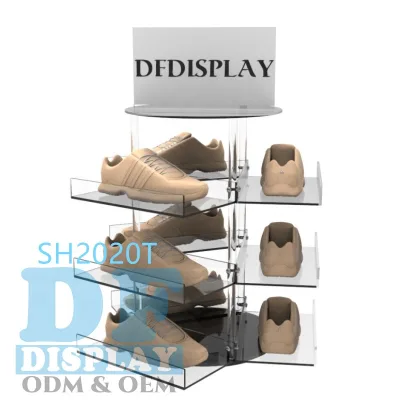
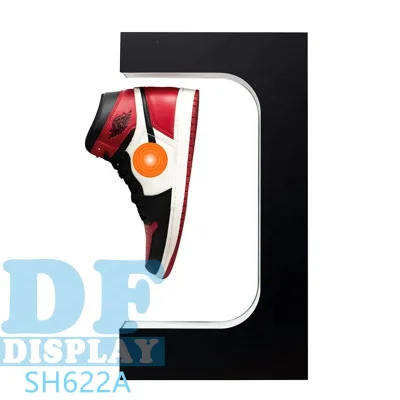


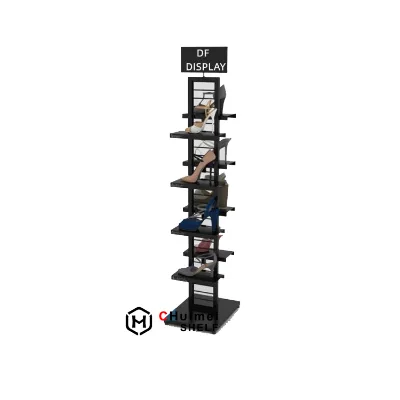

New Rotating Magnetic Levitation Shoes Sneaker Display Stand for Exhibition Show
$33.00 - $37.00
MOQ: 10 Pieces


Wireless Rechargeable Magnetic Levitation Shoe Display Stand with LED Light
$49.00 - $54.00
MOQ: 10 Pieces


Custom Logo Magnetic Levitation Shoe Display Stand with Remote Controller
$63.00 - $68.00
MOQ: 10 Pieces


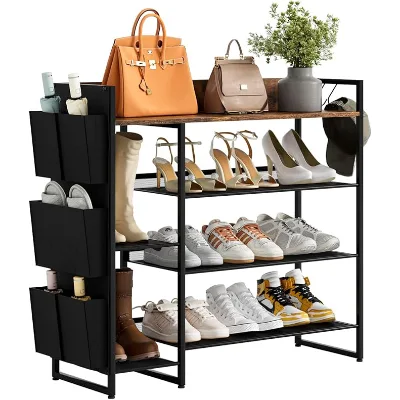

24 Shelf Vertical Free Standing Shoe Rack Display Shelf Shoe Organizer Stand
$43.99 - $53.33
MOQ: 2 Pieces

16 Piar Shoe Wooden Display Rack 360 Round Rotating Revolving Shoe Stand
$46.35 - $66.55
MOQ: 100 Pieces
Comprehensive Sourcing Guide
Strategic Sourcing Guide for Rotary Shoe Display Stands
Procuring a Rotary Shoe Display Stand requires a nuanced understanding of the intersection between mechanical functionality, retail aesthetics, and supply chain reliability. In the competitive landscape of footwear retail, the display unit is not merely a storage solution but a critical marketing tool that influences customer engagement and inventory turnover. This guide synthesizes available product attributes and industry standards to provide a disciplined framework for evaluating potential suppliers and specifications. Buyers must navigate a market where customization is the norm, and generic off-the-shelf solutions often fail to meet specific spatial or branding requirements. The following analysis focuses on technical parameters, material integrity, compliance verification, and the economic factors that drive the total cost of ownership for these commercial fixtures.
Technical Specifications and Material Integrity
The foundational aspect of sourcing a Rotary Shoe Display Stand lies in defining the precise technical specifications that align with the intended retail environment. Based on observed product data, the material composition is a primary differentiator. While some units are constructed from metal, others utilize acrylic, each offering distinct advantages regarding durability, weight, and visual appeal. Metal constructions, often cited in models such as CR-MD-019 and CR-MD-197, provide robust structural integrity suitable for high-traffic areas like exhibition shows and large supermarkets. These units frequently feature a "Floor Standing" configuration, ensuring stability for heavy loads of footwear. Conversely, acrylic options, identified in models like SH2020T, offer a modern, transparent aesthetic that allows the product itself to remain the focal point. The choice between metal and acrylic should be dictated by the specific lighting conditions of the store and the desired visual weight of the display.
Size and customization capabilities are equally critical. The market data indicates that "Customized" is a standard attribute for size, color, and general standards. This implies that buyers should not expect a rigid catalog of fixed dimensions but rather a flexible manufacturing process. For instance, specific models like SH622A and TJ-03 may have defined single package sizes, such as 44x23.5x7 cm or 50x50x95 cm, but the core product dimensions are often adjustable. The "Type" attribute further clarifies the form factor, ranging from "Floor Standing" to "Countertop Standing Display Unit." Buyers must verify the exact footprint and height requirements against their floor plans. A unit designed for a department store application may require a significantly larger capacity than one intended for a specialty store or a home setting. The "Appearance" is generally noted as "Modern," suggesting a sleek, contemporary design language that fits current retail trends, but the specific finish and color must be confirmed during the design phase.
Compliance, Certification, and Safety Standards
In the realm of commercial fixtures, compliance and safety are non-negotiable, yet the available data presents a complex picture regarding certifications. While some background information mentions CE certification, this is flagged as low-confidence and should not be assumed as a standard feature for all rotary shoe displays. Buyers must treat certification status as a variable that requires explicit verification rather than a given. The "prod_standard" attribute is listed as "Customized," which suggests that the manufacturing process may not adhere to a single universal standard but rather adapts to the buyer's specific regional or client requirements.
When evaluating a supplier, the procurement team must demand evidence of structural safety. Since these units are designed to hold significant weight, particularly in "Supermarkets and Stores" or "Exhibition Show" environments, the load-bearing capacity must be rigorously tested. The "Antitheft" attribute is explicitly noted as "Not Antitheft" for certain models, indicating that the base unit does not inherently include locking mechanisms or anti-theft features. This necessitates a separate evaluation of security protocols or the integration of third-party locking systems if the display is placed in high-theft areas. Furthermore, the "General Use" is categorized as "Commercial," which implies that the materials and construction methods must withstand daily wear and tear, frequent assembly, and disassembly. Buyers should request specific test reports regarding weight distribution and stability, particularly for rotary mechanisms that introduce dynamic forces not present in static shelving.
Cost Drivers and Economic Factors
The pricing structure for rotary shoe display stands is influenced by a complex matrix of customization, material costs, and logistical requirements. The observed price range spans from $0.75 to $300, a variance that reflects the difference between simple countertop units and large, custom-engineered floor-standing systems. The "MOQ" (Minimum Order Quantity) is another significant cost driver, with observed ranges from 2 to 1000 units. Specific models may have fixed MOQs, such as 50 pieces for certain metal units or 300 pieces for acrylic variants. These thresholds directly impact the unit economics; ordering below the MOQ often results in a substantial premium per unit or may not be feasible at all.
Lead times and sample availability also play a crucial role in the total cost of ownership. The "Sample Time" is typically 5-7 days, allowing buyers to evaluate the physical quality before committing to a bulk order. However, the "Delivery Time" for full production runs is estimated at 25-30 days. This timeline can vary based on the complexity of the customization, such as the application of a "Custom Logo" or specific color matching. The "Supply Ability" of 10,000 pieces per month suggests that suppliers have the capacity for large-scale orders, but buyers must confirm if this capacity is currently available or if it is allocated to other clients. Additionally, packaging details, such as "Express Safe Packing" or "Bubble bag With Strong Out Boxes," add to the shipping weight and volume. The "Single gross weight" varies significantly, from 2.0 kg for smaller countertop units to 10.0 kg for larger floor-standing models, directly affecting freight costs. Buyers should factor in these logistical variables when calculating the landed cost of the inventory.
Typical Applications and Usage Scenarios
The versatility of rotary shoe display stands is evident in the diverse range of applications identified in the product data. These units are designed for "Exhibition Show," "Supermarkets and Stores," "Speciality Stores," and even "Home" use. The specific application dictates the required durability and aesthetic. For "Exhibition Show" environments, the display must be robust enough to withstand frequent assembly and disassembly while maintaining a "Modern" appearance that attracts foot traffic. In "Supermarkets and Stores," the focus shifts to high capacity and ease of access for customers, often requiring a "Floor Standing" configuration to maximize floor space efficiency.
The "Usage" attribute also highlights specific functional roles, such as "HANGING APPERAL" or general "Shoes Display." This distinction is vital for buyers who may need to adapt a display for multiple product categories. For instance, a unit designed for hanging apparel might require different hooks or spacing than one designed for shoe stacks. The "Application" field further narrows the scope to "Department Store" settings, where the display must integrate seamlessly with other fixtures and adhere to strict brand guidelines. The "Style" is described as "SIMPLE," suggesting a design philosophy that prioritizes functionality and clarity over ornate decoration. However, the ability to customize the "Color" and apply a "Custom Logo" allows these simple structures to be branded effectively for specific retail chains. Buyers must ensure that the chosen model aligns with the specific operational needs of their retail environment, whether it is a high-volume department store or a boutique specialty shop.
Supplier Evaluation and Quality Control
Selecting the right supplier is perhaps the most critical step in the procurement process. The data indicates that suppliers are located in regions such as "Shenzhen" and "Fujian, China," which are known manufacturing hubs for retail fixtures. However, the "place of origin" varies, and buyers should verify the specific factory location to ensure alignment with their logistics strategy. The "Port of dispatch" is noted as "xiamen" for certain models, which is a key logistical detail for freight forwarding. When evaluating suppliers, buyers should prioritize those who demonstrate a clear understanding of the "Customization" process. The ability to provide samples within 5-7 days is a strong indicator of a responsive and efficient production line.
Quality control measures must be rigorous, given the "Commercial" nature of the product. Buyers should request detailed specifications on the "prod_packing" to ensure that the units arrive without damage. The "Single package size" and "Single gross weight" are essential for planning warehouse space and handling equipment. Furthermore, the "Feature" of "Easy Assembly" is a significant value proposition that reduces labor costs during store setup. However, this feature must be validated through the sample phase to ensure that the assembly process is truly intuitive and that the components fit together securely. Buyers should also verify the "Supply Ability" claims to ensure the supplier can meet demand spikes, particularly for seasonal retail periods. The "Logo" customization capability should be assessed for print quality and durability, as a faded or peeling logo can detract from the brand image.
Long-Term Procurement Considerations
Sourcing rotary shoe display stands is not a one-time transaction but part of a long-term strategy for retail optimization. The "Customized" nature of the product means that buyers should establish a relationship with a supplier capable of scaling production and maintaining consistency over time. The "prod_model" numbers, such as CR-MD-019 or SH2020T, serve as identifiers for specific configurations, and buyers should maintain a standardized list of approved models to ensure uniformity across different store locations. The "Text" attribute, which allows for "Custom Words," offers an opportunity for dynamic branding, but the longevity of this text under varying lighting and cleaning conditions must be considered.
Future-proofing the procurement strategy involves staying abreast of changes in retail trends and safety regulations. As the "General Use" remains "Commercial," suppliers must be prepared to adapt to new safety standards or material restrictions. The "Appearance" being "Modern" suggests that the design should remain relevant for several years, but buyers should plan for periodic updates to keep the retail environment fresh. The "Delivery Time" of 25-30 days should be factored into inventory planning to avoid stockouts during peak seasons. Finally, the "Antitheft" status being "Not Antitheft" for many models requires a proactive approach to security, potentially involving the integration of additional locking mechanisms or surveillance strategies. By treating the procurement of rotary shoe display stands as a strategic partnership rather than a simple purchase, buyers can ensure a reliable, high-quality supply chain that supports their retail operations for the long term.
FAQs
Can I customize the size and color of the display stand?
Yes, size and color are available as customized options for these units. Buyers should expect to define specific dimensions and finishes during the design phase to meet unique retail requirements.
What materials are used for rotary shoe display stands?
Products are constructed from either metal or acrylic materials depending on the model. Metal units offer robust structural integrity for high-traffic areas, while acrylic options provide a modern transparent aesthetic.
How long does it take to receive samples and full orders?
Sample production typically takes 5 to 7 days for evaluation. Full delivery time for bulk orders is estimated at 25 to 30 days after sample approval and order confirmation.
What is the minimum order quantity for these display units?
Minimum order quantities vary by model, ranging from 50 to 300 pieces. Specific units like the acrylic variants may require 300 pieces, while metal models might start at 50 pieces.
Where are these products manufactured and shipped from?
Products originate from manufacturing hubs in Shenzhen and Fujian, China. The port of dispatch for certain models is listed as Xiamen, affecting logistics planning for international buyers.
Are these display stands designed for anti-theft security?
No, the base units are not designed with inherent anti-theft features. Buyers must evaluate separate security protocols or integrate third-party locking systems if the display is placed in high-theft areas.