Find Round Head Self Tapping Screws for Construction, Automotive, and Furniture
Source 30 Round Head Self Tapping Screws from verified suppliers in China. Compare specifications including material grades, thread types, and surface finishes to find the right fasteners for your manufacturing needs.
Key considerations
Products List


Stainless Steel Flat Head Self Tapping Screw Cross Flat Tail Self Tapping Screws
$0.00 - $0.00
MOQ: 50000 Pieces


$0.03 - $0.20
MOQ: 10000 Pieces


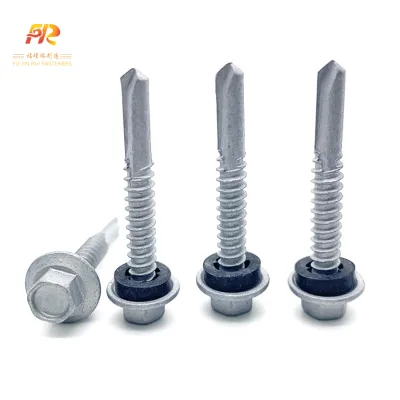
Comprehensive Sourcing Guide
Strategic Sourcing Guide for Round Head Self Tapping Screws
Understanding Product Variants and Technical Specifications
When sourcing round head self-tapping screws, buyers must first navigate the nuanced terminology used in the industry. The core keyword often encompasses several distinct head styles, including standard round heads, pan heads, and countersunk variants, all of which serve different mechanical functions. Based on observed market data, the product category includes items explicitly labeled as "Phillips/Slot Round Head Self Tapping Screw" and "Carbon Steel DIN7981 Cross Recessed Pan Head Self." It is critical to distinguish between a true round head and a pan head, as the latter offers a slightly larger bearing surface, while the former provides a lower profile. The observed listings indicate that "Round Head" and "Pan Head" are frequently grouped under the same search umbrella, yet they possess different geometric profiles that affect torque application and surface contact.
The thread configuration is another pivotal technical specification. The supplied facts highlight that these fasteners are predominantly "Self Tapping" with "Full Thread" options available. The thread type determines the screw's ability to cut its own mating thread into the base material, eliminating the need for a pre-tapped hole in many applications. The groove type is consistently observed as "Cross," referring to the Phillips drive recess, which is standard for high-torque applications. However, buyers should verify if "Slot" drive options are available, as some listings mention "Phillips/Slot" combinations. The size range observed in the market spans from ST2.2 to ST6.6, with specific references to ST3.5 through ST6.3. These alphanumeric codes generally denote the diameter and pitch, and procurement teams must ensure the selected size aligns with the structural requirements of the assembly. The thread pitch and length must be matched precisely to the material thickness to ensure optimal holding power without bottoming out or protruding excessively.
Material Selection and Surface Finishing Protocols
Material composition is the primary determinant of a screw's mechanical strength and corrosion resistance. The market data reveals a bifurcation in material offerings, with "Carbon Steel" and "Stainless Steel" being the two dominant categories. Carbon steel variants are often associated with higher tensile strength and are typically used in structural applications where cost efficiency is paramount. These are frequently finished with "Zinc Plated" coatings to provide a baseline level of corrosion protection. In contrast, stainless steel options, such as those described as "Stainless Steel Self Tapping Screw," offer superior resistance to rust and chemical exposure, making them ideal for outdoor or marine environments. The surface finishing options for stainless steel include "Plain," "Passivation," and various plating methods like "Galvanized," "Nickel Plated," or "HDG" (Hot-Dip Galvanized).
The choice of surface finish directly impacts the longevity of the fastener in specific environments. Zinc plating is a standard electroplating process that provides a sacrificial layer against corrosion, suitable for general indoor use. For more aggressive environments, buyers should look for HDG or specific stainless steel grades. The observed listings also mention "Plain" and "Passivation" finishes, which are common for stainless steel to remove free iron particles and enhance the natural oxide layer. It is essential to note that while "Zinc Plated" is a common observation for carbon steel, the specific thickness of the plating (e.g., micron level) is rarely detailed in general listings. Procurement teams must request specific plating thickness data sheets to ensure compliance with industry standards for corrosion resistance, as a thin zinc layer may fail prematurely in humid conditions.
Compliance, Standards, and Certification Verification
Navigating the compliance landscape for fasteners requires a rigorous verification of international standards and certifications. The observed data explicitly references "DIN" standards, specifically "DIN7981" for cross-recessed pan head screws, and "DIN" and "ANSI" standards for general specifications. DIN standards are German industrial norms that are widely adopted globally for metric fasteners, ensuring dimensional consistency and thread accuracy. ANSI standards, primarily used in the United States, provide a different set of dimensional guidelines. Buyers must confirm which standard applies to their specific project, as mixing standards can lead to compatibility issues. The listings also mention "ST3.5-ST6.3" and "ST2.2-ST6.3" as product standards, which likely refer to specific size or performance classifications within the manufacturer's internal coding or regional norms.
Certification plays a vital role in validating the quality and traceability of the supply chain. The provided facts indicate that suppliers often hold "ISO" certifications, with specific mentions of "ISO 9001-2008," "ISO," "RoHS," "GS," "SGS," and "TUV." ISO 9001 is a quality management standard that ensures the manufacturer has consistent processes in place for production and testing. RoHS (Restriction of Hazardous Substances) compliance is crucial for electronics and automotive applications, ensuring the absence of lead, mercury, and other hazardous materials. The presence of multiple certifications like SGS and TUV suggests third-party testing capabilities, which adds a layer of trust. However, buyers should not assume that every listed product automatically meets all these standards. Verification should involve requesting current, valid certificates for the specific batch of screws being ordered, as certification status can vary by production run and supplier capability.
Cost Drivers and Procurement Economics
The economics of sourcing round head self-tapping screws are influenced by several variables, including material costs, order volume, and logistical factors. The observed price range in the market spans from 0 to 5000 USD, which likely reflects the difference between small sample orders and large bulk pallet shipments rather than a per-unit price. The Minimum Order Quantity (MOQ) is equally variable, ranging from 1 to 100,000 units. This wide range indicates that suppliers cater to both prototyping needs and large-scale industrial production. For buyers requiring small quantities, the unit cost will be significantly higher due to setup and handling fees. Conversely, large orders benefit from economies of scale, reducing the per-unit cost.
Lead time is another critical cost driver, with observed delivery windows ranging from 3 to 30 days. Factors influencing this timeline include the availability of raw materials, the complexity of the surface finishing process, and the current production load of the supplier. Customization, which is listed as "Available" in some contexts but "Non-Customized" in others, can extend lead times. If a buyer requires a specific thread pitch, head style, or coating thickness that deviates from standard stock, the manufacturing process may need to be adjusted, resulting in a longer production cycle. Payment terms such as T/T, L/C, Western Union, and Moneygram also affect the financial risk and cash flow management for the buyer. Securing favorable payment terms can mitigate financial exposure, especially for first-time transactions with new suppliers.
Supplier Evaluation and Operational Capabilities
Evaluating a supplier for round head self-tapping screws requires a deep dive into their operational capabilities and geographic footprint. The observed data points to a concentration of manufacturing in "Zhejiangjiaxing," "Jiaxing Zheng, China," and generally "China." These regions are known for their robust hardware manufacturing ecosystems, offering a wide variety of fastener types and competitive pricing. However, the presence of a specific location does not guarantee quality; buyers must verify the specific factory's capacity and history. The "Brand Name" Goshen is mentioned in the context of one listing, but buyers should be cautious about relying on brand reputation alone without verifying the actual manufacturing source.
Supplier evaluation should also include an assessment of their customization capabilities. While some listings state "Customization: Available," others note "Non-Customized," indicating a split between standard stock producers and specialized manufacturers. For buyers with unique requirements, such as specific head styles like "Counter Sunk Bolt" or "Flat Head" variants, it is essential to confirm the supplier's ability to produce these non-standard items. Additionally, the packaging methods, described as "Carton + Pallet," "Bulk in Master Cartons," or "Bag+Carton+Pallet," impact the logistics and storage requirements. Proper packaging is crucial to prevent damage during transit, especially for high-volume orders. Buyers should request samples to verify packaging integrity and ensure that the products arrive in the condition required for immediate assembly.
Quality Control and Long-Term Procurement Strategy
Implementing a robust quality control (QC) strategy is essential for maintaining the reliability of round head self-tapping screws in critical applications. The observed data mentions "Free Samples," which is a valuable resource for initial quality assessment. Buyers should utilize these samples to conduct physical tests, such as tensile strength checks, thread engagement tests, and corrosion resistance evaluations. The presence of certifications like ISO and RoHS provides a baseline assurance, but independent testing of the actual product batch is often necessary to confirm compliance. For high-volume procurement, establishing a regular QC audit schedule is recommended to ensure that the supplier maintains consistent quality over time.
Long-term procurement considerations involve building a resilient supply chain that can adapt to market fluctuations. The variability in lead times, from 3 to 30 days, suggests that buyers should maintain a buffer stock or develop relationships with multiple suppliers to mitigate the risk of delays. The wide range of MOQs allows for flexibility, but buyers should aim to consolidate orders to maximize volume discounts without overstocking. Furthermore, the diversity in material options, from carbon steel to stainless steel, means that procurement strategies should be tailored to the specific environmental conditions of the end product. Regular reviews of supplier performance, including adherence to delivery schedules and quality consistency, will help in selecting the most reliable partners for future projects. By focusing on these strategic elements, buyers can ensure a steady supply of high-quality round head self-tapping screws that meet their technical and operational requirements.
Comparative Analysis of Product Attributes
To facilitate clearer decision-making, the following table summarizes the key attributes observed in the market for round head self-tapping screws. This comparison highlights the variations in standards, materials, and certifications that buyers must consider.
| Attribute Category | Observed Options | Key Considerations for Buyers |
|---|---|---|
| Head Style | Round, Pan Head, Counter Sunk, Flat Head | Verify bearing surface requirements; Pan offers more surface area, Round is lower profile. |
| Material | Carbon Steel, Stainless Steel | Carbon for strength/cost; Stainless for corrosion resistance. |
| Surface Finish | Zinc Plated, Plain, Passivation, Galvanized, Nickel Plated | Match finish to environmental exposure; Zinc for general use, HDG for harsh conditions. |
| Standards | DIN (DIN7981), ANSI, ST3.5-ST6.3 | Confirm dimensional compatibility; DIN is metric, ANSI is imperial/US standard. |
| Certifications | ISO 9001-2008, RoHS, SGS, TUV, GS | Request valid certificates; RoHS for electronics, ISO for quality management. |
| Thread Type | Full Thread, Self Tapping | Ensure thread pitch matches material thickness; Self-tapping eliminates pre-tapping. |
| Packaging | Carton + Pallet, Bulk in Master Cartons, Bag+Carton+Pallet | Assess damage risk; Palletized shipping is standard for bulk orders. |
| Lead Time | 3-20 Days, 5-30 Days, 7-25 Days | Plan production schedules around the longest potential lead time; 30 days is the max observed. |
| MOQ | 1 to 100,000 Units | Balance inventory costs with volume discounts; High MOQs reduce unit cost. |
This structured overview underscores the complexity of the market and the necessity for buyers to perform due diligence on each specific attribute. By carefully evaluating these factors, procurement teams can secure high-quality fasteners that align with their project specifications and long-term strategic goals.
FAQs
What materials are available for Round Head Self Tapping Screws?
These fasteners are primarily available in carbon steel and stainless steel. Carbon steel options often feature zinc plating for corrosion resistance, while stainless steel variants offer superior rust protection with finishes like passivation or plain surfaces.
Which standards apply to these self tapping screws?
The products commonly comply with DIN standards, specifically DIN7981 for cross-recessed pan heads. Some listings also reference ANSI standards, and specific size classifications like ST3.5 to ST6.3 are frequently used to denote dimensional specifications.
Can buyers request customization for these screws?
Customization is available for some suppliers, though others offer only non-customized standard items. Buyers should verify if specific head styles, thread pitches, or coating thicknesses can be modified before placing a large order to avoid delays.
What is the typical delivery time for these fasteners?
Delivery times generally range from 3 to 30 days depending on order volume and customization needs. Standard stock items may ship within a week, while custom specifications or large bulk orders often require up to a month for production and packaging.
How are these screws typically packaged for shipment?
Packaging usually involves bulk items placed in master cartons, which are then stacked on pallets. Some suppliers use a combination of bags, cartons, and pallets to ensure protection during transit and facilitate easy handling for industrial assembly lines.
What certifications do manufacturers typically hold?
Manufacturers often hold ISO 9001 quality management certifications and may also possess RoHS, SGS, or TUV certifications. These documents verify compliance with safety standards and quality processes, though buyers should request current certificates for specific product batches.
Where are these screws primarily manufactured?
Production is concentrated in regions like Zhejiang Jiaxing and other parts of China. These areas host a robust hardware ecosystem with numerous factories capable of producing metric fasteners at competitive prices with established supply chains.