Source Automatic Door Table Top Autoclave for Labs
Find reliable Automatic Door Table Top Autoclave options for medical, laboratory, and industrial sterilization needs. Compare 30 models with capacities from 14L to 300L, featuring stainless steel construction, LCD displays, and CE/ISO certifications for efficient high-pressure steam sterilization; compare the available evidence and request quotations based on your requirements.
Key considerations
Products List

$900.00 - $1000.00
MOQ: 5 Pieces


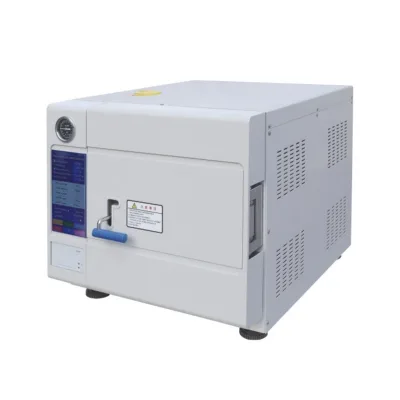
Class B Table Top Steam Automatic Sterilizers Autoclave (14L 17L 23L)
$855.00 - $1220.00
MOQ: 1 Pieces


High-Efficiency Autoclave for Safe and Effective Equipment Sterilization
$3000.00 - $5000.00
MOQ: 1 Pieces


Comprehensive Sourcing Guide
Automatic Door Table Top Autoclave Sourcing Guide
Procuring automatic door table top autoclaves requires a nuanced understanding of laboratory and medical sterilization needs. These units combine compact footprints with automated loading mechanisms, making them ideal for facilities with limited floor space but high throughput demands. Buyers must distinguish between general laboratory models and those certified for medical imaging diagnostics, as the latter often require stricter validation protocols. The presence of an automatic door suggests a focus on ergonomic workflow and reduced manual handling risks, which is critical in sterile processing departments.
The market offers a variety of configurations, from basic heating dry systems to advanced units with LCD displays and sterilization information recording. Sourcing decisions should be driven by specific volume requirements, such as 14L to 300L capacities, and electrical constraints like 220V or 380V supplies. Understanding the distinction between pressure steam sterilization and other methods ensures that the selected equipment aligns with the intended sterilization cycle and material compatibility. This guide outlines the key technical, compliance, and commercial factors necessary for a successful procurement strategy.
Product Scope and Observed Listing Signals
The current market landscape for automatic door table top autoclaves reveals a diverse range of models, including the HP-AC2N, HP-HAC150, and NB-T24J series. Listings indicate a price range from approximately $100 to $60,000, reflecting significant variations in capacity, automation level, and certification status. Minimum order quantities are typically low, ranging from 1 to 5 units, which facilitates trial purchases for smaller clinics or research labs. Buyers should note that while many units are labeled as "table top," larger capacities like 150L or 300L may require floor-standing installation or specialized support structures.
Observed attributes highlight a strong emphasis on stainless steel construction and precise temperature control, with working temperatures ranging from 105°C to 136°C. Many models feature LCD displays, ultra-high temperature alarms, and sterilization information recording capabilities, which are essential for traceability in regulated environments. The classification as "Imaging Diagnostic Equipment" for some units suggests they are designed for sterilizing tools used in radiology or similar diagnostic fields. Buyers must carefully verify if the "automatic door" feature is standard across all listed models or specific to higher-tier configurations.
Technical Specifications to Verify
Technical verification should begin with chamber volume and pressure ratings, which directly impact sterilization efficacy and cycle times. Models like the NB-T24J offer volumes of 14L, 17L, and 23L, with a working pressure of 0.14 MPa and a maximum working pressure of 0.165 MPa. Larger units, such as the HP-HAC150, provide a chamber volume of 24L with a working pressure of 0.14 MPa. Buyers must ensure that the selected capacity matches their daily load requirements without compromising the steam penetration necessary for effective sterilization of dense instrument packs.
Electrical and dimensional specifications are equally critical for facility planning. Power supplies vary between 220V and 380V, with frequencies typically at 50Hz, requiring confirmation of site compatibility. The HP-HAC150, for instance, operates at 1.5kW with overall dimensions of 560350500 mm. Temperature precision is often rated at 0.1°C, and pressure precision at 0.1 kPa, ensuring consistent cycle performance. Buyers should also verify the drying procedure, which is typically heating dry, and confirm that the ambient temperature range of 5-40°C is suitable for the intended installation environment.
Compliance and Safety Documentation
Compliance with international standards is non-negotiable for medical and laboratory equipment. Most listed autoclaves carry CE, ISO, and SGS certifications, with some explicitly mentioning ISO13485 for medical device quality management. The NB-T24J model is noted to meet European Standard Class B+, indicating suitability for vacuum-assisted sterilization cycles common in healthcare settings. Buyers must request valid certification documents and verify their authenticity with the issuing bodies, as counterfeit certificates are a risk in global sourcing. The presence of these certifications ensures that the equipment meets essential safety and performance requirements for its intended market.
Safety features such as ultra-high temperature alarms and pressure relief mechanisms are standard in reputable models. The sterilization information recording and printing function provides a critical audit trail, allowing facilities to track each cycle for quality assurance and regulatory inspections. Buyers should verify that the recording system is compatible with their existing data management infrastructure. Additionally, the theory of operation, typically based on pressure steam or autoclave principles, must align with the sterilization protocols required by local health authorities and accreditation bodies.
Cost Drivers and Commercial Terms
Cost variations in automatic door table top autoclaves are driven by capacity, automation level, and certification scope. Basic models with smaller volumes and manual doors may fall at the lower end of the price spectrum, while fully automatic units with larger chambers and advanced recording features command higher prices. The observed price range of $100 to $60,000 suggests that buyers can find options for various budget levels, but the lowest prices may correspond to minimal feature sets or non-medical grade equipment. Buyers should evaluate the total cost of ownership, including energy consumption and maintenance requirements, rather than focusing solely on the initial purchase price.
Commercial terms such as packaging and shipping logistics also influence the final cost. Units are typically packed in regular packing, wooden packages, or cartons, depending on the model and size. The HP-HAC150, for example, uses a wooden package, which may incur additional freight costs due to weight and dimensions. Buyers should clarify whether shipping costs are included in the quoted price and who is responsible for import duties and customs clearance. Negotiating clear delivery terms and warranty conditions is essential to avoid unexpected expenses and ensure long-term support.
Supplier Qualification and Quality Control
Supplier qualification is a critical step in mitigating procurement risks. Buyers should prioritize suppliers with a proven track record in manufacturing sterilization equipment, particularly those based in established industrial hubs like Zhengzhou, China. The presence of ISO13485 certification indicates a commitment to quality management systems specific to medical devices. Buyers should request references from existing clients and verify the supplier’s ability to provide after-sales support, including spare parts availability and technical assistance. A reliable supplier will also offer comprehensive training materials and user manuals in the buyer’s preferred language.
Quality control processes should be transparent and verifiable. Buyers should inquire about the testing procedures conducted before shipment, including pressure tests and temperature calibration checks. The use of stainless steel for the chamber and exterior ensures durability and resistance to corrosion, but buyers should verify the grade of steel used. Additionally, the consistency of manufacturing tolerances, such as the precision of temperature and pressure controls, should be confirmed through factory audits or third-party inspections. Establishing a clear communication channel with the supplier’s technical team can help resolve any issues that arise during installation or initial operation.
Long-Term Procurement Checks
Long-term procurement success depends on the availability of consumables and spare parts. Buyers should verify the lead times for critical components such as door seals, heating elements, and control boards. A supplier with a robust inventory or local distribution network can minimize downtime in case of equipment failure. Additionally, buyers should assess the supplier’s willingness to provide software updates for the LCD display and recording systems, ensuring that the equipment remains compatible with evolving regulatory requirements. Regular maintenance schedules and preventive care guidelines should be clearly defined and accessible.
The global export nature of these products suggests that buyers from various regions can access these units, but local service support may vary. Buyers should confirm the availability of local technicians or authorized service partners in their region. The ability to perform routine calibration and validation tests is essential for maintaining sterilization efficacy. Buyers should also consider the lifespan of the equipment and the supplier’s policy on end-of-life support, including recycling or disposal options. Establishing a long-term partnership with a reliable supplier ensures consistent quality and support throughout the equipment’s operational life.
FAQs
What sterilization temperatures does the autoclave support?
The device supports sterilization temperatures of 121 and 134 degrees Celsius. It features a working temperature range from 105 to 136 degrees with a precision of 0.1 degree. This ensures effective steam sterilization for various medical and laboratory applications requiring precise thermal control.
Which certifications are available for these sterilization units?
Available certifications include CE, ISO, SGS, and ISO13485 standards. These documents verify compliance with international safety and quality requirements. Buyers can request specific certification details to ensure the equipment meets regulatory needs for their specific region or facility.
Can the autoclave be customized for specific capacity needs?
Yes, customization is available for different chamber volumes. Options include capacities of 150, 200, or 300 liters for larger units, and 14, 17, or 23 liters for table top models. This flexibility allows facilities to select the exact size required for their workflow.
How is the sterilization process recorded and displayed?
The unit features an LCD display and records sterilization information for printing. It includes an ultra-high temperature alarm to ensure safety during operation. These features provide clear monitoring and documentation of the sterilization cycle for quality assurance and compliance purposes.
What is the maximum working pressure for the chamber?
The maximum working pressure reaches 0.23 MPa for larger models and 0.165 MPa for smaller units. Pressure precision is maintained at 0.1 kPa. This ensures safe and efficient operation while maintaining the necessary conditions for effective steam sterilization of medical instruments.
Where are these autoclave manufacturers located?
The products originate from Zhengzhou, Henan, China. This location serves as the primary manufacturing hub for these pressure steam sterilization equipments. Buyers can expect global export capabilities from this established industrial region in China.
What power supply is required for operation?
The equipment requires a 380V, 50Hz power supply for standard operation. Some table top models may operate on 220V. This electrical specification ensures compatibility with industrial power grids and allows for stable performance during continuous sterilization cycles in various facility settings.