Source Round Head Wooden Chipboard Screw for Furniture, Cabinets, and Joinery
Find 30 listings for Round Head Wooden Chipboard Screw options from Chinese manufacturers. Compare specifications including grades, finishes, and delivery periods to select the right fasteners for your projects.
Key considerations
Products List


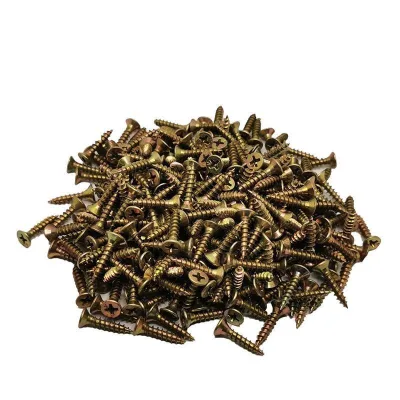


Countersunk Head Chipboard Screws Yellow White Zinc Plated Chipboard Screw
$990.00 - $1499.00
MOQ: 1 Tons


Yellow Zinc Plated Chipboard Screws Double Countersunk Head Chipboard Screw
$990.00 - $1499.00
MOQ: 1 Tons


$980.00 - $1399.00
MOQ: 1 Tons

$980.00 - $1399.00
MOQ: 1 Tons


Comprehensive Sourcing Guide
Strategic Sourcing Guide for Round Head Wooden Chipboard Screws
Selecting the correct fastener for wood-based paneling and chipboard applications requires a nuanced understanding of material science, manufacturing standards, and supply chain reliability. The Round Head Wooden Chipboard Screw is a specialized component designed to provide secure fastening while maintaining a specific aesthetic profile. Unlike countersunk screws that sit flush with the surface, round head variants protrude slightly, offering a distinct mechanical advantage in applications where a flush finish is not required or where the screw head must remain accessible for future adjustments. This guide synthesizes available market data to assist procurement professionals in defining specifications, evaluating suppliers, and managing the total cost of ownership for these critical hardware components.
Technical Specifications and Material Composition
The foundation of a reliable sourcing strategy lies in precise technical definition. For round head wooden chipboard screws, the material composition is predominantly carbon steel. This choice balances tensile strength with cost-effectiveness, making it suitable for a wide range of interior wood applications. The grade of the steel is a critical variable; observed market data indicates grades such as 12 and 9, often associated with specific groove configurations like cross or flower patterns. Buyers must verify the exact grade against their load-bearing requirements, as the structural integrity of the fastener depends heavily on the steel's hardness and ductility.
The physical dimensions of the screw are equally vital. The length of these fasteners typically ranges from 11mm to 160mm, allowing for versatility in joining materials of varying thicknesses. The diameter or thread standard is often referenced by metric sizes such as M2.5, M3, M3.5, M4, M4.5, M5, and M6, or by imperial equivalents like #6, #8, #10, and #12. The head style is explicitly defined as round or flat, with some variations featuring a countersunk head design that may be confused with standard round heads but serves a different function. The drive type is another key specification, with options including square Phillips combo drives, star drives, and square or Phillips drives. The point of the screw is often engineered as a T17 cutting point, which facilitates easier penetration into chipboard without the need for pre-drilling in many scenarios.
| Specification Category | Observed Market Variants | Procurement Verification Point |
|---|---|---|
| Material | Carbon Steel | Verify grade (e.g., 12, 9) and tensile strength requirements. |
| Head Style | Round Head, Flat Head | Confirm if "Round Head" or "Counter Sunk" is strictly required. |
| Drive Type | Square Phillips, Star, Square | Ensure compatibility with existing assembly tools. |
| Length Range | 11mm - 160mm | Match specific thickness of chipboard or wood panels. |
| Thread Standard | M2.5-M6, #6-#12 | Cross-reference with local metric or imperial standards. |
| Finish | Yellow Zinc Plated, White Clear Blue | Assess corrosion resistance needs based on environment. |
Compliance, Standards, and Certification Protocols
Navigating the regulatory landscape is essential for international procurement. The fasteners in this category are manufactured to adhere to a variety of international standards. Observed documentation references GB (Guobiao), DIN (Deutsches Institut für Normung), ANSI (American National Standards Institute), and JIS (Japanese Industrial Standards). The specific product standards often cited include M4-M5-M6 and 12-100, alongside imperial sizing like #8, #10, and #12. It is imperative for buyers to confirm which specific standard applies to their project, as a screw meeting GB standards may not fully align with DIN or ANSI tolerances regarding thread pitch or head dimensions.
Certification plays a significant role in quality assurance. While some background knowledge suggests ISO 9001 or ISO 14001, the explicit high-confidence facts point to ISO and GS certifications being available for these products. Buyers should request valid certificates of conformity from suppliers to verify that the manufacturing process adheres to these standards. Additionally, the origin of the product is frequently noted as Zhejiang, China, or simply China. While this provides a geographical context, it does not guarantee quality on its own; the specific factory's adherence to the stated standards is the true metric of compliance.
Cost Drivers and Pricing Dynamics
The pricing structure for round head wooden chipboard screws is influenced by several interconnected factors. The observed market price range spans from 0 to 2000 USD, though this wide range likely reflects the difference between small sample orders and bulk industrial shipments, as well as variations in order quantity. The Minimum Order Quantity (MOQ) is a significant cost driver, with observed ranges extending from 1 unit to 20,000 units. Buyers purchasing small quantities may face higher per-unit costs, while those securing large volumes can leverage economies of scale.
Material costs, specifically the price of carbon steel, fluctuate with global commodity markets. The finish applied to the screw also impacts the final price. Options such as Yellow Zinc Plated, White Clear Blue Zinc Plated, and Bright Zinc Plated involve different chemical processes and material costs. Furthermore, customization is a major variable. The availability of customized options means that non-standard lengths, unique drive types, or special packaging (such as plastic barrels or custom pallets) will incur additional charges compared to standard bulk or bag packaging. Lead times, which vary from 15 to 75 days depending on the supplier's ability to follow customer wishes, also affect the total cost of procurement, particularly if expedited shipping is required to meet production schedules.
Typical Applications and Performance Characteristics
Round head wooden chipboard screws are primarily designed for interior wood applications. The specific feature set, including ribbed heads and waxed surfaces, suggests an application where friction and ease of driving are paramount. The presence of counter-sinking nibs on some variants indicates a design intent to allow for a flush finish in specific contexts, even if the head is technically round. The T17 cutting point is engineered to penetrate chipboard efficiently, reducing the risk of splitting the material, which is a common issue with softer wood composites.
The finish of the screw is a critical performance characteristic. Yellow Zinc Plated and White Clear Blue Zinc Plated finishes provide corrosion resistance, making them suitable for environments with moderate humidity. However, for exterior applications or highly corrosive environments, buyers must verify if the standard zinc plating is sufficient or if additional coatings are necessary. The "Waxed" feature mentioned in product attributes suggests a lubrication layer that reduces driving torque, which can be beneficial for high-speed automated assembly lines. Understanding the specific environmental conditions of the end-use application is crucial for selecting the correct finish and grade.
Supplier Evaluation and Production Capabilities
When evaluating potential suppliers, buyers should look beyond the basic product listing. The ability to offer customization is a strong indicator of a flexible and capable manufacturing partner. Suppliers should demonstrate proficiency in producing screws to various standards, including GB, DIN, ANSI, and JIS. The delivery period is another key metric; observed ranges of 30, 45, and 60 days, or the ability to follow customer wishes, indicate a supplier's capacity to manage production schedules.
Packaging is often overlooked but is critical for logistics. Options range from bulk and bag to box and plastic barrel, with some suppliers offering PE bags, carton boxes, and pallet packages. The choice of packaging affects the efficiency of downstream assembly and the protection of the fasteners during transit. Buyers should also inquire about the supplier's origin, with Zhejiang, China, being a noted hub for this type of hardware. However, the location should be verified against the supplier's actual facility to ensure transparency. Finally, the availability of certifications like ISO and GS should be confirmed through direct documentation rather than assumed from general market knowledge.
Quality Control and Long-Term Procurement Considerations
Quality control in the fastener industry is non-negotiable. Buyers must establish clear acceptance criteria for thread accuracy, head dimensions, and coating thickness. The observation of specific grades like 12 and 9 implies that the supplier has a defined quality hierarchy. It is advisable to request sample testing reports that verify the mechanical properties of the carbon steel and the adhesion of the zinc plating. The "Feature: Counter Sinking Nibs for a Flush Finish" indicates a specific design element that should be visually inspected in samples to ensure it functions as intended.
Long-term procurement considerations involve building a relationship with a supplier who can maintain consistency. The variability in lead times (15-75 days) suggests that supply chain stability is a factor. Buyers should negotiate contracts that account for potential delays and establish clear communication channels for order tracking. The ability to follow customer wishes regarding delivery periods and packaging indicates a supplier willing to adapt to changing market demands. By focusing on suppliers who offer robust customization, adhere to recognized standards, and provide transparent certification, buyers can mitigate risks and ensure a steady supply of high-quality round head wooden chipboard screws for their operations.
FAQs
What materials are used for round head wooden chipboard screws?
These screws are primarily made from carbon steel to balance strength and cost. The observed grades include 12 and 9, which are often associated with specific groove configurations like cross or flower patterns for optimal performance in wood applications.
Which standards do these screws comply with?
The products comply with multiple international standards including GB, DIN, ANSI, and JIS. Specific product standards cited include metric sizes like M4-M6 and imperial sizes like #8 to #12, ensuring compatibility with various regional requirements.
What is the available length range for these fasteners?
The length of these fasteners typically ranges from 11mm to 160mm. This wide range allows for versatility in joining materials of varying thicknesses, making them suitable for diverse interior wood applications and chipboard projects.
Can I request customized packaging for these screws?
Yes, customization is available for packaging options such as bulk, bag, box, or plastic barrel. Suppliers also offer PE bags, carton boxes, and pallet packages, with some able to follow specific customer wishes for unique packaging needs.
What certifications are available for these products?
Available certifications include ISO and GS, which verify quality assurance and manufacturing compliance. Buyers should request valid certificates of conformity to ensure the manufacturing process adheres to these standards before placing large orders.
How long is the delivery period for these screws?
The delivery period varies from 30 to 60 days, or can follow customer wishes for specific timelines. Some suppliers indicate a broader range of 15 to 75 days depending on order volume and customization requirements.
What drive types are available for these screws?
Drive types include Square Phillips Combo Drive, Star Drive, and Square or Phillips drives. Selecting the correct drive type is essential to ensure compatibility with existing assembly tools and efficient installation on the production line.