Source Large Torque Cycloidal Hydraulic Motor for Excavators, Crushers, Trucks
Find and compare 30 listings for the Large Torque Cycloidal Hydraulic Motor from Zhejiang suppliers. Buyers can review specifications like shaft types, flange shapes, and warranty terms for mini excavators, crushers, and garbage trucks.
Key considerations
Products List
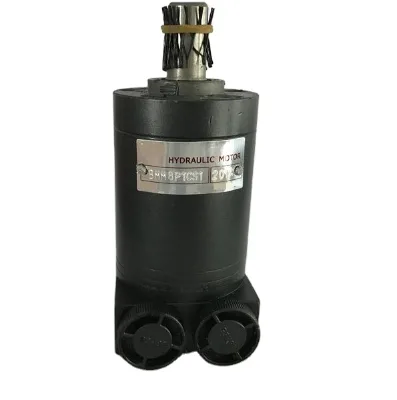
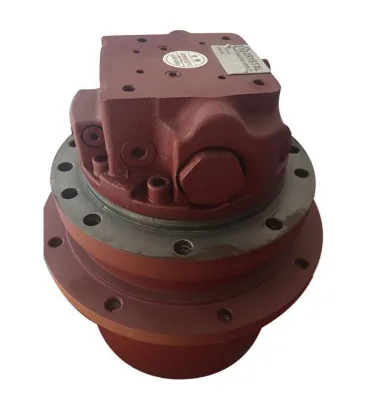


High Torque Hydraulic DC Motor for Oil Pump
$50.00 - $53.00
MOQ: 1 Pieces
Changzhou Sanghao Mechanical and Electrical Technology Co., Ltd.


Low Speed Large Torque Axial Piston Hydraulic Motor for Heavy Equipment
$812.00 - $842.00
MOQ: 1 Pieces


Comprehensive Sourcing Guide
Strategic Sourcing Guide for Large Torque Cycloidal Hydraulic Motors
Understanding the Technical Landscape of Hydraulic Motor Variants
When sourcing a Large Torque Cycloidal Hydraulic Motor, buyers must first navigate the complex terminology often found in product listings. The provided data indicates a diverse range of motor types, including "Gear Type," "Gear Motor," and "Hydraulic Gear Motor," alongside specific model identifiers such as "BMM," "BM4," "HMS," and "HMM." While the core keyword focuses on cycloidal designs, the available inventory data highlights that many suppliers in the region offer gear-type hydraulic motors as a primary alternative or related product line. It is critical for the buyer to distinguish between these mechanical architectures, as a cycloidal motor operates on a fundamentally different principle of internal gearing compared to the external or internal gear configurations listed in the "Gear Type" attributes.
The technical specifications provided reveal significant variability in performance parameters. The observed data lists "Max. Rpm" as "Other" in some instances, while specific entries cite values like "8000rpm/1500rpm/2500rpm/3000rpm." This discrepancy underscores the necessity for precise verification rather than relying on general listings. Furthermore, the "Speed" attribute is listed as both "Low Speed" and "High Speed," indicating that the market offers motors tailored to different operational regimes. For a large torque application, low-speed, high-torque characteristics are typically paramount, yet the presence of high-speed options suggests a need for careful filtering. The "Diameter of Shaft" is explicitly noted as "22mm" in specific records, while other entries describe shaft types as "straight, splined and tapered" or "Spline Axis/Flat Key Axis." These mechanical interface details are non-negotiable for integration into existing machinery, such as the "Mini Excavator/Crusher/Garbage Truck Shaft" applications mentioned in the product attributes.
Compliance Verification and Certification Standards
In the global B2B market, verifying compliance is a primary step before engaging with suppliers. The supplied facts mention "ISOCE" as a certification and reference "CE" in the low-confidence background section. Buyers must treat "ISOCE" with caution, as it may be a typographical variation of ISO standards or a specific, less common certification. The presence of "CE" in the background data suggests that compliance with European safety directives is a possibility, but it is not explicitly confirmed as a high-confidence fact for every listed product. Therefore, procurement teams should not assume that all units meet CE standards without requesting valid, current certificates of conformity.
Beyond certifications, the "prod_standard" field lists specific identifiers like "HMM 8," "HMM 12.5," and "100X100X50." These appear to be proprietary or internal standard codes rather than universally recognized international standards like ISO or DIN. A "100X100X50" entry likely refers to dimensional packaging or housing specifications rather than a performance standard. When evaluating a supplier for a large torque motor, the buyer must demand clarity on what these codes represent. Are they internal quality benchmarks, dimensional tolerances, or industry-specific standards? The absence of universally recognized standard names in the high-confidence facts means the buyer must explicitly request the full text of the standards against which the motor is tested. Relying on ambiguous codes like "HMM" without external validation poses a significant risk to the integrity of the procurement process.
Cost Drivers and Pricing Structure Analysis
The financial landscape for hydraulic motors is influenced by a wide array of factors, as evidenced by the observed price range of $0.3 to $3600 USD. This extreme variance indicates that the market includes everything from small auxiliary components to heavy-duty industrial units. For a "large torque" application, the lower end of this spectrum is likely irrelevant, and the buyer should focus on the upper tiers where engineering quality and material integrity are prioritized. The "Weight" attribute is listed as "8," which could imply a specific unit weight in kilograms, but without context, it is difficult to correlate this directly with the price. A heavier motor often implies more robust materials and higher torque capacity, which would justify a higher price point.
The "MOQ" (Minimum Order Quantity) range of 1 to 1000 units further complicates cost analysis. Suppliers offering an MOQ of 1 are likely catering to prototype or replacement needs, which often carry a premium per unit. Conversely, an MOQ of 1000 suggests a focus on mass production, where economies of scale can significantly reduce the unit cost. The "Selling Units" are listed as "Single item," which supports the flexibility of low-volume purchasing but may not reflect the pricing structure for bulk orders. Buyers must also consider the "prod_packing" methods, such as "Packing in Wooden Cases" or "Cardboard Box, Wooden Crate, Tray." Robust packaging is essential for heavy machinery to prevent damage during transit, and the cost of these materials is often factored into the final price. Additionally, the "Productive Capacity" of 80,000 units suggests a supplier with significant manufacturing capability, which can influence pricing stability and lead times for large orders.
Typical Applications and Operational Environments
The versatility of hydraulic motors is evident in the listed "Apply" attributes, which include "Mini Excavator," "Crusher," and "Garbage Truck Shaft." These applications demand high reliability and the ability to withstand harsh operating conditions. A large torque cycloidal motor is particularly suited for heavy-duty tasks where high starting torque is required at low speeds, such as driving the drums of a garbage truck or the cutting mechanisms of a crusher. The "Motor Flange Shape" options, including "Square," "Diamond Shape," and "Circle Shape," along with "Flange Type" variations like "Rhomb-Flange" and "Square-Flange," indicate that these motors are designed to be adaptable to various mounting configurations found in different machinery.
The "Casing Protection" is listed as "Closed Type," which is a standard feature for industrial motors to prevent contamination from dust, water, and debris. This is crucial for applications in construction and waste management, where the environment is often dirty and abrasive. The "Feature" attributes highlight "High Working Pressure" and "High Volumetric Efficiency," which are essential for maintaining performance under load. For a large torque application, the ability to operate at high pressures without losing efficiency is a key differentiator. The "Excitation Mode" being listed as "Excited" and the "Number of Poles" being "12" or having a "Power Rating:4000W" suggests that some units may have specific electrical or hybrid characteristics, though the primary focus remains on hydraulic power transmission. Buyers should ensure that the motor's pressure rating and efficiency align with the specific demands of their machinery to avoid premature failure.
Supplier Evaluation and Production Capacity
Evaluating a supplier requires a deep dive into their operational capabilities and geographic location. The "Place of Origin" is consistently listed as "Zhejiang, China," a region known for its manufacturing hub. The "Showroom Location" is listed as "Other," which may indicate that the supplier operates primarily through online channels or has a centralized facility rather than a public showroom. The "Productive Capacity" of 80,000 units is a significant indicator of a supplier's ability to handle large orders. However, buyers must verify if this capacity is dedicated to hydraulic motors or if it is a general figure for all products.
The "Customization" attribute is marked as "Available," and the "prod_model" field includes "customerized" and specific codes like "BMM" and "HMS." This suggests that suppliers are willing to tailor products to specific requirements, such as shaft dimensions or flange shapes. For a large torque motor, customization might involve specific torque ratings, shaft diameters, or mounting configurations. The "Warranty" periods vary between "1 Year" and "1.5 Year," which is a standard range but warrants attention. A longer warranty period often reflects the supplier's confidence in their product quality. Buyers should also inquire about the "Lead Time," which is not explicitly provided in the facts but is a critical factor in procurement planning. The "Selling Units" being "Single item" suggests flexibility, but the "MOQ" range indicates that bulk discounts may be available for larger orders.
Quality Control and Long-Term Procurement Considerations
Ensuring long-term reliability involves rigorous quality control measures. The "Feature" of "High Volumetric Efficiency" implies that the motor is designed to minimize energy loss, which is a key indicator of quality. However, without specific test results or performance data in the provided facts, buyers must request independent testing reports. The "Standard" entries like "HMM 8" and "HMM 12.5" are ambiguous, and buyers should insist on clear documentation of the testing protocols used to validate these standards. The "Weight" of 8 units and the "Diameter of Shaft" of 22mm are specific data points that should be verified against the actual product received to ensure consistency.
Long-term procurement considerations also include the availability of spare parts and the supplier's after-sales support. The "Warranty" period is a starting point, but the ability to source replacement parts like shafts, flanges, or seals is crucial for minimizing downtime. The "prod_packing" methods, such as "Wooden Cases" and "Pallets," indicate a commitment to safe shipping, which is important for maintaining the condition of the motor during transit. Buyers should also consider the "Color" options, such as "Black/Blue," which may be relevant for branding or identification purposes in large fleets. Finally, the "Application" list suggests that these motors are used in critical machinery, so the risk of failure must be mitigated through thorough due diligence and potentially third-party inspections before finalizing the purchase.
Conclusion on Sourcing Strategy
Sourcing a Large Torque Cycloidal Hydraulic Motor requires a meticulous approach that balances technical specifications, compliance verification, and supplier reliability. The data provided highlights a market with significant variability in product attributes, from shaft types to speed ratings and certification standards. Buyers must navigate this complexity by focusing on precise technical requirements, demanding clear documentation for standards and certifications, and evaluating suppliers based on their production capacity and customization capabilities. By adhering to a disciplined procurement strategy that prioritizes verified data over general listings, buyers can secure high-quality hydraulic motors that meet the demanding needs of heavy-duty applications. The key lies in understanding the nuances of the product attributes and ensuring that every aspect of the motor aligns with the specific operational demands of the intended machinery.
FAQs
What certifications are available for these hydraulic motors?
The products list ISOCE certification, though CE is mentioned in background data. Buyers should verify specific certificates for each unit rather than assuming universal compliance with European standards.
Can I customize the shaft and flange dimensions?
Customization is available for shaft types including splined, tapered, and flat key axes. Flange shapes can be selected from square, diamond, or circle options to match specific machinery requirements.
What is the warranty period for these motors?
Warranty periods vary between 1 year and 1.5 years depending on the specific model and supplier. Buyers should confirm the exact duration before finalizing the purchase to ensure adequate coverage.
Which locations supply these hydraulic motors?
The place of origin is consistently listed as Zhejiang, China. Buyers should expect manufacturing to originate from this region while verifying specific showroom or factory locations if required.
How does the minimum order quantity affect pricing?
MOQ ranges from 1 to 1000 units, influencing unit costs significantly. Lower quantities often carry a premium, while bulk orders may benefit from economies of scale associated with the 80,000 unit capacity.
What packing methods are used for these motors?
Packing includes wooden cases, pallets, cardboard boxes, and crates to ensure safe transit. The robust packaging is essential for protecting heavy machinery components during international shipping.