Source Safety Lock Clevis Pin for Trailers, Boats, and RT
Find and compare 30 Safety Lock Clevis Pin options from China. These pins feature stainless steel or steel shanks with various handle types like T, B, or L shapes. Available in customized sizes from 5mm to 25mm, they support OEM requests and offer certifications such as ISO and RoHS for reliable industrial use.
Key considerations
Products List


Factory Clevis Hitch Lock Pin Stainless Steel Position Pin Wire Lock Pin
$1.17 - $1.33
MOQ: 500 Pieces


Quick Release Hardware Lynch Pin Steel Safety Locking Linch Pin with O Ring
$0.02 - $0.28
MOQ: 1000 Pieces

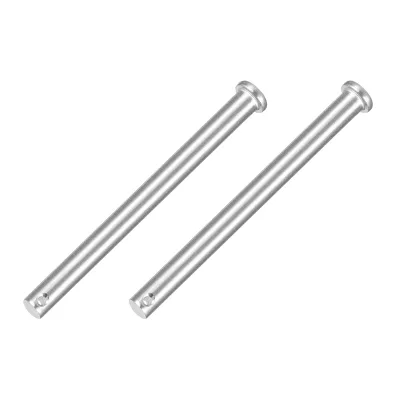
Hot Sale Stainless Steel Grooved Lock Pin Flat Head Clevis Pin with Groove
$1.02 - $2.04
MOQ: 500 pieces


Comprehensive Sourcing Guide
Safety Lock Clevis Pin Sourcing Guide
Procurement professionals must first distinguish between the specific mechanical designs available in the current market, as the term "Safety Lock Clevis Pin" often encompasses diverse variants like wire lock pins, ball lock pins, and D-type or O-type configurations. The observed product listings reveal a significant divergence in design, ranging from simple double-wire pins to complex quick-release mechanisms featuring T-type, B-type, or D-ring handles. Buyers should carefully review the specific item descriptions to ensure the selected component matches the exact retention mechanism required for their assembly, as a standard wire lock pin will not function identically to a ball lock pin in high-vibration environments.
The commercial landscape for these components is characterized by a wide range of minimum order quantities and delivery timelines that directly impact inventory planning and cash flow. While some suppliers list a minimum order quantity of just one piece, others require orders starting at 100 pieces or even up to 20,000 units, necessitating a clear assessment of immediate volume needs versus long-term stockpiling strategies. Furthermore, delivery times vary significantly from a rapid seven to fifteen workdays to a more extended thirty to forty days, requiring early engagement with potential vendors to align production schedules with project deadlines and avoid costly assembly line stoppages.
Product Scope and Observed Listing Signals
Buyers should verify the specific material composition of the shank and handle, as listings indicate options ranging from stainless steel to standard steel, with handles often constructed from cast aluminum or brass. The surface finishing is equally critical, with observed products offering zinc plating, clean finishes, or color-coded options like yellow, black, and blue to aid in visual identification and corrosion resistance. Selecting the wrong material combination can lead to premature failure in harsh environments, so procurement teams must cross-reference the application requirements against the specific material attributes listed for each supplier's offering.
The physical dimensions and standardization of the pins are another key signal, with observed sizes spanning from 4.5mm to 25mm and specific diameters like 1/4 inch or 3/8 inch being common. Some listings support fully customized dimensions based on buyer drawings, while others adhere to fixed standard ranges, requiring a precise match between the equipment's existing clearance and the pin's usable length. It is essential to confirm whether the product is offered as a standard off-the-shelf item or a fully customized solution, as this distinction affects both the unit cost and the lead time required for manufacturing the specific geometry needed for the application.
Technical Specifications to Verify
Verification of the pin type is the first technical step, as the market offers distinct categories including linch pins, lynch pins, square lock pins, and quick-release ball lock pins with varying handle geometries. Each type serves a different retention purpose, with ball lock pins often preferred for frequent disassembly due to their spring-loaded mechanisms, while wire lock pins provide a simpler, cost-effective solution for static or semi-static loads. Buyers must explicitly confirm the handle type, such as T-type, B-type, or D-ring, to ensure compatibility with the tools and operators who will be installing and removing the pins during routine maintenance cycles.
Dimensional accuracy and standard compliance are equally vital, with observed specifications ranging from 5mm to 25mm in diameter and usable lengths from 10mm to 100mm. The standard listed for some products is 6mm or 1/4 inch, while others support custom drawings, meaning the buyer must validate that the supplier's tolerance levels meet the strict engineering requirements of the host machinery. Additionally, the finish quality, such as zinc plating or anodized aluminum, must be verified to ensure it provides adequate protection against the specific environmental factors, such as moisture or chemical exposure, present in the intended operational setting.
Compliance and Safety Documentation
Certification status serves as a primary indicator of a supplier's commitment to quality management and regulatory adherence, with observed listings frequently citing ISO, RoHS, CE, and GS certifications. These documents are not merely administrative but provide assurance that the manufacturing processes adhere to international standards for environmental safety and product reliability, which is crucial for industries with strict liability requirements. Procurement teams should request copies of these certificates to verify their validity and ensure they cover the specific product lines being sourced, rather than accepting generic claims without supporting documentation.
Safety documentation must also address the specific application context, such as trailer latches, boat fittings, or general industrial machinery, to ensure the pin meets the necessary load-bearing and safety criteria. While the provided facts confirm the availability of certifications, buyers must independently verify that the specific pin model is rated for the dynamic loads and vibration levels expected in their specific use case. Relying solely on the presence of a certification label without understanding the scope of that certification can lead to the selection of a component that is compliant in name but inadequate in performance for the intended high-stress application.
Cost Drivers and Commercial Terms
The unit cost of safety lock clevis pins is heavily influenced by the complexity of the design, the material grade selected, and the extent of customization required. Products featuring specialized handles, such as D-ring or T-type configurations made from cast aluminum, typically command a higher price point than standard wire lock pins made from basic steel. Additionally, the choice of surface finishing, such as color anodized aluminum or zinc plating, adds to the manufacturing cost, and buyers should anticipate that fully customized dimensions based on specific drawings will incur higher per-unit costs compared to standard off-the-shelf sizes.
Commercial terms regarding minimum order quantities and lead times are critical factors that determine the total cost of ownership and supply chain flexibility. Suppliers may offer low MOQs of one piece for sampling or small batches, but larger orders often trigger different pricing tiers and longer production windows, such as the observed thirty to forty-day delivery time for customized runs. Buyers must balance the desire for low inventory costs against the risk of supply delays, ensuring that the chosen supplier can meet the required volume thresholds without compromising the delivery schedule or inflating the unit price through expedited shipping fees.
Supplier Qualification and Quality Control
Supplier qualification should begin with a rigorous review of their production capabilities and their ability to maintain consistent quality across large batches, as evidenced by their adherence to ISO standards and specific product certifications. The presence of certifications like RoHS and CE suggests a baseline level of quality control, but buyers must also assess the supplier's internal processes for handling custom orders, particularly when specifications deviate from standard sizes like 1/4 inch or 5mm. A supplier's ability to provide samples and their responsiveness to technical queries are strong indicators of their reliability and their capacity to support complex procurement needs.
Quality control protocols must extend beyond the initial sample approval to include ongoing inspection of the finished goods, ensuring that attributes like surface finishing, material composition, and dimensional accuracy remain consistent. Buyers should verify that the supplier employs robust packaging methods, such as plastic bags, cartons, and pallets, to prevent damage during transit, which is especially important for components with delicate finishes or precise tolerances. Establishing a clear quality agreement that defines acceptable defect rates and inspection procedures is essential to mitigate the risk of receiving substandard products that could compromise the safety and integrity of the final assembly.
Long-Term Procurement Checks
Establishing a long-term partnership requires regular audits of the supplier's ability to maintain consistent lead times and quality standards over extended periods, as initial performance does not guarantee future reliability. Buyers should monitor the supplier's adherence to the agreed-upon delivery windows, such as the observed seven to fifteen workdays or thirty to forty days, to ensure that production bottlenecks do not disrupt the supply chain. Continuous communication regarding any changes in material availability or manufacturing processes is vital to prevent unexpected delays or quality deviations that could impact downstream operations.
Strategic procurement also involves periodically re-evaluating the market to ensure that the sourced components remain competitive in terms of cost and technical performance compared to emerging alternatives. As technology evolves, new materials or finishing techniques may offer superior durability or cost-efficiency, and buyers should remain open to updating their specifications to incorporate these advancements. Regularly reviewing the supplier's certification status and compliance with updated international standards ensures that the procurement strategy remains robust and aligned with the latest industry safety and environmental requirements.
FAQs
What materials are used for safety lock clevis pins?
Safety lock clevis pins are typically manufactured from stainless steel or carbon steel. Some variants feature cast aluminum handles and brass buttons for enhanced durability. These material choices ensure resistance to corrosion and wear in demanding industrial environments, providing reliable performance for trailer latches and boat applications.
Can I customize the diameter of a Safety Lock Clevis Pin?
Yes, customization is widely accepted for safety lock clevis pins. Standard diameters often range from 5mm to 25mm, with options for 1/4 inch or specific custom sizes. Buyers can provide drawings for tailored dimensions, ensuring the pin fits precise mechanical requirements for specialized equipment and heavy-duty machinery applications.
What certifications do safety lock clevis pins typically hold?
Safety lock clevis pins commonly hold ISO, RoHS, CE, and GS certifications. These standards verify compliance with international quality and safety regulations. Buyers should verify specific documentation with suppliers to ensure the products meet regional regulatory requirements for industrial components, guaranteeing reliability and legal compliance for global supply chains.
What is the typical lead time for safety lock clevis pins?
Lead times for safety lock clevis pins generally range from 7 to 40 days depending on order volume and customization. Standard items may ship within 7-15 workdays, while customized orders with specific specifications or larger quantities often require 30-40 days for production and quality assurance processes to ensure precision.
How are safety lock clevis pins packaged for shipping?
Safety lock clevis pins are typically packaged in plastic bags, then placed in cartons, and finally palletized for secure transport. Standard export packing is used to protect components during transit. Bulk orders may be packed at 25-30 kilograms per carton, ensuring safe delivery and minimizing damage risks for international shipments.
What handle types are available for safety lock clevis pins?
Available handle types include T-type, B-type, L-type, and D-ring styles. These options allow users to select the most ergonomic and functional design for their specific application. The handles are often made from cast aluminum, providing a secure grip and easy operation for quick release mechanisms in various industrial settings.