Source Sandwich System Tartan Running Track for Schools, Stadiums, Playgrounds
Compare 27 Sandwich System Tartan Running Track options featuring EPDM and polyurethane materials with shock absorption rates over 45%. These tracks are designed for outdoor and indoor use in schools, stadiums, and playgrounds with customizable sizes and installation methods.
Key considerations
Products List


Rubber Tartan Running Tracks Sandwich System Running Track Material
$8.00 - $20.00
MOQ: 500 Square Meters


Sandwich System Tartan Track Stadium Running Track Material Training Center Running Track
$10.00 - $20.00
MOQ: 500 Square Meters

Sandwich System Track Running Iaaf Athletic Track Synthetic Rubber Running Track
$10.00 - $20.00
MOQ: 1000 Square Meters


400m Athletic Sandwich Polyurethane Rubber Tartan Track Running Track
$10.00 - $20.00
MOQ: 500 Square Meters


Athletic Running Track of Sport Surface Tartan Track Stadium Running Track
$22.00
MOQ: 500 Square Meters

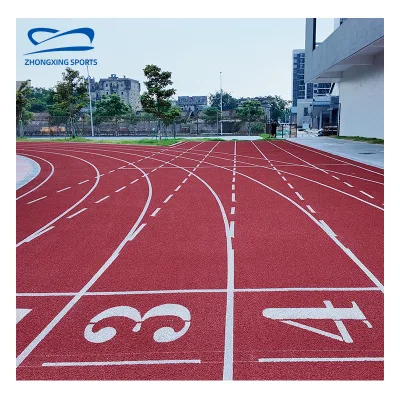


Sustainable Running Track with Advanced Sandwich System for Training
$23.00 - $33.00
MOQ: 1000 Square Meters

Sustainable Athletic Running Track with Eco-Friendly Sandwich System
$23.00 - $33.00
MOQ: 1000 Square Meters

Eco-Friendly Sandwich System Running Track for Sustainable Athletic Training
$23.00 - $33.00
MOQ: 1000 Square Meters

Eco-Friendly Running Track Featuring Durable Sandwich System Material
$23.00 - $33.00
MOQ: 1000 Square Meters

Advanced Sandwich System Running Track for Enhanced Athletic Performance
$23.00 - $33.00
MOQ: 1000 Square Meters

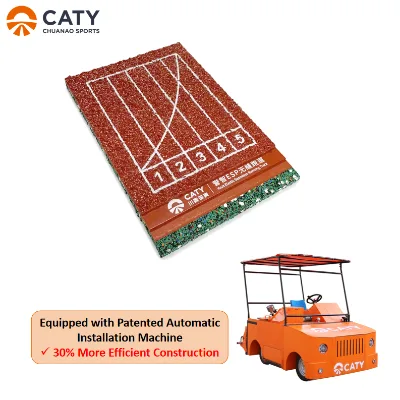
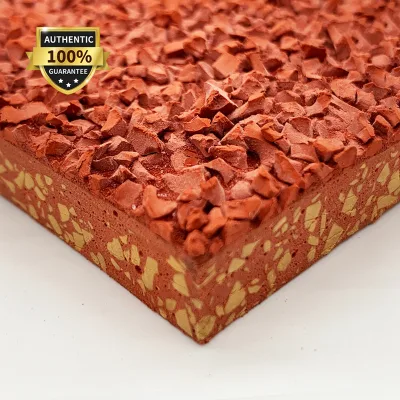


Premium Iaaf Approved Synthetic Sandwich System Rubber Running Track
Negotiable
MOQ: 200 Square Meters
Comprehensive Sourcing Guide
Strategic Sourcing Guide for Sandwich System Tartan Running Tracks
Procuring a Sandwich System Tartan Running Track represents a significant capital investment for athletic facilities, schools, and commercial stadiums. The complexity of these surfaces requires a procurement strategy that balances technical performance with rigorous supplier verification. Unlike standard monolithic tracks, the sandwich system utilizes a multi-layered construction designed to optimize energy return, shock absorption, and durability. This guide provides a disciplined framework for buyers to navigate the market, ensuring that the selected product meets international performance standards while adhering to budgetary and logistical constraints.
Technical Architecture and Material Composition
The fundamental distinction of a sandwich system running track lies in its layered construction. The supplied data indicates that the core material composition typically involves a combination of EPDM (Ethylene Propylene Diene Monomer) granules, SBR (Styrene-Butadiene Rubber) granules, and a Polyurethane (PU) binder. This specific blend is critical for achieving the desired mechanical properties. The "sandwich" designation often refers to a structure where a base layer provides structural integrity, while the top layer offers the necessary friction and color retention.
Buyers must verify the specific ratio of these materials, as the performance characteristics vary significantly based on the formulation. The observed technical specifications highlight a shock absorption rate exceeding 53% in some configurations, while others list a rate above 45%. This variance suggests that different product models or thicknesses may be available, and the procurement team must define the exact performance threshold required for the intended application. Furthermore, the tensile strength is a critical metric; documented values include 0.8 MPa and 70 psi, indicating the material's resistance to tearing under stress.
The surface texture and friction factor are equally vital for athlete safety. The data notes a friction factor of 0 in specific functional contexts, which likely refers to a baseline coefficient or a specific test condition, but the primary requirement is a high anti-slide value. One observed specification lists an anti-slide value of 57 at 20ºC, a figure that should be the benchmark for verification. The installation method is also a key technical differentiator; the system supports both human casting and machine spraying. Machine spraying generally ensures a more uniform thickness and density, which is crucial for maintaining consistent performance across the entire track surface.
Compliance, Certification, and Safety Standards
In the realm of professional athletics, compliance is not merely a formality but a prerequisite for eligibility in competitive events. The supplied context explicitly mentions the "Iaaf" (International Association of Athletics Federations) certificate as a potential attribute. Buyers must treat this as a high-priority verification point. While the presence of a certificate is noted, the specific grade or version of the standard must be confirmed with the supplier. A track intended for high-level competition must meet strict Iaaf or World Athletics certification requirements regarding shock absorption, vertical deformation, and friction.
Environmental safety is another non-negotiable aspect of modern procurement. The product attributes emphasize an "Environmental Friendly" level, with specific claims of being non-toxic and having no smell. These are observations that must be validated through independent laboratory testing reports rather than accepted solely on supplier marketing. The flame retardant level is listed as "I" in the provided data, which aligns with international fire safety standards, but buyers should request the specific test report (e.g., DIN 4102 or ASTM E84) to confirm the classification.
Additionally, the production origin is identified as China, with specific mentions of Guangdong as a place of origin. While this is a factual observation of the supply chain, it does not dictate quality. However, it informs the logistics and potential lead times. Buyers should ensure that the supplier can provide a Certificate of Origin and that the manufacturing facility adheres to ISO quality management systems, even if not explicitly listed in the initial data. The absence of a CE certification in the high-confidence facts suggests that buyers should not assume this standard applies unless explicitly confirmed for the specific batch being ordered.
Cost Drivers and Economic Considerations
The pricing structure for sandwich system tracks is influenced by several dynamic factors. The observed listed price range in the market spans from 1.22 to 33 USD, a wide variance that reflects differences in material quality, thickness, system complexity, and order volume. This range indicates that the unit price is not static but is heavily dependent on the specific configuration chosen. A track with a higher shock absorption rate or a specialized EPDM top layer will naturally command a price at the upper end of this spectrum.
The Minimum Order Quantity (MOQ) is a significant cost driver. The data shows an MOQ range of 100 to 1000 units, with a specific instance of 500 square meters noted. For smaller projects, this MOQ can create a barrier, potentially requiring the buyer to consolidate orders or share costs with other facilities. Conversely, larger orders benefit from economies of scale, reducing the per-square-meter cost. Buyers must calculate the total landed cost, including the MOQ requirement, shipping, and installation, rather than focusing solely on the unit price.
Other cost variables include the customization options available. The product attributes confirm that customization is available, including colors, sizes, and specific functional requirements like waterproofing and thermal insulation. Customization typically incurs additional setup costs and may extend the production lead time. The producing ability is noted as 15 days, which serves as a baseline for budgeting, but complex custom orders may require additional time. Payment methods are flexible, with suppliers suggesting contact with customer service for specific terms, indicating that negotiation is possible for large-scale contracts.
Typical Applications and Performance Requirements
The versatility of the sandwich system allows it to serve a wide range of applications, from professional stadiums to school playgrounds. The data explicitly lists "School, Stadium, Playground" as primary usage areas. For professional stadiums, the track must meet the highest standards of shock absorption and vertical deformation to protect athletes from injury. The observed vertical deformation of 2.3mm is a specific data point that buyers should use as a reference for high-performance applications.
For school and community playgrounds, the focus shifts slightly towards durability and safety. The "Durable Years" attribute ranges from 8-10 years to over ten years, suggesting that the lifespan is contingent on usage intensity and maintenance. The "All-Weather Durability" advantage is a key selling point, ensuring that the track remains functional in various climatic conditions. The waterproof and soundproof attributes further enhance its suitability for indoor-outdoor transition zones or areas where noise reduction is necessary.
The installation method also dictates the application suitability. Machine spraying is often preferred for large, uniform surfaces like stadiums, while human casting might be more feasible for smaller, irregularly shaped playgrounds. The "Sand" pattern mentioned in the attributes likely refers to the texture or granule distribution, which affects traction and aesthetics. Buyers must match the specific application needs with the correct technical configuration to avoid over-specifying or under-specifying the product.
Supplier Evaluation and Quality Assurance
Evaluating a supplier for a sandwich system track requires a multi-faceted approach. The first step is verifying the authenticity of the certifications mentioned, particularly the Iaaf certificate. Buyers should request copies of the certificates and cross-reference them with the issuing body. The "Customized Size" standard noted in the data implies that the supplier has the flexibility to meet specific project dimensions, but this must be backed by a robust quality control process.
Quality control should extend beyond the final product to the raw materials. The supplier's use of Edpm, SBR, and PU Binder must be verified to ensure no substandard or recycled materials are used, which could compromise the track's longevity and safety. The "No Smell, Non-Toxic" claim requires third-party testing to validate. Additionally, the packaging method, described as "Export Packing," "Barrels and Pallets," or specific drum/bag configurations (200kg/drum, 25kg/bag), is crucial for preventing damage during transit.
The production capability is another critical factor. With a stated producing ability of 15 days, the supplier must demonstrate the capacity to meet this timeline consistently. Buyers should inquire about the production line's capacity and the supplier's track record for meeting deadlines. The "Free Sample" attribute is a valuable tool for evaluation; buyers should always request a sample to physically inspect the texture, color consistency, and material quality before committing to a large order.
Long-Term Procurement and Maintenance Strategy
Procuring a running track is a long-term commitment that extends well beyond the initial installation. The "Durable Years" attribute suggests a lifespan of 8 to 10 years or more, but this is contingent on proper maintenance. Buyers should factor in the long-term costs of maintenance, including cleaning, repair of wear and tear, and potential resurfacing. The "Waterproof" and "Thermal Insulation" attributes are particularly important for longevity, as they protect the underlying structure from moisture damage and temperature fluctuations.
The installation warranty and after-sales support are essential components of the procurement strategy. While the data mentions "Contact our customer service" for payment, it does not explicitly detail warranty terms. Buyers must negotiate clear warranty agreements that cover material defects and installation errors. The "Customized" nature of the product means that spare parts or replacement granules must be available from the same supplier to ensure color and material consistency in future repairs.
Finally, the procurement process should include a plan for periodic performance testing. Over time, the shock absorption rate and friction factor may degrade. Establishing a schedule for re-testing the track surface ensures that it continues to meet safety standards. The "Sand" pattern and "Colors or Customized" options also imply that aesthetic maintenance may be required to keep the facility looking professional. By integrating these long-term considerations into the initial procurement plan, buyers can ensure the track remains a safe and high-performing asset for its entire lifespan.
FAQs
What materials compose a sandwich system running track?
The track is composed of EPDM granules, SBR granules, and a Polyurethane binder. This specific blend ensures durability and shock absorption for various athletic applications.
Can the track be customized for specific project needs?
Yes, customization is available for colors, sizes, and functional requirements. Buyers can request specific dimensions and features like waterproofing or thermal insulation to match their site.
How is the sandwich system running track installed?
Installation can be performed via human casting or machine spraying. Machine spraying generally ensures uniform thickness, while human casting offers flexibility for smaller or irregular areas.
What is the minimum order quantity for this track?
The minimum order quantity ranges from 100 to 1000 units, with some suppliers requiring 500 square meters. Buyers should verify the specific MOQ before placing an order.
Which certifications does the running track product hold?
The product may hold an Iaaf certificate for athletic compliance. Buyers should verify the specific certificate version and request documentation to ensure eligibility for competitive events.
How long does the production process take?
The producing ability is typically 15 days for standard orders. Complex customizations may require additional time, so buyers should confirm lead times during the negotiation phase.
What are the key performance metrics for this track?
Key metrics include a shock absorption rate over 53% and a vertical deformation of 2.3mm. These values ensure athlete safety and energy return during high-intensity activities.