Source Sauna Rooms for Hotels, Spas, and Homes
Compare 30 Sauna units with varying capacities from 2 to 4 people and dimensions up to 12000mm. Buyers can evaluate electric heating types, solid wood materials like red cedar and hemlock, and control panel features for health applications.
Key considerations
Products List


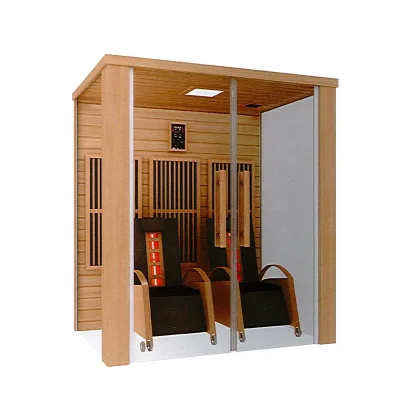
Outdoor Sauna and Change Room One Person Sauna Steam Room Portable Infrared Sauna
$4000.00 - $6000.00
MOQ: 1 Minimum


$2780.00 - $2980.00
MOQ: 1 Sets


$2780.00 - $2980.00
MOQ: 1 Sets

Comprehensive Sourcing Guide
Strategic Sourcing Guide for Commercial Sauna Systems
Understanding Technical Specifications and Variability
When sourcing Sauna systems for commercial or residential deployment, buyers must navigate a landscape defined by significant technical variability. The core keyword "Sauna" encompasses a broad spectrum of heating technologies, dimensions, and material compositions. Based on current market observations, the primary heating mechanism often cited is the Far Infrared Sauna or Carbon Crystal Heating Plate, which operates on electric power supply. However, specific configurations may also integrate Infrared Heaters alongside Steam Generators to offer a dual-functionality of dry steam and infrared therapy.
A critical observation in the technical specifications is the diversity in capacity and physical footprint. The market presents units ranging from compact 2-person models with dimensions of approximately 1200x1050x1900mm to expansive 4-person or larger installations measuring up to 3600x2000x2300mm, and even industrial-scale units reaching 12000x3500x3000mm. This variance directly impacts the power requirements, with specific models noted to operate at 4500W, while others rely on standard plug-powered 220-240V supplies. Buyers must verify that the electrical infrastructure at the installation site can support the specific wattage and voltage rating of the selected unit, as the difference between a single-item 2-person unit and a multi-person batch unit is substantial.
Material selection is another pivotal technical factor. The primary construction material is predominantly Solid Wood, with specific varieties such as Red Cedar and Hemlock frequently appearing in product attributes. The choice of wood affects not only the aesthetic appeal but also the thermal retention properties and durability of the Sauna. Furthermore, the door shape is typically a Linear Type, and the design style is generally Modern, often featuring computer control panels with soft-touch interfaces and transom windows. These features contribute to the user experience but require precise integration during the assembly phase.
Compliance and Certification Verification
In the B2B procurement of electrical heating appliances, compliance with safety standards is non-negotiable. The market data indicates that reputable suppliers often provide certifications such as CE, ETL, and RoHS. These certifications serve as evidence that the product meets specific regional safety, electromagnetic compatibility, and hazardous substance restriction requirements. However, buyers must treat these certifications as observations of specific listed products rather than universal guarantees for all inventory.
When evaluating a potential supplier, the procurement team should request current, valid certificates for the specific model number being purchased. For instance, a model designated as S02 or 1388 may carry different certification statuses than a model labeled S022. The presence of CE certification suggests compliance with European standards, while ETL indicates testing against North American safety standards. RoHS compliance ensures the product is free from specific hazardous materials.
Buyers should also verify the "prod_standard" and "prod_packing" dimensions against the physical requirements of the installation site. The standard dimensions listed, such as 1200x1050x1900mm or 3600x2000x2300mm, must align with the available space. Additionally, the packaging dimensions, which may differ significantly from the product dimensions (e.g., 1200x1750x800mm for packing versus 1200x1050x1900mm for the unit), are crucial for logistics planning. Ensuring that the supplier can provide documentation verifying these standards and certifications is a primary step in risk mitigation.
Cost Drivers and Pricing Dynamics
The pricing structure for Sauna systems is influenced by a complex interplay of factors, including capacity, material quality, heating technology, and customization options. The observed price range in the market spans from $1 to $22,800, reflecting the vast difference between entry-level single units and high-end, large-scale commercial installations. This wide variance indicates that price alone is not a reliable indicator of quality without context regarding the specific configuration.
Key cost drivers include the heating type and power rating. Units utilizing Carbon Crystal Heating Plates or Far Infrared technology may command different price points compared to those with standard Infrared Heaters or combined steam generators. The material composition also plays a significant role; Solid Wood types like Red Cedar are often more expensive than Hemlock due to their natural resistance to decay and aromatic properties. Customization availability is another major factor; while many suppliers offer customization, the extent of this service and the associated costs will vary.
The Minimum Order Quantity (MOQ) is another critical economic consideration. The observed MOQ range is 1 to 10 units, with specific listings indicating an MOQ of 1 set. For buyers looking to outfit a single facility, a low MOQ is advantageous. However, for larger deployments, understanding the pricing tiers associated with bulk orders is essential. Buyers should also consider the Gross Weight Per Batch, which can impact shipping costs. For example, a batch weighing 30.000kg will incur different freight charges compared to lighter units.
Typical Applications and Usage Scenarios
The application of Sauna systems extends beyond residential use, with a strong presence in commercial sectors such as hotels, spas, and wellness centers. The "Usage" attribute is explicitly listed as "Health," indicating that these units are designed for therapeutic and relaxation purposes. The "Application" field frequently cites "Hotel," suggesting that these systems are robust enough to handle high-traffic commercial environments.
Capacity is a primary determinant of the application scenario. A 2-person unit with dimensions of 1200x1050x1900mm is ideal for boutique hotels, private residences, or small wellness studios where space is limited. In contrast, a 4-person unit measuring 3600x2000x2300mm is better suited for larger hotel complexes, fitness centers, or public wellness facilities. The most extensive units, reaching dimensions of 12000x3500x3000mm, are likely intended for large-scale commercial resorts or dedicated health retreats.
The "Function" attribute, which includes "Dry Steam," further defines the application. Systems capable of generating dry steam offer a more versatile experience, appealing to users seeking a traditional Sauna experience alongside infrared benefits. This dual functionality makes them particularly attractive for high-end hospitality venues that aim to provide a comprehensive wellness experience. Buyers should align the capacity and function of the Sauna with the expected user volume and the specific health services they intend to offer.
Supplier Evaluation and Sourcing Strategy
Evaluating suppliers requires a focus on their ability to deliver consistent quality and support. The "prod_origin" for many units is listed as Guangdong, China, a region known for its manufacturing capabilities in this sector. However, the location of the supplier should not be the sole determinant of selection. Buyers must assess the supplier's track record regarding "After-Sale Service," which is frequently listed as "Online Technical Support" and "Free Spare Parts."
The availability of technical support is crucial for maintaining operational continuity. In a commercial setting, a malfunctioning Sauna can disrupt business operations and negatively impact customer satisfaction. Therefore, verifying the responsiveness and expertise of the technical support team is a vital step. Additionally, the provision of free spare parts can significantly reduce long-term maintenance costs.
Buyers should also examine the "Customization" capabilities of the supplier. While customization is available, the extent of this service—such as the ability to modify dimensions, wood types, or control panel interfaces—varies. A supplier that offers flexible customization can better meet the specific spatial and aesthetic requirements of a project. Furthermore, the "Selling Units" attribute, which is often "Single Item," suggests that suppliers are willing to engage in smaller transactions, which is beneficial for buyers testing the market or outfitting smaller facilities.
Quality Control and Long-Term Procurement Considerations
Ensuring the quality of Sauna systems involves rigorous inspection of both the manufacturing process and the final product. Buyers should verify the "Temperature Control Mode," which is often described as a "Wall Temperature Control System." This feature ensures that the heat is distributed evenly and safely, preventing hot spots that could damage the wood or harm users. The "High Temperature" rating, observed at 60°C (140°F), is a standard operating parameter that must be maintained consistently.
Long-term procurement considerations include the durability of the materials and the reliability of the heating elements. The "Heater" type, whether Infrared Ray or Infrared Heater and Steam Generator, should be selected based on the expected usage frequency. High-traffic commercial environments require heaters that can withstand continuous operation without degradation. The "Controlpanel" type, specifically the "Soft Touch Control Panel," should be evaluated for its resistance to wear and tear in humid environments.
Buyers must also consider the "prod_packing" and "prod_standard" dimensions to ensure that the units can be transported and installed without damage. The packaging dimensions, such as 1200x1750x800mm or 3600x1750x800mm, must be compatible with the logistics chain. Additionally, the "Gross Weight Per Batch" should be factored into the shipping and handling costs.
In conclusion, sourcing Sauna systems requires a meticulous approach that balances technical specifications, compliance, cost, and supplier reliability. By carefully evaluating the observed attributes and verifying the specific details of each model, buyers can make informed decisions that ensure the successful deployment of high-quality Sauna systems for their specific needs. The wide range of options available, from compact 2-person units to large-scale commercial installations, provides ample opportunity to find a solution that aligns with both functional requirements and budgetary constraints.
FAQs
What heating technologies are available for these Sauna units?
Available heating technologies include Far Infrared, Carbon Crystal Heating Plates, and Infrared Heaters, with some models combining Infrared Heaters and Steam Generators. Specific units operate at 4500W or use standard plug-powered 220-240V supplies depending on the model capacity.
Which solid wood types are used in the construction of these saunas?
The primary construction material is Solid Wood, with specific varieties including Red Cedar and Hemlock. These wood types are selected for their thermal retention properties and durability, often featuring a Modern design style with Linear Type doors.
What are the standard capacity and dimension options for these units?
Units range from compact 2-person models measuring 1200x1050x1900mm to larger 4-person installations up to 3600x2000x2300mm. Some industrial-scale units reach dimensions of 12000x3500x3000mm to accommodate high-traffic commercial environments like hotels.
Can buyers customize the Sauna units to meet specific requirements?
Yes, customization is available for these Sauna systems. Buyers can often modify features to align with specific spatial or aesthetic needs, though the extent of service varies by supplier and specific model configuration.
What certifications do these Sauna products typically hold?
Reputable units often carry CE, ETL, and RoHS certifications to ensure compliance with regional safety and hazardous substance standards. Buyers should verify these certificates for the specific model number, as status may vary between different product listings.
How is the temperature controlled in these electric Sauna rooms?
Temperature control is managed via a Wall Temperature Control System with a Soft Touch Control Panel. The units typically operate at a high temperature of 60°C (140°F) and may feature Computer Control Panels for enhanced user interaction.
What after-sale services are provided for these Sauna systems?
Suppliers typically offer Online Technical Support and Free Spare Parts as part of their after-sale service. This support is crucial for maintaining operational continuity in commercial settings like hotels and wellness centers.