Source Sausage Caulking Gun for adhesive, sealant, and industrial use
Compare 30 Sausage Caulking Gun listings from China with varying MOQs, power sources, and customization options. Buyers can evaluate models like GMCG-015 and GM-090 for industrial or DIY applications.
Key considerations
Products List






Comprehensive Sourcing Guide
Strategic Sourcing Guide for Industrial Caulking Guns
The global market for industrial sealing and adhesive application tools has seen a steady increase in demand, driven by the expansion of construction, automotive, and manufacturing sectors. Among these tools, the Sausage Caulking Gun represents a critical piece of equipment designed for efficiency and precision. For procurement professionals, navigating the supply chain for these devices requires a disciplined approach that distinguishes between general product attributes and specific, verified technical capabilities. This guide synthesizes available market data to provide a framework for sourcing high-quality sausage caulking guns, focusing on technical specifications, supplier evaluation, and long-term operational viability.
Technical Specifications and Functional Diversity
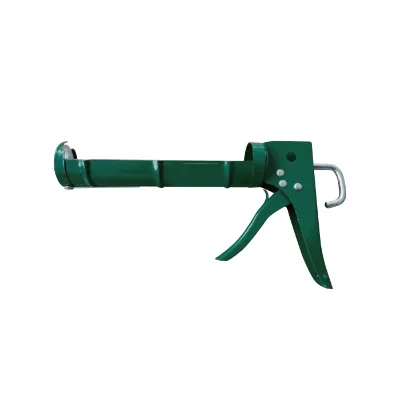
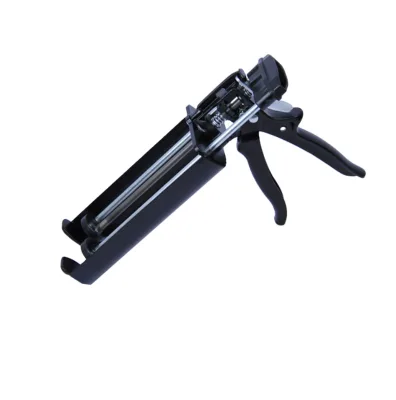
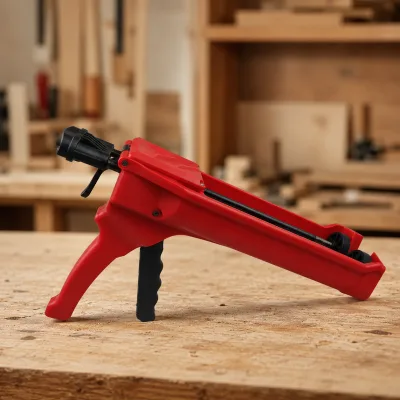
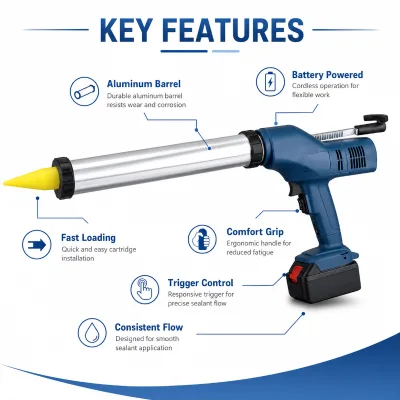
When evaluating sausage caulking guns, buyers must first understand that the term encompasses a diverse range of mechanical designs rather than a single uniform product. The supplied market data indicates that these tools are available with varying power sources, including air-powered, manual, and cordless configurations. This diversity suggests that the optimal choice depends heavily on the specific application environment. For instance, air-powered models are often preferred in high-volume industrial settings where continuous operation is required, while manual and cordless options offer flexibility for mobile or remote tasks.
The mechanical thrust is a primary performance metric. Data points from the market reveal thrust ratios as high as 2:1 and specific thrust capabilities reaching 450 kilograms. These figures are critical for determining the gun's ability to handle high-viscosity adhesives or sealants. A higher thrust ratio generally implies less physical effort required from the operator, which can reduce fatigue during extended use. However, buyers should verify that the thrust rating matches the specific viscosity of the cartridges they intend to use, as the data notes that these tools are specifically designed for "adhesive cartridge" usage.
Material composition is another vital specification. The observed market data highlights the use of iron for handles and metal for the main body, with some models incorporating nylon components. The "Heavy Duty Gun" classification suggests that these units are built to withstand rigorous industrial use. The "Diy, Industrial" grade classification further indicates that the product line spans from lighter-duty applications to heavy industrial tasks. When reviewing product listings, procurement teams should look for explicit confirmation of material grades to ensure the tool can withstand the chemical and mechanical stresses of the intended application.
Customization and Branding Capabilities
A significant advantage of sourcing these tools from the current market is the extensive availability of customization options. The data confirms that OEM, ODM, and OBM support are standard offerings, allowing buyers to tailor products to their specific brand identity or operational requirements. This extends to visual and functional aspects, with "Customized Color" and "Accept Customized Logo" being widely available attributes. For companies looking to brand their tools for internal use or as part of a product line, this flexibility is a key differentiator.
The production models listed, such as GMCG-015, GM-090, and GMCG-023, demonstrate that manufacturers offer a variety of specific configurations. Some models are described with unique features like "Rotatable" mechanisms, which may offer ergonomic benefits in tight spaces. The "Single package size" of 30x15x7 cm and a "Single gross weight" of 4.000 kg provide baseline logistics data for shipping and storage planning. However, buyers must be aware that these specifications can vary by model. The "prod_standard" attribute noting "all sizes are available" suggests that packaging and dimensions are not fixed, requiring direct verification with the supplier for specific orders.
Cost Drivers and Procurement Parameters
Understanding the cost structure of sausage caulking guns is essential for budgeting and negotiation. The observed market data presents a wide price range, from $0.48 to $105 USD. This significant variance is likely driven by the complexity of the mechanism, the quality of materials (e.g., metal vs. plastic components), and the level of customization requested. A unit priced at the lower end of the spectrum may be a basic manual model, while the higher end likely includes advanced features like air power, cordless operation, or specialized industrial-grade construction.
Minimum Order Quantity (MOQ) is another critical factor influencing total cost. The data shows a broad MOQ range, from as low as 100 pieces to as high as 50,000 pieces. Specific models have distinct thresholds; for example, some listings indicate an MOQ of 500, while others require 5,000 or even 50,000 units. This disparity suggests that suppliers may have different production lines or capacity constraints. Buyers with smaller volume needs must identify suppliers with lower MOQs to avoid excessive inventory costs, while large-scale purchasers can leverage the lower unit prices often associated with higher volume commitments.
Lead times also play a role in the total cost of ownership. The observed delivery times range from 30 days to 30-45 days. This timeline must be factored into the supply chain planning to prevent stockouts. The "30 Days" delivery window appears common, but the "30-45 Days" range indicates potential variability based on order complexity or customization requirements. Buyers should clarify these timelines during the negotiation phase to ensure alignment with their production schedules.
Compliance, Certification, and Safety Standards
While the provided data does not list specific certification bodies or standard numbers, the "Industrial" grade classification implies that these tools must meet certain safety and performance benchmarks. In the context of industrial procurement, buyers should verify compliance with relevant international standards for hand tools and pneumatic equipment. The "warranty" data, showing options for 3 years or 6 months, serves as an indirect indicator of manufacturer confidence in product durability. A longer warranty period often correlates with higher quality control standards and better after-sales support.
Safety is paramount when dealing with tools that exert significant force. The "Easy Opration" advantage listed in the data suggests that ergonomic design is a priority, but buyers must independently verify that the tools meet local safety regulations regarding pressure ratings and mechanical safeguards. Since the data mentions "Air" as a power source, compliance with pneumatic safety standards is essential. Procurement teams should request documentation regarding material safety and mechanical integrity, ensuring that the "Metal" and "Iron" components do not pose risks such as sharp edges or structural failure under load.
Supplier Evaluation and Geographic Considerations
The majority of the observed supply originates from China, with specific mentions of "Jiangsu, China" as a place of origin. This geographic concentration indicates a mature manufacturing ecosystem for these tools. When evaluating suppliers, buyers should look beyond the "Brand" names like DOZ or NSJ and focus on the supplier's capacity to deliver consistent quality. The availability of "Customized support" including OEM and ODM suggests that many suppliers are capable of acting as contract manufacturers rather than just resellers.
Supplier reliability can be assessed through their response to customization requests and their transparency regarding production timelines. The data shows a mix of brands and models, indicating a competitive market. Buyers should prioritize suppliers who provide clear specifications for each model number, such as GMCG-015 or GMCG-0891, rather than generic descriptions. The "Single item" selling unit suggests that some suppliers may be willing to sell samples or small batches, which is useful for initial quality testing before committing to large orders.
Quality Control and Long-Term Procurement Strategy
Implementing a robust quality control process is essential for mitigating the risks associated with sourcing industrial tools. Given the variation in materials and specifications, buyers should establish clear acceptance criteria before production begins. This includes verifying the "plunger type" (e.g., "Smooth Rod"), the "thrust ratio," and the durability of the "Handle Material." For high-volume orders, requesting pre-shipment inspections is advisable to ensure that the delivered units match the agreed-upon specifications.
Long-term procurement considerations should focus on the availability of spare parts and the consistency of the supply chain. The "3 Years" warranty option indicates that some manufacturers are prepared to support their products over an extended period. Buyers should inquire about the availability of replacement parts, such as seals or plungers, to minimize downtime. Additionally, the "Customized" nature of many orders means that maintaining a relationship with a supplier who can replicate specific features in future production runs is crucial for brand consistency.
Comparative Analysis of Key Product Attributes
To facilitate decision-making, the following table summarizes the key attributes observed in the market data, highlighting the variability that buyers must navigate.
| Attribute Category | Observed Options | Implication for Procurement |
|---|---|---|
| Power Source | Air, Manual, Cordless | Must match application environment (fixed vs. mobile). |
| Material Grade | Metal, Iron, Nylon, Industrial | Determines durability and suitability for heavy-duty tasks. |
| MOQ Range | 100 to 50,000 PCS | Requires alignment with budget and inventory strategy. |
| Warranty | 6 Months to 3 Years | Indicates manufacturer confidence; longer is generally preferred. |
| Customization | OEM, ODM, OBM, Logo, Color | Essential for branding and specific operational needs. |
| Thrust Capability | 2:1 Ratio, 450 kgs | Critical for handling high-viscosity adhesives. |
| Delivery Time | 30 to 45 Days | Must be factored into production scheduling. |
Conclusion
Sourcing sausage caulking guns requires a nuanced understanding of the diverse product landscape. The market offers a wide array of options ranging from basic manual tools to advanced air-powered industrial units. Buyers must carefully evaluate technical specifications such as thrust, material grade, and power source to ensure the selected tool meets their operational demands. The availability of customization options provides significant flexibility for branding and functional tailoring, but it also necessitates clear communication with suppliers regarding specifications and lead times. By adhering to a disciplined evaluation process that includes rigorous quality control and supplier verification, procurement professionals can secure reliable, high-performance tools that support their industrial operations effectively. The data confirms that while the market is competitive and varied, a strategic approach to sourcing can yield significant value and operational efficiency.
FAQs
What power sources are available for sausage caulking guns?
Sausage caulking guns are available with air, manual, or cordless power sources. The optimal choice depends on the specific application environment, with air models suited for high-volume industrial settings and manual or cordless options offering flexibility for mobile tasks.
How much thrust can these industrial guns generate?
These tools offer thrust ratios up to 2:1 and specific capabilities reaching 450 kilograms. This high thrust is critical for handling high-viscosity adhesives, though buyers must verify the rating matches the specific cartridges they intend to use for their operations.
Can I customize the logo and color of the gun?
Yes, customization is available including customized logos and colors. Many suppliers support OEM, ODM, and OBM services, allowing buyers to tailor products to their specific brand identity or operational requirements without needing to compromise on the core mechanical functionality.
What is the typical delivery time for these orders?
The typical delivery time ranges from 30 to 45 days. This timeline must be factored into supply chain planning to prevent stockouts, with the exact duration potentially varying based on order complexity, customization requirements, and specific supplier capacity constraints.
What materials are used to construct the gun body?
The main body is typically constructed from metal, with handles made of iron and some components incorporating nylon. The heavy-duty classification suggests these units are built to withstand rigorous industrial use and chemical stresses associated with adhesive application tasks.
What is the minimum order quantity for these products?
Minimum order quantities vary significantly, ranging from 100 pieces to 50,000 pieces depending on the specific model. Buyers with smaller volume needs must identify suppliers with lower MOQs, while large-scale purchasers can leverage lower unit prices associated with higher volume commitments.
How long is the warranty period for these tools?
Warranty periods observed in the market range from 6 months to 3 years. A longer warranty period often correlates with higher quality control standards and better after-sales support, serving as an indirect indicator of manufacturer confidence in product durability.