Source Self-Centering Air Vise for Boring Milling Drilling
Find 30 self-centering air vise options from Chinese manufacturers. Compare models like L-DOG 6080H and DJ80120CRM with features including manual drive, customizable sizes, and clamping ranges up to 100mm for various machine tools.
Key considerations
Products List


96mm Stable Performance Self Centering Vise for Long - Term Continuous Use
$420.00 - $450.00
MOQ: 1 Pieces


96mm Advanced Centering Mechanism Self Centering Vise for Ultra - High Accuracy
$460.00 - $500.00
MOQ: 1 Pieces

96mm Wide Clamping Range Manual Self Centering Vise for Quick Change Clamping
$460.00 - $500.00
MOQ: 1 Pieces

Modular Design Self Centering Vise for Customized Workholding Solutions
$420.00 - $450.00
MOQ: 1 Pieces
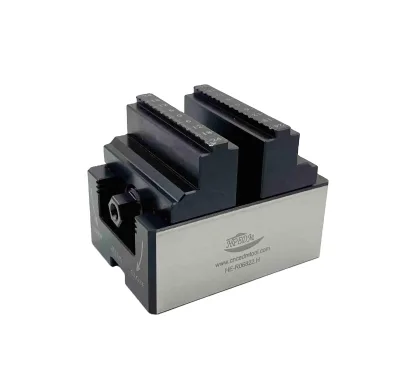


Precision Clamping 120mm 4-Axis 5-Axis Self-Centering Vise with R Centering Plate
$50.00 - $600.00
MOQ: 1 Pieces


Comprehensive Sourcing Guide
Strategic Sourcing Guide for Self-Centering Air Vise Systems
Understanding the Technical Architecture and Material Composition
When evaluating self-centering air vise systems for industrial procurement, the primary focus must remain on the fundamental construction materials and mechanical design that ensure operational reliability. The core component of these vises is the jaw assembly, which is frequently manufactured from High Speed Steel (HSS) to withstand the high friction and thermal loads generated during machining operations. In specific configurations, particularly those designed for heavy-duty clamping or specific machine tool integrations, Cast Iron is utilized to provide the necessary mass and vibration damping characteristics. Furthermore, Stainless Steel variants are available for applications requiring resistance to corrosion or where hygiene standards are critical, such as in food processing or pharmaceutical manufacturing environments.
The mechanical advantage of a self-centering mechanism lies in its ability to move both jaws simultaneously toward a central point, ensuring the workpiece is clamped symmetrically without manual adjustment. This feature is often highlighted as a key advantage in product specifications, allowing for rapid setup times and consistent positioning accuracy. The clamping range is a critical specification that buyers must verify against their specific inventory of workpieces. Observed data indicates clamping capabilities ranging from 5mm to 100mm, though this range can vary significantly based on the specific model and manufacturer. The jaw width, another vital dimension, has been observed at 100mm in certain high-capacity units, providing a broad surface area for securing larger components.
The drive mode for these systems is predominantly manual in the context of the observed product listings, yet the integration of pneumatic (air) actuation is implied by the product category. This suggests a hybrid approach where the mechanical self-centering logic is maintained, but the actuation force is supplied by compressed air, reducing operator fatigue and increasing cycle speed. The system often incorporates core components such as bearings, gearboxes, gears, and pressure vessels, which are essential for the smooth transmission of force and the durability of the clamping action. The absence of an anvil in certain models indicates that these units are designed specifically for clamping rather than supporting heavy hammering or forging operations, distinguishing them from general-purpose bench vises.
Compliance, Standards, and Certification Verification
Navigating the compliance landscape for industrial vises requires a rigorous verification of product standards and certifications. Buyers should not assume that all listed products meet international safety or quality benchmarks without explicit documentation. In the observed market data, specific product standards such as DJ6080H, DJ80120, and DJ80120CRM are cited as reference points for manufacturing specifications. These alphanumeric codes likely represent internal or regional standards that define the dimensional tolerances, material grades, and assembly requirements for the specific model series. It is imperative for procurement teams to request the full technical datasheet that correlates these standard codes with international equivalents, such as ISO or ANSI standards, to ensure compatibility with existing machinery and safety protocols.
Regarding certifications, while some background information may suggest the availability of CE marking, this should be treated as a variable attribute rather than a guaranteed inclusion. The presence of a CE mark indicates conformity with health, safety, and environmental protection standards for products sold within the European Economic Area. However, buyers must verify this status on a per-unit or per-batch basis, as certification is often tied to specific production runs or regional distribution agreements. Relying on a general "Low-confidence" note regarding CE certification without concrete proof from the supplier can lead to compliance risks, especially for exports to regulated markets.
Furthermore, the origin of the product plays a significant role in compliance verification. Many of the observed units originate from Jiangsu, China, a major manufacturing hub. While this region is known for producing high-quality industrial machinery, it also necessitates a thorough supply chain audit. Buyers should confirm that the supplier adheres to the declared standards (e.g., L- DOG 6080H) and that the manufacturing process includes the necessary quality control checkpoints to maintain these standards. The "New Product 2024" and "New Product 2020" marketing tags indicate that the technology is evolving, and older models may not incorporate the latest safety features or material improvements. Therefore, verifying the current version of the standard against the specific model number is essential before finalizing a purchase order.
Cost Drivers and Pricing Dynamics in the Market
The pricing structure for self-centering air vise systems is influenced by a complex interplay of material costs, manufacturing complexity, and value-added features. The observed price range in the market spans from approximately $20 to $1,883 USD, a variance that reflects the diversity in product specifications and intended applications. The lower end of this spectrum typically corresponds to basic manual or semi-automatic units with standard steel construction and minimal feature sets. In contrast, the higher price points are associated with advanced models featuring stainless steel construction, integrated pneumatic systems, high-precision bearings, and specialized gearboxes designed for 4-axis or 5-axis machine tools.
Material composition is a primary cost driver. Units constructed from High Speed Steel or Stainless Steel inherently carry higher material costs compared to those made from Cast Iron. Additionally, the inclusion of core components such as pressure vessels and complex gearbox assemblies adds to the manufacturing expense. The customization options available, such as adjustable jaw widths or specific mounting configurations, also contribute to the final price. Buyers should note that while the Minimum Order Quantity (MOQ) is often as low as 1 piece or 1 set, making these systems accessible for small workshops, bulk purchasing may offer economies of scale that are not immediately visible in the per-unit price.
Other factors influencing cost include the packaging and logistics. Products are typically packed in cartons or wooden crates, with the choice of packaging often dictated by the weight and fragility of the unit. Heavier models, such as those weighing 20kg, may require reinforced wooden crates to prevent damage during transit, which adds to the overall cost. The warranty period, observed as 1 year in several listings, also reflects the manufacturer's confidence in the product's durability and can influence the pricing strategy. A longer warranty period might be negotiated for larger orders or specific high-value models, serving as a risk mitigation tool for the buyer.
Typical Applications and Machine Tool Integration
Self-centering air vise systems are versatile tools designed to integrate seamlessly into a wide array of industrial machining environments. The primary applications identified include Boring Machines, Drilling Machines, Milling Machines, Slotting Machines, Grinding Machines, and Punching Machines. This broad applicability underscores the importance of selecting a vise that matches the specific kinematic requirements of the host machine. For instance, models suitable for 4-axis and 5-axis machine tools require a high degree of precision and rigidity to maintain clamping force during complex multi-directional movements. The clamping range of 5-100mm makes these vises particularly suitable for holding a diverse range of workpiece sizes, from small precision components to larger structural parts.
The operational environment is another critical consideration. These vises are designed for use in Manufacturing Plants and Machinery Repair Shops, indicating their suitability for both high-volume production lines and maintenance facilities. The "Exchange Tool Quickly" feature is particularly valuable in environments where changeover times are critical to overall efficiency. This attribute allows operators to swap out workpieces or even the vise itself with minimal downtime, ensuring continuous production flow. The "Convenient Operation" advantage further enhances usability, reducing the physical strain on operators and minimizing the risk of human error during the clamping process.
Weight is a significant factor in application suitability. Units weighing 4.2kg are generally lighter and more portable, making them ideal for smaller workstations or mobile repair units. Conversely, heavier models weighing up to 20kg offer greater stability and are better suited for heavy-duty machining operations where vibration resistance is paramount. The specific dimensions, such as the 8012059mm size profile observed in certain models, must be matched against the available space on the machine table to ensure proper fitment and clearance. Buyers should also consider the drive mode; while manual operation is common, the integration of pneumatic systems allows for automated clamping sequences, which is essential for modern, high-speed manufacturing cells.
Supplier Evaluation and Quality Assurance Protocols
Evaluating suppliers for self-centering air vise systems requires a multi-faceted approach that goes beyond simple price comparison. The presence of "Video Outgoing-Inspection" services is a significant positive indicator, suggesting that the supplier is willing to provide visual proof of the product's condition and functionality before shipment. This transparency helps mitigate the risk of receiving defective or non-conforming goods. Buyers should actively request these video inspections, particularly for high-value orders, to verify the integrity of the core components, such as the bearings and gears, and to ensure that the self-centering mechanism operates smoothly.
The "New Product 2024" and "New Product 2020" marketing tags suggest that suppliers are continuously updating their product lines. However, buyers must exercise caution when relying on these labels as indicators of quality. Instead, they should focus on the technical specifications and the track record of the supplier in delivering products that meet the declared standards (e.g., DJ80120CRM). The durability of the product, described as "High" in some listings, should be substantiated by warranty terms and customer testimonials. A 1-year warranty is a standard offering, but buyers should inquire about the terms of service, including what constitutes a valid claim and the process for replacement or repair.
Furthermore, the origin of the product, specifically Jiangsu, China, should be verified against the supplier's business license and export credentials. While the region is a manufacturing hub, the quality of individual suppliers can vary widely. Buyers should conduct due diligence on the supplier's production capacity, quality control processes, and after-sales support capabilities. The availability of customization is a key differentiator, allowing buyers to tailor the vise to their specific needs. However, this requires clear communication of requirements and a robust agreement on the customization process, including timelines and additional costs.
Long-Term Procurement and Lifecycle Management
Sourcing self-centering air vise systems is not merely a transactional event but a strategic decision that impacts long-term operational efficiency and maintenance costs. The "High" durability attribute observed in product listings suggests that these vises are built to withstand rigorous use, but their lifespan is contingent on proper maintenance and operating conditions. Buyers should develop a maintenance schedule that includes regular inspection of the self-centering mechanism, lubrication of the bearings and gears, and checks for wear on the jaws. The "Exchange Tool Quickly" feature is a design element that facilitates maintenance, allowing for the rapid replacement of worn components without dismantling the entire system.
The modular nature of these vises, with core components like gearboxes and pressure vessels, means that individual parts can often be replaced rather than the entire unit. This modularity extends the lifecycle of the equipment and reduces the total cost of ownership. However, buyers must ensure that the supplier provides a steady supply of spare parts and technical support. The "Customizable" nature of the product also implies that future modifications or upgrades may be necessary as production requirements evolve. Establishing a long-term relationship with a supplier who can support these changes is crucial for maintaining operational flexibility.
Finally, the environmental and safety implications of the vise's operation should be considered. The use of pneumatic systems requires a reliable supply of compressed air, and buyers should assess the energy efficiency of their air supply infrastructure. Additionally, the "Self-Centered" advantage reduces the risk of workpiece slippage, which is a critical safety factor in machining operations. By selecting a high-quality vise with robust safety features and reliable supplier support, buyers can ensure a safe and efficient manufacturing environment that supports long-term growth and productivity.
FAQs
What materials are used for self-centering air vise jaws?
Jaws are commonly made from High Speed Steel, Cast Iron, or Stainless Steel depending on the model. High Speed Steel handles high friction, while Cast Iron offers vibration damping, and Stainless Steel resists corrosion for specific environments.
Can these vises be customized for specific machine tools?
Yes, customization is available for various applications including 4-axis and 5-axis machine tools. Buyers can request specific jaw widths or mounting configurations to match their Boring, Drilling, or Milling Machine requirements.
What is the minimum order quantity for purchasing these vises?
The minimum order quantity is typically 1 piece or 1 set, making them accessible for small workshops. This low threshold allows buyers to test the product without committing to large bulk orders immediately.
How is the clamping range defined for these systems?
The clamping range is observed to be between 5mm and 100mm for specific models. This range accommodates diverse workpiece sizes, ensuring secure holding for both small precision components and larger structural parts.
Which standards apply to the self-centering air vise models?
Specific product standards such as DJ6080H, DJ80120, and DJ80120CRM define the manufacturing specifications. Buyers should verify these codes against international equivalents to ensure compatibility with existing machinery and safety protocols.
What core components are included in the drive mechanism?
Core components include bearings, gearboxes, gears, and pressure vessels essential for force transmission. These parts ensure smooth operation and durability during the clamping action in manufacturing plants and repair shops.
Where are these self-centering air vise systems manufactured?
The products originate from Jiangsu, China, a major manufacturing hub for industrial machinery. Buyers should verify the supplier's credentials and adherence to declared standards to ensure quality control during the manufacturing process.