Source Self-Centering Center Clamp Vise for Milling, Drilling, and Boring
Find and compare 30 Self-Centering Center Clamp Vise options from verified suppliers. These vises feature high-speed steel or cast iron construction, manual drive modes, and customizable sizes for various machine tools including milling, drilling, and boring applications; compare the available evidence and request quotations based on your requirements.
Key considerations
Products List


Steel Square Clamp Rotary Table 5 Axis CNC Machine Self Centering Vise
$1216.00 - $1356.00
MOQ: 1 Pieces

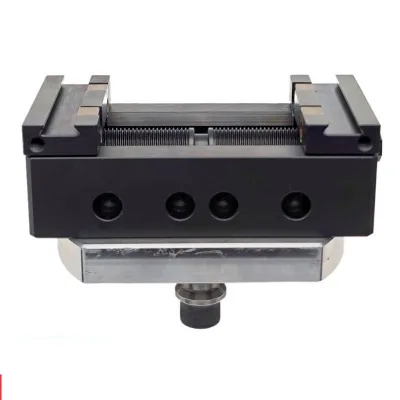

96mm Wide Clamping Range Manual Self Centering Vise for Quick Change Clamping
$460.00 - $500.00
MOQ: 1 Pieces

Centering Tool CNC Self Center Vise for Efficient Work Center Clamping Fixture
$615.00 - $680.00
MOQ: 1 Pieces

Multi - Clamping System Self Centering Vise for Complex Parts Machining
$420.00 - $450.00
MOQ: 1 Pieces

Steel Square Clamp Rotary Table 5 Axis CNC Machine Self Centering Vise
$460.00 - $500.00
MOQ: 1 Pieces

96mm Efficient Clamping Device Self Centering Vise for Quick Workpiece Setup
$420.00 - $450.00
MOQ: 1 Pieces

Hot Selling Single Station Manual Self Centering Mechanism Vise for Precise Clamping
$460.00 - $500.00
MOQ: 1 Pieces


Precision Clamping 120mm 4-Axis 5-Axis Self-Centering Vise with R Centering Plate
$50.00 - $600.00
MOQ: 1 Pieces


Comprehensive Sourcing Guide
Self-Centering Center Clamp Vise Sourcing Guide
Self centering center clamp vises hold workpieces symmetrically by moving both jaws simultaneously toward a common center, which eliminates the cumulative positioning error found in traditional single-jaw screw vises. For B2B buyers in machining, tooling, and equipment maintenance operations, this design matters most when parts must repeat identical alignment across batches, secondary operations, or multiple machines. The category spans compact milling and drilling applications through CNC 4-axis and 5-axis setups, so defining your actual machine platform before sourcing prevents over- or under-specifying the clamping solution.
This guide is written for procurement teams evaluating suppliers, principally in China's machine accessory manufacturing base, on a listing-evidence basis. It walks through what observed listings reveal, which specifications must be confirmed in writing, what documentation to request, how price and terms are typically structured, and which supplier qualification steps reduce the risk of receiving vises that drift, deform, or fail prematurely in production service.
Product Scope and Observed Listing Signals
Observed listings in this category present a clear signal cluster: high-speed steel, cast iron, and stainless steel appear as listed materials; models such as AIX5-D125, DJ6080H (also listed as L-DOG 6080H), and DJ80120CRM recur with jaw widths like 100mm and clamping ranges of 5–100mm; several units are marketed for 4-axis and 5-axis machine tools. Condition is listed as new, with "New Product 2024" and "New Product 2020" marketing types, which helps buyers distinguish current-generation designs from legacy stock. Treat these attributes as supplier-stated observations, not verified guarantees.
Commercial signals are equally informative. Customization is listed as available, MOQs in the dataset range from a single piece or set upward, prices span roughly USD 0.7 to USD 1,356 across the wider accessory category, and packing is stated as cartons or wooden crates. Applicable industries named include manufacturing plants and machinery repair shops, with applications listed for boring, drilling, milling, slotting, grinding, and punching machines. A listed "self-centered" advantage and quick tool exchange feature are the key differentiators to probe during inquiry.
Technical Specifications to Verify
Start with the geometry that determines fit: jaw width (one listing states 100mm), clamping range (one listing states 5–100mm), overall dimensions (one listing gives 80×120×59), and stated suitability for 4-axis and 5-axis machines. Confirm whether the vise's center alignment matches your machine table's T-slot or mounting pattern, and whether the "without anvil" shape noted in some listings is compatible with your fixturing style. Request dimensioned drawings rather than relying on listing photos, since small differences in body height or jaw opening can invalidate an otherwise attractive quotation.
Material and drive details come next. Listings cite high-speed steel, cast iron, stainless steel, and generic metal; ask which material applies to the jaws versus the body, because jaw hardness and body rigidity serve different functions. Confirm drive mode (one listing states manual), weight (4.2kg on one model, 20kg on another), and accessories — one listing includes a 16mm screwdriver and 12×12mm wrench, which hints at the wrench interface you should verify. Finally, confirm size customizability and any logo printing options in writing before ordering samples.
Compliance and Safety Documentation
Because clamping failures at speed can eject workpieces, documentation matters even for a mechanically simple product. Request material certificates or composition declarations for the body and jaw steel, hardness test results or hardness range commitments for jaws and moving components, and confirmation that core components — bearings, gears, and gearbox elements where applicable — meet the supplier's internal specification. One listing names bearing, gearbox, pressure vessel, and gear as core components; ask for the actual component list on your specific model rather than assuming the full set applies.
Safety-adjacent documentation should include dimensional inspection reports, assembly torque or operating instructions, and a video outgoing-inspection record, which at least one listing states is provided. Verify the stated warranty (one listing offers 1 year) covers clamping accuracy degradation, not only catastrophic breakage, and clarify what evidence is required to make a claim. Do not assume certifications exist; ask the supplier to state precisely which certificates, if any, the product holds, and treat any certificate as something your team verifies independently before volume commitment.
Cost Drivers and Commercial Terms
Price variance in this category is driven primarily by material selection, precision grade, size, and customization depth. A small cast-iron manual vise occupies a very different price band than a precision self-centering unit built for 5-axis CNC work; the observed USD 0.7–1,356 range across the broader category reflects that spread. Expect customization of size, jaw geometry, or branding to raise unit cost and affect lead time. Ask suppliers to break quotations into base unit, tooling or customization fees, and packing, so you can compare offers on identical configurations rather than headline numbers.
Commercial terms deserve equal scrutiny. Observed MOQs range from a single piece or set to higher volumes, so confirm the MOQ for your exact model, not the listing's minimum. Clarify unit pricing at sample, trial, and repeat-order volumes; packing method (carton versus wooden crate affects freight cost and damage risk); Incoterms; and payment structure. Because prices, lead times, and MOQs were not verified in this dataset, treat every commercial figure as negotiable and confirm it against your own RFQ responses.
Supplier Qualification and Quality Control
Qualify suppliers on evidence they can actually produce, not on listing polish. Useful verification steps include: confirming the stated origin (listings cite China, with one specifying Jiangsu), requesting factory photos or video walks of the machining and assembly lines, and asking how self-centering accuracy is measured and at what tolerance the unit leaves the factory. Suppliers offering customization and logo printing indicate some in-house flexibility, but ask whether customization is performed in-house or subcontracted, since subcontracted modifications are a common source of inconsistency.
For quality control, define an incoming inspection protocol before your first order: check center alignment repeatability on a reference workpiece, verify jaw parallelism, confirm smooth simultaneous jaw movement through the full clamping range, and weigh the unit against the stated 4.2kg or 20kg figures as a rough material check. Use the stated 1-year warranty period as a window for monitoring field performance on initial production lots. Require a video outgoing-inspection for sample units, and reserve third-party inspection rights for any volume order above sample quantity.
Long-Term Procurement Checks
Sustained sourcing value depends on repeatability and replaceability. Before scaling orders, confirm the supplier can consistently reproduce the same model (AIX5-D125, DJ6080H, L-DOG 6080CRM-class units) with unchanged drawings, and require written change-notification obligations for any revision to materials, dimensions, or internal components. Ask about spare parts availability — replacement jaws, screws, and wrench interfaces — because a self-centering vise with unavailable jaws becomes scrap when wear exceeds tolerance. For multi-machine deployments, consider standardizing on one model to simplify fixturing, tooling, and operator training.
Finally, build periodic requalification into the relationship. Track clamping accuracy and failure rates across lots, document any drift, and re-run incoming inspection on annual or biannual samples even when no issues are reported. Reconfirm commercial terms annually, since customization scope, packing, and pricing may shift as product generations change — note that listings in this dataset range from "New Product 2020" to "New Product 2024." Maintain your own specification sheet, drawing archive, and inspection records so that switching or dual-sourcing remains a realistic option if performance or commercial terms deteriorate.
FAQs
What materials are used for Self-Centering Center Clamp Vise jaws?
Manufacturers typically use High Speed Steel, Cast Iron, or Stainless Steel for these vises. The choice depends on the required hardness and corrosion resistance for your specific machining application. High Speed Steel offers superior durability for heavy-duty cutting, while Stainless Steel provides excellent resistance to rust in humid environments. Cast Iron is often selected for its stability and cost-effectiveness in general-purpose industrial settings.
Can I customize the size and logo for these vises?
Yes, customization is available for both dimensions and branding. You can request specific jaw widths, such as 100mm, or other custom sizes to fit your machinery. Additionally, many suppliers offer logo printing services to help with brand identification. This flexibility allows you to tailor the equipment precisely to your operational needs and corporate identity standards.
What is the typical MOQ for ordering these clamping vises?
The minimum order quantity is generally 1 piece or 1 set. This low entry point allows buyers to test the product quality before committing to larger volumes. It is particularly useful for small workshops or for initial procurement trials. You can start with a single unit to verify performance and compatibility with your existing machine tools.
Which machine tools are compatible with these self centering vises?
These vises are suitable for use with Boring, Drilling, Milling, Slotting, Grinding, and Punching machines. They are also designed for 4-axis and 5-axis machine tools. The manual drive mode ensures precise control during operation. This versatility makes them a practical choice for various manufacturing plants and machinery repair shops requiring reliable workholding solutions.
How are these vises packaged for safe shipping?
Products are packed in cartons or wooden crates to ensure safe transit. This robust packaging protects the vise from damage during international shipping. Wooden crates are often used for heavier models, while cartons suffice for lighter units. This method helps maintain the condition of the equipment, including features like the self-centered mechanism, until it reaches your facility.
What warranty is provided for these industrial clamping vises?
A 1-year warranty is typically provided for these new products. This coverage ensures that any manufacturing defects are addressed within the first year of purchase. The warranty applies to core components like bearings and gears. It provides peace of mind for buyers, ensuring that the investment in high-speed steel or stainless steel vises is protected against early failures.