Source Self Drilling Roofing Screw with EPDM Bounded Washer for Steel, Metal, and Wood
Compare 30 listings for Self Drilling Roofing Screw with EPDM Bounded Washer from verified Chinese manufacturers. Evaluate carbon steel and stainless steel options with hexagon head styles and various surface treatments like bright zinc galvanized.
Key considerations
Products List


EPDM Bonded Sealing Washer/Rubber Bonded Seal Washer Use for Self Drilling Screw
$0.01 - $2.00
MOQ: 10000 Pieces


Adhesive Washer for Self Drilling Screws EPDM Rubber Roof Screws Adhesive Washer
$0.01 - $0.03
MOQ: 1000 Pieces


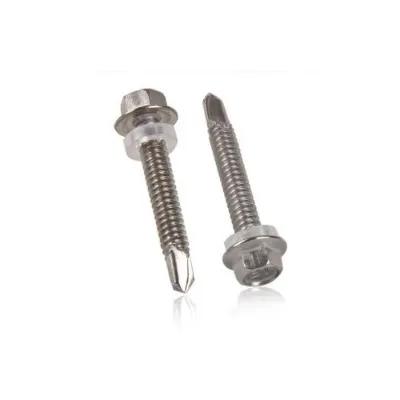


5.5X32mm Fixing Cladding to Metal Self Drilling Screws with EPDM Washer
$0.01 - $0.02
MOQ: 10000 Pieces


Comprehensive Sourcing Guide
Strategic Sourcing Guide for Self-Drilling Roofing Screws with EPDM Bounded Washers
Procuring fasteners for roofing applications requires a nuanced understanding of material science, mechanical specifications, and supply chain reliability. The core keyword "self-drilling roofing screw with EPDM bounded washer" points to a critical component in metal construction, where the fastener must penetrate steel decking and provide a watertight seal simultaneously. While the market offers a vast array of options, buyers must navigate a complex landscape of standards, material grades, and surface treatments to ensure structural integrity and longevity. This guide synthesizes available product attributes and industry knowledge to provide a disciplined framework for evaluating potential suppliers and selecting the correct fastener specifications.
Technical Specifications and Material Composition
The foundation of a reliable self-drilling screw lies in its material composition and geometric design. Based on observed market data, the primary material for these fasteners is often Carbon Steel, specifically grades such as C1022A. This grade offers a balance of tensile strength and ductility suitable for general roofing applications. However, the supply chain also frequently lists Stainless Steel and Brass as alternative materials, which are essential for environments requiring high corrosion resistance, such as coastal regions or chemical plants. The selection between Carbon Steel and Stainless Steel is a primary cost and performance driver.
The head style of the screw is a critical functional attribute. The most common configuration observed is the Hexagon Head, which allows for high torque application using standard hex drivers. Some listings also indicate a Hex Washer Head design, which integrates the sealing washer directly into the head structure, streamlining the installation process. The groove type varies, with Cross (Phillips) and Hexagon grooves being prevalent. The choice of groove affects the driver compatibility and the torque transfer efficiency during installation.
Drill point technology is another vital specification. The screws are engineered with specific drill point types, such as 3#/4# Drill Points, designed to penetrate metal sheets without the need for pre-drilling. The shank type is consistently identified as a Screw, featuring a threaded section that grips the substrate securely. The standard dimensions observed in the market range significantly, from small models like 4.2x16mm up to larger sizes such as 6.3x125mm. Buyers must verify that the selected model matches the thickness of the metal being fastened and the underlying structural member.
Compliance, Standards, and Certification Verification
In the construction industry, compliance with international and national standards is non-negotiable. The observed product data indicates a wide adherence to various global standards, including GB (Guobiao), DIN (Deutsches Institut für Normung), ANSI (American National Standards Institute), BSW (British Standard Whitworth), JIS (Japanese Industrial Standards), and GOST (Soviet Standard). A single supplier may claim compliance with multiple standards, such as DIN7504 or general DIN/GB/ANSI/BSW/JIS/GOST specifications.
Buyers must rigorously verify which specific standard applies to their project location. For instance, projects in China may prioritize GB standards, while those in North America or Europe will likely require DIN or ANSI compliance. The observed data also lists specific product standards like 4.2X16mm-6.3X150mm and 6.3X25mm, which serve as dimensional references but do not replace the need for material and mechanical property standards.
Certification plays a pivotal role in risk mitigation. The market data highlights several certifications, including CE, ISO, GS, and RoHS. The CE mark indicates conformity with health, safety, and environmental protection standards for products sold within the European Economic Area. ISO certification suggests that the manufacturer adheres to international quality management systems. RoHS compliance is particularly relevant for electronic components but is also a marker for environmental safety in material sourcing, ensuring the absence of restricted hazardous substances. However, buyers should treat these certifications as observations of the supplier's capabilities rather than automatic guarantees for every SKU, as certification status can vary by production batch or specific product line.
Cost Drivers and Pricing Dynamics
The pricing of self-drilling screws is influenced by a complex interplay of factors, including raw material costs, surface treatment processes, and order volume. The observed price range in the market is extensive, spanning from $0.01 to $1530. This wide variance reflects the difference between a single unit cost and bulk pallet pricing, as well as the disparity between basic carbon steel screws and premium stainless steel variants.
Surface treatment is a significant cost driver. The data lists "Bright Zinc Galvanized" and "Zinc Plated" as common finishes. These treatments are essential for preventing rust and extending the lifespan of the fastener, especially in outdoor roofing applications. The thickness and quality of the zinc coating directly impact the price. Furthermore, the inclusion of an EPDM bounded washer adds to the cost, as EPDM (Ethylene Propylene Diene Monomer) rubber is a high-performance material known for its weather resistance and elasticity.
Order volume, represented by the Minimum Order Quantity (MOQ), also heavily influences the unit price. The observed MOQ range is vast, from 1 unit to 3,000,000 units. Suppliers offering lower MOQs may charge a premium per unit due to the overhead of handling smaller batches. Conversely, buyers purchasing in bulk, such as the observed "Bulk N.W.20kgs/CTN" or "Pallet" configurations, can negotiate significantly lower prices. The capacity of the supplier, noted as 300 tons or 500 tons per month, indicates their ability to handle large-scale orders without compromising lead times or quality.
Typical Applications and Performance Requirements
Self-drilling roofing screws with EPDM washers are primarily designed for metal-to-metal or metal-to-wood connections in roofing and cladding systems. The EPDM washer is crucial for creating a watertight seal around the screw shank, preventing water infiltration that could lead to corrosion of the underlying structure or interior damage. The self-drilling capability allows for rapid installation, reducing labor costs and minimizing the risk of misalignment associated with pre-drilling.
The specific application dictates the required screw length and diameter. For thin gauge metal roofing, smaller diameters like 4.2mm or 4.8mm with lengths around 13mm to 25mm are typical. For thicker structural steel or applications requiring penetration into wood purlins, larger diameters up to 6.3mm and lengths extending to 125mm or more are necessary. The "Standard" model designation often refers to generic sizes like M3-M100, but buyers must ensure the specific model number matches the project's structural requirements.
The observed packing options, such as "500g/Bag," "1kg/Bag," "5kg/Box," and "Carton, Pallet," suggest versatility in handling different project scales. Small box packing is suitable for maintenance or small residential repairs, while bulk packing and pallets are essential for large commercial construction projects. The origin of the products, primarily from China (including locations like Zhajiang and Zhejiang), indicates a robust manufacturing base capable of meeting global demand.
Supplier Evaluation and Capacity Assessment
When evaluating potential suppliers, buyers should look beyond the basic product listing and assess the manufacturer's operational capacity and flexibility. The data indicates that suppliers have varying production capacities, ranging from 300 tons to 500 tons per month. This capacity metric is a strong indicator of the supplier's ability to fulfill large orders and maintain consistent supply during peak construction seasons.
Customization is another key factor. The observed data explicitly states that "Customization" and "Customized" options are available. This implies that suppliers can modify screw lengths, head styles, or material grades to meet specific project needs. For example, a buyer might require a non-standard drill point or a specific zinc coating thickness. The ability to customize suggests a more agile manufacturing process and a willingness to collaborate with the buyer.
The geographic origin of the supplier, specifically China, offers cost advantages but requires careful logistics planning. Buyers should verify the supplier's ability to handle international shipping and ensure that the "prod_origin" aligns with any trade restrictions or tariff considerations in the destination country. Additionally, the variety of standards supported (DIN, GB, ANSI, etc.) demonstrates the supplier's technical proficiency and adaptability to different market requirements.
Quality Control and Long-Term Procurement Considerations
Ensuring long-term reliability requires a robust quality control (QC) strategy. Buyers should demand evidence of material testing, particularly for the carbon steel grade (C1022A) and the integrity of the zinc plating. The "Bright Zinc Galvanized" finish must be uniform and free from defects that could compromise corrosion resistance. The EPDM washer must be bonded securely to the screw head to prevent separation during installation or exposure to extreme weather conditions.
Long-term procurement considerations involve establishing a relationship with a supplier who can provide consistent quality over time. The availability of certifications like ISO and CE provides a baseline for quality assurance, but ongoing audits and sample testing are recommended. Buyers should also consider the packaging integrity; options like "Box and Cartons and Pallets" suggest that the supplier understands the need for protecting fasteners during transit to prevent damage or contamination.
Finally, buyers must remain vigilant about the "Low-confidence background" regarding certifications like RoHS. While listed, the reliability of such claims should be verified through third-party testing reports. In the context of roofing screws, the primary focus should remain on mechanical strength, corrosion resistance, and seal integrity. By adhering to the observed standards and verifying the specific attributes of each batch, buyers can mitigate risks and ensure that the self-drilling screws meet the demanding requirements of modern roofing systems.
| Attribute Category | Observed Data Points | Buyer Verification Action |
|---|---|---|
| Material | Carbon Steel (C1022A), Stainless Steel, Brass | Request Mill Test Certificates (MTC) for specific grade. |
| Standard | GB, DIN7504, ANSI, JIS, GOST | Confirm project-specific standard compliance (e.g., DIN for EU). |
| Surface Treatment | Bright Zinc Galvanized, Zinc Plated | Verify coating thickness and salt spray test results. |
| Dimensions | 4.2x16mm to 6.3x125mm, M3-M100 | Match screw length/diameter to substrate thickness. |
| Certification | CE, ISO, GS, RoHS | Request valid certificates and check expiration dates. |
| Packaging | Bags, Boxes, Pallets, Bulk | Ensure packaging protects against moisture and damage. |
| Capacity | 300-500 tons/Month | Assess ability to meet project timeline and volume. |
| Origin | China (Zhejiang, Zhajiang) | Verify logistics capabilities and trade compliance. |
By systematically analyzing these factors, procurement professionals can make informed decisions that balance cost, quality, and reliability, ensuring the successful execution of roofing projects with self-drilling screws equipped with EPDM bounded washers.
FAQs
What materials are used for self drilling roofing screws?
The primary material is Carbon Steel, specifically grade C1022A, though Stainless Steel and Brass are also available. These materials provide the necessary strength and corrosion resistance required for roofing applications.
Which standards do these screws typically comply with?
Products commonly comply with multiple international standards including GB, DIN7504, ANSI, JIS, and GOST. Buyers must verify the specific standard required for their project location to ensure structural integrity.
Can I request customization for screw specifications?
Yes, customization is available for various attributes like head style, drill point, and dimensions. Suppliers can adjust specifications to meet unique project requirements beyond standard models.
What surface treatments are applied to these fasteners?
Common surface treatments include Bright Zinc Galvanized and Zinc Plated finishes to prevent rust. These coatings are essential for ensuring longevity in outdoor roofing environments exposed to weather.
How is the product packed for shipment?
Packing options include 500g bags, 1kg bags, 5kg boxes, or bulk cartons weighing 20kg. Larger orders may be shipped on pallets to ensure safe transport and handling.
What is the typical production capacity of suppliers?
Suppliers demonstrate monthly capacities ranging from 300 tons to 500 tons. This capacity indicates the ability to handle large-scale orders while maintaining consistent supply for construction projects.