Source Self-Elevating Marine Engineering Platform for Offshore Drilling
Compare 30 self-elevating marine engineering platform listings with varying capacities and dimensions. Buyers can evaluate specifications like lifting stroke, jacking speed, and working wave height to find suitable equipment for offshore operations.
Key considerations
Products List

Self-Propelled Jack-up Barge Platform Modular Self Elevating Platform for Sale
$222500.00 - $277850.00
MOQ: 1 Pieces


High-Strength Marine Self-Lifting Platform for Offshore Engineering & Maintenance Jack up Barge
$120000.00 - $1250000.00
MOQ: 1 Sets


CE Certified 9.75m Platform Height Self Propelled Mobile Elevating Platform
$6900.00 - $8900.00
MOQ: 1 Pieces


Low Noise Self Propelled Lift Platform Elevated Lift Platform Height 4.8m
$2800.00 - $4800.00
MOQ: 1 Pieces

Customized High Quality Jack-up Barge Platform for Self Elevating Platform in Sea
$170000.00 - $660000.00
MOQ: 1 Sets


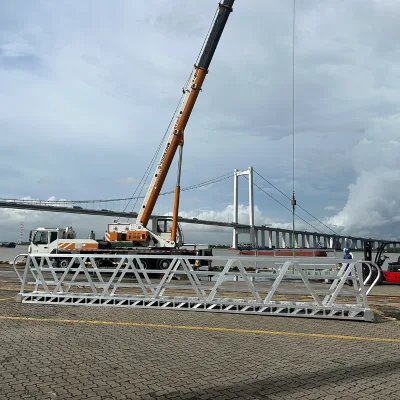


Marine-Grade HDPE Floating Platform for Building Docks, Piers, and Walkways.
$400.00 - $450.00
MOQ: 5 Square Meters
Comprehensive Sourcing Guide
Strategic Sourcing Guide for Self-Elevating Marine Engineering Platforms
The procurement of self-elevating marine engineering platforms represents a critical investment for offshore construction, dredging, and marine infrastructure projects. These specialized vessels, often categorized as bucket dredgers or jack-up barges, rely on hydraulic or mechanical systems to elevate their decks above the water surface, providing a stable working platform regardless of wave conditions. Buyers must navigate a complex landscape of technical specifications, operational environments, and compliance requirements to ensure the selected asset meets project demands. This guide outlines the essential factors for sourcing these platforms, drawing on observed industry data and verified product attributes to inform decision-making.
Technical Specifications and Operational Capabilities
Understanding the technical architecture of a self-elevating platform is the first step in the sourcing process. The core functionality relies on the interaction between the hull, the jacking system, and the positioning piles. In the observed market, platforms vary significantly in dimensions and load-bearing capacities. For instance, smaller units may feature a deck dimension of 10 by 6 meters with a mold depth of 1.5 meters, suitable for lighter dredging tasks. In contrast, larger engineering platforms can extend to lengths of 36.6 meters and widths of 27.4 meters, offering a free deck area of up to 910 square meters.
The jacking system is a pivotal component. Buyers should verify whether the lifting method is hydraulic or utilizes mechanical locking mechanisms. The speed of operation is equally critical; observed data indicates jacking speeds ranging from 18 meters per hour to 22 meters per hour. The lifting stroke, which determines how far the deck can be raised, typically ranges between 1.20 meters and 1.22 meters per cycle. The positioning piles, which anchor the vessel to the seabed, vary in diameter from 0.48 meters to 1.90 meters. The height of these piles is a crucial determinant of the maximum water depth the platform can operate in, with observed heights ranging from 35.0 meters to 58.0 meters, the latter of which may be extendable.
Load capacity is another primary specification. The deck strength, measured in tons per square meter, dictates the weight of machinery that can be safely placed on the working surface. Observed values range from 3 tons per square meter to 15 tons per square meter. Furthermore, the total lifting capacity per spud can vary dramatically, from 40 tons to 600 tons per spud. This variance directly influences the stability of the platform in varying sea states. Buyers must match these specifications to the specific geotechnical conditions of their project site, ensuring the platform can support the intended operational weight without compromising stability.
Environmental Tolerance and Working Conditions
A self-elevating platform is only as effective as its ability to withstand the environmental conditions of the deployment site. The working wave height and wind speed are critical parameters that define the operational envelope of the vessel. Data from available listings indicates that smaller units may be rated for working wave heights of 1.0 meter and wind speeds of 25 kilometers per hour. Larger, more robust platforms are designed to handle significantly harsher conditions, with ratings for wave heights up to 3 meters and wind speeds reaching 50 kilometers per hour.
The working seawater velocity is another often-overlooked but vital factor. A platform must maintain its position against the current while jacking down or operating. Observed specifications list a working seawater velocity of 1 meter per second, which serves as a baseline for current resistance. Buyers must ensure that the platform's anchoring system and pile friction capabilities are sufficient to counteract local currents. Additionally, the power type of the vessel, often diesel in heavy-duty applications, must be compatible with the fuel availability and environmental regulations of the project location. The condition of the equipment, whether new or refurbished, also impacts its ability to withstand these stresses, with new units generally offering higher reliability for demanding environments.
Compliance, Certification, and Standards Verification
When sourcing marine engineering platforms, verifying compliance with international and local standards is non-negotiable. The supply chain for these heavy assets often involves manufacturers in specific regions, such as Qingzhou in Shandong Province, China. Buyers must confirm that the product adheres to recognized quality management standards. Observed listings frequently cite ISO9001 certification, which indicates a commitment to quality control processes during manufacturing. However, buyers should not assume that all listed products automatically possess this certification; it must be explicitly verified through documentation.
Beyond general quality standards, specific marine safety and construction standards apply. The structural integrity of the positioning piles and the deck must meet classification society requirements. While specific classification society names should not be assumed without evidence, buyers should request proof of compliance with relevant maritime codes. The product standard listed in some specifications, such as dimensions like 11.80m x 11.80m x 1.5m, often serves as a reference for the design baseline. It is essential to distinguish between a design standard and a certification standard. Buyers must request third-party inspection reports that validate the platform's adherence to safety regulations regarding lifting capacity, structural welding, and hydraulic system integrity.
Cost Drivers and Procurement Economics
The cost of a self-elevating marine engineering platform is influenced by a multitude of factors, including size, customization, and the complexity of the jacking system. The observed price range in the market is extremely broad, spanning from 1 USD to 2,000,000 USD. This wide variance reflects the difference between small, specialized units and massive, fully equipped dredging barges. The operating weight, which can reach 48 tons for certain models, is a significant driver of cost due to the materials required for the hull and the heavy machinery needed for the jacking mechanism.
Customization is a major cost variable. Many suppliers offer customization options, allowing buyers to tailor the deck dimensions, pile height, or power systems to specific project needs. A customized unit will generally command a higher price than a standard model. The packing method also impacts logistics costs; units shipped as "naked" require less packaging but may need on-site assembly, while "modular assembly" units might incur higher shipping costs but reduce on-site labor time. Buyers should also consider the Minimum Order Quantity (MOQ), which ranges from 1 to 1000 units, though for heavy machinery, this often refers to the number of units in a fleet order rather than individual piece purchases.
Supplier Evaluation and Origin Considerations
Evaluating suppliers requires a focus on their manufacturing location and track record. The observed data points to specific origins, such as China and Qingzhou, Shandong Province, which is a known hub for dredging equipment manufacturing. When assessing a supplier, buyers should verify the origin of the product to understand the regulatory environment and logistical implications. The location of the factory can influence lead times and shipping costs.
Suppliers should be evaluated on their ability to provide detailed technical documentation and after-sales support. The availability of spare parts, particularly for the hydraulic systems and positioning piles, is crucial for minimizing downtime. Buyers should also inquire about the customization capabilities of the supplier. The ability to modify the deck strength or adjust the jacking speed to meet unique project requirements is a sign of a responsive and capable manufacturer. It is important to treat product attributes as observations rather than universal claims; a supplier may offer a specific model with a 12190mm max cutting height, but this does not mean every unit they sell has this specification. Due diligence involves confirming the exact configuration of the unit being purchased.
Quality Control and Long-Term Procurement Strategy
Quality control in the manufacturing of self-elevating platforms must be rigorous. The structural components, such as the positioning piles and the deck, are subjected to immense stress. Buyers should insist on witnessing or reviewing non-destructive testing (NDT) reports for critical welds and hydraulic fittings. The condition of the equipment, whether new or used, must be verified through physical inspection or third-party survey reports. For new units, the "new" status should be confirmed by the manufacturer's warranty and production date.
Long-term procurement considerations extend beyond the initial purchase price. The maintenance of the jacking system and the replacement of worn positioning piles are ongoing costs. Buyers should evaluate the availability of maintenance services and the expected lifespan of the platform. The modular assembly of some units suggests that components can be replaced or upgraded, extending the operational life of the asset. Additionally, the working conditions, such as the maximum wave height and wind speed, will dictate the frequency of maintenance. A platform rated for 3-meter waves will likely require more robust maintenance protocols than one rated for 1 meter.
Comparative Analysis of Platform Configurations
To assist in decision-making, buyers can compare different platform configurations based on key performance indicators. The following table summarizes the observed variations in specifications for different models, highlighting the trade-offs between size, capacity, and environmental tolerance.
| Specification | Small/Standard Unit | Large/Heavy Unit |
|---|---|---|
| Deck Dimensions | 10 x 6 M | 36.6m Length x 27.4m Width |
| Mold Depth | 1.5m | 2.8m |
| Free Deck Area | 80 | 910 |
| Max Load | 30t | 350 T |
| Deck Strength | 3t/M² | 15t/M² |
| Positioning Pile Height | 35.0 M | 58 M (Extendable) |
| Pile Diameter | 0.48m | 1.90m |
| Lifting Capacity (Per Spud) | 40 T | 600 T |
| Working Wave Height | 1.0 M | 3 M |
| Working Wind Speed | 25km/H | 50 Km/H |
| Jacking Speed | 22m/H | 18m/H |
| Lifting Stroke | 1.20m | 1.22m |
| Product Model Reference | SWSC180, HD-PT12 | HD-PT30 |
This comparison illustrates that larger platforms offer significantly higher load capacities and environmental tolerance but may have slightly slower jacking speeds. The choice depends on the specific project requirements regarding load, depth, and sea conditions.
Conclusion
Sourcing a self-elevating marine engineering platform requires a meticulous approach that balances technical specifications, environmental constraints, and supplier reliability. Buyers must move beyond generic descriptions and verify specific attributes such as deck strength, jacking speed, and pile dimensions. By focusing on verified data and adhering to strict quality control standards, procurement teams can secure assets that ensure safety, efficiency, and long-term value in marine engineering projects. The diversity of available configurations, from compact units to massive dredging barges, offers flexibility, but it also demands a thorough understanding of the operational context to make the right selection.
FAQs
What is the maximum lifting capacity per spud for these platforms?
The maximum lifting capacity per spud ranges from 40 tons to 600 tons depending on the specific model configuration. Larger units designed for heavy dredging tasks typically feature a capacity of 600 tons per spud, while smaller units may only support 40 tons.
Can these platforms operate in high wind speeds and waves?
Yes, specific models are rated to withstand working wind speeds up to 50 kilometers per hour and wave heights of 3 meters. Smaller units generally operate in calmer conditions with ratings of 25 kilometers per hour wind and 1 meter wave height.
Which customization options are available for the deck dimensions?
Customization is available for deck dimensions, allowing buyers to select specific lengths and widths to fit project needs. Observed configurations include a 10 by 6 meter deck for smaller units and a 36.6 by 27.4 meter deck for larger heavy-duty platforms.
How does the jacking speed affect the operational efficiency?
The jacking speed typically ranges between 18 and 22 meters per hour, influencing how quickly the deck can be elevated. Faster speeds of 22 meters per hour are observed on certain models, while larger units may operate at 18 meters per hour.
What certification standards do these marine platforms meet?
Many of these platforms adhere to ISO9001 quality management standards during manufacturing. Buyers should verify specific documentation as not all listed products automatically possess this certification without explicit confirmation from the supplier.
Where are these self-elevating platforms typically manufactured?
These platforms are primarily manufactured in China, with specific origins noted in Qingzhou, Shandong Province. This region is a known hub for dredging equipment manufacturing, influencing logistics and lead times for international buyers.