Source Self-Inking Stamp for School, Office, and Home Gifts
Explore 30 verified listings for the self-inking stamp, comparing options in plastic and rubber materials with customizable logos and sizes. Buyers can evaluate specifications like dimensions, weight, and minimum order quantities to find suitable units for school, office, or event applications.
Key considerations
Products List


Custom Text 26*26mm Large Return Address Stamp Self-Inking Rubber Stamp
$0.61 - $0.65
MOQ: 3000 pieces


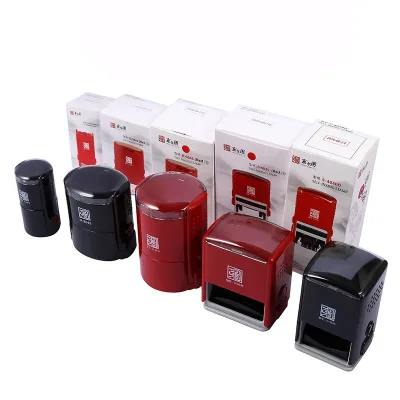
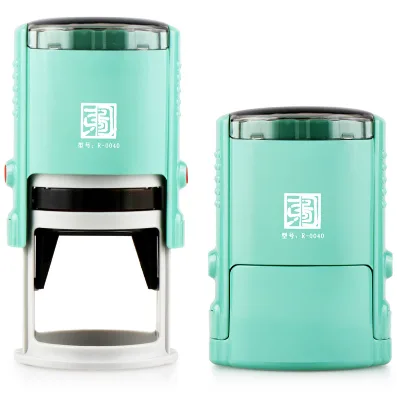
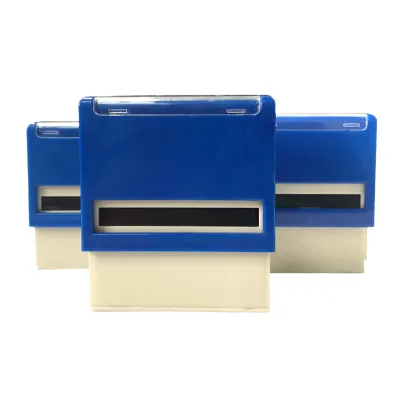


14*38 Manufacturer Stamps Custom Automatic Office Self Inking Rubber Stamp
$0.48 - $0.59
MOQ: 1080 Pieces
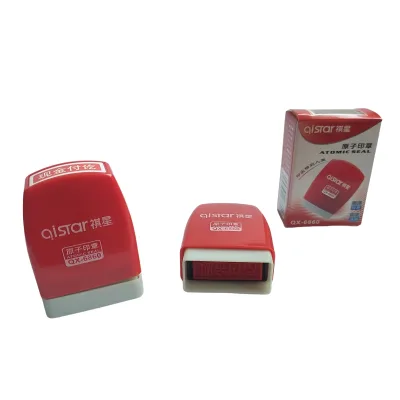

Comprehensive Sourcing Guide
Strategic Sourcing Guide for Self-Inking Stamps
Understanding Product Variants and Technical Specifications
The self-inking stamp market presents a diverse array of configurations, requiring buyers to distinguish between specific functional designs before initiating procurement. Based on observed product attributes, the core category encompasses both standard stamps and self-inking mechanisms, often categorized under specific model identifiers such as "CSI," "5285," or "Stamp 01." A critical technical distinction lies in the actuation mechanism; while some listings explicitly denote "Self-Inking Stamp" capabilities, others are categorized simply as "Stamp" or "Date Stamp," implying different operational requirements.
Material composition is a primary differentiator in this sector. The supply chain demonstrates a mix of materials, including pure plastic, pure rubber, and composite constructions labeled as "Plastic+Rubber." The rubber component typically serves as the die or stamping surface, while the plastic forms the housing and internal ink reservoir. Some entries further specify the inclusion of ink and pigment within the material definition, indicating a pre-inked system. Buyers must verify the specific material breakdown for their intended application, as the durability of the rubber die and the chemical compatibility of the ink with the substrate are paramount.
Physical dimensions vary significantly across the available inventory, directly influencing the stamp's footprint and the size of the impression. Observed specifications include rectangular dimensions such as 3873mm, 3069mm, and 452777mm, as well as larger formats like 10570mm and 6540*100mm. Weight is another critical specification, ranging from lightweight units at 17.3g to heavier, more robust models weighing up to 72g. The weight differential often correlates with the size of the ink pad and the density of the housing material. Procurement teams should align these physical constraints with ergonomic requirements, particularly for high-volume stamping tasks where hand fatigue is a concern.
Compliance, Certification, and Safety Standards
In the realm of B2B procurement, verifying compliance and safety certifications is essential to mitigate liability and ensure product safety. Among the observed product attributes, "SGS" is explicitly listed as a certification standard for certain stamp models. SGS is a recognized global inspection, verification, testing, and certification company, and its presence suggests that the product has undergone third-party assessment for quality and safety. However, buyers should not assume that all listed products carry this certification unless explicitly stated in the specific product data sheet.
Beyond specific certifications, buyers must evaluate the chemical safety of the ink and materials used. Since the product composition includes "ink, pigment, and plastic," it is imperative to verify that the pigments used are non-toxic and compliant with relevant regional regulations, such as REACH in Europe or CPSIA in the United States, particularly if the stamps are intended for use in schools or by children. The application data indicates that these products are frequently used in "School, Home, Gifts, Events, and Crafts," environments where safety standards are often stricter than in general office settings.
Standardization of the product is another area requiring attention. One observed attribute lists "50 ps per box" as a standard, which likely refers to a packaging quantity or a specific industry benchmark for a batch size. While this is not a universal performance standard, it highlights the need for buyers to clarify packaging norms with suppliers. Furthermore, the origin of the products is predominantly listed as "China," with specific mentions of "Zhejiang, China." Buyers should verify if the manufacturing facilities in these regions adhere to international quality management systems, such as ISO 9001, even if not explicitly listed in the initial product summary.
Cost Drivers and Pricing Dynamics
The pricing structure for self-inking stamps is highly variable, influenced by material costs, customization levels, and order volume. The observed price range in the market spans from $0.30 to $10,000 USD. This wide disparity is not indicative of a single product line but rather reflects the spectrum from basic, low-volume office supplies to large-scale, custom-branded industrial orders. The lower end of the range likely corresponds to standard, non-customized units with minimal packaging, while the upper end may encompass bulk orders with complex custom logos, specialized inks, or integrated packaging solutions.
Order Volume is the most significant cost driver in this category. The Minimum Order Quantity (MOQ) ranges from as low as 200 pieces to as high as 5,000 pieces, with specific observed thresholds at 200, 3000, and 1000 units. Suppliers often employ a tiered pricing model where the unit cost decreases as the order quantity increases. For buyers requiring smaller quantities, such as the 200-piece MOQ observed, the per-unit cost will be significantly higher compared to those meeting the 3,000-piece threshold.
Customization is another major factor influencing cost. Attributes such as "Custom Logo Acceptable," "Custom Color," and "Customized" indicate that personalized branding adds to the production complexity and cost. The inclusion of a custom logo requires additional setup time for die creation and potentially more expensive ink formulations to ensure color fidelity. Buyers should anticipate that the base price of a standard stamp will increase based on the number of colors in the logo and the complexity of the design. Additionally, the choice of packaging, whether "Carton Box" or "Polybag," can impact the final landed cost, especially for international shipments where volume and weight are critical.
Typical Applications and Usage Scenarios
The versatility of self-inking stamps makes them suitable for a broad range of applications, as evidenced by the diverse usage categories listed. The primary sectors identified include "Office," "School," "Home," "Gifts," "Events," and "Crafts." In an office environment, these stamps are typically used for date stamping, approval marks, or department identification. The "Date Stamp" model specifically caters to administrative needs where consistent, legible dating of documents is required.
The educational sector represents a significant market segment, with "School" listed as a primary application. In this context, stamps are often used for grading, encouraging student work, or organizing classroom materials. The "Encourage" theme observed in the product attributes suggests a specific subset of stamps designed for positive reinforcement in educational settings. These stamps often feature motivational phrases or symbols and are typically made with safe, non-toxic inks to comply with school safety policies.
For the "Gifts" and "Events" sectors, the focus shifts to aesthetics and personalization. The "Pattern" and "Custom Color" attributes highlight the demand for stamps that serve as decorative elements or personalized favors. In the "Crafts" industry, the ability to stamp on various substrates, including paper, fabric, and wood, is a key requirement. The "Plastic+Rubber" construction provides the durability needed for repeated use in crafting projects. Buyers targeting these segments should prioritize suppliers who offer a wide variety of themes and colors to meet the creative needs of their customers.
Supplier Evaluation and Verification Protocols
Evaluating suppliers in the self-inking stamp market requires a rigorous approach to verify their capabilities and reliability. The first step is to confirm the authenticity of the product attributes provided. Buyers should request detailed technical data sheets that confirm the material composition, dimensions, and weight of the specific models they intend to purchase. For instance, verifying that a "Self-Inking Stamp" actually possesses the internal ink reservoir mechanism described is crucial to avoid receiving standard rubber stamps that require separate ink pads.
Supplier location and logistics capabilities are also vital. With origins listed as "China" and specifically "Zhejiang, China," buyers must assess the supplier's experience with international shipping and their ability to handle the "Carton Box" or "Polybag" packaging requirements. The "Trade Assurance" payment method observed in the listings indicates a platform-based protection mechanism, which is a positive indicator for transaction security. However, buyers should not rely solely on this; direct communication regarding lead times and production capacity is necessary.
The availability of samples is a critical evaluation tool. The attribute "Sample: Availible" suggests that suppliers are willing to provide pre-production units for quality assessment. Buyers should utilize this opportunity to test the ink flow, the clarity of the impression, and the durability of the rubber die. Additionally, verifying the "Customization" capabilities is essential. Buyers should inquire about the lead time for custom logo creation and the minimum order quantities required for personalized runs. A supplier that can accommodate a 200-piece custom order may not be suitable for a 3,000-piece bulk order, so alignment on volume expectations is key.
Quality Control and Long-Term Procurement Strategy
Establishing a robust quality control (QC) protocol is essential for maintaining consistency in self-inking stamp procurement. Given the variation in weights (17.3g to 72g) and dimensions, buyers should implement a sampling plan that checks for dimensional accuracy and weight consistency. The "50 ps per box" standard suggests a specific packaging count, which must be verified to ensure that the final product matches the order specifications. Quality checks should also include a functional test of the self-inking mechanism to ensure that the ink transfers evenly and that the stamp returns to its resting position correctly after each impression.
Long-term procurement considerations involve building a relationship with suppliers who can scale with demand. The observed MOQs range from 200 to 5,000 pieces, indicating that suppliers are equipped to handle both small and large orders. However, buyers should negotiate terms that allow for flexibility in order quantities as market needs fluctuate. Consistency in material quality is another long-term factor; the use of "Plastic+Rubber" or "Plastic" materials must remain consistent across batches to ensure that the stamps perform identically over time.
Finally, buyers should consider the environmental impact and sustainability of the products. While not explicitly detailed in the provided attributes, the use of "ink, pigment, and plastic" raises questions about recyclability and disposal. Inquiring about the eco-friendliness of the materials and the packaging can be a differentiator for brands targeting environmentally conscious markets. By focusing on these quality and sustainability aspects, buyers can ensure a reliable supply chain that meets both current operational needs and future strategic goals.
FAQs
Can I get a custom logo on the self-inking stamp?
Yes, custom logos are acceptable for these self-inking stamps. Suppliers offer this service alongside custom colors and themes, though specific minimum order quantities like 200 or 3000 pieces may apply depending on the vendor.
What materials are used to make these self-inking stamps?
These stamps are typically constructed from plastic, rubber, or a combination of both. Some models explicitly list ink and pigment as part of the material composition, ensuring a pre-inked system for immediate use.
Which certifications are available for self-inking stamp products?
SGS certification is available for certain self-inking stamp models in the current inventory. Buyers should verify this specific certification on the product data sheet as it is not guaranteed for every listed item.
How much does a self-inking stamp cost per unit?
The price for self-inking stamps ranges widely from 0.30 to 10,000 USD depending on the order volume and customization. Lower prices usually apply to standard units, while complex custom branding increases the cost significantly.
What is the minimum order quantity for self-inking stamps?
Minimum order quantities vary from 200 pieces up to 5000 pieces for self-inking stamps. Specific listings show thresholds of 200, 1000, and 3000 units, so buyers must check the specific supplier requirements before ordering.
Where are these self-inking stamp manufacturers located?
Most self-inking stamp manufacturers are located in China, with specific origins noted in Zhejiang. Buyers should confirm the exact production location and shipping capabilities when selecting a supplier for international procurement.
Can I receive a sample before placing a large order?
Yes, samples are available for self-inking stamps to verify quality and ink flow before bulk purchasing. This allows buyers to test the dimensions, weight, and stamping clarity before committing to the minimum order quantity.