Source Self-Inflating Eco-Friendly Sleeping Pad for Camping
Compare 22 Self-Inflating Eco-Friendly Sleeping Pad options from Ningbo suppliers. Buyers can review dimensions, thickness, and packing details for hiking, camping, and outdoor leisure activities. These mats feature soft hardness, waterproof surfaces, and various sizes suitable for spring, autumn, or all-season use.
Key considerations
Products List


Outdoor Single Self Inflating Sleeping Pad Outdoor Camping Sleeping Pad
$11.10 - $13.50
MOQ: 50 Pieces

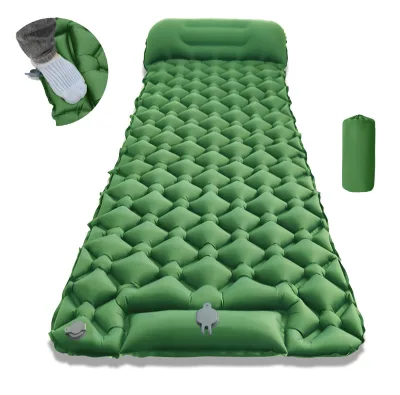
Self Inflating Camping Sleeping Pad with Pillow Ultralight Sleeping Pad
$14.89 - $15.59
MOQ: 50 Pieces


Outdoor Self Inflating Air Mattress Inflatable Sleeping Pad with Pillow
$10.00 - $30.00
MOQ: 500 Pieces



Comprehensive Sourcing Guide
Self-Inflating Eco-Friendly Sleeping Pad Sourcing Guide
Procurement teams must first distinguish between open foaming and closed-cell constructions when evaluating self-inflating eco-friendly sleeping pads. The observed market data indicates that open foaming types are prevalent, utilizing external inflator pumps to achieve optimal loft and thermal retention. Buyers should verify that the specific foam core aligns with sustainability goals while maintaining the structural integrity required for repeated inflation cycles.
Selection criteria should prioritize the balance between weight and thickness, as observed listings range from 5cm to 8cm in thickness with weights varying from 480g to 860g. A thicker pad generally offers superior comfort for camping and hiking applications, yet the added mass impacts portability. Sourcing decisions must weigh the specific usage environment against the logistical constraints of carrying heavier gear over long distances.
Product Scope and Observed Listing Signals
The current market inventory reveals a diverse range of models, including specific identifiers like SM60, KG6112, and YTSP01 series, each offering distinct dimensional profiles. Dimensions observed span from 190cm to 200cm in length, with widths varying between 55cm and 70cm to accommodate different body types. Buyers must carefully cross-reference the listed folded size, which ranges from compact 28cm bundles to larger 72cm packages, to ensure compatibility with their existing gear storage solutions.
Color and style variations are limited in the current dataset, with blue and modern rectangular designs being the primary observed attributes. Some listings feature square shapes and leisure-oriented styles, suggesting a niche market segment for stationary or car-camping use cases. Procurement strategies should account for these stylistic differences, ensuring that the aesthetic and functional requirements of the end-user align with the available product configurations before placing bulk orders.
Technical Specifications to Verify
Thickness and density are critical performance indicators that directly influence thermal insulation and comfort levels for the end consumer. Verified specifications show thicknesses of 5cm, 6cm, and 8cm, with corresponding weights of 480g and 860g. Buyers must confirm that the foam density remains consistent across production batches to prevent premature compression or loss of self-inflating properties over time.
The inflation mechanism is another vital technical parameter, with external inflator pumps being the standard method observed in the supply chain. While some models rely on the natural expansion of the foam, the inclusion of a pump ensures rapid setup in adverse weather conditions. Verification of the pump compatibility and the durability of the valve system is essential to guarantee reliable performance during extended outdoor expeditions.
Compliance and Safety Documentation
Eco-friendly claims require rigorous documentation to substantiate the environmental assertions made by suppliers regarding material composition and manufacturing processes. Buyers should request detailed material safety data sheets that confirm the absence of harmful chemicals and verify the recyclability of the foam and fabric components. Without explicit certification data, these claims remain unverified and may expose the buyer to reputational risks in regulated markets.
Safety standards for sleeping pads often involve flammability and chemical emission tests, though specific test results were not observed in the provided listing data. Procurement teams must mandate that suppliers provide third-party test reports confirming compliance with relevant international safety standards for recreational equipment. This due diligence ensures that the products meet the safety expectations of consumers and regulatory bodies in the destination markets.
Cost Drivers and Commercial Terms
Pricing in this category is influenced by the complexity of the foam core, the inclusion of accessories like carrying bags, and the customization of logos and packaging. The observed price range of 5 to 30 USD reflects variations in material quality and feature sets, such as the difference between simple OPP bag packaging and comprehensive brown box sets. Buyers should analyze the cost-per-unit relative to the included features to determine the true value proposition of each supplier offering.
Minimum Order Quantities (MOQ) vary significantly, ranging from single units to 500 units, allowing flexibility for both trial orders and large-scale distribution. Customization services, including logo printing and specific packing requirements, often incur additional costs or higher MOQ thresholds. Negotiation strategies should focus on balancing the unit price with the volume commitment to optimize the overall procurement budget while securing necessary branding elements.
Supplier Qualification and Quality Control
Supplier location data indicates a concentration of manufacturing in Ningbo and broader China regions, which are established hubs for outdoor gear production. Buyers should verify the supplier's production capacity and quality control protocols to ensure consistent output across large orders. The presence of multiple product models suggests a mature supply chain capable of handling diverse specifications, but individual factory audits remain necessary to validate these capabilities.
Quality control checks must focus on the integrity of the seams, the durability of the valve, and the consistency of the foam expansion. Since the products are described as handmade in some instances, manual inspection processes are critical to identify defects that automated systems might miss. Establishing clear acceptance criteria for weight, dimensions, and inflation performance will help maintain product quality standards throughout the supply chain.
Long-Term Procurement Checks
Sustainability and durability are key factors for maintaining a competitive edge in the eco-friendly sleeping pad market over the long term. Buyers should monitor the supplier's ability to source sustainable materials and maintain consistent quality as production volumes scale up. Regular re-evaluation of the product's performance in real-world conditions will help identify any degradation in material quality or design flaws that may emerge after initial market entry.
Supply chain resilience is equally important, requiring buyers to assess the supplier's ability to meet lead times and manage inventory fluctuations. The observed sample lead time of 3-5 days suggests a responsive production environment, but bulk order lead times must be confirmed to prevent stockouts during peak seasons. Building a robust relationship with the supplier ensures a steady flow of high-quality products that meet the evolving demands of the outdoor recreation sector.
FAQs
What are the standard dimensions for these sleeping pads?
The standard dimensions vary by model, with common sizes including 190x66x5 cm, 192x62x5 cm, and 190x58x6 cm. Some thicker options reach 193x70x8 cm. These rectangular mats are designed to accommodate most adult sleepers comfortably while maintaining a compact folded size for easy transport during outdoor activities.
How thick are the available self-inflating mats?
Thickness options typically include 5 cm, 6 cm, and 8 cm variants. The 5 cm models offer a balance of comfort and portability, while the 8 cm versions provide enhanced cushioning for softer ground. Thicker pads generally weigh more, with weights ranging from 480g to 860g depending on the specific model and material density.
Can I customize the logo on these eco-friendly pads?
Yes, customized logos are accepted for bulk orders. The products support customization features, allowing buyers to add their branding to the sleeping pads. This service is ideal for businesses looking to create branded merchandise for camping gear or promotional items, ensuring your logo is prominently displayed on the final product.
What is the packaging method for these sleeping mats?
Packaging methods vary by model, including cartons, OPP bags, and combined OPP bag with carrying bags and brown boxes. For example, some models are packed in cartons containing six pieces, while others use individual OPP bags. This flexible packaging ensures safe transport and allows for different retail or wholesale distribution needs.
Are these sleeping pads suitable for all seasons?
Most models are designed for spring and autumn use, offering soft hardness and waterproof features. However, some specific variants are rated for all-season use. The open foaming material provides insulation and comfort, making them suitable for various outdoor environments, though users should check specific model ratings for extreme cold conditions.
How long does it take to produce a sample?
Sample production typically takes 3-5 days. This quick turnaround allows buyers to evaluate the quality, thickness, and material of the self-inflating mats before placing larger orders. The samples help verify that the product meets specific requirements for camping, hiking, or leisure use before committing to bulk procurement.