Source Sharkbite Brass Pipe Fitting for Power Station, Gas, Sewage
Compare 30 listings of Sharkbite Brass Pipe Fitting from Wenzhou and Zhuji suppliers. Options include male and female connections, various models like KL-62, and custom sizes for power stations, gas systems, and sewage treatment.
Key considerations
Products List


Brass Male Coupling Compression Water Plumbing Tube Pipe Fittings for Copper Pipe
$0.30 - $0.32
MOQ: 500 Pieces


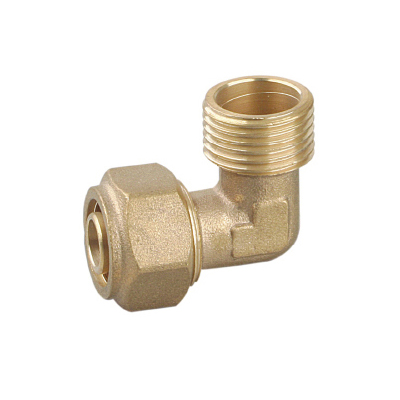


Brass Plumbing Fittings for Pex Pipe Hot Water Pipe Fittings-Tee Female
$1.00 - $1.20
MOQ: 1000 Pieces

Brass Plumbing Fittings for Pex Pipe Hot Water Pipe Fittings-Elbow Female
$0.79 - $0.84
MOQ: 1000 Pieces

1/2 Inch Brass Pex Pipe Fitting Support Elbow Connector Compression Fittings
$0.83 - $0.89
MOQ: 1000 Pieces

Ifan Forged Brass Pipe Fitting and Brass Plumbing Fittings 1/2 Inch Brass Fittings
$0.25 - $0.31
MOQ: 600 Pieces


Comprehensive Sourcing Guide
Strategic Sourcing Guide for Sharkbite Brass Pipe Fittings
Understanding the Product Category and Technical Attributes
When sourcing brass pipe fittings, specifically those marketed with "sharkbite" style connections or similar quick-connect mechanisms, buyers must first distinguish between the generic category and specific technical implementations. The core product under investigation is a brass fitting designed for water applications, often featuring a connection type that accommodates both male and female interfaces depending on the specific model. The material composition is a critical starting point; the supplied data confirms that the primary material is copper or brass, with specific references to "yellow brass" and "Bibcock Material: Brass." This material selection is standard for ensuring corrosion resistance and durability in plumbing environments.
The technical specifications for these fittings vary significantly across different product listings. Some models are identified by specific model numbers such as KL-62, YM2023703, and BT6044, while others are categorized by size ranges like 16/20/26/32mm or 1/2-16MM. The shape of the fittings can be "Equal," "Heteromorphic," or designed with a "Round" or "Hexagon" head code, indicating their specific function in piping systems. The thread distribution is noted as "Internal Thread" for certain variants, while others may feature different connection geometries. The surface treatment often includes a nickel plating process, which enhances the aesthetic appeal and provides an additional layer of protection against oxidation. The wall thickness is typically listed as "STD" (Standard), but buyers must verify if specific projects require heavy-duty or thin-walled variations.
| Attribute Category | Observed Variations in Supply |
|---|---|
| Material | Copper, Yellow Brass, Bibcock Brass |
| Connection Type | Male, Female, Quick Connect (implied) |
| Sizes | 16mm, 1/2", 3/4", 1", 16-32mm |
| Shape | Equal, Heteromorphic, Round Head, Hexagon Head |
| Surface Finish | Nickel Plated, Yellow Brass |
| Standard Sizes | 1/2", 1/2-16MM, 322018 |
Compliance, Certification, and Standard Verification
Compliance is a non-negotiable aspect of sourcing industrial and plumbing components. The supplied facts indicate that some products carry certifications such as CE, ROHS, and ISOGOST. These certifications suggest adherence to European safety standards, restrictions on hazardous substances, and specific GOST standards often relevant to Eastern European or Russian markets. However, the data also lists "customized" as a standard, which implies that not all units may come with pre-existing certifications. Buyers must exercise caution and verify that the specific batch they intend to purchase holds the necessary regulatory approvals for their target market.
While the background information mentions ASTM B88 and ASTM F877, these are not explicitly confirmed in the high-confidence facts for the specific listings provided. Therefore, a buyer cannot assume that every "sharkbite" style brass fitting automatically meets these American Society for Testing and Materials standards. Instead, the procurement strategy should involve a direct request for test reports or certification documents that specifically validate compliance with ASTM B88 (for seamless copper water tube) or ASTM F877 (for PEX tubing systems) if the project requires it. The "prod_standard" field in the data shows entries like "1/2"" and "customized," which refers to dimensional standards rather than material safety standards. Buyers must clarify whether the "1/2"" designation refers to the nominal pipe size or a specific manufacturing standard.
Cost Drivers and Pricing Dynamics
The pricing structure for brass pipe fittings is influenced by several volatile factors, primarily the fluctuating cost of raw copper and brass. The observed price range in the market data is extremely low, listed between 0 and 5 USD, which likely represents unit costs for small quantities or specific promotional listings rather than bulk industrial pricing. This wide variance suggests that the final cost is highly dependent on the order volume and the specific customization level required.
The Minimum Order Quantity (MOQ) is a significant cost driver, with observed ranges spanning from 1 to 3000 pieces. A specific listing notes an MOQ of 3000pcs, which is typical for standard, non-customized items. Conversely, the availability of "Customization" and "Service: Customizable" attributes suggests that lower MOQs might be available for bespoke orders, but these will likely command a higher unit price due to the setup costs involved in tooling and production lines. The packaging method also impacts the landed cost; options include "Wooden Case by Sea," "Pallet/Carton/Wooden Box," or "Poly Bag." Wooden cases and pallets are more expensive but necessary for international sea freight to prevent damage, whereas poly bags are cost-effective for domestic or small-scale shipments. Buyers should calculate the total cost of ownership, including packaging and shipping, rather than focusing solely on the unit price.
Typical Applications and Market Fit
The versatility of brass pipe fittings is evident in their listed applications. The data specifies usage in "Power Station," "Gas," "Sewage Treatment," and "Public Works." This indicates that these fittings are robust enough for heavy industrial environments, not just residential plumbing. The "medium" is explicitly identified as "water," confirming their primary function in fluid transport systems. The "Hot Issue Market" is listed as "USA and Europe," suggesting that the supply chain is well-established to meet the high demand in these regions.
The "Perfect Match" attribute notes that these products are "Widely Used," and the "Use" attribute highlights that they are "Easy to Install." This ease of installation is a key selling point for quick-connect fittings, reducing labor costs and installation time on-site. The "ventilation mode" is listed as "mechanical ventilation," which may refer to the specific design of the fitting to handle pressure or flow dynamics in specific systems. The "Warranty" of 5 years for certain models provides a benchmark for expected longevity, though buyers must confirm if this warranty applies to the specific supplier or is a general industry standard. The "Quality" attribute mentions production by "Professional Technical Personnel," which serves as a qualitative indicator of manufacturing competence but requires verification through site audits or third-party quality reports.
Supplier Evaluation and Geographic Considerations
Geographic origin plays a crucial role in supplier evaluation. The data points to several manufacturing hubs in China, specifically "Wenzhou, Zhejiang Province," "Zhejiang, China," and "Zhuji China." These regions are renowned for their brass and plumbing fixture industries. When evaluating suppliers from these locations, buyers should verify the specific factory capabilities. The "prod_origin" is consistently listed as China, but the specific city can indicate the specialization of the manufacturer; for instance, Zhuji is often associated with valve and fitting manufacturing.
Supplier reliability is further assessed through their service offerings. The availability of "Customization" and "Service: Customizable" suggests a flexible supply chain capable of adapting to client needs. However, the "prod_packing" variations (Wooden Case, Carton, Pallet) indicate that logistics capabilities vary. A supplier offering "Wooden Case by Sea" is likely equipped for large-scale international export, while those offering "Poly Bag" might be more suited for smaller, consolidated shipments. Buyers should prioritize suppliers who can demonstrate a track record of exporting to the USA and Europe, as indicated by the "Hot Issue Market" data. This ensures the supplier understands the specific regulatory and logistical requirements of these major markets.
Quality Control and Long-Term Procurement Strategy
Quality control in the brass fitting industry must address both material integrity and dimensional accuracy. The "Technics" attribute lists "Forged" as a manufacturing process, which generally implies a stronger, more durable product compared to cast alternatives. The "Surface" treatment of "Nickle" is a standard quality feature to prevent corrosion. However, buyers must verify the thickness and uniformity of this plating, as thin plating can lead to premature failure in water applications. The "Wall Thickness: STD" is a standard specification, but for high-pressure applications, buyers should request confirmation that the fittings meet the required pressure ratings.
Long-term procurement considerations involve the stability of the supply chain. The "Lead time" is not explicitly provided in the data, but the "prod_packing" and "prod_origin" suggest that sea freight is the primary mode of transport, which implies longer lead times compared to air freight. Buyers should plan for these logistics when managing inventory. The "Customization" feature offers a strategic advantage for long-term contracts, allowing buyers to brand products or modify dimensions for specific projects. However, this requires a robust quality assurance process to ensure that custom orders do not deviate from the core specifications.
To ensure consistent quality, buyers should implement a rigorous inspection protocol. This includes verifying the "Certification" status (CE, ROHS, ISOGOST) for every batch, checking the "prod_model" against the ordered specifications, and inspecting the physical condition of the "Nickle" surface and "Forged" structure. The "Warranty" of 5 years should be clearly defined in the contract, specifying the conditions under which it is valid. By focusing on these tangible attributes and avoiding assumptions about unverified standards, buyers can build a resilient supply chain for brass pipe fittings that meets both technical and commercial requirements.
FAQs
What materials are used for sharkbite brass pipe fittings?
The primary materials are copper and brass, including yellow brass and bibcock brass. Some listings specify copper as the base material while others highlight brass for durability in water applications.
Which certifications do these fittings typically hold?
Some products carry CE, ROHS, and ISOGOST certifications. Buyers must verify specific batches as some listings indicate customized standards rather than pre-existing certifications for every unit.
How can I find fittings with specific model numbers?
You can search for models like KL-62, YM2023703, or BT6044. These specific identifiers help distinguish between different sizes and shapes such as equal or heteromorphic designs.
What is the minimum order quantity for these fittings?
MOQs range from 1 to 3000 pieces depending on the supplier. A specific listing notes an MOQ of 3000pcs for standard items, while customization may allow lower quantities.
Where are these brass fittings manufactured?
Products originate from cities like Wenzhou, Zhejiang, and Zhuji in China. These regions are known hubs for brass and plumbing fixture manufacturing with established export capabilities.
Can these fittings be customized for specific projects?
Yes, customization is available for dimensions, packaging, and specifications. Services include customizable options for models like 16/20/26/32mm or specific thread distributions.
What packaging options are available for shipping?
Packaging includes wooden cases by sea, pallets, cartons, and poly bags. The choice depends on shipment size and destination, with wooden cases preferred for international sea freight.