Source Sic Ceramic Tube for Thermal, Electrical, and Chemical Uses
Explore 30 verified listings for the Sic Ceramic Tube, featuring options in silver, black, and white with customizable sizes. Buyers can compare thermal conductivity, flexural strength, and packaging details across multiple manufacturers in China.
Key considerations
Products List


Sintered SiSiC silicon carbide radiation tube sic ceramic protection tube
$10.00 - $40.00
MOQ: 10 Pieces


Silicon Sic Carbide Thermocouple Protection Ceramic Tubes Sisic Radiant Tubes
$10.00 - $200.00
MOQ: 1 Pieces

Sic Square Beam Silicon Carbide Square Tube, Round Tube, Rod, Impeller
$100.00 - $2000.00
MOQ: 1 Pieces
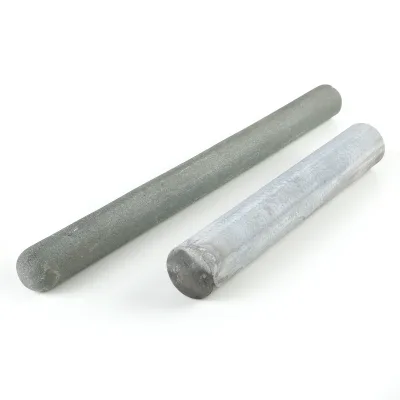


Comprehensive Sourcing Guide
Strategic Sourcing Guide for Silicon Carbide Ceramic Tubes
Understanding the Product Category and Material Science
Silicon Carbide (SiC) ceramic tubes represent a critical class of advanced industrial components designed for environments where extreme thermal stability, chemical resistance, and mechanical strength are non-negotiable. When sourcing these components, buyers must first distinguish between the various material formulations available in the market. The supplied data indicates that products are frequently categorized under specific material types, including Ceramics and Silicon Carbide (SiC). These tubes are often manufactured using a machine-made process, ensuring consistency in geometry and density, which is vital for high-performance applications.
The core utility of these tubes lies in their unique combination of physical properties. Unlike traditional ceramics, SiC tubes exhibit exceptional thermal conductivity, with observed data pointing to values around 150W/M.K at 20°C. This high thermal conductivity allows for efficient heat dissipation, making them ideal for furnace components and heat exchangers. Simultaneously, they maintain structural integrity under high stress, with flexural strength figures reaching up to 380MPa and compressive strength as high as 2100MPa. The purity of the silicon carbide is another critical variable, with some specifications noting a purity level of more than 98%.
Buyers should also note the variation in product models and shapes. While the core keyword focuses on tubes, the market includes related forms such as plates and rods. Specific model identifiers found in supplier listings include "Sic Ceramic," "SiCTube," "SISIC-T," and "SISIC/RBSIC/SIC." These designations often refer to the specific sintering method or the ratio of free silicon to silicon carbide within the matrix. The shape is consistently described as a pipe or tube, with lengths ranging from 200mm to 1500mm, and diameters often customized to meet specific engineering requirements.
Technical Specifications and Performance Parameters
When evaluating potential suppliers, the technical specifications provided in the product data offer a baseline for comparison, though buyers must verify these figures against their specific application needs. The following table summarizes the key performance metrics observed in the current market data for SiC ceramic tubes:
| Parameter | Observed Value/Range | Significance for Procurement |
|---|---|---|
| Thermal Conductivity | 150 W/M.K (at 20°C) | Indicates heat transfer efficiency; critical for heating elements and heat exchangers. |
| Flexural Strength | 380 MPa | Measures resistance to bending; essential for tubes subjected to mechanical load. |
| Compressive Strength | 2100 MPa | Determines load-bearing capacity under direct pressure. |
| Elasticity Modulus | 380 GPa | Reflects stiffness; higher values indicate less deformation under stress. |
| Open Porosity | < 0.1% | Low porosity ensures chemical inertness and prevents fluid penetration. |
| Grain Size | < 15 µm | Fine grain structure contributes to higher strength and better surface finish. |
| Thermal Expansion | 4.4 x 10⁻⁶ /°C (20°C to 500°C) | Low expansion ensures dimensional stability during thermal cycling. |
| Weibull Modulus | 10 | Indicates the reliability and consistency of the material's strength distribution. |
| Purity | > 98% Silicon Carbide | Higher purity generally correlates with better chemical resistance and thermal properties. |
It is important to treat these values as observations from specific product listings rather than universal guarantees for all SiC tubes. The "Standard" field in the data varies significantly, ranging from specific dimensions like "202020cm" or "D400X1000MM" to "According requirements" and "According to order quantity." This variability underscores the necessity for buyers to define their own dimensional and performance criteria clearly before engaging with suppliers. Customization is explicitly marked as "Available," suggesting that off-the-shelf solutions may not meet the precise needs of complex industrial setups.
Compliance, Certification, and Verification Protocols
In the realm of industrial ceramics, compliance is often tied to the specific application industry rather than a single global standard. The supplied data mentions "ISO 9001" in a low-confidence background context, which means buyers should not assume this certification is present without explicit verification. Instead of relying on generic certifications, procurement teams must focus on verifying the "prod_standard" and material purity claims directly with the manufacturer.
Buyers should request detailed test reports that confirm the open porosity, flexural strength, and thermal conductivity figures listed above. Since the data indicates that standards can be "According requirements," the burden of defining the acceptance criteria often falls on the buyer. For applications in the chemical industry or electrical appliances, the low open porosity (<0.1%) is a critical compliance factor to prevent chemical ingress or electrical breakdown.
Furthermore, the origin of the product is a significant factor in supply chain transparency. The data points to "China" and specifically "Weifang, China" as the production origin. While this is a known hub for ceramic manufacturing, buyers should verify the specific factory location and its quality control infrastructure. The "prod_standard" field also lists "SISIC/RBSIC/SIC," which refers to the type of silicon carbide (Reaction Bonded, Sintered, etc.). Buyers must ensure the specific type matches their thermal and mechanical requirements, as different bonding methods yield different performance characteristics.
Cost Drivers and Pricing Dynamics
The pricing for silicon carbide ceramic tubes is influenced by a complex interplay of material costs, manufacturing complexity, and customization levels. The observed price range in the market spans from $0.1 to $2000 USD, a vast disparity that reflects the difference between small, standard components and large, custom-engineered tubes. Several factors drive these costs:
- Material Purity and Grade: Tubes with a purity of more than 98% and fine grain sizes (<15 µm) command higher prices due to the advanced processing required to achieve such density and strength.
- Dimensional Customization: The "Size" is listed as "Customized" or "Customzied" in multiple entries. Non-standard lengths (200-1500mm) and diameters require unique molds and sintering schedules, increasing the unit cost.
- Packaging Requirements: The data lists various packaging methods, including "Plastic Bag," "Wooden Box," "Wooden Box with Foam Inner," and "Plywood Case." Specialized packaging for fragile ceramic components adds to the overall cost, particularly for international shipping.
- Order Quantity (MOQ): The Minimum Order Quantity (MOQ) ranges from 1 to 100 units. Smaller orders often carry a higher per-unit cost due to setup fees and the inefficiency of small-batch production runs.
Buyers should be aware that the "Long Service Life" and "Thermostability" are key advantages that justify the initial investment. While the upfront cost may be higher than alternative materials, the reduced frequency of replacement and maintenance in harsh environments often results in a lower total cost of ownership.
Typical Applications and Industry Fit
Silicon carbide ceramic tubes are versatile components utilized across a diverse range of industries. The data highlights several key application areas, including "Construction," "Electrical Appliance," "Electron," "Chemical Industry," and "Textile." Additionally, the "Applicable Industries" field lists "Hotels," "Garment Shops," and "Building Material Shops," which likely refers to the end-use environments or the supply chain partners rather than the direct manufacturing process.
In the Chemical Industry, the high chemical resistance and low porosity of SiC tubes make them ideal for handling corrosive fluids and gases. The "Hygienic" attribute suggests suitability for food processing or pharmaceutical applications where contamination must be avoided.
For Electrical and Electronic applications, the thermal conductivity and electrical insulation properties (implied by the ceramic nature) are crucial. These tubes are often used as heating elements, insulators, or protective sheaths in high-temperature furnaces.
In the Textile and Garment sectors, SiC tubes may be used in drying ovens or heat-setting equipment where rapid and uniform heating is required. The "Classical" style mentioned in the data likely refers to the traditional cylindrical form factor, which is standard for these industrial processes.
The "Industrial Ceramic" application tag reinforces the primary use case in heavy manufacturing, where components must withstand thermal shock and mechanical abrasion. The "Refractory Material" classification further confirms their role in high-temperature containment and structural support within industrial furnaces.
Supplier Evaluation and Quality Control Strategies
Selecting a reliable supplier for SiC ceramic tubes requires a rigorous evaluation process that goes beyond simple price comparison. Buyers should prioritize suppliers who demonstrate transparency regarding their manufacturing methods and quality control protocols.
Verification of Manufacturing Capabilities: Since the "Making Method" is listed as "Machine Made," buyers should inquire about the specific machinery and automation levels used. Consistent machine production is essential for maintaining the tight tolerances required for the "Customized" sizes. Suppliers should be able to provide evidence of their production capacity and consistency.
Quality Assurance Protocols: The data mentions specific physical properties like "Open Porosity <0.1%" and "Weibull Modulus 10." A reputable supplier must be able to provide third-party or in-house test reports validating these figures for each batch. Buyers should verify the "Purity of Silicon Carbide" claims, as this directly impacts the material's performance.
Packaging and Logistics: The variety of packaging options, from "Plastic Bag" to "Wooden Case with Soft Foam," indicates that the supplier must have robust logistics capabilities to prevent breakage. Given the brittle nature of ceramics, the "Wooden Box with Foam Inner" or "Plywood Case" options are likely necessary for international shipping. Buyers should evaluate the supplier's experience in handling fragile goods and their ability to provide secure packaging solutions.
Origin and Traceability: With the origin listed as "Weifang, China," buyers should ensure the supplier can provide full traceability of the raw materials and the manufacturing process. This is particularly important for industries with strict regulatory requirements.
Long-Term Procurement and Lifecycle Management
Procuring silicon carbide ceramic tubes is not just a one-time transaction but a long-term partnership that impacts operational efficiency. The "Long Service Life" attribute is a primary selling point, but it relies on correct installation and maintenance. Buyers should consider the following long-term factors:
Total Cost of Ownership (TCO): While the initial price may vary, the TCO should be calculated based on the expected lifespan of the tube. A tube with higher purity and better mechanical strength may cost more upfront but will last significantly longer in harsh environments, reducing downtime and replacement costs.
Customization and Scalability: As the "Customization" field indicates, many orders are tailored to specific needs. Buyers should assess the supplier's ability to scale production as their requirements grow. The ability to produce "SISIC-T" or "SiCTube" models in varying lengths (200-1500mm) suggests flexibility, but buyers must confirm lead times for custom orders.
Maintenance and Replacement: Even with high durability, SiC tubes may eventually degrade. Buyers should establish a relationship with the supplier for timely replacement and ensure that the "prod_model" numbers are consistent to avoid compatibility issues. The "Key Word" and "Key Word 2" fields (Silicon Carbide Ceramic Tube, Sic Ceramic Pipe) highlight the importance of using precise terminology to ensure the correct part is ordered.
Performance Monitoring: Regular monitoring of the tubes' performance in the field is essential. Buyers should track metrics such as thermal conductivity degradation or mechanical failure rates to validate the supplier's claims and inform future procurement decisions.
In conclusion, sourcing silicon carbide ceramic tubes requires a deep understanding of the material's properties, the specific needs of the application, and the capabilities of the supplier. By focusing on technical specifications, verifying compliance, and evaluating long-term value, buyers can secure high-quality components that enhance their industrial operations.
FAQs
What materials are used to make these ceramic tubes?
These tubes are primarily made from Silicon Carbide (SiC) and general Ceramics. The material purity often exceeds 98% to ensure high performance. Some specific models utilize SISIC or RBSIC formulations for enhanced thermal stability.
How long are the standard lengths available for these tubes?
The standard length range for these tubes spans from 200mm to 1500mm. Buyers can also request customized sizes to fit specific engineering requirements. The exact dimensions depend on the specific model and order needs.
Can I get these tubes with custom dimensions and shapes?
Yes, customization is available for both size and shape to meet specific needs. The products come in pipe or plate shapes with dimensions tailored to the order. This flexibility allows for precise integration into various industrial applications.
Which industries typically use silicon carbide ceramic tubes?
These tubes are widely used in the chemical industry, electrical appliances, and construction sectors. They also serve the textile, garment, and hotel industries for thermal management. Their high strength makes them suitable for heavy industrial environments.
What is the typical flexural strength of these ceramic tubes?
The observed flexural strength for these tubes is up to 380 MPa. This high strength ensures resistance to bending under mechanical loads. It is a key factor for applications requiring structural integrity under stress.
How are these ceramic tubes packaged for shipping?
Packaging options include plastic bags, wooden boxes, and plywood cases with foam inner layers. The specific method depends on the order quantity and shipping requirements. Robust packaging is essential to prevent breakage during transit.
What is the origin of these silicon carbide ceramic products?
The products originate from China, with specific manufacturing hubs located in Weifang. This region is a known center for ceramic production. Buyers should verify the specific factory location for supply chain transparency.