Source Silent Portable Diesel Generator for Land Use, Emergency Crew, Standby Unit
Find a Silent Portable Diesel Generator suitable for land use, emergency crews, and standby units. Compare 30 available models with varying cooling methods, installation types, and output specifications from verified manufacturers in China.
Key considerations
Products List


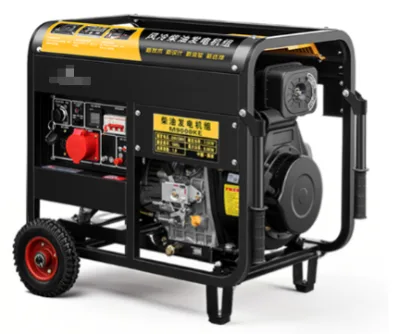


AC 30kVA Generator Portable Generators Silent Diesel Generator with Cabinet
$2550.00 - $2750.00
MOQ: 1 Pieces
Comprehensive Sourcing Guide
Strategic Sourcing Guide for Silent Portable Diesel Generators
Navigating the global market for silent portable diesel generators requires a disciplined approach that balances technical performance, regulatory compliance, and supply chain reliability. For procurement professionals, the core objective is to identify units that deliver consistent power while adhering to strict noise and mobility constraints. The following guide synthesizes available market data to provide a framework for evaluating suppliers and selecting equipment that meets specific operational needs without relying on unverified claims.
Technical Architecture and Operational Specifications
The fundamental architecture of a Silent Portable Diesel Generator is defined by its engine configuration, cooling method, and electrical output characteristics. Based on observed market data, these units frequently utilize a four-stroke engine configuration, which is standard for balancing fuel efficiency and durability in stationary and mobile applications. The excitation mode is predominantly AC rotating exciter, ensuring stable voltage regulation under varying load conditions.
Cooling methods vary significantly based on the unit's intended power rating and enclosure design. While some high-capacity models employ water cooling systems to manage thermal loads in continuous operation, portable variants often rely on air-cooled systems to maintain a compact footprint. The installation method is a critical differentiator; the market distinguishes between portable units designed for mobility and fixed installations. For the specific category of "silent portable" units, the installation method is typically classified as portable, allowing for rapid deployment to emergency sites or remote locations.
Electrical output is another primary specification. Most units in this category produce AC three-phase power, which is essential for industrial machinery and large-scale commercial loads. The rated current and startup modes also vary; some models feature a 24V start-up system powered by specific engine modes, such as the 186f configuration, while others utilize micro-computer control for automatic diesel generation. The physical dimensions of the generator set are strictly defined by the manufacturer's standard enclosure sizes. Observed standard dimensions range from compact units measuring approximately 960560780 mm to larger industrial enclosures reaching 390013501900 mm. Buyers must verify that the physical footprint aligns with their transport and storage constraints before finalizing a purchase.
Noise Control and Environmental Compliance
The defining characteristic of a "silent" generator is its ability to operate within specific decibel limits, often categorized under "Low Noise" or "Low Noise Automation Type" classifications. This feature is achieved through specialized acoustic enclosures and sound-dampening materials integrated into the design. The land use type for these units is generally designated for land use, indicating their suitability for outdoor or semi-outdoor environments where noise pollution is a concern.
Compliance with environmental and safety standards is non-negotiable for international procurement. While specific certification statuses must be verified against the supplier's current documentation, the market frequently references standards such as CE and ISO 8528. The CE marking indicates conformity with health, safety, and environmental protection standards for products sold within the European Economic Area. Additionally, certifications like SONCAP (Standards Organisation of Nigeria Conformity Assessment Program) are critical for buyers targeting specific regional markets. The protection class for these units is typically IP23, which offers protection against solid objects larger than 12mm and water spray up to 60 degrees from vertical, making them suitable for outdoor use in various weather conditions.
Cost Drivers and Pricing Dynamics
Understanding the cost structure of silent portable diesel generators is essential for budgeting and total cost of ownership analysis. The observed price range in the market spans from approximately 94 USD to 16,999 USD. This vast disparity is driven by several key factors, including the generator's kilovolt-ampere (kVA) rating, the sophistication of the control system, and the quality of the acoustic enclosure.
The minimum order quantity (MOQ) also influences the unit cost, with observed ranges varying from 1 to 50 units. Buyers purchasing single units or small batches may face higher per-unit costs compared to those placing bulk orders. Fuel tank configuration is another cost driver; options such as top tank or bottom tank designs can affect the unit's price and operational convenience. Furthermore, the inclusion of customization options, such as specific colors or tailored control interfaces, will add to the base price.
Payment terms are a significant component of the financial agreement. Standard industry practices include T/T (Telegraphic Transfer), L/C (Letter of Credit), D/A (Documents against Acceptance), D/P (Documents against Payment), Western Union, and Moneygram. Buyers should negotiate terms that align with their cash flow management and risk tolerance. Delivery times typically range around 30 days after confirmation, though this can fluctuate based on production capacity and order volume.
Typical Applications and Usage Scenarios
Silent portable diesel generators are designed for a diverse range of applications, primarily categorized as common units, standby units, or emergency crew support. Their versatility makes them ideal for construction sites, where noise restrictions often apply, and for outdoor events where a reliable power source is needed without disturbing the audience. The "Low Noise" designation specifically targets environments where acoustic comfort is a priority, such as residential areas, hospitals, or hospitality venues.
In emergency scenarios, these units serve as critical backup power sources. The "Emergency Crew" usage classification highlights their role in disaster relief and rapid response operations. The micro-computer control automatic diesel generator type is particularly valuable here, as it allows for unattended operation and automatic startup when the main power supply fails. The fuel tank capacity, whether top or bottom mounted, dictates the runtime and refueling logistics, which are critical factors in prolonged emergency operations.
Supplier Evaluation and Verification
When evaluating potential suppliers, buyers must look beyond marketing materials and verify the manufacturer's credentials. The market data indicates that many suppliers are professional generator manufacturers with R&D capabilities, suggesting a capacity for innovation and quality control. The factory location is a key verification point; observed data points to manufacturing hubs in China, specifically in provinces like Zhejiang and Fujian.
Buyers should request proof of business type and operational history. A supplier claiming to be a professional manufacturer should be able to provide details about their production lines, quality assurance processes, and after-sales support. The loading port is another logistical detail to confirm; Ningbo and Shanghai ports are common departure points for these goods. Verifying the factory location ensures that the buyer is dealing with the actual manufacturer rather than a trading company, which can impact pricing and communication efficiency.
Quality Control and Packaging Standards
Quality control begins with the manufacturing process and extends through to the final packaging and shipping. The product packing standards observed include plastic film cartons, cartons with wooden pallets, and reinforced plastic film. These packaging methods are designed to protect the generator from moisture, dust, and physical damage during transit. The export carton is a standard requirement for international shipping, ensuring the unit remains secure during long-haul transport.
The product standard dimensions and specifications must be strictly adhered to during production. For instance, specific models like the Gd-300kVA or Gd-30kVA have defined standard dimensions that must be met. Any deviation from these standards could indicate a quality issue or a mismatch with the buyer's requirements. The certification of the product, including CE, ISO, and SONCAP, serves as a third-party validation of the quality control measures implemented by the manufacturer. Buyers should request test reports and certification documents to ensure the unit meets the required safety and performance standards.
Long-Term Procurement Considerations
Sourcing a Silent Portable Diesel Generator is not merely a transactional event but a strategic decision that impacts long-term operational efficiency. The customization availability allows buyers to tailor the unit to specific needs, such as specific fuel tank configurations or control interfaces. However, this customization must be balanced against the potential for increased lead times and complexity in spare parts management.
The delivery time of approximately 30 days after confirmation is a standard benchmark, but buyers should account for potential delays due to logistics or production bottlenecks. The payment terms, including T/T and L/C, offer flexibility but require careful management to mitigate financial risk. Finally, the long-term viability of the supplier is crucial. A manufacturer with R&D capabilities is more likely to provide ongoing support, firmware updates, and spare parts availability, ensuring the generator remains a reliable asset for years to come.
Comparative Analysis of Key Specifications
To assist in the decision-making process, the following table summarizes the key specifications observed in the market for silent portable diesel generators. This comparison highlights the variability in dimensions, cooling methods, and control systems, helping buyers identify the features most relevant to their specific application.
| Specification Category | Observation A | Observation B | Observation C |
|---|---|---|---|
| Model No. | Gd-300kVA | Gd-30kVA | Gd-100kVA |
| Dimensions (mm) | 390013501900 | 21009301150 | 290011001450 |
| Cooling Method | Water Cooling | Air Cooled | Air Cooled |
| Installation | Portable | Portable | Fixed |
| Control Type | Standard | Self-Starting | Micro-Computer Control |
| Protection Class | IP23 | IP23 | IP23 |
| Origin | China | China Fujian | China |
| Certification | CE, Soncap | CE, ISO, SONCAP | Standard |
This table illustrates that while the core technology (four-stroke, AC three-phase) remains consistent, the physical and functional attributes vary significantly. Buyers must align these specifications with their operational requirements, ensuring that the chosen unit fits within their logistical constraints and power needs. By rigorously applying these evaluation criteria, procurement professionals can secure high-quality silent portable diesel generators that deliver reliable performance and long-term value.
FAQs
What is the typical lead time for silent portable diesel generators?
The standard delivery time is 30 days after confirmation. This timeline applies to professional manufacturers with R&D capabilities located in China, specifically in Zhejiang and Fujian provinces.
Which certifications are commonly available for these generator units?
Common certifications include CE, SONCAP, and ISO standards. These marks indicate conformity with safety and environmental protection requirements for international markets like Europe and Nigeria.
Can the generator units be customized for specific needs?
Yes, customization is available for color, fuel tank configuration, and control interfaces. Buyers can select between top or bottom tank designs and request specific acoustic enclosure features.
What is the minimum order quantity for purchasing these units?
The minimum order quantity ranges from 1 to 50 units depending on the supplier. Smaller orders may incur higher per-unit costs compared to bulk purchases from professional manufacturers.
How are silent portable diesel generators typically packaged for shipping?
Units are packed in strong export cartons, often with wooden pallets or reinforced plastic film. This packaging protects the generator from moisture and physical damage during long-haul transport.
What cooling methods are used in silent portable diesel generators?
Cooling methods vary between air cooling and water cooling based on the model. Portable variants often use air cooling for compactness, while larger units may employ water cooling for thermal management.