Source Silver Rectangular Alloy Quartz Watch for retail, gifts, and fashion
Compare 30 Silver Rectangular Alloy Quartz Watch options from verified suppliers. Explore variations in movement, case material, and features to find the right timepiece for your inventory needs.
Key considerations
Products List


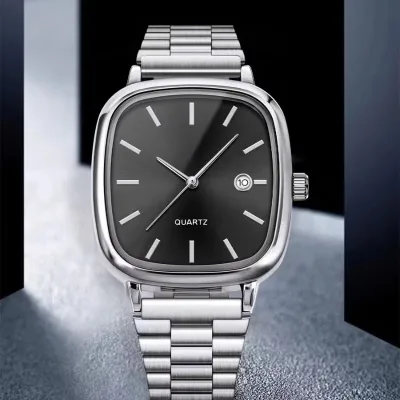
Men's Quartz Watch Square Stainless Steel Strap Business Style Silver Alloy Case
$11.32 - $11.91
MOQ: 2 Pieces




Comprehensive Sourcing Guide
Strategic Sourcing Guide for Silver Rectangular Alloy Quartz Watches
The global market for timepieces continues to evolve, with a distinct segment dedicated to affordable, fashion-forward accessories that prioritize style over high-end horological mechanics. For procurement professionals and B2B buyers searching for a "Silver Rectangular Alloy Quartz Watch," the supply landscape is characterized by a high volume of manufacturers, primarily concentrated in China, offering a wide array of customization options. This guide provides a disciplined approach to sourcing these specific timepieces, focusing on the intersection of material composition, movement technology, and supply chain reliability. The objective is to navigate the available product attributes to ensure the final selection meets the specific aesthetic and functional requirements of the target market without relying on unverified marketing claims.
Understanding Product Attributes and Material Composition
The core of the "Silver Rectangular Alloy Quartz Watch" search query implies a specific set of physical characteristics that must be verified against supplier catalogs. While the term "silver" often suggests a precious metal, in the context of mass-market alloy watches, it typically refers to a plating finish or a specific alloy coloration rather than solid silver content. Based on observed market data, the band materials for these timepieces frequently include stainless steel and plated metal options. The case material is predominantly zinc alloy, which offers a lightweight and cost-effective alternative to solid steel or titanium, making it ideal for fashion accessories where weight and price sensitivity are paramount.
The shape of the watch face is a critical differentiator. While many watches in this category feature round dials, the specific request for a "rectangular" shape narrows the selection significantly. However, buyers must remain aware that product listings often contain mixed attributes. For instance, while some observed products feature a "Round" case shape, others are explicitly listed with a "Square" case shape. In the context of rectangular watches, the distinction between square and rectangular is often a matter of aspect ratio, but the underlying manufacturing mold is similar. The surface material is consistently observed as glass, with some listings specifying "Tempered Glass" for enhanced durability. The dial color is another variable; while black and white are common, the "silver" designation in the keyword likely refers to the case and band finish rather than the dial color itself.
| Attribute Category | Common Observation | Verification Requirement |
|---|---|---|
| Case Shape | Round, Square | Confirm specific rectangular dimensions in technical drawings. |
| Case Material | Zinc Alloy, Alloy | Verify plating thickness and alloy composition for corrosion resistance. |
| Band Material | Stainless & Plated Metal, Stainless Steel | Check for hypoallergenic properties and clasp security. |
| Surface Material | Glass, Tempered Glass | Confirm scratch resistance and clarity standards. |
| Movement | Quartz | Verify battery life and serviceability. |
Technical Specifications and Movement Mechanics
The "quartz" designation in the core keyword indicates the movement type, which is a defining feature of this product category. Quartz movements are observed to be the standard for this segment, offering high accuracy and low maintenance compared to mechanical alternatives. The supply data confirms that "Quartz" is a primary movement type for these watches, contrasting with the "Mechanical" movements found in higher-end dress watches. For buyers, the choice of quartz movement implies a reliance on battery power, which necessitates checking the expected battery life and the ease of replacement.
The physical dimensions of the watch are equally critical for procurement planning. Observed specifications for similar models indicate a case thickness ranging from 11mm to 13mm, with dial diameters varying between 35.2mm and 43mm. For a rectangular watch, the width and height of the dial are more relevant than a single diameter measurement. Buyers should request detailed dimensional drawings to ensure the watch fits the intended wrist size and style profile. The thickness of 11.7mm or 13mm suggests a substantial presence on the wrist, which may be desirable for a bold fashion statement but could be less suitable for formal wear requiring a slim profile.
Furthermore, the display type is a key technical specification. While many quartz watches in this category feature analog displays with hands, some listings indicate "Digital" display methods. This creates a potential point of confusion for buyers searching for a traditional analog rectangular watch. It is essential to clarify whether the product requires a digital interface or a classic analog face. Additionally, features such as "Day/Date," "Chronograph," and "Luminous" capabilities are frequently observed. These features add functional value but also increase the complexity of the movement and the potential for failure points. Buyers must verify if the "Day/Date" feature is a simple window or a more complex complication, and whether the "Chronograph" function is purely decorative or fully operational.
Compliance, Certification, and Quality Standards
In the realm of B2B procurement, compliance and quality assurance are non-negotiable, yet the supply data for this specific category presents a mixed picture regarding formal certifications. The provided context mentions "High Quality Top 3A, 5A, 7A, 10A" as a product standard. These designations are industry-specific marketing terms often used to denote the grade of the watch's finish and movement quality, rather than internationally recognized regulatory standards like ISO or ASTM. Buyers should treat these grades as internal quality benchmarks used by the manufacturer and request specific test reports to validate these claims.
Regarding external certifications, the data includes a low-confidence reference to "CE" certification. CE marking indicates conformity with health, safety, and environmental protection standards for products sold within the European Economic Area. However, due to the low-confidence nature of this data point, buyers cannot assume that all listed products are CE-compliant. It is imperative to request current, valid certification documents from the supplier before placing an order. Relying on the assumption of compliance without documentation can lead to customs delays, product seizures, or legal liabilities in the destination market.
The product origin is consistently listed as "China" or "Chian" (a likely typo for China). This geographic concentration suggests a mature supply chain with established logistics for shipping these goods. However, the origin also necessitates a rigorous supplier evaluation process to ensure that the "Alloy case" and "Stainless Steel" materials meet the declared specifications. Buyers should verify that the plating processes used to achieve the "silver" finish adhere to environmental regulations, particularly regarding heavy metals and chemical usage, which are strictly regulated in many Western markets.
Cost Drivers and Pricing Dynamics
The pricing structure for silver rectangular alloy quartz watches is influenced by several key factors, including material costs, movement complexity, and customization levels. The observed price range in the market spans from $1.30 to $65.00 USD. This wide variance indicates that the "Silver Rectangular Alloy Quartz Watch" is not a single product but a category encompassing entry-level fashion accessories to mid-range branded items. The lower end of the spectrum likely corresponds to basic models with simple quartz movements, minimal features, and standard packaging. The higher end may reflect watches with advanced chronograph functions, superior plating quality, or custom branding.
The Minimum Order Quantity (MOQ) is another significant cost driver. The observed MOQ range is between 1 and 500 units. This flexibility allows buyers to test the market with small orders or commit to larger volumes for better unit economics. For buyers seeking to minimize risk, starting with an MOQ of 1 to 50 units can be a strategic approach to validate product quality and market acceptance before scaling up. However, buyers should be aware that higher customization requests, such as specific packaging or logo engraving, may increase the MOQ or the unit price.
Customization is a major value proposition in this sector. The data confirms that "Customization" is available, allowing buyers to tailor the watch to their brand identity. This can include custom dial colors, case shapes, and packaging options like "Bubble Bag/Customizable Packaging Box." The availability of "Detachable Case" and various "Clasp Types" (Buckle, Bracelet Clasp, Folding Clasp with Safety) further enhances the ability to customize the final product. Buyers should factor the cost of these customizations into their total landed cost calculations, as they can significantly impact the final price per unit.
Supplier Evaluation and Procurement Strategy
Selecting the right supplier is critical for ensuring consistent quality and reliable delivery. Given the high volume of suppliers in the Chinese market, buyers must employ a rigorous vetting process. The presence of detailed product videos and the willingness of suppliers to provide "More Detailed Product Videos" upon request is a positive indicator of transparency. Buyers should utilize these resources to visually inspect the watch's finish, the quality of the glass, and the functionality of the movement.
When evaluating suppliers, buyers should look for evidence of a structured quality control process. While specific test results are not provided in the general data, the mention of "High Quality Top 3A, 5A, 7A, 10A" suggests that suppliers have internal grading systems. Buyers should request samples that represent the specific grade they intend to purchase to verify that the supplier's internal standards align with their expectations. Additionally, the "Leave Your Contact Information" and "We Will Contact You as Soon as Possible" attributes indicate a responsive communication channel, which is essential for resolving issues related to production delays or quality defects.
The "Buy in Large Quantities for Better Disco" (likely a typo for "Discount") note highlights the importance of volume in securing favorable terms. Buyers should negotiate based on their projected annual volume rather than just the initial order size. Establishing a long-term relationship with a supplier can lead to better pricing, priority production scheduling, and more flexible customization options. However, buyers should avoid relying solely on verbal promises and ensure that all agreed-upon terms, including quality standards and delivery timelines, are documented in a formal purchase agreement.
Long-Term Procurement Considerations and Risk Management
Sourcing silver rectangular alloy quartz watches involves long-term considerations that extend beyond the initial transaction. The "30 m" waterproof rating observed in the data indicates that these watches are suitable for daily wear and light splashes but are not designed for swimming or diving. Buyers must clearly communicate this limitation to their end customers to manage expectations and prevent returns due to water damage. The "Luminous" feature is another aspect that requires attention; over time, the luminous material may degrade, and buyers should inquire about the type of luminous material used and its expected lifespan.
Packaging is a critical component of the product experience. The observed "Box" and "Bubble Bag/Customizable Packaging Box" options suggest that packaging can be tailored to the buyer's brand. However, buyers should ensure that the packaging provides adequate protection during shipping, especially for watches with glass surfaces that are prone to scratching or cracking. The "Detachable Case" feature mentioned in the data may also impact packaging requirements, as the watch may need to be shipped in parts or with specific instructions for assembly.
Finally, buyers must consider the supply chain resilience. With the product origin in China, geopolitical factors and logistics disruptions can impact lead times. The "Lead Time" is not explicitly provided in the data, but buyers should establish clear expectations regarding production and shipping timelines. A robust procurement strategy includes maintaining a buffer stock to mitigate the risk of delays and having a contingency plan for alternative suppliers. By focusing on these long-term factors, buyers can build a sustainable sourcing strategy that ensures the consistent delivery of high-quality silver rectangular alloy quartz watches to their customers.
FAQs
What materials are used for the case and band?
The case is made of zinc alloy or alloy, while the band typically uses stainless steel or plated metal. Some models feature a detachable case design for easier customization.
Which movement types are available for these watches?
Quartz movements are the standard for this category, offering accuracy and low maintenance. Mechanical movements are also observed in specific dress-style models within the product listings.
Can I customize the packaging and dial color?
Yes, customization is available for packaging options like bubble bags or custom boxes. Dial colors such as black and white are observed, allowing for tailored aesthetic choices.
What is the typical price range for these watches?
The observed price range spans from 1.3 to 65 USD depending on the model and features. Pricing varies based on the movement type, material quality, and order volume.
How does the minimum order quantity affect pricing?
The minimum order quantity ranges from 1 to 500 units, allowing for flexible purchasing strategies. Larger quantities often result in better discounts and more favorable terms for buyers.
What specifications define the case dimensions?
Case thickness varies between 11mm and 13mm, with dial diameters ranging from 35.2mm to 43mm. These dimensions ensure a substantial presence on the wrist for fashion statements.
Are there specific features like chronograph or water resistance?
Features include day/date displays, chronographs, and luminous hands for visibility. Water resistance is typically rated at 30 meters, suitable for daily wear but not swimming.